
Carbon offSet refers to activities that reduce or eliminate carbon inevitably generated by a specific activity through actions taken in a different sector or location — compensating for the level of carbon emitted and achieving balance. Carbon offsetting can be implemented either through direct investment in reduction projects such as afforestation, renewable energy investment, and methane reduction initiatives, or through the purchase of emission credits issued by such projects.
The concept of a carbon market was officially introduced for the first time through the Kyoto Protocol in 1997, laying the groundwork for market-based tools to reduce carbon emissions — including carbon offset mechanisms. Subsequently, when the Paris Climate Agreement in 2015 declared the global goal of Net Zero, even companies without, even companies without mandatory reduction obligations began actively utilizing carbon offsets as a practical tool for meeting their greenhouse gas reduction targets.
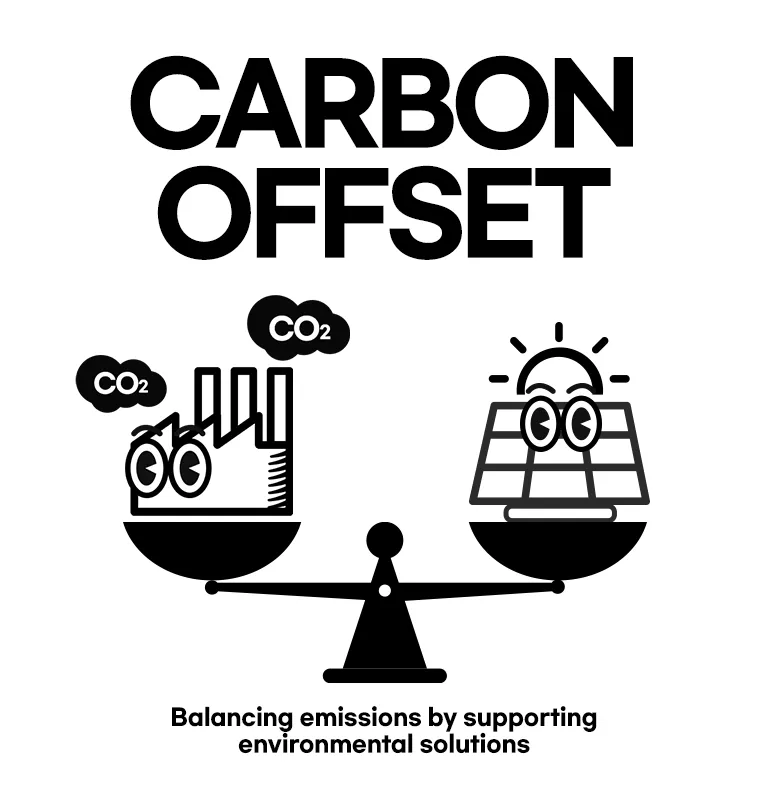
[Carbon Offset ⓒESG.ONL]
In a long-term outlook report releaSed on June 26, 2025, energy research firm Wood Mackenzie stated that, alongside CCUS (Carbon Capture, Utilization and Storage), the carbon offset market is emerging as a key instrument in global Net Zero strategies. As a flexible strategies. As a flexible mechanism capable of meeting reduction targets in the short term, the carbon offset market is projected to grow more than five times its current size by 2050, surpassing USD 150 billion (approximately KRW 213 trillion).
Carbon offsets are attracting particular attention in the Voluntary Carbon Market (VCM) — a privately led carbon reduction mechanism in which emission credits can be purchased and traded on a voluntary basis. This is significant in that it encourages additional greenhouse gas reductions across diverse regions beyond international regulations, playing an important role in effectively responding to rapid climate change and realizing Net Zero targets.
Of course, there have also been cases in which certain carbon offset certification projects have exaggerated their reduction results or been misused as a tool for Greenwashing, raising concerns about credibility and effectiveness. Nonetheless, carbon offsets remain one of the key instruments for reducing companies' Scope 3 emissions and achieving carbon neutrality. Companies must go beyond simply purchasing emission credits and simultaneously pursue fundamental efforts to reduce carbon emissions across all their operations — actively utilizing carbon offsets as a practical alternative for compensating for emissions that cannot be eliminated due to technological limitations.
by Editor O