Loading Data
Please wait a moment...
Update Cal.
2026.08
03
Mon
04
Tue
05
Wed
06
Thu
07
Fri
08
Sat
09
Sun
Update Calendar
2026.08
01
Sat
02
Sun
03
Mon
04
Tue
05
Wed
06
Thu
07
Fri
08
Sat
09
Sun
10
Mon
11
Tue
12
Wed
13
Thu
14
Fri

Loading Data
Please wait a moment...
KAU25
₩25,650
↓ -1.16%KAU25
₩25,650
↓ -1.16%KAU26
₩26,000
0.00%KAU26
₩26,000
0.00%KCU25
₩9,300
0.00%KCU25
₩9,300
0.00%EUA
€81.94
↑ +1.34%EUA
€81.94
↑ +1.34%NEWSLETTER
ESG in your inbox every morning.
Get curated in-depth stories and carbon market updates delivered every Monday at 8 AM.
[ESG and ESPR]
Each year, the market value of unsold inventory that the domestic fashion industry sends to incinerators is estimated at approximately ₩1 trillion. Under the pretext of preserving brand exclusivity, the choice to burn rather than dump at bargain prices had become entrenched as a standard practice. However, such logic is becoming difficult to sustain. Under the EU’s Ecodesign for Sustainable Products Regulation (ESPR), the disposal of unsold clothing, clothing accessories, and footwear by large enterprises within the EU is, in principle, prohibited. The EU is signaling that overproduction and inventory destruction can no longer be treated as merely an internal cost issue for companies. The ESPR itself is a regulation that took effect in July 2024, and beginning July 19 of this year, the regulation will start applying to products from large enterprises. While the regulation’s direct scope is the EU market, Korean companies that sell products in Europe or are connected to the supply chains of European brands are not exempt from its influence.The Fashion Industry Will Feel the Regulatory Shift Through ESPRESPR is the EU’s core product regulation established for the transition to a circular economy. Its fundamental direction is to impose sustainability requirements across the entire life cycle of products — from the design stage before a product enters the market, through use, repair, reuse, recycling, to disposal. Before ESPR took effect, there was the Ecodesign Directive enacted in 2009. While that directive primarily dealt with energy efficiency standards for energy-related products, ESPR significantly broadens the scope of application. With the exception of certain categories such as food, feed, and pharmaceuticals, nearly all physical products placed on the EU market may become subject to product-specific delegated regulations in the future. [Key contents of the Ecodesign Regulation © Korea Energy Agency]While ESPR sets a comprehensive regulatory framework that applies across industries, the specific prohibition on the disposal of unsold textile and footwear products by fashion large enterprises has begun to take effect, making the fashion industry the first to directly experience the regulatory signal.Three Changes Beginning July 19The first change that will apply most directly to large fashion enterprises within the EU starting July 19 is the ‘prohibition on the disposal of unsold inventory.’ Of course, there are limited exceptions. Exceptions may be recognized in cases such as safety reasons, products that are severely damaged and unusable, or counterfeit goods that should not be circulated in the market. To apply an exception, companies must retain documentation proving the grounds for the exception for five years. It would be difficult to effectively maintain existing incineration practices through the exception clause.Second, the disclosure burden regarding the treatment of unsold products is increasing. ESPR requires companies to disclose the quantity, weight, reason for disposal, and treatment method of unsold consumer goods that are discarded. Large enterprises are already within the scope of this disclosure obligation, and from 2027, reporting must be conducted in a more standardized format.Third, preparations surrounding the Digital Product Passport (DPP) are gaining momentum. DPP is a system that digitally exposes sustainability-related information such as raw materials, composition, repairability, and recycling information of products. Its purpose is to enable consumers, repair shops, recyclers, and regulatory authorities to more easily access product information. Companies are now at the stage where they must begin organizing their supply chain data collection systems to prepare for the phased implementation of DPP requirements. [ESPR Implementation Timeline and Key Phases © TÜV Rheinland Official Website]Challenges for Korean Fashion Companies in EuropeESPR targets products sold within the EU. Domestic companies that directly export clothing or footwear to the EU, as well as suppliers that provide fabrics, subsidiary materials, or finished products to European brands, may fall under its direct or indirect influence. The key is not ‘whether you are a Korean company’ but ‘whether your product is placed on the EU market.’According to Ministry of Climate, Energy and Environment statistics, domestic clothing waste generation exceeds 110,000 tons annually. Clothing incineration or disposal occurring within Korea is not directly subject to ESPR regulation. However, for companies supplying products to the EU market, domestic production, distribution, and inventory handling practices are highly likely to become subject to gradual scrutiny. This is because once DPP is fully implemented, product data will connect the entire life cycle — from raw material sourcing, manufacturing, and distribution to use, repair, and recycling. [Poster for LF HAZZYS’s first upcycling project, the ‘Rework Collection’ © LF]In response, the government and industry are also beginning to prepare. The Ministry of Trade, Industry and Energy and related agencies are operating pilot projects and consultative bodies for DPP preparedness, while discussions on inventory management, recycling, and data standardization continue within the textile and fashion industries. Examples linking inventory and circularity are emerging — such as the Rework Collection, an upcycling project launched by LF HAZZYS in 2023, and Kolon FnC’s expansion of its secondhand fashion platform. However, responding to the unsold clothing disposal regulation may be an even more challenging task than DPP preparedness. While DPP is a matter of organizing data, the prohibition on inventory destruction requires transforming production volumes, sales strategies, discount policies, resale channels, and recycling infrastructure — this is closer to an adjustment of the fashion business model itself.ESPR: An Export Industry Issue Beyond FashionThe scope of ESPR does not stop at fashion. The European Commission is progressively presenting a timeline for adopting product-specific delegated acts through the ‘2025–2030 Working Plan.’ The adoption of the delegated act for steel is scheduled for 2026, followed by textiles and clothing, aluminum, and tires in 2027, furniture in 2028, and mattresses in 2029. This is why the ESPR response is not merely about whether unsold clothing can be burned. As delegated acts accumulate, how transparently Korean export companies manage their product data and how they collect and verify environmental information across their supply chains will become a prerequisite for accessing the EU market. The regulatory clock is already ticking. by Editor L
2026.07.06
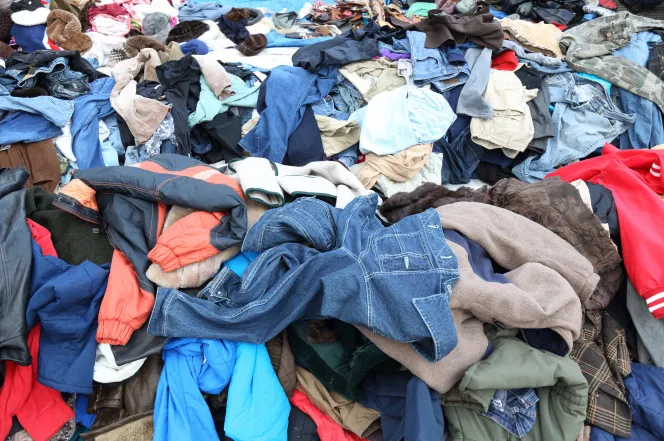 [ESG and ESPR]
[ESG and B Corp]
‘B Corp Certification’ is a global certification and corporate movement that recognizes businesses prioritizing social and environmental responsibility beyond profit-seeking. Currently, over 10,900 companies across more than 100 countries and 160 industries have obtained B Corp Certification. In South Korea, around 30 companies, including Toss Bank, DLG Law Firm, and Impact Square, are listed as B Corp Certified companies.B Lab, the global nonprofit organization that operates B Corp Certification, unveiled its newly revised certification standards in April 2025. The new standards have been applied to new certification applicants since March 2026 — the seventh revision since B Lab’s founding, and widely regarded as the most significant change in 19 years. B Lab has set ‘System Change,’ centered on continuous improvement and collective effort, as the goal of this standards revision. In this regard, B Lab Korea, B Lab’s Korean partner organization, held a ‘B Corp Certification Information Session’ on June 29 to introduce the new certification standards to domestic corporate representatives. The session covered the revised B Corp Certification evaluation methods, detailed criteria, and their significance.[B Lab Korea Executive Director Jeong Tae-eun explaining B Corp Certification at the session © ESG.ONL]All Seven Impact Areas Must Be Passed to Be CertifiedThe core of this certification standard revision is the abolition of the previous composite score summation method. Previously, a company could receive a high overall score by performing exceptionally well in one area, such as environment, which would offset weaker performance in other areas like governance or labor conditions. Under the new standards, such compensation is no longer permitted. Instead, companies must meet detailed sub-performance criteria across seven impact topics: ▲Corporate Purpose & Stakeholder Governance ▲Fair Labor ▲Justice, Equity, Diversity & Inclusion (JEDI) ▲Human Rights ▲Climate Action ▲Environmental Management & Circularity ▲Government Relations & Collective Action. Performance in one area can no longer fill the gaps in another. [The Seven Impact Topics of the Newly Revised B Corp Certification Standards © Captured from B Lab Korea Website] Examining some of the key topics among the seven: ‘Corporate Purpose & Stakeholder Governance’ requires companies to act according to a defined purpose and establish governance that monitors social and environmental performance. ‘Fair Labor’ addresses quality jobs, fair wage practices, and reflecting worker feedback in decision-making. ‘Climate Action’ requires establishing plans that contribute to limiting global warming to 1.5°C, and for large corporations, includes greenhouse gas emissions and Science Based Targets (SBT). ‘Government Relations & Collective Action’ covers corporate efforts to work collectively to promote systemic change. Beyond Regulatory Compliance, Toward Substantive ActionThe backdrop of this revision is the regulatory environment. The new standards were developed in compliance with the EU’s ‘Empowering Consumers for the Green Transition Directive,’ scheduled to take effect in September 2026. This regulation prevents companies from engaging in greenwashing, such as unsubstantiated eco-friendly advertising. Amid the global trend of tightening greenwashing regulations, B Lab has set a direction through the new standards for companies to go beyond regulatory compliance and take substantive action on social and environmental issues. Companies that have received B Corp Certification must continue to demonstrate compliance with the standards and show improvements at each evaluation cycle. [Billy Hanafee, B Lab Global Certification Operations Strategy Lead, explaining the new B Corp Certification standards © ESG.ONL]The more stringent performance criteria in the B Corp Certification process may pose a burden on small and medium-sized enterprises (SMEs). For companies with limited personnel and budgets, evaluating and meeting criteria across all seven areas is challenging. Reflecting these difficulties, the revision now varies the number of detailed requirements that companies must fulfill, ranging from a minimum of 20 to a maximum of 124, depending on size and industry sector. The structure applies more requirements to large enterprises and a more basic level of requirements for SMEs first. If we compare B Corp Certification to a corporate ‘health check-up,’ this revision can be seen as having increased the number of check-up items, while the application of those items can now be adjusted to fit the company’s weight class. Beyond just B Corp Certified companies, any company can freely measure its impact performance through the B Impact Assessment platform. The B Impact Assessment is a tool provided by B Lab for measuring a company’s social and environmental impact, evaluating corporate operations and business models across five areas: governance, workers, community, environment, and customers.Amid growing investment demand for ESG-managed companies, expectations for corporate B Corp Certification are also rising. In line with this trend, B Lab is refining its certification standards. As certification strengthens, obtaining B Corp Certification can serve as a competitive advantage for overseas business expansion and investment attraction. At the information session, a B Lab Korea representative emphasized the practical competitiveness of B Corp Certification as a management verification tool, noting that “Korean IT startup Eqpoall was able to gain a high level of trust in the North American market by promoting its B Corp Certification status.” The bar for B Corp Certification has been raised, but the weight of trust in the certification has shifted accordingly. Companies that prove their responsibility across all seven areas and have their implementation consistently verified at each evaluation cycle will serve as the standard demonstrating that B Corp Certification is not a checkpoint but a continuous practice. by Editor L
2026.07.02
 [ESG and B Corp]
[ESG and Carbon Neutrality]
By 2050, forests aged 50 years or older are expected to account for 72% of South Korea’s total forest area. As a result, the greenhouse gas absorption rate of forests is projected to decline significantly. While the spread of renewable energy and electric vehicles is accelerating reductions in carbon emissions, the absorption sinks that must support those reductions are actually weakening. This is one reason why calls have persistently continued for new carbon sinks beyond existing ones such as forests and vegetation in South Korea’s carbon neutrality reduction strategy. In this context, the ground beneath our feet is now garnering attention as a new carbon sink. Carbon Sinks: Now It’s Soil, Beyond ForestsOn May 21, the Ministry of Climate, Energy and Environment held a kick-off meeting at Sangyeonjae Seoul Station for the ‘Soil-Based Environmental Technology Development Project to Contribute to Achieving the Nationally Determined Contribution (NDC)’ and announced plans to pursue related research in earnest. This project aims to develop soil carbon absorption and removal technologies suited to the domestic environment. It is also expected to be utilized as a substantive carbon reduction tool, linked to the ‘National Greenhouse Gas Inventory’ — the administrative process for calculating national greenhouse gas emissions and absorption. With this project, the carbon absorption policy that was previously forest-centered is expected to expand to the soil domain. According to the Intergovernmental Panel on Climate Change (IPCC), soil is considered a larger carbon reservoir than the atmosphere and vegetation, with soil carbon storage at approximately 1,700 PgC (petagrams of carbon), far exceeding the atmospheric carbon storage of 870 PgC and vegetation carbon storage of 450 PgC. The IPCC’s Working Group III Sixth Assessment Report, published in April 2022, emphasized the importance of carbon absorption by introducing the ‘Top 10 Carbon Removal Technologies,’ which included four soil-based carbon absorption and removal technologies.[Top 10 Carbon Removal Technologies © IPCC Working Group III Sixth Assessment Report]Soil Carbon Absorption and Removal Project: What Is Being Researched?In the first year of the project, the Ministry of Climate, Energy and Environment is pursuing research on five technologies, including ▲Biochar Utilization Technology ▲Enhanced Rock Weathering Technology ▲Integrated Impact Assessment Model for Soil Carbon Absorption and Removal. Among these, the most noteworthy technology is ‘biochar.’ Biochar is a compound word of ‘biomass’ and ‘charcoal,’ and is a material produced by pyrolyzing wood, agricultural crop residues, organic waste, etc. at high temperatures in the absence of oxygen. During the production process, carbon is converted into a stable structure, and when applied to soil, it can store carbon semi-permanently for over 100 years. [Effects of Biochar © Korea Biochar Association Official Website]Second, ‘enhanced rock weathering technology’ involves crushing rocks with high calcium and magnesium content and spreading them on soil, where they absorb atmospheric carbon dioxide in the form of carbonates. The resulting carbonates remain in the soil and oceans, sequestering carbon. Third, in the ‘integrated impact assessment model’ development stage, the effectiveness of soil carbon absorption and removal technologies is scientifically verified, and the environmental positive and negative impacts of the technologies on ecosystems are comprehensively analyzed. The integrated impact assessment model is a key evaluation tool for scientifically verifying greenhouse gas reduction effects. This project is a public-sector technology development initiative, and in the future, institutions or operators designated by the Ministry of Climate, Energy and Environment will be able to use the developed technologies free of charge.Measurement Standards as Important as Carbon Absorption TechnologyAdvancing soil carbon absorption technology affects not only national greenhouse gas reduction targets but also corporate ESG strategies. As domestic companies prepare for ESG disclosures based on the status of NDC implementation, securing carbon sinks can contribute to enhancing the credibility of carbon neutrality roadmaps. If a company’s soil carbon absorption performance is officially recognized as a greenhouse gas reduction amount, companies could use farmland or idle land to secure greenhouse gas emission credits. However, for this to happen, an MRV system (Measurement, Reporting, and Verification) that can incorporate soil-based carbon absorption performance into the national greenhouse gas statistical report must first be established. As soil carbon absorption and emission rates vary significantly depending on regional characteristics and climate conditions, establishing reliable measurement standards is just as important as technology development. [MRV Strengthening Plan © Ministry of Economy and Finance]Until now, carbon reduction strategies have primarily been discussed in terms of reducing emissions. However, this project is significant in that it develops the opposite side — carbon absorption technology. Now, as corporate ESG disclosure obligations are being expanded in stages, securing sink-based carbon performance could serve as a means to fill the gaps in NDC achievement that could not be met through emissions reduction alone. For soil to become a genuine strategic resource for carbon neutrality, technology and institutional frameworks must accelerate together. by Editor L
2026.06.30
 [ESG and Carbon Neutrality]
GOOD CHOICE, GOOD CHANGE
Sustainable Brand Exhibition ↗
Human Rights Impact Assessment

Human Rights Impact Assessment (HRIA) refers to the systematic process of identifying and analyzing the impact of a company’s business activities on the human rights of stakeholders, including employees and partner company workers. More than a mere fulfillment of legal obligations, it is a core tool constituting the ‘S’ dimension of ESG management.The concept of HRIA originated from the process of predicting and identifying the impact of business on human rights. It is regarded as one of the key instruments of Human Rights Due Diligence (HRDD) required by the UN Guiding Principles on Business and Human Rights (UNGPs). In 2011, the United Nations officially published the UNGPs, which clarify that while not legally binding, businesses have a responsibility to respect human rights. [Human Rights Impact Assessment(HRIA) © ESG.ONL/ESG Today]In South Korea, the National Human Rights Commission of Korea developed the ‘Human Rights Management Reporting and Evaluation Guidelines’ in 2022, which include content on human rights policy declarations, conducting Human Rights Impact Assessments (human rights due diligence), identifying and mitigating adverse impacts, human rights management information disclosure, and human rights education. The commission recommended implementation by public institutions and state-owned enterprises, and many organizations now conduct assessments and disclose results in accordance with these guidelines. The scope of HRIA evaluation includes not only employees and workers but also local community residents and consumers, with particular priority given to examining the rights of vulnerable groups such as persons with disabilities, non-regular workers, and women. The outcome of HRIA serves as foundational evidence for human rights-related items required by major ESG disclosure frameworks such as the Global Reporting Initiative (GRI) and the Sustainability Accounting Standards Board (SASB). Amid the strengthening of global supply chain due diligence requirements, HRIA functions as evidence of corporate human rights management that draws the attention of investors, regulators, and consumers. by Editor O
Intergovernmental Panel on Climate Change
The Intergovernmental Panel on Climate Change (IPCC) is an international body jointly established in 1988 by the World Meteorological Organization (WMO) and the United Nations Environment Programme (UNEP). Its primary role is to synthesize the latest research on the scientific basis of climate change, its environmental and socio-economic impacts, and response strategies, and to provide this to policymakers worldwide. The IPCC does not conduct its own research; instead, hundreds of scientists and policy experts from around the world review and analyze existing studies and publish their findings in reports.The IPCC is composed of three working groups: Working Group I (WG I), which addresses the physical science basis of climate change; Working Group II (WG II), which analyzes climate change impacts, adaptation, and vulnerability; and Working Group III (WG III), which studies greenhouse gas mitigation options. It also operates the Task Force on National Greenhouse Gas Inventories (TFI), which develops methodologies for calculating and reporting national greenhouse gas emissions. [Intergovernmental Panel on Climate Change(IPCC) © ESG.ONL/ESG Today]The IPCC publishes comprehensive Assessment Reports on a 6–7 year cycle. Since the first report in 1990, it has released a total of six reports through the Sixth Assessment Report (AR6) in 2023. IPCC Assessment Reports serve as the scientific foundation for international climate agreements. The First Assessment Report in 1990 became the starting point for negotiations on the United Nations Framework Convention on Climate Change (UNFCCC), and subsequently provided key evidence for the adoption of the Kyoto Protocol and the Paris Agreement. In 2007, the IPCC jointly received the Nobel Peace Prize with former U.S. Vice President Al Gore for its efforts to raise awareness of the dangers of climate change and present response measures. In the Sixth Assessment Report released in 2023, the IPCC pointed out that to limit the global average temperature rise to within 1.5°C, greenhouse gas emissions must peak before 2025, decline by 43% by 2030, and reach net zero by 2050. While the IPCC functions as a key platform connecting climate science and policy, it also has limitations. It has been criticized that the political positions of national governments can be reflected in the report adoption process, potentially weakening scientific conclusions. There are also concerns that the long publication cycle for Assessment Reports makes it difficult to rapidly reflect the changing climate reality. Nevertheless, the IPCC remains the most authoritative scientific consensus body on climate change, and its findings are widely used in ESG disclosure standards and corporate climate risk assessments. by Editor O
Energy Storage System
An Energy Storage System (ESS) refers to a device or technological system that stores electrical energy in various forms and supplies it when needed. ESS is a critical infrastructure for addressing the intermittency issues of renewable energy such as solar and wind power and enhancing grid stability. [Energy Storage System (ESS) © ESG.ONL/ESG Today]ESS, whose importance is rapidly growing in the transition to carbon neutrality, is classified by storage method into ‘electrochemical storage,’ ‘mechanical storage,’ and ‘thermal storage.’ Electrochemical storage converts electrical energy into chemical energy and then converts it back to electrical energy during discharge. Mechanical storage uses physical force, potential energy, or kinetic energy to store electrical energy, while thermal storage converts electrical energy into thermal energy such as cold or heat and stores it for use in heating and cooling when needed. The key driver behind the growing attention on ESS is the expansion of renewable energy. Since solar and wind power generation is irregular depending on weather and time, ESS is essential for storing surplus power and supplying it during peak demand. According to the International Energy Agency (IEA), global renewable energy generation capacity is expected to more than double by 2030, and ESS demand is rapidly increasing accordingly. In the ESS market, companies such as China’s CATL and BYD, along with South Korea’s Samsung SDI, are currently leading the market. In July 2024, Samsung SDI signed a contract worth approximately ₩1 trillion to supply 6.3 GWh of ESS batteries to U.S. clean energy company NextEra Energy. ESS is projected to grow 17-fold by 2050 and is closely tied to ESG investment as essential infrastructure for achieving carbon neutrality goals. The combination of renewable energy and ESS is regarded as a key means of reducing fossil fuel dependence and cutting greenhouse gas emissions. by Editor O
Rio Declaration on Environment and Development
The Rio Declaration on Environment and Development is an international environmental declaration adopted at the United Nations Conference on Environment and Development held in Rio de Janeiro, Brazil, in June 1992. Reaffirming and building upon the principles of the 1972 Stockholm Declaration (often referred to as the Declaration on the Human Environment), the Rio Declaration was the first to formally recognize that environmental protection and economic development cannot be separated. More than 175 countries have signed it, and it consists of 27 principles serving as national action guidelines for sustainable development. The core of the Rio Declaration is the institutionalization of the concept of ‘Sustainable Development.’ Principle 1 states that human beings are at the center of concerns for sustainable development and are entitled to a healthy and productive life in harmony with nature. Principle 3 stipulates that the right to development must be fulfilled so as to equitably meet the developmental and environmental needs of present and future generations. Alongside this, the Rio Declaration formally recognized that developed and developing countries bear differing environmental responsibilities through the principle of ‘Common but Differentiated Responsibilities (CBDR).’[Rio Declaration(Rio Declaration on Environment and Development) © ESG.ONL/ESG Today]Among the 27 principles of the Rio Declaration, Principles 10 and 15 are particularly noteworthy. Principle 10 centers on the idea that environmental issues are best handled with the participation of all concerned citizens, presenting three core rights: access to environmental information, the right to participate in decision-making, and access to judicial remedies. Principle 15, the Precautionary Principle, establishes that where there are threats of serious or irreversible damage to the environment or human health, lack of full scientific certainty shall not be used as a reason for postponing environmental protection measures. Since the adoption of the Rio Declaration, these two principles have served as important benchmarks in international environmental law and national environmental policies.The Rio Declaration became the starting point for the international climate and environmental framework that led to the 1997 Kyoto Protocol, the 2015 Paris Agreement, and the UN Sustainable Development Goals adopted in the same year. The concepts of environmental responsibility, stakeholder participation, and intergenerational equity emphasized in ESG management are also rooted in the principles of the Rio Declaration.by Editor O
Polycrisis
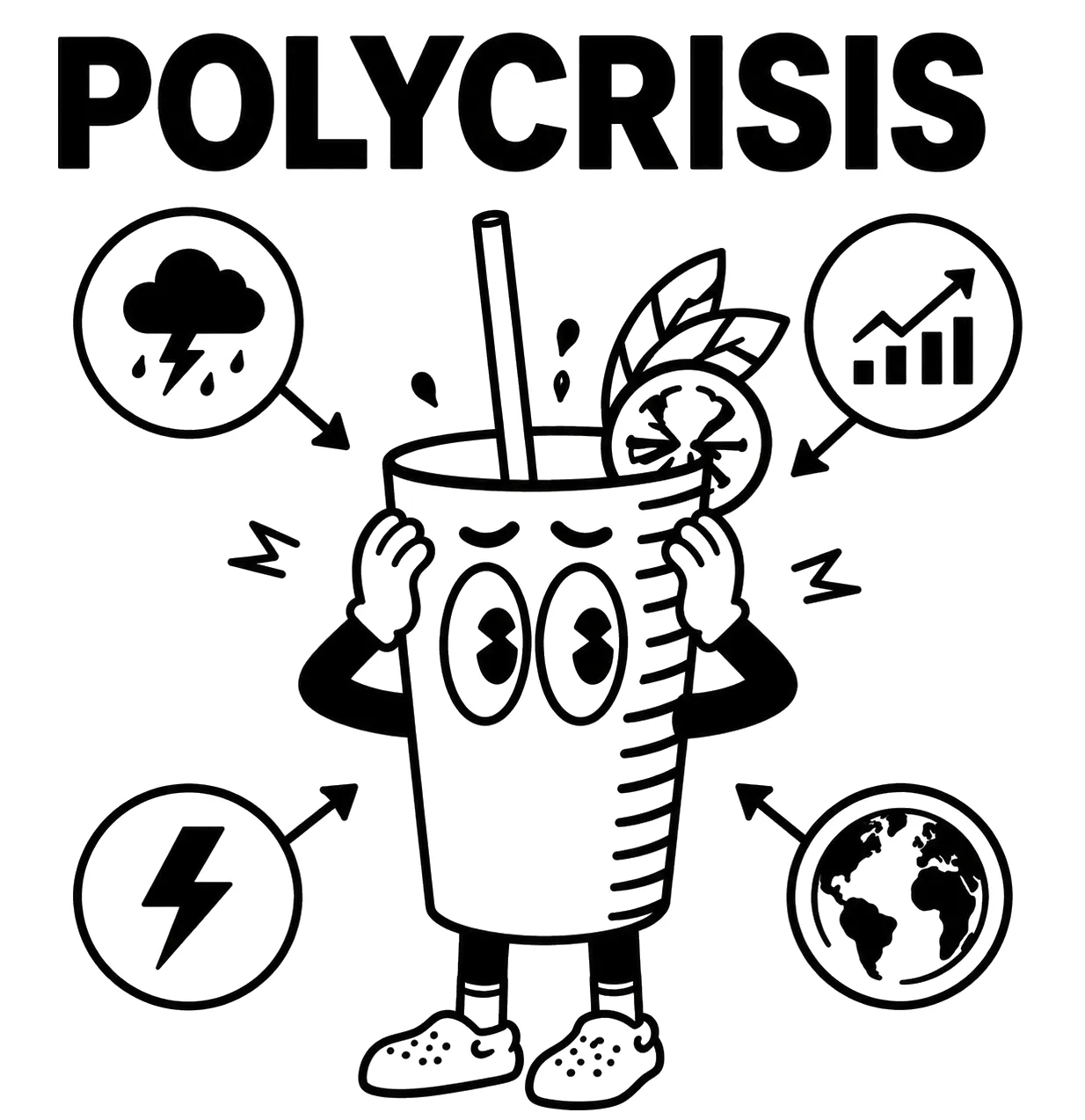
Polycrisis refers to a phenomenon in which crises of different natures — such as climate, economic, and geopolitical — occur simultaneously, creating damage greater than the sum of the individual shocks. The concept of polycrisis was first introduced by French thinker Edgar Morin in his 1990s works Terre-Patrie (Homeland Earth) and Pour une politique de civilisation. It gained global attention in 2023 at the World Economic Forum Annual Meeting in Davos, Switzerland, when Columbia University historian Adam Tooze defined polycrisis as “a state in which shocks interact, making the whole more threatening than the sum of its parts.”[Polycrisis(Polycrisis) © ESG.ONL/ESG Today]The core of polycrisis lies in the chain reactions between crises. For example, when extreme weather events reduce food production and geopolitical conflicts simultaneously destabilize energy supply, inflation accelerates. Any single crisis might appear manageable in isolation, but when multiple crises converge, they generate pressures far stronger than each individual shock. According to Adam Tooze, the current polycrisis phase can be traced back to around 2008 and onward. At that time, the financial crisis, Russia’s invasion of Georgia, the collapse of the WTO Doha Round, and the failure of the Copenhagen climate negotiations unfolded simultaneously, laying the foundation for today’s polycrisis. In the past, issues such as carbon emissions or occupational accidents could be managed individually. However, in a polycrisis environment, climate risks lead to supply chain disruptions, which in turn trigger social conflicts and financial losses. As a result, demands are growing for companies to identify and disclose the entire process. Accordingly, corporate resilience — the ability to absorb shocks and recover quickly — is emerging as a new criterion in ESG evaluation. by Editor O
SNACK · ANYTIME



Open today's
fortune cookie!
The Approaching Super El Nino: A Warning Sign of the Climate Crisis
[Domestic Trends]July 3, International Plastic Bag Free Day
[Global Trends]What India's Record Heatwave Is Destroying
[Domestic Trends]Festival Venues: What Remains After the Slam
[Domestic Trends]The Correlation Between Final Exams and Eco-Friendly Campuses
Do you have stories to tell about ESG? Join ESG.ONL and share your insights for a better tomorrow.
Inquire