

When final exam season approaches each year, bright lights spill from university campus buildings late into the night. Libraries and study rooms fill with students, and heating, cooling, and lighting continue to run throughout lecture halls. Coffee and energy drinks consumed for exam preparation, printed study materials, and disposable containers also increase rapidly.
Recognizing this situation, many universities are declaring carbon neutrality and ESG management and pursuing the transition to eco-friendly campuses. Various efforts continue, including building energy management systems and introducing waste reduction policies, but whether these are actually transforming the daily lives of campus members is another question.
Universities as Major Energy Consumers
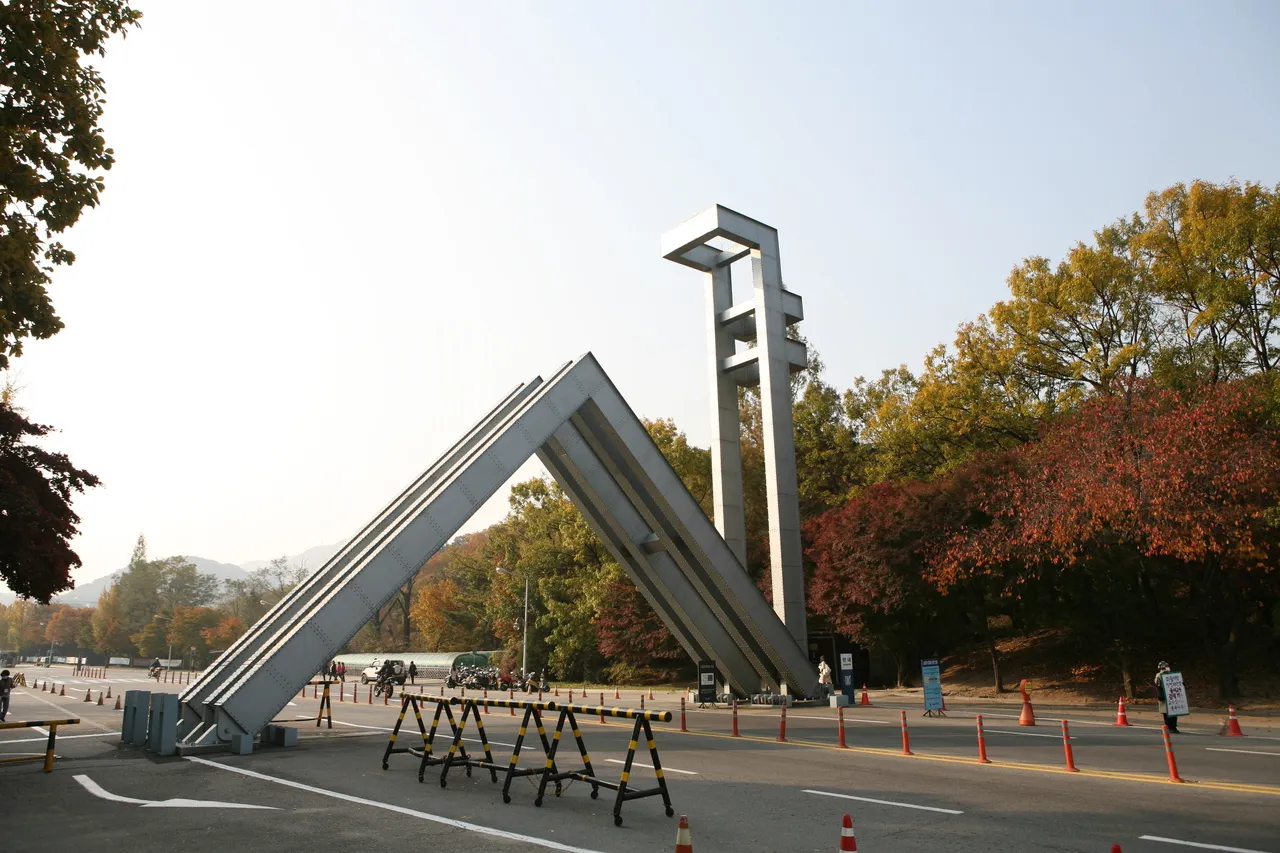
[Seoul National University © Korea Tourism Organization]
Universities are by no means small energy consumers. According to the energy-intensive building rankings published by the Seoul Metropolitan Government, Seoul National University ranked first continuously for ten years from 2012, and five universities in total — including Yonsei University, Korea University, Hanyang University, and Ewha Womans University — appeared within the top 20. Given the nature of campuses densely populated with large lecture halls, research labs, and libraries, high energy consumption is unavoidable.

[Scenes of university exams © Getty Images]
Particularly during final exam periods, with study room and classroom lights running late into the night, electricity consumption increases above normal levels. Energy drink cans, disposable cups, and indiscriminately printed exam materials quickly fill up trash bins. While students focus on their grades, not only trash but also energy waste quietly accumulates across campus.
Universities Declaring Eco-Friendliness
Recognizing these structural problems, universities are successively declaring the transition to eco-friendly campuses. Korea University announced the realization of a carbon-neutral campus by 2045 through its Carbon Neutrality Declaration in 2022, establishing management systems for energy efficiency improvement and waste resource circulation. Hanyang University built an automatic meter reading system in 2013 to automatically read meters at 179 points for electricity, gas, and water, analyzing usage by hour and day. In 2015, it introduced an integrated control system for individual heating and cooling units, designed so that lights and HVAC only operate when doors are closed, achieving tangible energy savings.

[Disposable-Free Campus Project © Namseoul University Instagram]
Namseoul University went a step further by officially declaring an ‘ESG Campus.’ ESG — standing for Environmental, Social, and Governance — is a standard for evaluating whether a company or institution practices environmental responsibility, social roles, and transparent operations beyond mere financial performance. President Yoon Seung-yong stated, “Small practices such as using reusable cups, saving electricity and water lead to big changes,” and faculty and student representatives together recited the ESG Practice Declaration.
Small ESG Changes Driven by Students
However, the reality of campuses during exam periods is far from such declarations. The University ESG Guidelines stipulate that all operational activities of universities can have significant impacts on the external environment, defining environmental protection through carbon neutrality practices as a core responsibility of universities. Yet, it is pointed out that campaigns or practical systems that actually drive behavioral change among individual students remain insufficient. Building-level energy efficiency improvements and institution-level carbon neutrality declarations are important first steps. But if they do not translate into behavioral changes in the daily lives of all campus members, environmental issues may remain confined to phrases in policy documents.
Experts emphasize that an ESG campus must not remain at the building system and policy level. The actions that can be practiced during exam periods are more concrete than one might think. Representative examples include unplugging unused electronic devices, carrying a personal tumbler, turning off lights in empty classrooms, and using electronic materials instead of printouts. Universities also need to establish institutional mechanisms such as energy-saving campaigns, reusable cup return point systems, and collection boxes for single-sided printouts. Final exams are a time when students are evaluated on their semester’s performance through scores. It is time to review not only exam report cards but also the environmental report cards of universities.
by Editor N