Loading Data
Please wait a moment...
Update Cal.
2026.08
03
Mon
04
Tue
05
Wed
06
Thu
07
Fri
08
Sat
09
Sun
Update Calendar
2026.08
01
Sat
02
Sun
03
Mon
04
Tue
05
Wed
06
Thu
07
Fri
08
Sat
09
Sun
10
Mon
11
Tue
12
Wed
13
Thu
14
Fri

Loading Data
Please wait a moment...
Evening ESG news and briefings to wrap up your day.

This spring brought unpredictable extreme weather, with temperatures soaring up to 31°C creating midsummer-like conditions, followed the next day by torrential downpours. El Nino is pointed to as the primary cause of such abnormal weather patterns. Concerns are mounting in particular as the possibility of a more powerful ‘Super El Nino’ has been raised for this summer, putting the entire world on high alert regarding climate risk.Not Just El Nino, But a ‘Super El Nino’El Nino refers to a phenomenon in which sea surface temperatures in the eastern equatorial Pacific Ocean rise above normal levels. Typically, trade winds blow strongly from east to west in the equatorial region, pushing warm water toward the western Pacific. However, when the trade winds weaken, warm water shifts toward the eastern Pacific, causing changes in the oceanic and atmospheric circulation system. El Nino is generally defined as a sustained period where eastern Pacific sea surface temperatures remain 0.5°C or more above normal, while a ‘Super El Nino’ is classified when temperatures rise by 2°C or more.[Sea Surface Temperature Status, May 10–16, 2026 © Korea Meteorological Administration ‘El Nino White Paper’]According to data from the Korea Meteorological Administration, sea surface temperatures in the Pacific El Nino-La Nina monitoring region currently stand at 28.8°C, 1°C above normal, indicating an increased likelihood of El Nino development. Recently, the U.S. National Oceanic and Atmospheric Administration (NOAA) forecasted an 82% probability of El Nino occurring between June and August of this year. NOAA also analyzed that the probability of El Nino developing into a stronger Super El Nino between this year and 2027 reaches as high as 67%. Damage Caused by Super El NinoSo what will happen if a Super El Nino occurs? With temperatures continuing to rise due to global warming, a Super El Nino could lead to more frequent extreme weather events such as torrential rains, record-breaking heatwaves, and droughts. This could result in reduced agricultural output and a sharp increase in agricultural product prices, a phenomenon known as ‘heatflation.’ Furthermore, socio-economic damages such as water shortages and heightened wildfire risk are expected to intensify significantly.[KMA Teleconnection Schematic Diagram © Korea Meteorological Administration ‘El Nino White Paper’]Since the establishment of the World Meteorological Organization (WMO) in 1950, Super El Nino events have occurred a total of four times. They occurred as recently as 2023 and 2024, with 2024 recorded as the hottest year since observations began in 1950. The 2024 Super El Nino also triggered a series of weather anomalies. Droughts struck parts of South America and Africa, while prolonged high temperatures and drought in the Mediterranean region caused cocoa and olive oil prices to surge dramatically. South Korea also recorded its longest-ever streak of tropical nights, with some regions enduring heatwaves exceeding 35°C.Can We Prepare for a Super El Nino?Super El Nino is not merely a weather phenomenon. Beyond heatwaves, droughts, and torrential rains, it is a compound risk factor affecting food supply, prices, and public safety. Particularly in the context of ongoing global warming, the ripple effects of a Super El Nino could be even more severe, making heightened awareness essential.[Severe Drought in Southern Africa Due to the 2024 El Nino © NASA Earth Observatory ]Experts emphasize that fundamentally mitigating the extreme weather caused by Super El Nino requires ‘greenhouse gas reduction’ and ‘achieving carbon neutrality.’ At the same time, building response systems to prepare for climate disasters is also critical. This includes advancing weather prediction systems, establishing agricultural and water resource management measures, and strengthening social safety nets to protect populations vulnerable to disasters.The increasing likelihood of a Super El Nino signals that the climate crisis is already an ongoing risk. The extreme weather we are experiencing now may be merely the beginning of the climate disasters we will face ahead. We are now in an era where not only structural societal transitions for energy conservation but also everyday practices are no longer optional. by Editor N

July 3 is the International Plastic Bag Free Day, commemorated by the international community. This day was proposed in 2008 by GAIA, an international environmental organization based in Spain, with the aim of limiting plastic bag use for at least one day a year, and was established with the participation of environmental organizations from countries including the United States and France. Let us explore the birth of the plastic bag, regulations across different countries, and the efforts to make a plastic-bag-free day a part of everyday life.The Irony of the Plastic Bag Invented for the EnvironmentIn modern consumer society, the plastic bag — a symbol of cheap, lightweight convenience — was originally developed with the purpose of protecting nature. In 1959, Swedish engineer Sten Gustaf Thulin devised a reusable, high-density polyethylene bag — what we now know as the plastic bag — to address the deforestation problem caused by excessive use of paper bags. However, ironically, as mass production technology advanced and manufacturing costs plummeted, the plastic bag, in complete opposition to Thulin’s original intention, became a single-use, throwaway item.[The first plastic bag, devised by Sten Gustaf Thulin in 1959 © Medium]Easily discarded plastic bags emit enormous amounts of carbon during the production process. Moreover, their durability — taking hundreds of years to decompose after disposal — disrupts both soil and marine ecosystems. In other words, the disposable plastic bag created to protect the environment has instead become a threat to it. The Choices Made to Reduce Plastic BagsTo address the environmental problems caused by plastic bags, countries around the world have established legal regulatory measures. In South Korea, since April 2019, as part of the Ministry of Climate, Energy and Environment’s ‘Enhanced Recycling Waste Management Measures,’ the use of disposable plastic bags has been completely banned in large discount stores and supermarkets above a certain size. According to the Ministry, plastic bag usage in large retailers stood at 1,596 tons in 2017 before the policy was implemented, but decreased to 466 tons by 2021, four years later. Reusable standard garbage bags, shopping baskets, and paper bags are replacing disposable plastic bags.While South Korea’s regulations focus on specific disposable plastic bag items, overseas efforts are moving toward broadening the regulatory scope. According to the EU’s ‘Single-Use Plastics Directive’ announced in 2019, by 2030, all plastic bottles placed on the EU market must contain at least 30% recycled plastic in their manufacture. New Zealand, beginning with a ban on single-use bags and disposable plastic shopping bags in 2019, has been progressively tightening single-use plastic regulations. Since October 1, 2022, the manufacture and sale of six categories of items — including single-use plastic cotton buds, drink stirrers, and polyvinyl chloride (PVC) containers — have been banned. Plastic Bag Free Day: From One Day to Daily LifeFor International Plastic Bag Free Day to become part of daily life, a shift in consumer culture is necessary. Governments must set long-term reduction targets that go beyond individual product regulations, backed by concrete implementation plans. Corporate responsibility is equally important. Companies must join the path toward sustainable development — by developing reusable packaging materials and investing in the adoption of circular economy models. Policy sets the direction; business provides the means.[International Plastic Bag Free Day poster © Korea Environment Institute Official Instagram]Ultimately, however, the agent of change is the individual who uses these disposable items. In honor of International Plastic Bag Free Day, let us carry a reusable bag instead of a plastic one. That small choice can be the first step toward a sustainable future. by Editor N
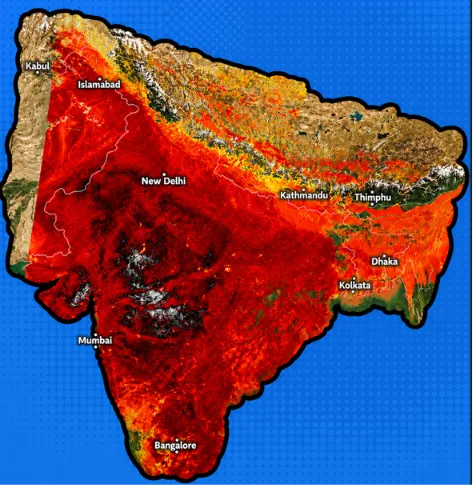
Even faster than South Korea, where recent summer heat feels unlike past years, India has been trapped in extreme warmth since April. In India, the period from May to June is typically considered the severe hot season, with intense heat persisting. This year, however, an early heatwave with maximum temperatures exceeding 45°C struck India as early as April, before the full onset of summer. In Rajasthan state, temperatures soared to 48.3°C, and major cities including Delhi and Lucknow have been enduring relentless heat day and night. Recently, even nighttime temperatures have risen sharply, prompting talk that there is effectively no time to escape the heat anymore.As of April 27 of this year, the fact that the top 50 cities worldwide recording the highest temperatures were all located in India’s interior is an event with few statistical precedents. [Heatwave in India, June 2026 © India Meteorological Department Official Facebook]Why Is India So Hot?This heatwave is not the result of a single factor but a complex combination of multiple meteorological phenomena and environmental factors. Western Disturbances — storms originating in the Mediterranean region that move eastward and bring rain to India — have weakened this year, with reduced frequency. Over the Gangetic Plain and eastern Indian region, a Heat Dome has formed, with hot air trapped by a stationary high-pressure system. In addition, abnormal climate patterns are a cause of India’s long-term climate change. According to the India Meteorological Department, since 1961, the frequency of heatwaves in India has increased by 0.1 days per decade, and average nighttime temperatures have also risen by approximately 0.21°C per decade. Cities retain heat longer due to densely packed buildings, limited green spaces, and high vehicle emissions, further accelerating nighttime temperature increases. Nighttime heat is more dangerous than daytime heat because it deprives the body of recovery time. Moreover, this year has added the potential for a Super El Niño, where tropical Pacific sea surface temperatures rise 2°C or more above normal. A Super El Niño can weaken the seasonal monsoon, which accounts for about 70% of India’s precipitation, potentially delivering compound blows to agriculture and the economy through reduced harvests, intensified water rationing, and power outages. Heat That Threatens SurvivalThe danger of heatwaves cannot be fully explained by temperature figures alone. The 2026 heatwave in India is even more lethal because it is accompanied by a sharp rise in humidity. India’s average relative humidity rose from 67.1% in 2015–2019 to 71.2% in 2020–2024, and among cities, Delhi showed the largest increase at 8 percentage points. [Atmospheric temperatures during the 2024 heatwave in Europe and Southeast Asia © NASA]When the wet-bulb temperature — an index that simultaneously reflects temperature and humidity — approaches 35°C, the human body loses its ability to regulate temperature through sweat evaporation, threatening life itself. Climate analyst Bruno Bresinski stated, “In some regions of India, the heat index is approaching 55°C, and the wet-bulb temperature is reaching levels close to the limit of human survival,” conveying the severity of the heatwave. While only air conditioning can remove both heat and moisture simultaneously, the reality is that most Indian households lack air conditioning.[ Medical facilities provided as heatwave shelters in India © Children’s Environment Health Collaborative]The Vicious Cycle of Climate and Economy Triggered by HeatwavesAlso notable is the structure in which efforts to overcome the heat — such as using fans or air conditioners — actually intensify the heatwave. Over 70% of India’s electricity is still generated by coal-fired power, and according to S&P Global Energy data, India’s coal-fired power generation averaged 164.9 GW in April 2026, an increase from the same period last year. Ultimately, the heatwave drives up electricity demand, which raises the utilization rate of coal power plants, leading to additional greenhouse gas emissions that in turn fuel further heatwaves — a structurally operating vicious cycle. Economists warn that such a vicious cycle will become a structural obstacle to India’s long-term economic growth. The heatwave has caused the loss of 247 billion labor hours in agriculture and construction, resulting in an economic blow of approximately USD 194 billion (around KRW 260 trillion) to India. This figure corresponds to up to 4.5% of India’s GDP, demonstrating that extreme summers are not a temporary shock but could be a recurring impediment to economic growth.In 2022, 2024, and 2025, India’s summers appeared before us each year carrying the modifier “unprecedented.” Yet this 2026 Indian summer has set yet another record. The problem is that this record is highly likely to keep being broken. As long as the vicious cycle of climate and economy triggered by heatwaves continues, the modifiers attached to India’s summers can only grow stronger each year. by Editor N

On a hot summer lawn, strangers stand shoulder to shoulder and become one. The ‘slam’ at festival venues — pushing, shoving, jumping, and colliding — is the moment when the most primal solidarity unfolds among strangers. Behind that heat-filled scene, alongside the enjoyment, something else is piling up.According to the Performance Market Analysis Report by the Korea Arts Management Service, popular music concert ticket sales in 2025 recorded ₩981.7 billion, a 29% year-on-year increase, showing explosive growth. From spring to fall this year, a series of large-scale festivals including music events are scheduled to arrive one after another. But alongside the ever-growing scale of festivals, the recurring waste problem has also begun to surface.After the Festival, It Wasn’t Just Fun That RemainedFor an event averaging 5,000 visitors per day, approximately 150 standard 100-liter garbage bags worth of waste are generated. For large-scale festivals drawing tens of thousands, the volume is difficult to estimate. Most festival waste comes from on-site banners, paper tickets, disposable cups, and food packaging. The Daegu Chimac Festival held in July 2025 aimed to be eco-friendly, preparing a total of 24,000 reusable containers, but that number was woefully inadequate compared to the approximately one million visitors. Even though both reusable and disposable containers were provided, many booths still used disposables, and only a single booth near the main stage was equipped with reusable containers. Two days after the festival ended, reports continued of trash, including reusable containers discarded as if disposable, appearing throughout the venue. [2025 Daegu Chimac Festival venue © Daegu Chimac Festival Official Website]How Festival Venues Are Changing for the EnvironmentThat said, efforts to reduce waste at festival venues are not absent. Trash Busters, a domestic reusable container startup, provides a reusable container rental service to reduce disposables generated at festivals and events. At the festival venue, visitors return their reusable containers to designated return booths after meals and get their deposit back. At TSWC, Trash Busters’ specialized washing center in Anyang, 140,000 reusable cups are cleaned daily — a scale three times that of Seoul World Cup Stadium. [Trash Busters providing reusable container rental services at festival venues © Trash Busters Official Instagram]At the Suwon Theater Festival held in May 2025, efforts to create a disposable-free venue were evident. The eco-friendly startup Eatgreen collaborated with Suwon City to place reusable container return bins throughout the festival venue and directly guided visitors on how to return containers. As a result, reusable items were actively collected throughout the festival period. The Regulatory Gap on Festival Disposables Between Korea and Overseas Overseas, government-level regulations on waste discarded at festivals are already well established. In Austria, the use of disposables at large music festivals attracting three million visitors annually is completely banned by government policy. In contrast, South Korea’s festival and event venues are evaluated as being close to a blind spot for disposable regulation. The Ministry of Climate, Energy and Environment has been implementing the ‘Guidelines for Reducing Disposable Product Use by Public Institutions’ since July 2018, which public enterprises and local governments must follow. However, critics point out that the guidelines are effectively toothless, as they merely state that public institutions should ‘strive’ not to use disposables in meetings or events.[Guidelines for Reducing Disposable Product Use by Public Institutions © Ministry of Climate, Energy and Environment]In the summer of 2026, hundreds of thousands of visitors will flock to various festival venues. For only joyful memories to remain after the festival, something as essential as the goodwill of the audience is needed: systematic design by organizers and policy support to reduce waste. A great festival is not built on stage alone. by Editor N

When final exam season approaches each year, bright lights spill from university campus buildings late into the night. Libraries and study rooms fill with students, and heating, cooling, and lighting continue to run throughout lecture halls. Coffee and energy drinks consumed for exam preparation, printed study materials, and disposable containers also increase rapidly.Recognizing this situation, many universities are declaring carbon neutrality and ESG management and pursuing the transition to eco-friendly campuses. Various efforts continue, including building energy management systems and introducing waste reduction policies, but whether these are actually transforming the daily lives of campus members is another question.Universities as Major Energy Consumers[Seoul National University © Korea Tourism Organization]Universities are by no means small energy consumers. According to the energy-intensive building rankings published by the Seoul Metropolitan Government, Seoul National University ranked first continuously for ten years from 2012, and five universities in total — including Yonsei University, Korea University, Hanyang University, and Ewha Womans University — appeared within the top 20. Given the nature of campuses densely populated with large lecture halls, research labs, and libraries, high energy consumption is unavoidable.[Scenes of university exams © Getty Images]Particularly during final exam periods, with study room and classroom lights running late into the night, electricity consumption increases above normal levels. Energy drink cans, disposable cups, and indiscriminately printed exam materials quickly fill up trash bins. While students focus on their grades, not only trash but also energy waste quietly accumulates across campus.Universities Declaring Eco-FriendlinessRecognizing these structural problems, universities are successively declaring the transition to eco-friendly campuses. Korea University announced the realization of a carbon-neutral campus by 2045 through its Carbon Neutrality Declaration in 2022, establishing management systems for energy efficiency improvement and waste resource circulation. Hanyang University built an automatic meter reading system in 2013 to automatically read meters at 179 points for electricity, gas, and water, analyzing usage by hour and day. In 2015, it introduced an integrated control system for individual heating and cooling units, designed so that lights and HVAC only operate when doors are closed, achieving tangible energy savings.[Disposable-Free Campus Project © Namseoul University Instagram]Namseoul University went a step further by officially declaring an ‘ESG Campus.’ ESG — standing for Environmental, Social, and Governance — is a standard for evaluating whether a company or institution practices environmental responsibility, social roles, and transparent operations beyond mere financial performance. President Yoon Seung-yong stated, “Small practices such as using reusable cups, saving electricity and water lead to big changes,” and faculty and student representatives together recited the ESG Practice Declaration.Small ESG Changes Driven by StudentsHowever, the reality of campuses during exam periods is far from such declarations. The University ESG Guidelines stipulate that all operational activities of universities can have significant impacts on the external environment, defining environmental protection through carbon neutrality practices as a core responsibility of universities. Yet, it is pointed out that campaigns or practical systems that actually drive behavioral change among individual students remain insufficient. Building-level energy efficiency improvements and institution-level carbon neutrality declarations are important first steps. But if they do not translate into behavioral changes in the daily lives of all campus members, environmental issues may remain confined to phrases in policy documents. Experts emphasize that an ESG campus must not remain at the building system and policy level. The actions that can be practiced during exam periods are more concrete than one might think. Representative examples include unplugging unused electronic devices, carrying a personal tumbler, turning off lights in empty classrooms, and using electronic materials instead of printouts. Universities also need to establish institutional mechanisms such as energy-saving campaigns, reusable cup return point systems, and collection boxes for single-sided printouts. Final exams are a time when students are evaluated on their semester’s performance through scores. It is time to review not only exam report cards but also the environmental report cards of universities. by Editor N

The 2026 FIFA North and Central America World Cup kicked off today. This World Cup is the largest in history, with 104 matches across 16 host cities and 48 participating nations. But off the pitch, a different set of numbers is drawing attention. According to ‘FIFA’s Climate Blind Spot,’ a report jointly published in 2025 by academic and environmental groups including the Environmental Defense Fund and Scientists for Global Responsibility, this tournament is estimated to generate approximately 9.02 million tons of CO₂-equivalent emissions — roughly double the average emissions of World Cups held between 2010 and 2022. The largest-ever festival of football is casting a shadow as the largest-ever carbon emitter.As Participating Nations Increase, So Do EmissionsThe core driver of increased carbon emissions is not the stadiums but travel distances. Since the 2026 World Cup largely utilizes existing stadiums, new stadium construction is not the central issue as it was with the Qatar World Cup. However, the widely dispersed host locations — with over 4,500 km separating Miami and Vancouver, for instance — increase the likelihood that teams and fans will rely on air travel. Approximately 7.7 million tons of the tournament’s total carbon emissions are expected to come from aviation alone, and under the worst-case scenario, aviation emissions could reach 13.7 million tons. Indeed, the Bosnia and Herzegovina national team must travel from Toronto to Los Angeles to Seattle in sequence, a zigzag route across the North American continent that generates substantial carbon emissions. The journey to the stadium is creating a greater environmental burden than the 90 minutes played inside it. [BC Place Stadium in Vancouver, designated as a Canadian venue for the 2026 World Cup © BC Place Official X]Heatwaves have also emerged as a variable. U.S. meteorological authorities forecast that temperatures across most of North America during the June–July tournament will exceed historical averages. Warnings have been raised that 14 of the 16 host cities could exceed a Wet-Bulb Globe Temperature (WBGT) of 28°C — an index measuring perceived heat stress in high-temperature environments — which is considered a dangerous level. Some cities such as Houston, Dallas, and Atlanta operate air-conditioned stadiums, but critics point out that large-scale cooling itself leads to additional energy consumption and carbon emissions. It is a vicious cycle: the climate crisis engulfs the World Cup while the World Cup deepens the climate crisis.FIFA’s Promise to Reduce Carbon Emissions: How Sincere Is It?In 2021, FIFA announced the ‘FIFA Climate Strategy’ at the UN COP26, setting a goal of reducing carbon emissions by 50% by 2030 and achieving net zero by 2040. The report included measures such as building eco-friendly infrastructure, improving energy efficiency, and encouraging renewable energy use. Yet the gap between declaration and action remains unbridged. FIFA’s claim of achieving ‘carbon neutrality’ at the 2022 Qatar World Cup was ruled as false advertising by the Swiss Fair Trading Commission on the grounds that it was ‘unverifiable’ and lacked a ‘specific offset plan.’ The declaration failed the verification test. [Crude oil production and refining facilities of ARAMCO© ARAMCO Website]In 2024, professional women’s soccer players from around the world sent a letter of protest to FIFA. At the time, FIFA had signed a four-year sponsorship deal with ARAMCO, the world’s largest state-owned oil company based in Saudi Arabia, making ARAMCO an official sponsor of both the 2026 World Cup and the 2027 Women’s World Cup. Regarding FIFA’s partnership with a company profiting from oil that exacerbates climate change, the women’s players criticized, “Grassroots football is suffering from extreme heat, drought, and fires, while Saudi Arabia is profiting by supporting FIFA.” This is why FIFA’s actions — declaring carbon reductions while accepting fossil fuel company sponsorship — cannot easily escape greenwashing criticism.FIFA has proposed measures to reduce carbon emissions at the North and Central America World Cup, including adjusting match times and introducing hydration and rest breaks for players. However, climate and environmental groups and researchers assess these as insufficient to address the fundamental climate burden, and have stressed the need for efforts not only to shorten travel routes but also to reduce the overall scale of major sporting events in the climate crisis era. As long as FIFA’s growth strategy — expanding participating nations and dispersing host locations — is structurally designed to increase carbon emissions, the next tournament and the one after will struggle to escape the same criticism. The 2026 World Cup will be both the largest festival in history and the stage where the effectiveness of the carbon reduction pledges FIFA has championed for years will be rigorously put to the test. by Editor N

The government has extended the vehicle fuel tax cut until July 31, and international flight fuel surcharges will also drop by approximately 20% from June compared to their peak levels. Both measures aim to ease the burden on the public amid soaring oil prices triggered by the Middle East war, but from an ESG perspective, these two measures create a tension between Environmental (E) and Social (S) considerations. Seemingly Similar but Different: Fuel Tax Cuts vs. Fuel Surcharge Drops [Vehicle Fuel Tax Comparison Table© ESG.ONL] First, it is necessary to distinguish between the nature of the ‘fuel tax cut’ and the ‘fuel surcharge drop.’ The vehicle fuel tax cut is a policy decision in which the government directly adjusts tax rates. On May 21, 2026, the Ministry of Economy and Finance convened a meeting of the Special Task Force (TF) of relevant ministers for livelihood price management and announced that the fuel tax cut, originally scheduled to expire on May 31, would be extended for two months until July 31. The reduction rates remain unchanged at 15% for gasoline and 25% for diesel. Accordingly, the per-liter fuel tax will continue to apply at the reduced rates of ₩698 (down from ₩763) for gasoline and ₩436 (down from ₩523) for diesel. Compared to pre-cut rates, this translates to a reduction effect of ₩122 per liter for gasoline and ₩145 per liter for diesel at consumer prices. [Korean Air Boeing 787-10 © Korean Air Official Website]In contrast, the decline in aviation fuel surcharges is not a government decision but an automatic adjustment linked to international oil prices. Aviation fuel surcharges are calculated across 33 tiers based on the daily average price of jet fuel traded on the Singapore spot market (Mean of Platt’s Singapore Kerosene, MOPS), and are reflected in the following month’s ticket issuance on a monthly basis. After the Middle East war broke out in February 2026, the highest tier, Tier 33, was applied to May ticket issuances, but with expectations of war negotiations and declining international oil prices, from June issuances onward it has been adjusted downward by six tiers to Tier 27. Based on Korean Air standards, round-trip fuel surcharges for the longest-haul routes such as to New York have dropped from ₩1,128,000 to ₩903,000, a reduction of ₩225,000. The Fuel Tax Dilemma: Between Climate Goals and Vulnerable PopulationsThe fuel tax is not simply a tax. It functions as a ‘carbon price signal’ that imposes a cost on fossil fuel consumption to suppress usage and encourage the transition to eco-friendly alternatives. Lowering the fuel tax reduces the short-term burden on consumers, but in the long term, it may increase fossil fuel consumption and greenhouse gas emissions — moving in the opposite direction of carbon neutrality.South Korea has declared carbon neutrality by 2050 as a statutory goal and submitted a Nationally Determined Contribution (NDC) to the United Nations of reducing greenhouse gases by 40% by 2030 compared to 2018 levels. The Organisation for Economic Co-operation and Development (OECD) has consistently pointed out that fossil fuel subsidies and fuel tax cuts conflict with carbon neutrality goals. The more the fuel tax cut becomes a repeated practice rather than an emergency response, the lower international trust in South Korea’s carbon reduction pathway will inevitably fall. [Framework Act on Carbon Neutrality and Green Growth for Climate Crisis Response © Carbon Neutrality and Green Growth Commission] That said, the fuel tax cut cannot be evaluated solely on environmental grounds. The damage from soaring oil prices is not evenly distributed. The impact of surging fuel prices is far greater for residents of rural areas with limited access to public transportation, workers in freight and transportation industries whose livelihoods depend on fuel costs, and small business owners for whom energy costs constitute a significant portion of their expenses. This is the context behind the Ministry of Economy and Finance applying a higher reduction rate of 25% to diesel, considering the ripple effects on industrial and logistics sectors. With consumer price inflation recording a 2.6% year-on-year increase last month — the steepest rise in roughly 21 months — leaving energy price increases unchecked would amount to directly shifting the burden onto socially vulnerable groups. To Achieve Both Livelihood and the EnvironmentUltimately, this fuel tax cut is a policy where you gain one thing and lose another. As a temporary crisis response, the fuel tax cut is an unavoidable choice. However, the more the reduction is repeated and prolonged, the more necessary it becomes to verify whether its benefits are sufficiently reaching the truly vulnerable, and how it will connect with post-expiration eco-friendly transition support policies. Rather than uniformly cutting the entire fuel tax, more precise alternatives could include expanding energy vouchers for low-income households and small business owners, or EV transition subsidies.This fuel tax cut debate serves as a reminder that ESG is not merely an eco-friendly campaign but a practical decision-making framework for striking a balance between the dual values of Environment and Social. by Editor N

The ‘Wax Break Ball’ — a squishy toy wrapped in wax that you crack open with your hands — is currently all the rage. This toy, whose appeal lies in the satisfying sensation of breaking the wax shell encasing the squishy interior, is the latest example of a ‘consume-then-discard’ structure that raises concerns each time a new trend item emerges.A Trend Driven by Sensory Stimulation, Debris That Becomes WasteWhile conventional squishy toys are meant to be repeatedly touched and enjoyed, the Wax Break Ball derives its fun from the fleeting sound and tactile sensation of cracking the wax shell. The rapid spread of such sensory-driven products is fueled by the content consumption environment reorganized around short-form platforms such as TikTok and Instagram Reels. The problem with these products lies in their ‘materials.’ The wax used in the toys is typically petroleum-based paraffin wax, which has very low biodegradability, and the polyurethane-based synthetic resin of the internal squishy material is virtually impossible to sort for recycling. Mixing wax fragments and synthetic resin, Wax Break Balls have no applicable category under separated waste disposal standards and are mostly treated as general waste. [Wax Break Ball © ESG.ONL]This pattern of toy materials being discarded without proper recycling is nothing new. During the COVID-19 pandemic, as time spent at home increased, a craze erupted for silicone-based toys such as ‘Pop Its.’ Advertised as semi-permanently reusable devices that let users repeatedly press bubbles, these toys were discarded in large quantities once the trend faded. Since silicone materials are not covered by standard plastic separation and collection systems, most were incinerated or landfilled. The same goes for keycap consumption, which has even evolved into a collectibles culture amid the mechanical keyboard and merchandise craze. While the keycap material itself is plastic, its small, mixed-material nature prevents it from entering the recycling system. Moreover, replaced older keycaps end up in standard garbage bags destined for incineration or landfill. Waste Disposal Slower Than the Speed of TrendsThe structure of all these cases is identical. Trends spread rapidly through short-form platforms, and massive amounts of waste are generated during the brief trend cycle. Once the trend ends, social attention disappears along with it. According to research by Greenpeace and a team led by Professor Jang Yong-chul of Chungnam National University, disposable plastic waste accounts for nearly half of all plastic waste in South Korea. Trend-driven consumer goods that are difficult to separate for collection and impossible to recycle are exactly what is driving up this share of plastic waste. [Comparison of EU Environmental Regulation Impacts© Korea International Trade Association]Alongside consumer-level efforts to address plastic waste, institutional approaches must be pursued in parallel. Since 2021, the EU has imposed a tax of €0.80 per kilogram on non-recyclable plastic waste, and Spain and Italy have been levying separate taxes on non-reusable plastic products since 2023. The Extended Producer Responsibility (EPR) system, under which companies that produce trend-driven consumer goods also share the cost of material waste, needs to be concretized in South Korea as it has been in Europe. A single Wax Break Ball will not destroy the planet. But as long as trends repeat, so too will the accumulation of waste. by Editor N