

The government has extended the vehicle fuel tax cut until July 31, and international flight fuel surcharges will also drop by approximately 20% from June compared to their peak levels. Both measures aim to ease the burden on the public amid soaring oil prices triggered by the Middle East war, but from an ESG perspective, these two measures create a tension between Environmental (E) and Social (S) considerations.
Seemingly Similar but Different: Fuel Tax Cuts vs. Fuel Surcharge Drops
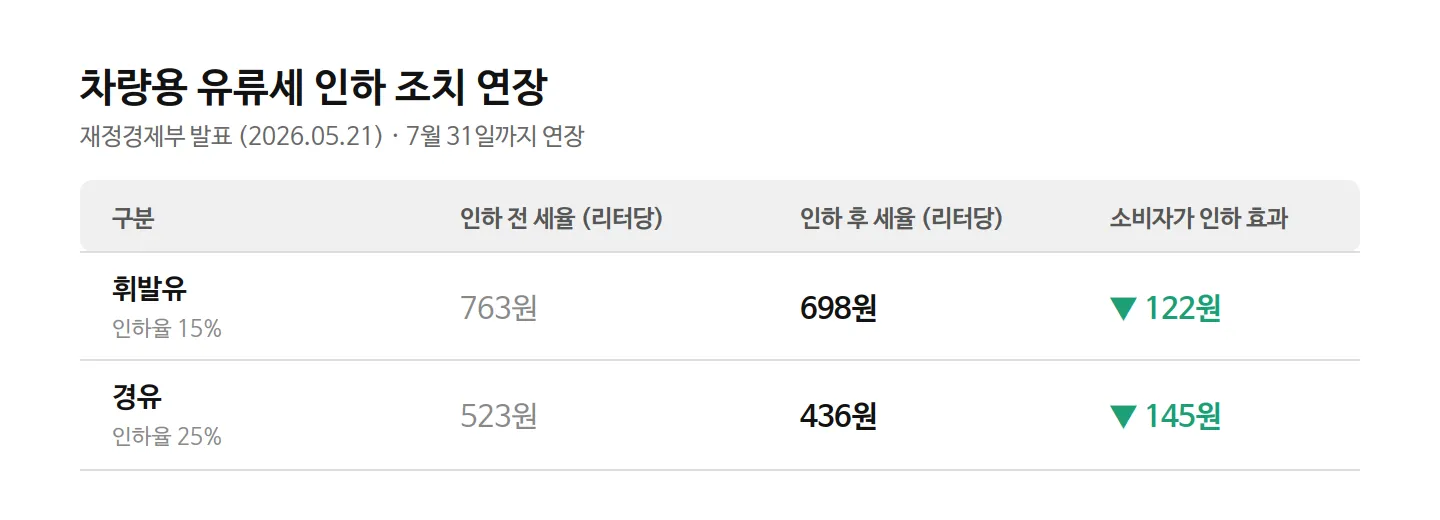
[Vehicle Fuel Tax Comparison Table© ESG.ONL]
First, it is necessary to distinguish between the nature of the ‘fuel tax cut’ and the ‘fuel surcharge drop.’ The vehicle fuel tax cut is a policy decision in which the government directly adjusts tax rates. On May 21, 2026, the Ministry of Economy and Finance convened a meeting of the Special Task Force (TF) of relevant ministers for livelihood price management and announced that the fuel tax cut, originally scheduled to expire on May 31, would be extended for two months until July 31. The reduction rates remain unchanged at 15% for gasoline and 25% for diesel. Accordingly, the per-liter fuel tax will continue to apply at the reduced rates of ₩698 (down from ₩763) for gasoline and ₩436 (down from ₩523) for diesel. Compared to pre-cut rates, this translates to a reduction effect of ₩122 per liter for gasoline and ₩145 per liter for diesel at consumer prices.
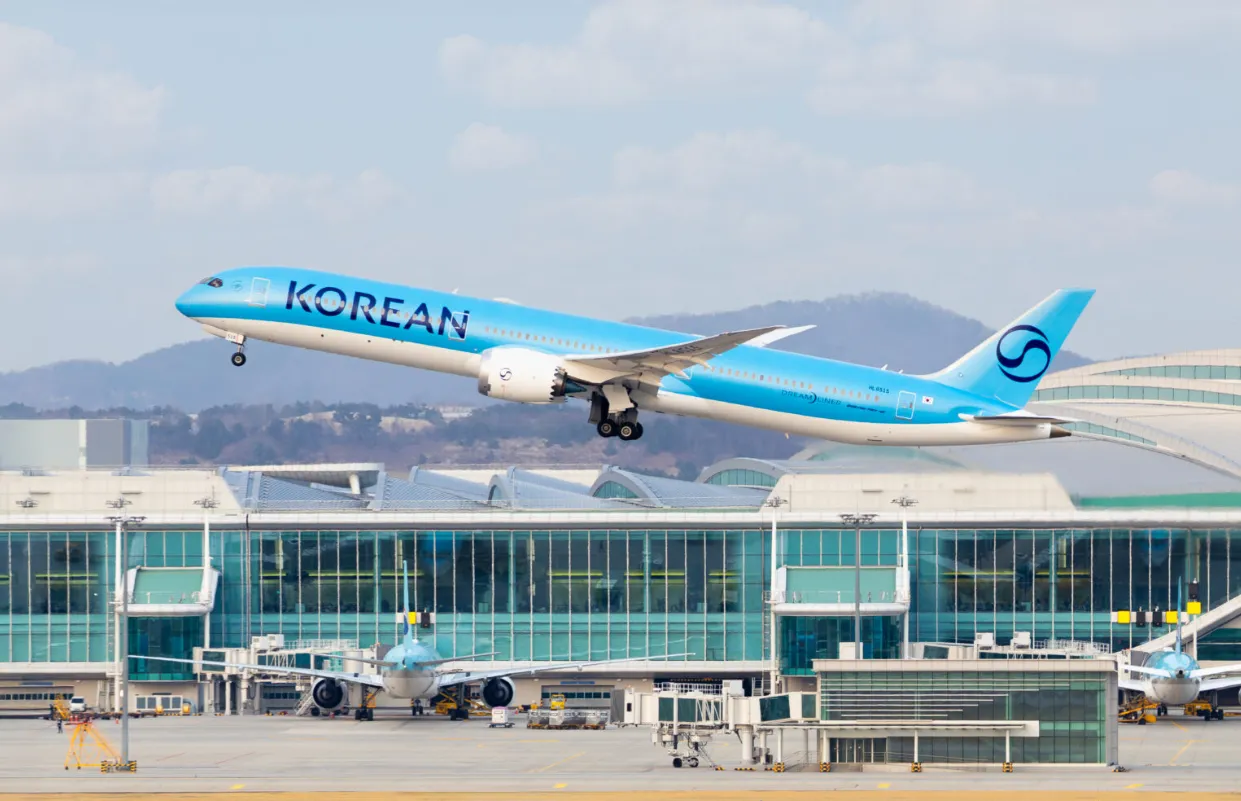
[Korean Air Boeing 787-10 © Korean Air Official Website]
In contrast, the decline in aviation fuel surcharges is not a government decision but an automatic adjustment linked to international oil prices. Aviation fuel surcharges are calculated across 33 tiers based on the daily average price of jet fuel traded on the Singapore spot market (Mean of Platt’s Singapore Kerosene, MOPS), and are reflected in the following month’s ticket issuance on a monthly basis. After the Middle East war broke out in February 2026, the highest tier, Tier 33, was applied to May ticket issuances, but with expectations of war negotiations and declining international oil prices, from June issuances onward it has been adjusted downward by six tiers to Tier 27. Based on Korean Air standards, round-trip fuel surcharges for the longest-haul routes such as to New York have dropped from ₩1,128,000 to ₩903,000, a reduction of ₩225,000.
The Fuel Tax Dilemma: Between Climate Goals and Vulnerable Populations
The fuel tax is not simply a tax. It functions as a ‘carbon price signal’ that imposes a cost on fossil fuel consumption to suppress usage and encourage the transition to eco-friendly alternatives. Lowering the fuel tax reduces the short-term burden on consumers, but in the long term, it may increase fossil fuel consumption and greenhouse gas emissions — moving in the opposite direction of carbon neutrality.
South Korea has declared carbon neutrality by 2050 as a statutory goal and submitted a Nationally Determined Contribution (NDC) to the United Nations of reducing greenhouse gases by 40% by 2030 compared to 2018 levels. The Organisation for Economic Co-operation and Development (OECD) has consistently pointed out that fossil fuel subsidies and fuel tax cuts conflict with carbon neutrality goals. The more the fuel tax cut becomes a repeated practice rather than an emergency response, the lower international trust in South Korea’s carbon reduction pathway will inevitably fall.
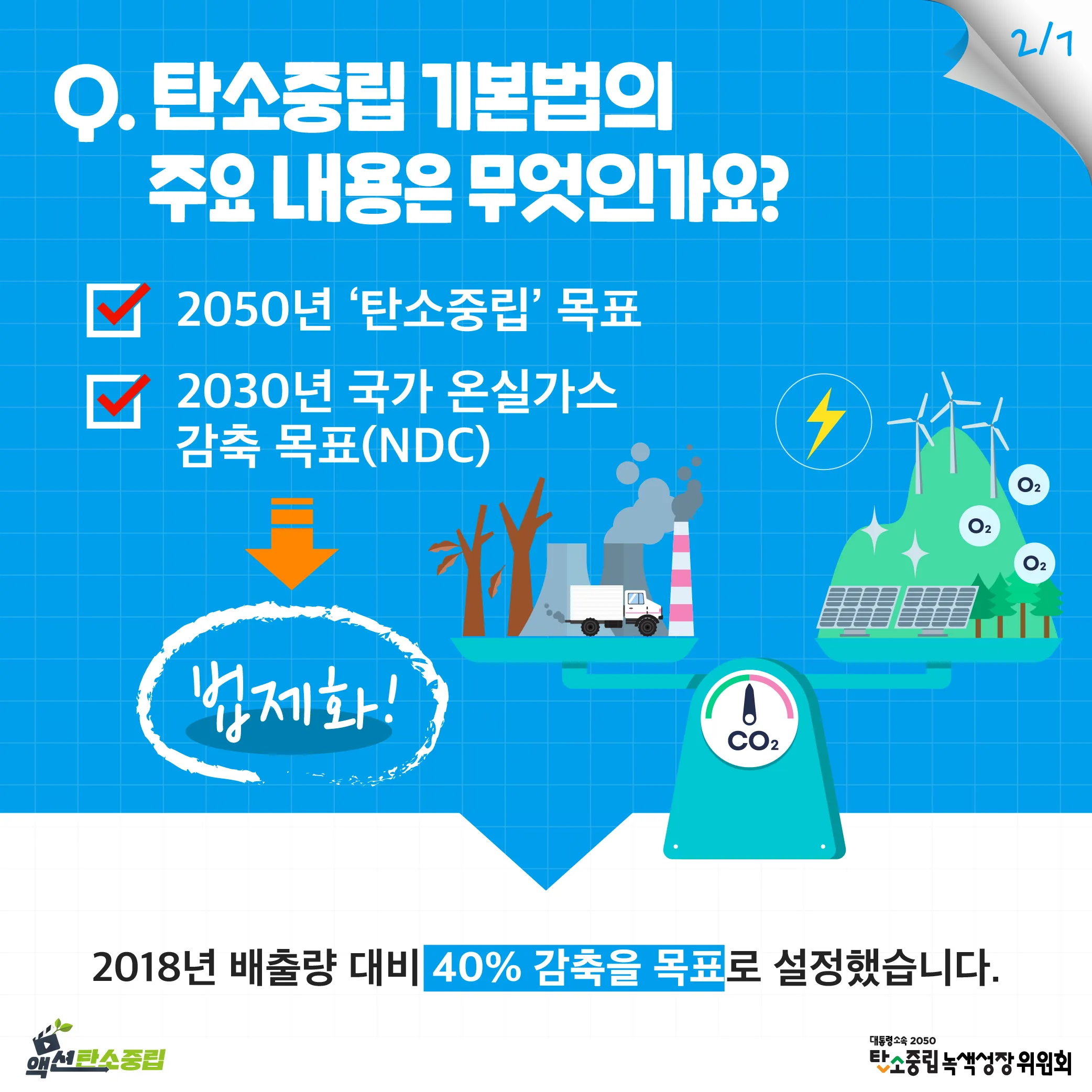
[Framework Act on Carbon Neutrality and Green Growth for Climate Crisis Response © Carbon Neutrality and Green Growth Commission]
That said, the fuel tax cut cannot be evaluated solely on environmental grounds. The damage from soaring oil prices is not evenly distributed. The impact of surging fuel prices is far greater for residents of rural areas with limited access to public transportation, workers in freight and transportation industries whose livelihoods depend on fuel costs, and small business owners for whom energy costs constitute a significant portion of their expenses. This is the context behind the Ministry of Economy and Finance applying a higher reduction rate of 25% to diesel, considering the ripple effects on industrial and logistics sectors. With consumer price inflation recording a 2.6% year-on-year increase last month — the steepest rise in roughly 21 months — leaving energy price increases unchecked would amount to directly shifting the burden onto socially vulnerable groups.
To Achieve Both Livelihood and the Environment
Ultimately, this fuel tax cut is a policy where you gain one thing and lose another. As a temporary crisis response, the fuel tax cut is an unavoidable choice. However, the more the reduction is repeated and prolonged, the more necessary it becomes to verify whether its benefits are sufficiently reaching the truly vulnerable, and how it will connect with post-expiration eco-friendly transition support policies. Rather than uniformly cutting the entire fuel tax, more precise alternatives could include expanding energy vouchers for low-income households and small business owners, or EV transition subsidies.
This fuel tax cut debate serves as a reminder that ESG is not merely an eco-friendly campaign but a practical decision-making framework for striking a balance between the dual values of Environment and Social.
by Editor N