Loading Data
Please wait a moment...
Update Cal.
2026.08
03
Mon
04
Tue
05
Wed
06
Thu
07
Fri
08
Sat
09
Sun
Update Calendar
2026.08
01
Sat
02
Sun
03
Mon
04
Tue
05
Wed
06
Thu
07
Fri
08
Sat
09
Sun
10
Mon
11
Tue
12
Wed
13
Thu
14
Fri

Loading Data
Please wait a moment...
Evening ESG news and briefings to wrap up your day.

Corporate Social Responsibility (CSR) activities have evolved beyond simply sponsoring cultural content production into directly participating in production, discovering new talent, and supporting overseas distribution, thereby underpinning the entire industry ecosystem. Korean companies are investing in film and performance, while entertainment companies are investing in genre expansion, building foundations for the sustainable growth of K-content. Let us explore cases of corporate investment that functions as cultural ecosystem building rather than one-off marketing.Corporate Cultural Investment Expanding to the ScreenCorporate cultural content investment is particularly prominent in film industry participation. Hyundai Motor Group is pursuing a strategy of ‘selling culture, not cars’ through content marketing. The short film ‘Night Fishing,’ produced by Hyundai Motor Group and starring actor Son Suk-ku in 2024, won the Editing Award at the Montreal Fantasia International Film Festival and the Grand Prix in the Entertainment category at the 2025 Cannes Lions, proving the new possibilities of branded content. In January 2026, ‘Bedford Park,’ the first independent feature film in which Hyundai Motor Group participated as an investor, won the Special Jury Award at the Sundance Film Festival, extending those possibilities to feature-length film. After Sundance, it signed a global distribution deal with Sony Pictures Classics, earning recognition for both artistic merit and marketability — a significant achievement in terms of strengthening the international competitiveness of K-content. [Cast and crew of the independent feature film ‘Bedford Park’ © Hyundai Motor Group Official Website]The financial sector is also actively engaging in cultural investment. IBK Industrial Bank invested ₩1 billion in the production of the film ‘The Man Living with the King,’ which surpassed 16 million viewers in the first half of 2026, and is expected to achieve a return of approximately 400%. When selecting films to invest in, IBK applies its own checklist of 16 criteria including scenario and rating, scoring each stage — an approach focused on completeness and differentiating factors, which has consistently led to box office success. IBK launched the ‘IBK Cultural Content Loan’ in 2011 to provide loans to outstanding cultural content SMEs, and in 2012 became the first in the financial sector to establish a dedicated cultural content department. It has since expanded its investment scope beyond films to dramas such as ‘The Moon Rising During the Day’ and musicals like ‘Cats’ and ‘The Phantom of the Opera.’ While Hyundai Motor Group approaches cultural investment as a way to practice its marketing philosophy, IBK exemplifies a new model of CSR by expanding investment across the broader cultural ecosystem.Entertainment Companies Expanding the Music Ecosystem Beyond Genre BoundariesWhile the automotive industry and financial sector continue investing in the film industry, domestic entertainment companies are expanding their investment beyond popular music into classical and indie music, creating the additional value of cultural diversity. SM Entertainment established the ‘SM Classics’ label to arrange and perform K-pop with orchestras, leading the popularization of classical music. Through repeated collaborations with renowned orchestras such as the Seoul Philharmonic Orchestra and the Korean Symphony Orchestra, it has broadened the artistic horizons of K-pop, while also stepping into improving music accessibility for culturally underserved communities by supporting instruments and lessons for children in regions lacking classical music education. SM Entertainment is concretizing an approach that simultaneously pursues commercial success and social value through music-based social contribution activities. [SM CLASSICS LIVE 2025 in TOKYO © SM Entertainment]YG Entertainment, through its subsidiary YG Plus, is supporting global music distribution for indie and small-medium labels to expand the indie music ecosystem, operating the digital platform ‘Mixtape’ as part of that effort. The Mixtape platform contributes to lowering the barriers for overseas expansion of domestic indie music by distributing indie musicians’ tracks to global streaming services such as Spotify and Apple Music. The distribution networks and marketing know-how of a major agency are now being provided to small-medium labels, opening a channel for artists to enter overseas markets. In 2025, YG Plus signed an agreement with the Federation of Korean Music Performers, creating the first case of collaboration between a copyright trust management organization and a global distribution platform. Through this, artists can secure a foundation for sustainable music activities with guaranteed rights protection and global distribution. While SM has added artistic depth to K-pop through classical music, YG is supporting the diversity of the K-content industry by broadening the reach of the indie music ecosystem.For Cultural Investment to Build a Sustainable EcosystemCorporate cultural investment is settling into a structure that goes beyond short-term marketing effects to support the entire industry ecosystem. However, there is still insufficient verification as to whether such investment is taking place on a foundation of guaranteed creative autonomy and fair revenue distribution structures. Going forward, it is hoped that companies will recognize these aspects and embrace cultural investment as a sustainable growth engine for the content industry, rather than as a one-time CSR activity. by Editor N

The Stewardship Code, a self-regulatory code requiring institutional investors to responsibly engage in the management of their investee companies, is undergoing a full-scale overhaul after ten years since its introduction. Since its domestic adoption in December 2016, a total of 249 institutional investors have joined, including the four major pension funds — National Pension Service, Government Employees Pension Service, Teachers’ Pension, and Korea Post — as well as asset management firms, insurers, and venture capital firms. While the scale has grown compared to the early days of adoption, its effectiveness remains in question. According to a December 2025 report by the Korea Capital Market Institute, among 72 participating institutions including pension funds, asset managers, insurers, securities firms, and banks, only 10 had published a Stewardship Code implementation report. Even those that did publish were limited to pension funds and asset managers, with no confirmed cases among insurers, banks, or securities firms. [Stewardship Code Implementation Report Publication Status © Korea Capital Market Institute]Measures to Substantiate the Stewardship Code The UK has revised its Stewardship Code three times since its introduction in 2010, and Japan has also been steadily refining it, yet South Korea has not had a single revision since enacting its Stewardship Code in 2016. Change began in December 2025. The Stewardship Code Development Committee and the Korea ESG Standards Institute, together with relevant ministries and agencies including the Financial Services Commission and the Ministry of Health and Welfare, announced measures to substantiate the Stewardship Code. The core of the substantiation effort has three pillars.First, the formalization of implementation review procedures. Participating institutions must submit self-reports on 12 items including fiduciary duty policies, conflict of interest management, and voting rights exercise, and the ESG Standards Institute will practically review these self-reports through the implementation review process. Second, the integration of the disclosure system. Implementation reports that were previously scattered across each institution’s website will be collectively posted on a dedicated Stewardship Code website, and a comprehensive report enabling inter-institutional comparison of item-by-item implementation levels will also be published. Third, the revision of the Stewardship Code content itself. The scope of fiduciary responsibility, which was previously centered on governance (G) within ESG such as board composition and governance transparency, will be expanded to include environmental (E) and social (S) considerations, and the application of stewardship principles at the investment selection stage is also under review. The Stewardship Code Development Committee plans to prepare amendments to the code and detailed guidelines within the first half of 2026.[Stewardship Code Implementation Review Items by Principle © Korea ESG Standards Institute]From Pro Forma Participation to Subject of Real ScrutinyIn tandem with the institutional overhaul, the National Pension Service, the largest institutional investor, has also picked up pace. President Lee Jae-myung directly ordered the strengthening of the Stewardship Code at a work report session with the Ministry of Health and Welfare and its affiliated institutions, stating that “the National Pension Service must actively exercise its voting rights in companies with backward management practices.” The National Pension Service is pursuing plans to establish separate fiduciary responsibility activity standards for outsourced managers and to reflect inspection and evaluation results in fund allocation and redemption. Concrete examples have already emerged: the National Pension Service voted against SK Hynix’s proposal to dispose of treasury shares for employee compensation purposes at its shareholders’ meeting.Starting this year, the Financial Supervisory Service will inspect asset management firms’ Stewardship Code implementation status and disclose the evaluation results. The scope of inspection will begin with 68 asset management firms and pension funds in 2026, and expand in phases to private equity fund managers and insurers in 2027, securities firms, banks, and investment advisory firms in 2028, and to venture capital by 2029. Internal controls and compensation systems for private equity fund managers will also be reformed. The Financial Supervisory Service indicated that corporate leaders need to personally inspect performance-based compensation structures and internal organizations.After Japan introduced its Stewardship Code in 2014, institutional investors actively demanded shareholder returns from undervalued companies with low Price to Book Ratios (PBR). Companies responded with share buybacks and expanded dividends, and as a result, the Nikkei index, Japan’s benchmark stock index, more than tripled over the course of a decade. This is a case where the Stewardship Code went beyond mere normative dimensions to transform the fundamental character of the entire capital market. Once the Stewardship Code amendments are finalized in the first half of this year, those standards will immediately set the bar for investors. This is precisely why companies should now review their internal ESG management systems and disclosure readiness. by Editor N
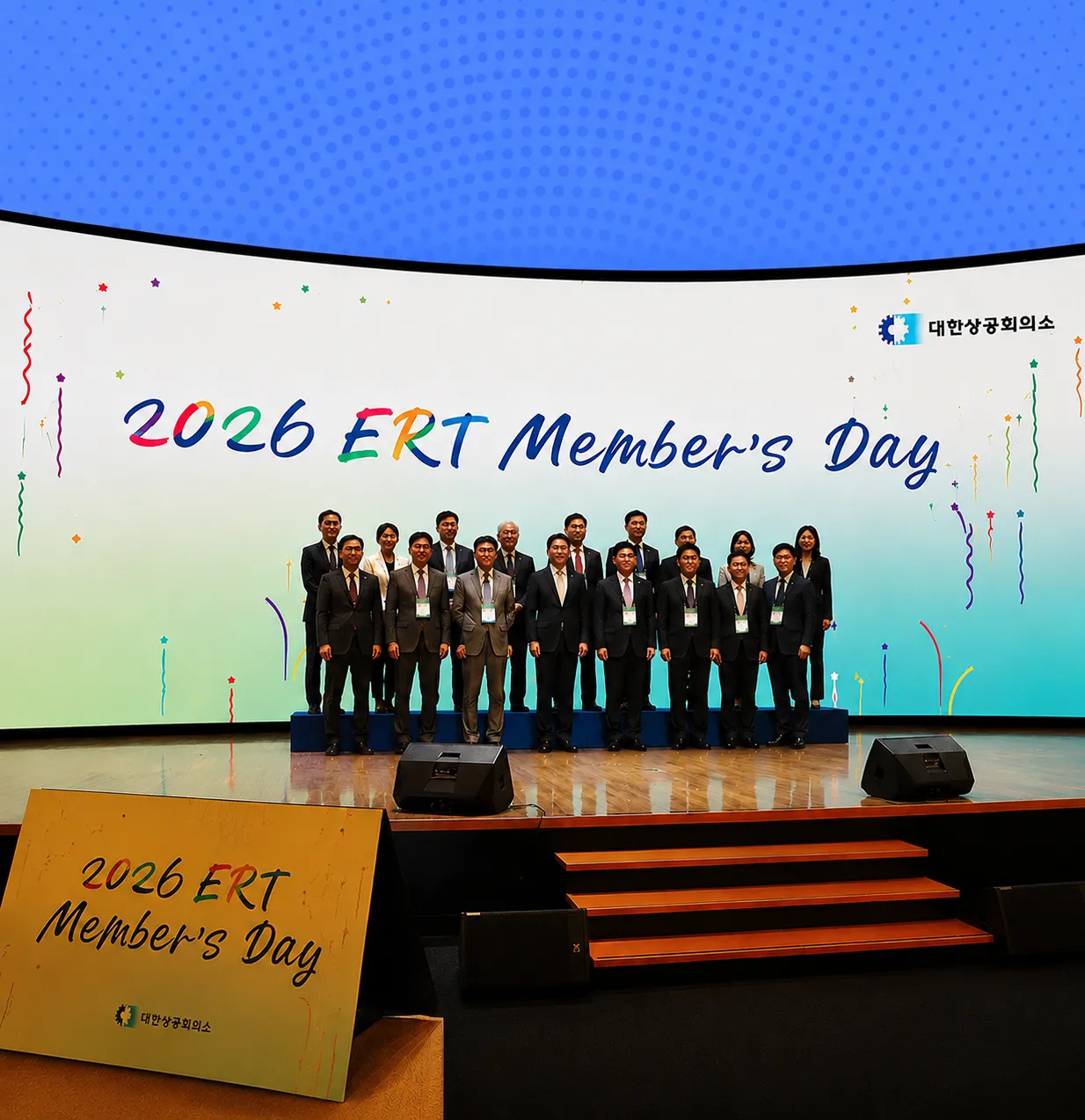
At 1:00 PM on May 20, the International Conference Hall of the Korea Chamber of Commerce and Industry in Jung-gu, Seoul, was filled with a diverse range of stakeholders — from government, regional, and social enterprise officials to citizens interested in ESG and solving social issues. They had gathered to attend ‘ERT Members Day 2026,’ hosted by the Entrepreneurship Round Table (ERT). ERT is a voluntary council of companies that leverage technology and capabilities to contribute to solving social issues, currently joined by some 1,900 companies and 72 regional chambers of commerce and industry. Now in its third year, Members Day is an annual event where ESG and social contribution managers from ERT member companies share examples of each company’s activities, experience hands-on programs, and expand inter-company exchange. This year’s event theme was ‘The AI Era: Connection and Collaboration.’ It started from the awareness that it is not that technology will solve social issues on its own, but rather that the more we enter the AI era, the more sophisticated the structures of collaboration among businesses, government, regions, and consumers must become. The event did not treat this theme as a single lecture, but concretized it through a flow that began with a keynote address presenting the concept, followed by member company collaboration case presentations and an experiential exhibition zone. The targets of collaboration were also distributed across sessions by level — government, platform, local community, and consumers — helping attendees understand the concept. [Group photo of key figures attending ERT Members Day 2026 © ESG.ONL]Before the full-fledged panel session programs began, the importance of collaboration among diverse actors for solving social issues was emphasized in the keynote speech and congratulatory remarks. In his keynote address, Korea Chamber of Commerce and Industry Chairman Chey Tae-won stated, “As social issues have become more complex than before, they are difficult to resolve through the efforts of a single company or government alone,” adding that “companies, government, social enterprises, and consumers must organically connect their respective capabilities to solve structured social issues.” Vice Minister of the Interior and Safety Kim Min-jae also shared in his congratulatory remarks, “Regional issues cannot be solved by institutions alone. When local governments, field expertise, and public-private ideas are combined, practical solutions can be found.” Government·Platform·Regional Collaboration Creating Sustainable Structures In the panel sessions that followed the keynote, examples of collaboration between regions, companies, and government were presented, along with specific cases of company-platform collaboration. The ‘Solvathon’ case — a regional problem-solving idea competition in which LG HelloVision collaborated with the Ministry of the Interior and Safety last year — and McDonald’s Korea’s ‘Taste of Korea’ campaign that incorporated regional specialty products demonstrated new possibilities for mutual prosperity that spreads regional distinctiveness while enhancing brand value. Naver Happy Bean introduced the ‘Drunk Driving Prevention’ Good Action campaign, a consumer-participatory social contribution activity carried out with OB Beer, showcasing ‘the power of a platform that connects companies and society.’ [LG HelloVision ESG Director Noh Sung-rae presenting on ‘Local Impact Created by Connection’ at ERT Members Day 2026]The ways in which companies measure social value and spread it together with consumers were also a major pillar of this year’s ERT Members Day. SK introduced its Social Progress Credit (SPC) model for measuring and rewarding social value. SPC is a policy experiment that measures the social performance created by social enterprises and provides incentives proportional to that performance. Over the past 10 years, SK has accumulated experience in measuring performance through collaboration with 468 social enterprises. Through the SPC case, SK presented the possibility that social value can lead to a structure of sustainable corporate growth. Hyundai Department Store added further depth to the session by sharing its ‘365 Recycle Campaign,’ part of its ESG program, in which customers’ unworn clothing is reborn as upcycled padding vests.[SK Social Value Institute Planning Director Park Sung-hoon presenting on ‘Social Progress Credit (SPC) Cases’ at ERT Members Day 2026 ]Where Technology Meets PeopleIn addition to the speaker presentation sessions and workshop networking, the ERT Members Day venue featured a workation exhibition zone addressing regional tourism and local extinction. The exhibition zone offered regional workation information for Jeju, Gangneung, Busan and other locations, as well as a test to find the workation type best suited to oneself and activities to discover desired workation destinations, drawing crowds of participants eager to experience regional value alongside entertainment.[The ‘Workation Exhibition Zone’ and ‘Helpful AI Experience Zone’ set up at the ERT Members Day 2026 venue]In another experiential space, the ‘Helpful AI Experience Zone,’ various companies showcased their latest technologies: ‘Dot,’ which supports information access for the visually impaired through proprietary braille cell technology; ‘WHEELY-X,’ which provides exercise solutions enabling wheelchair users to mount the wheelchair themselves; and ‘Local Universe,’ which demonstrated map-based AR (augmented reality) local content. A defining feature of this year’s ERT Members Day was that it did not leave the theme ‘The AI Era: Connection and Collaboration’ as a mere slogan but embedded it in the very structure of the event. Government, companies, local communities, and consumers each took the stage in their respective roles, and even the methods of measuring social value and spreading it together with consumers were addressed in a single venue. That said, the distance between the language of collaboration filling the event hall and its translation into substantive change remains. As ERT Members Day marks its third edition, we can look forward to next year’s event to see what record of collaboration it will accumulate beyond being an annual forum for sharing. by Editor N
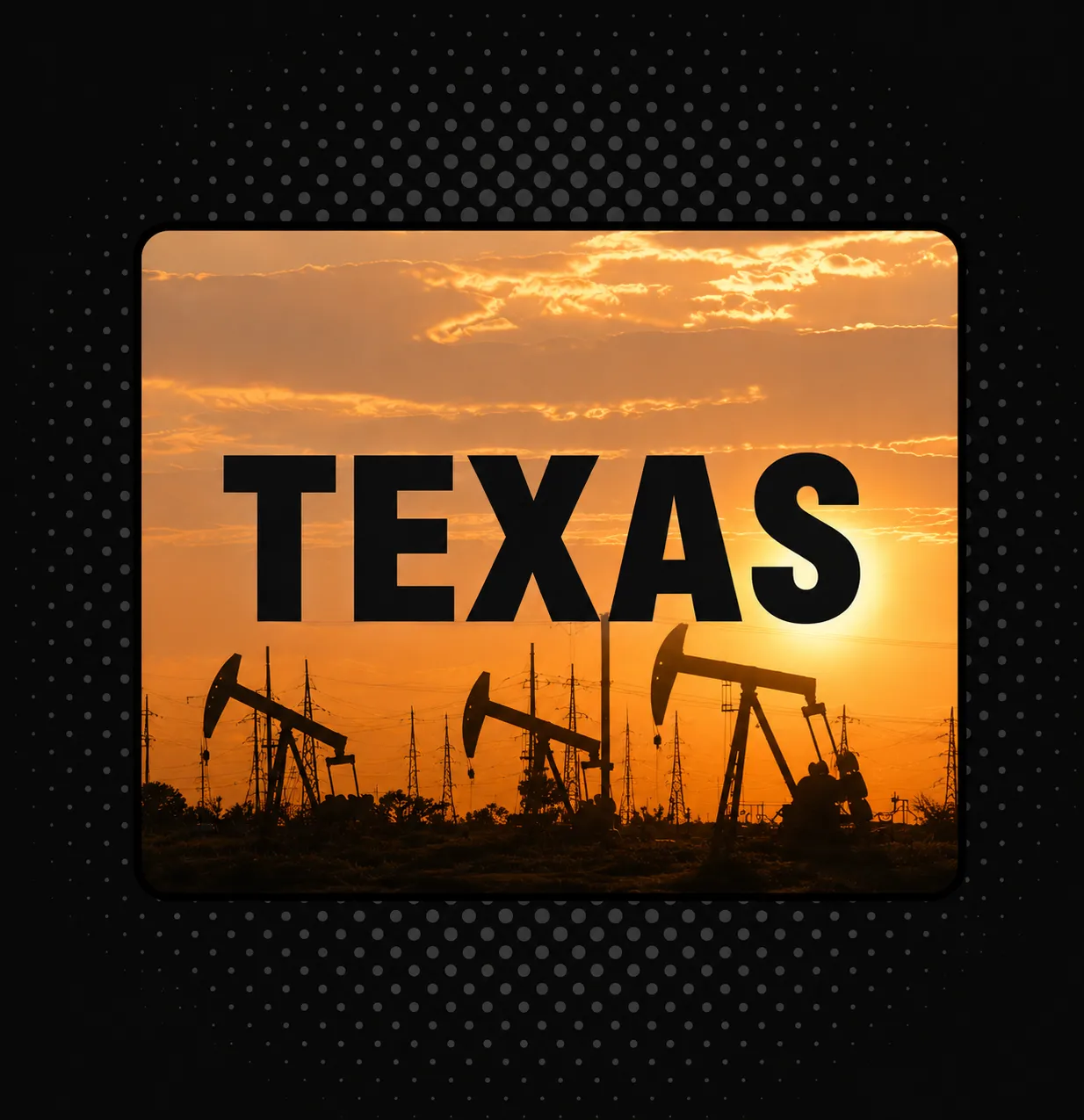
Texas Senate Bill 13 (SB 13), enacted in 2021, is an ‘anti-ESG law’ that restricts government dealings with financial institutions that boycott the fossil fuel industry. On February 4, 2026, Judge Alan D. Albright of the U.S. District Court for the Western District of Texas ruled SB 13 unconstitutional, finding that it violates the First Amendment’s freedom of speech and the Fourteenth Amendment’s due process. A local government law targeting financial institutions that turn away from fossil fuels was thus blocked by the courts. The Collision Between the Fossil Fuel Industry and ESGSince the late 2010s, ESG-conscious investing has grown rapidly in the global investment industry. This worked to the disadvantage of fossil fuel companies, as an increasing number of financial institutions declared they would not invest in coal, oil, or natural gas companies on climate change grounds. The problem began in earnest when global mega financial institutions such as BlackRock publicly declared in Texas — America’s largest oil-producing state — that they would “reduce investment in fossil fuel companies.” When large investors pull out, fossil fuel companies find it harder to raise funds, and stock prices fall, posing a threat to the very foundation of Texas’s regional economy.[Texas Oil Plant © gettyimages]To address this, the Texas state government enacted SB 13 in 2021. Specifically, SB 13 is divided into two provisions. The first is the ‘divestment provision.’ The Texas Comptroller compiles a list of financial institutions deemed to be boycotting fossil fuels and notifies those institutions. If a listed institution fails to cease its boycott activities or demonstrate a legitimate business purpose within 90 days, it becomes subject to divestment. In that case, the institution must phase out its holdings of securities: 50% within 180 days and 100% within 360 days. The second is the ‘contract prohibition provision,’ requiring companies with 10 or more employees and contracts totaling USD 100,000 or more to attach verification stating they will not boycott fossil fuel companies. In practice, global mega financial institutions such as BlackRock and French bank Société Générale were among those listed as entities subject to SB 13. Rising Borrowing Costs and the Policy Paradox[Rising Texas Bond Yields © ChatGPT/ESG.ONL]Paradoxically, SB 13 shifted costs onto Texas residents. The Texas state government issues bonds when it needs money for public projects such as roads or schools, but when large financial institutions were excluded from the dealing list under SB 13, bond purchases declined. With fewer bidders, Texas had to promise higher interest rates for its bonds to sell, and that interest comes out of the state budget — in other words, residents’ taxes. The law created to protect the fossil fuel industry for the sake of the region ended up increasing the tax burden on Texas residents. The Brookings Institution, a U.S. policy research organization, analyzed that in the first eight months after SB 13 took effect, Texas public entities incurred an additional USD 300–500 million in interest on USD 32 billion in borrowing.The Future of SB 13 Amid Ongoing Legislative Battles[U.S. Federal Court Ruling © ChatGPT/ESG.ONL]Texas appealed the ruling two days later, on February 6. Depending on the appellate outcome, SB 13 could be revived or could disappear entirely. Multiple U.S. states beyond Texas — including Alabama, Arkansas, and Kentucky — are also operating similar laws. If the ruling is upheld on appeal, a cascade of lawsuits over similar rulings could follow.It is difficult to view this ruling as having been issued in favor of ESG-conscious investing. The court found the law unconstitutional because the definition of ‘boycott’ was so broad that even the expression of opinions became subject to punishment — not because regulating actual refusal to transact with fossil fuel companies is itself unconstitutional. If Texas were to narrow the definition of boycott and re-enact the law to punish only the actual refusal or reduction of transactions, a structure could be created in which financial institutions that do not invest in fossil fuel companies are expelled from Texas. Legal experts predict that Texas may attempt to pass amended legislation with a narrowed definition. The federal court ruling may have, from Texas’s perspective, provided an opportunity to craft a more precise law. The battle over what criteria should guide corporate investment will continue inside and outside the courtroom, and beyond Texas as well. by Editor N

On April 14, the ‘ICGN Korea Conference 2026’ was held at the Korea Exchange Conference Hall in Yeouido, Seoul. While the key agenda items of the day were the performance of the Value-Up Program and an international comparison of Stewardship Codes, some speakers mentioned cybersecurity as a sustainability risk that boards of directors must address. The fact that the International Corporate Governance Network (ICGN), a global institutional investor network, placed cybersecurity within the official framework of a corporate governance conference carries significant implications.The Ripple Effects of Cybersecurity IssuesThe year 2025 marked a turning point in South Korea’s cybersecurity history. According to the Cybersecurity Threat Trends Report published by the Ministry of Science and ICT and the Korea Internet & Security Agency, the number of corporate personal information breach reports in South Korea reached 2,383 cases in 2025, a 26.3% increase from 2024. Among these were the personal data breach incidents at SK Telecom and Coupang that we all remember. First, the April 2025 SK Telecom personal data breach, in which subscriber information was leaked on a massive scale through a malware attack, was recorded as a representative case in which a telecommunications giant at the forefront of ESG disclosure exposed structural vulnerabilities in its core infrastructure security. With changes to the Personal Information Protection Act’s penalty criteria, sanctions of up to approximately KRW 500 billion were mentioned, and the financial ripple effects on the company were enormous.[Notice regarding the April 2025 SK Telecom personal data breach incident © SK Telecom]In November of the same year, 33.7 million account names, addresses, and order information were leaked en masse from Coupang, South Korea’s largest e-commerce platform company. Coupang became aware of the personal data breach 12 days after the initial incident occurred. The gap between the initially identified scale of 4,500 affected accounts and the actual scale of 33.7 million exposed a comprehensive void in the company’s internal control and monitoring systems. S&P Global downgraded Coupang’s ESG score immediately after the incident. Penalties of up to KRW 1.2 trillion were mentioned for Coupang, and the incident once again proved that cybersecurity failures are directly linked to ESG ratings and corporate value.The Global Response Through RegulationWhile breach incidents have surged in South Korea, global regulatory authorities are forging a trend toward legislating cybersecurity as a board responsibility agenda. The U.S. Securities and Exchange Commission (SEC), through a December 2025 amendment to its cybersecurity disclosure rules, designated material incidents as mandatory reporting subjects and codified the direct oversight responsibility of boards of directors. Based on this amendment, U.S. financial companies are under pressure to establish systems for customer data breach incidents and comply by June 3, 2026. Europe has been implementing the Digital Operational Resilience Act (DORA) since January 2025. Under this act, financial institutions within the EU must comply with requirements including reporting major security incidents and establishing digital operational resilience testing. The Organisation for Economic Co-operation and Development (OECD) also stipulated in its October 2025 report, <OECD Corporate Governance Factbook 2025>, that “boards should define the risk appetite for key risks, including sustainability and cybersecurity, and ensure management policies are in place.”[The Digital Operational Resilience Act (DORA), which entered into force on January 16, 2023, and has been formally applied since January 17, 2025 © ESMA Official Website]Cybersecurity: From an IT Team Task to a Board ResponsibilitySo why is cybersecurity now being mentioned as an ESG agenda, going beyond a board responsibility agenda? The online academic journal platform ScienceDirect estimated the global economic losses caused by cyberattacks in 2025 at approximately USD 10.5 trillion. In November 2025, Donnelley Financial Solutions, a U.S. investment research firm, stated in an official blog post that “investors are intensively scrutinizing corporate governance strengthening, cybersecurity oversight, and human capital as financially material ESG factors.”In South Korea, ESG disclosure will become mandatory from 2028 for KOSPI-listed companies with total assets of KRW 30 trillion or more. Moreover, Korean Sustainability Disclosure Standards compatible with the International Sustainability Standards Board (ISSB) standards are set to be applied in phases, starting with KOSPI-listed companies. Within this disclosure framework, cybersecurity is no longer merely a technical task for the IT team. As the SK Telecom personal data breach demonstrated, cybersecurity incidents are directly linked to corporate ESG reputation risk, declining investor confidence, and punitive fines. In this structure, a board’s failure to directly oversee cybersecurity is tantamount to a governance gap. The fact that cybersecurity was mentioned as one of the key agenda items at the ICGN Korea Conference 2026 serves as an advance warning that global capital will no longer be lenient toward companies that have failed to fill that gap. by Editor N

Companies issue sustainability reports spanning hundreds of pages each year. These reports organize environmental data under Global Reporting Initiative (GRI) standards and describe climate risks according to the International Sustainability Standards Board (ISSB) framework. As of 2025, 51% of the top 50 companies by market capitalization in South Korea applied the ISSB framework in preparing their sustainability reports, and from 2028, KOSPI-listed companies with total assets of KRW 30 trillion or more will be required to file sustainability reports. Viewed solely by the ratio of companies producing sustainability reports, South Korea’s ESG information disclosure system seems to have entered a mature stage.Are AI Systems Reading Sustainability Reports?However, the way investors and consumers review corporate sustainability has already changed. Corporate stakeholders no longer meticulously read 200-plus-page PDF attachments. They ask generative AI such as ChatGPT, Perplexity, Claude, or Google Gemini questions like “What is this company’s carbon reduction performance?” or “What is its supply chain human rights policy?” and make decisions based on the AI’s answers. The problem is that the sources AI uses to compose its answers are not necessarily the official sustainability report. AI synthesizes news articles scattered across the web, social media mentions, and third-party evaluation data to create a ‘summarized corporate image.’ No matter how thoroughly the content is detailed in a sustainability report, if it lies buried in a form that AI cannot read, the situation that emerges is no different from it not existing online at all.[Google AI Overview, where generative AI synthesizes answers from multiple web sources © Google]The strategy that has emerged to solve this problem is Generative Engine Optimization (GEO). Originally developed in the marketing field as a technique for optimizing information structures so that brand content is cited in AI answers, GEO differs from conventional Search Engine Optimization (SEO), which aimed at achieving high keyword-based search result rankings, in that it is designed to make AI trust and cite specific sources when generating answers. The key is ‘structures that AI can easily understand.’ Trustworthy sources, clear sentences, logically connected paragraphs, and fact-based descriptions with specified figures and sources all increase the likelihood of AI citation. Conversely, if descriptions are vague or data are scattered without structure, AI will skip that information.The Format of Sustainability Reports Determines Corporate ReputationApplying a GEO perspective to ESG information disclosure makes the problem of AI struggling to use sustainability reports as information sources even more apparent. The vast majority of sustainability reports are in PDF file format and consist of lengthy narrative text and images — a structure that makes it difficult for AI to collect and cite data in real time. Even if a company diligently discloses its Scope 1·2·3 emissions, if those figures are entered within table images that AI finds difficult to analyze, they will not be reflected in AI search results. If the climate target achievement roadmap lies buried in paragraph form in the middle of a 50-page report, AI will not recognize it as key information.As a result, AI ends up evaluating a company’s ESG level based not on its sustainability report, but on content reported by external media. Because of this, greenwashing controversies surrounding companies can easily spread, while companies that have actually achieved substantive results may be undervalued.[Corporate sustainability report published in PDF file format © Lotte Engineering & Construction Official Website]Leading companies are already responding to this change. Comprehensive shipping and logistics company HMM has publicly released a supply chain carbon calculator on a web-based platform, enabling external stakeholders to query and cite data in real time. Amazon discloses climate targets and partner company data in structured form through its ‘Sustainability Exchange’ platform. [HMM Supply Chain Carbon Calculator screen © HMM Official Website]In this way, a trend is forming in which companies are moving beyond the closed format of the sustainability report and transitioning their ESG information into open data structures that AI can read and cite. Now, as mandatory ESG disclosure expands, the question companies must answer is shifting from ‘what to disclose’ to ‘how to disclose.’ Reports that AI cannot read are reports that will no longer be read. by Editor N
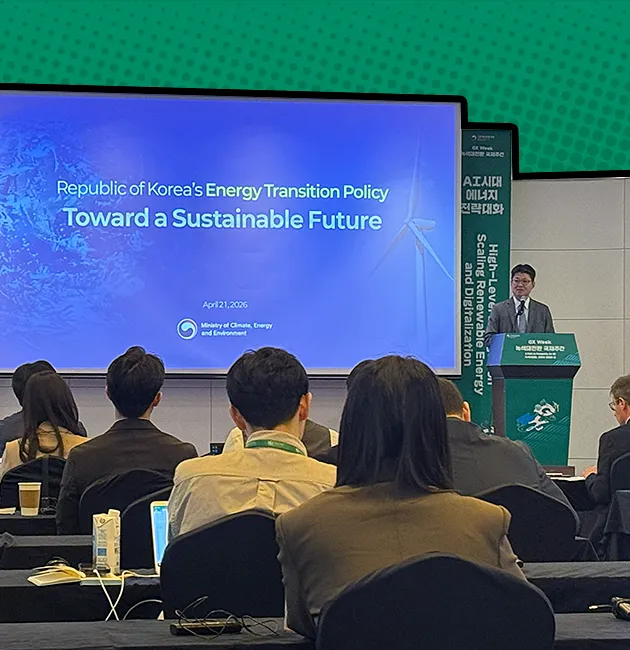
On April 21, the Ministry of Climate, Energy and Environment and the Climate Group, the operating body of the global RE100 initiative, jointly hosted the ‘Energy Strategy Dialogue in the AI Era’ at the Sono Calm Hotel in Yeosu. Organized as a key session of the Green Transformation International Week held in conjunction with UNFCCC Climate Week, the event drew officials from the Ministry of Climate, Energy and Environment, GE Vernova, domestic and international RE100-implementing companies, and global energy solution organizations. Let us examine the discussions that took place among institutions and companies on energy transition in the AI era.[UNFCCC Deputy Executive Secretary Noura Hamladji speaking at the ‘Energy Strategy Dialogue in the AI Era’ © ESG.ONL]First, the UNFCCC warned that in the era of digital transformation, energy transition is essential, and that failing to handle power energy in a responsible manner could slow the pace of energy transition. In a situation of surging data center power consumption, securing clean power has become a necessity rather than an option. To advance digitalization for all while preventing electricity price increases, securing finance through international cooperation is essential. As the digital divide widens, ensuring that the benefits of innovation are shared by all requires not only energy transition but also sustainable political leadership at this juncture. The Climate Group then emphasized that while South Korea’s policy direction regarding renewable energy is clear, stronger demand forecasting and enhanced support for RE100-compliant companies are needed.Discussions also continued on the day’s key agenda items: responding to the surge in power demand driven by the spread of AI and data centers, managing energy supply chain risks, and building the RE100 ecosystem. The Ministry of Climate, Energy and Environment stated that its goal is to achieve 100 GW of renewable energy installed capacity by 2030. Three major transition directions were also presented: the phased phase-out of coal-fired power, expansion of electric vehicle deployment, and utilization of transition finance. The Ministry also emphasized that a significant portion of the 6.9 tons of greenhouse gas emissions comes from the steel, city gas, and petrochemical sectors, making the electrification of the industrial sector a key task.[Group photo of panelists at the ‘Energy Strategy Dialogue in the AI Era’ © ESG.ONL]Naver shared its implementation strategy from the consumer perspective. It presented the case of leveraging outside air and geothermal energy for data center cooling, reducing cooling equipment utilization to below 10%, and applying double-glazed windows, rooftop solar panels, and geothermal pipes at its headquarters building to reduce energy consumption itself. It is also aiming to achieve 40% RE100 by 2028 by combining long-term renewable energy Power Purchase Agreements (PPA) with direct investment in power plants. In terms of the RE100 initiative, Naver stressed that as the renewable energy demand of Asian companies is rapidly growing, there is an urgent need to revitalize the PPA market and improve the institutional framework so that companies can procure renewable energy at predictable prices. Finally, GE Vernova introduced its ultra-high-voltage direct current (HVDC) and Flexible AC Transmission System (FACTS) technology solutions that address the issue of renewable energy’s lack of inertia, and expressed expectations for cooperation with South Korea by mentioning the West Coast renewable energy interconnection project.Now, as the speed and direction of energy transition are being reshaped faster than ever before, we look forward to seeing what energy policy formulation will result from the dialogue shared in Yeosu. by Editor N

When April 5 arrives, corporate press releases pour in without fail. The articles contain a familiar scene: a photo of dozens of employees holding shovels in front of saplings, the phrase ‘a first step toward carbon neutrality,’ and even a wooden plaque inscribed with the number of trees planted. The sight of a company that emits hundreds of billions of won worth of carbon annually planting one hundred trees on Arbor Day and distributing a press release has, before we knew it, become a standardized ESG activity among domestic companies. However, fundamental questions about corporate forest-related ESG activities have recently been raised both at home and abroad. Does ‘having planted’ trees mean they have ‘lived’?[Social contribution activities through tree planting Ⓟ Hyundai Motor Company CSR Digital Magazine]The Evolution of the Tree-Planting Business: From Citizen Participation to Corporate PartnershipsThe tree-planting business has a history of approximately 15 years in South Korea. The social venture Tree Planet, which began as a mobile game in 2010 and drew attention for its model in which ‘users planting trees in virtual space leads to actual trees being planted in reality,’ is regarded as a pioneer in the field. At its peak, it was selected as the official app of the UN Convention to Combat Desertification (UNCCD), one of the three major UN environmental conventions, and attracted participation from overseas fans through ‘Star Forest’ campaigns named after K-pop stars such as ‘TVXQ Forest’ and ‘Girls’ Generation Forest.’ However, the center of gravity of Tree Planet’s business today is no longer the citizen participation app. Tree Planet has agreed to carry out a five-year forest ecological restoration project with Hyundai Motor Company starting in 2024, and has signed partnerships with corporations and local governments, including a business agreement with Chilgok-gun, Gyeongsangbuk-do for the creation of honey source forests.The Credibility Crisis of Carbon Credits Hidden Behind ESG DemandThis change signifies an overall directional shift in the tree-planting business: from a B2C emotional model in which consumers directly ‘purchase’ trees, to a B2B commissioned model in which companies ‘order’ forests for ESG performance. Behind this is the trend of corporate demand for visible nature-based activities surging after the declaration of 2050 net zero targets. However, this demand does not always lead to genuine forest restoration. The carbon reduction effect of the Brazil REDD+ project (activities to prevent deforestation and degradation) purchased by Samsung Electronics’ UK subsidiary in 2025 was found to be zero, and the reduction effect of the Cambodia REDD+ project purchased by SK Securities amounted to only 11.52%. In July 2024, Google completely halted its purchase of forest carbon credits — emission rights that are certified based on the amount of greenhouse gases reduced and absorbed and can be traded on the market — and declared a shift toward directly reducing its own emissions. MSCI Carbon Market, a global carbon market research firm, estimated the size of the voluntary carbon market in 2024 at approximately USD 1.4 billion (about KRW 2 trillion), but the actual quantity of carbon credits purchased, used, and retired has remained at 180 million tons for three consecutive years from 2023 to 2025. This is a signal that companies are beginning to question the credibility of carbon credits. [Pacajai REDD+ Project Ⓟ Kluthe]Steps Toward Verified ForestsThe simplistic notion that ‘one tree-planting event completes ESG’ can only diminish now. The strengthening trend of greenwashing regulations is also a pressure factor. During the 2024 National Assembly audit, it was pointed out that the greenwashing judgment criteria of the Korea Environmental Industry and Technology Institute under the Ministry of Climate, Energy and Environment are ambiguous and the level of punishment is weak. Accordingly, the government has signaled amendments to related laws. The EU has already adopted the ‘Green Claims Directive,’ which mandates the presentation of verifiable evidence when making eco-friendly claims. This stricter environment may, in fact, become an opportunity for operators equipped with the quality of ecological restoration and a transparent verification system.Ultimately, the conditions for survival in the tree-planting business today are not merely the number of trees, but clearly establishing the quality of ecosystem restoration, multi-year tracking and management rather than one-off events, and the role as verification infrastructure rather than a marketing tool. The scene of companies holding shovels and standing before cameras every time Arbor Day comes around will not disappear for the time being, but if five years of monitoring data does not follow behind that single photo, the meaning of tree planting will gradually fade. [Related Article]Tree Planet Director Jung Min-chul: “Until Everyone in the World Becomes a Tree Planter”