

Texas Senate Bill 13 (SB 13), enacted in 2021, is an ‘anti-ESG law’ that restricts government dealings with financial institutions that boycott the fossil fuel industry. On February 4, 2026, Judge Alan D. Albright of the U.S. District Court for the Western District of Texas ruled SB 13 unconstitutional, finding that it violates the First Amendment’s freedom of speech and the Fourteenth Amendment’s due process. A local government law targeting financial institutions that turn away from fossil fuels was thus blocked by the courts.
The Collision Between the Fossil Fuel Industry and ESG
Since the late 2010s, ESG-conscious investing has grown rapidly in the global investment industry. This worked to the disadvantage of fossil fuel companies, as an increasing number of financial institutions declared they would not invest in coal, oil, or natural gas companies on climate change grounds. The problem began in earnest when global mega financial institutions such as BlackRock publicly declared in Texas — America’s largest oil-producing state — that they would “reduce investment in fossil fuel companies.” When large investors pull out, fossil fuel companies find it harder to raise funds, and stock prices fall, posing a threat to the very foundation of Texas’s regional economy.
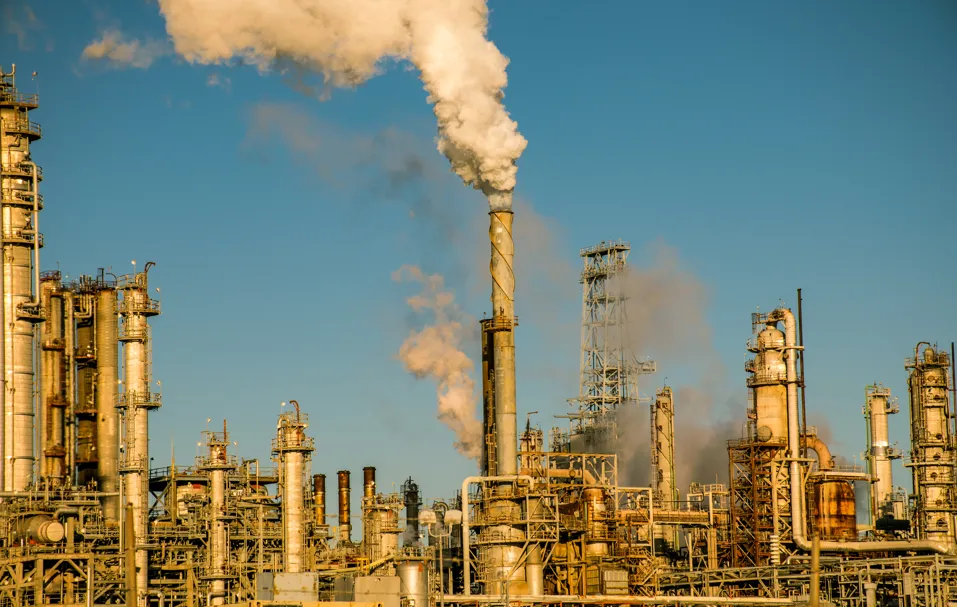
[Texas Oil Plant © gettyimages]
To address this, the Texas state government enacted SB 13 in 2021. Specifically, SB 13 is divided into two provisions. The first is the ‘divestment provision.’ The Texas Comptroller compiles a list of financial institutions deemed to be boycotting fossil fuels and notifies those institutions. If a listed institution fails to cease its boycott activities or demonstrate a legitimate business purpose within 90 days, it becomes subject to divestment. In that case, the institution must phase out its holdings of securities: 50% within 180 days and 100% within 360 days. The second is the ‘contract prohibition provision,’ requiring companies with 10 or more employees and contracts totaling USD 100,000 or more to attach verification stating they will not boycott fossil fuel companies. In practice, global mega financial institutions such as BlackRock and French bank Société Générale were among those listed as entities subject to SB 13.
Rising Borrowing Costs and the Policy Paradox
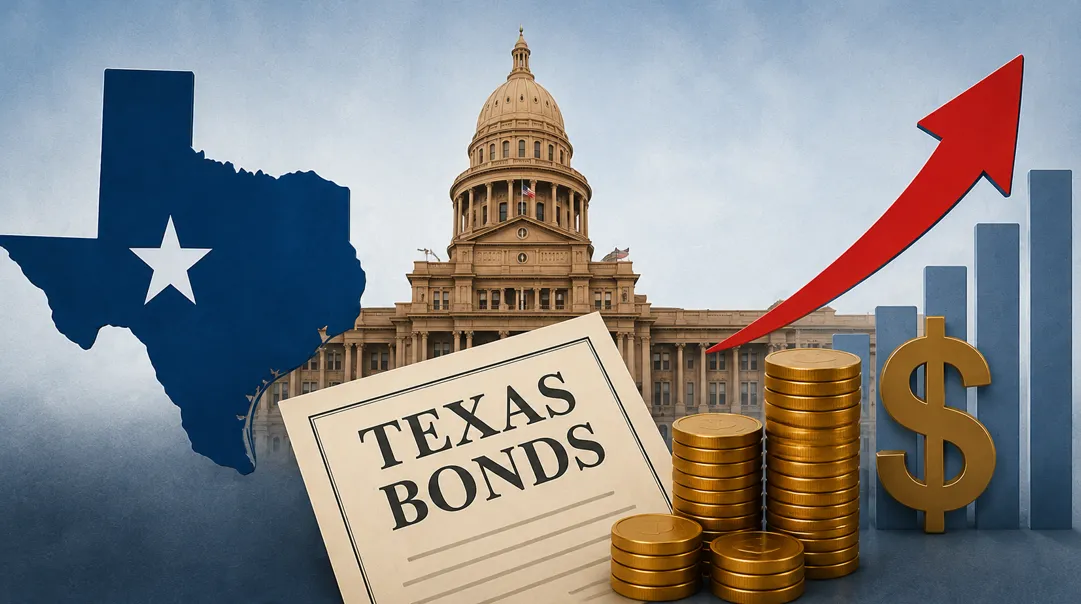
[Rising Texas Bond Yields © ChatGPT/ESG.ONL]
Paradoxically, SB 13 shifted costs onto Texas residents. The Texas state government issues bonds when it needs money for public projects such as roads or schools, but when large financial institutions were excluded from the dealing list under SB 13, bond purchases declined. With fewer bidders, Texas had to promise higher interest rates for its bonds to sell, and that interest comes out of the state budget — in other words, residents’ taxes. The law created to protect the fossil fuel industry for the sake of the region ended up increasing the tax burden on Texas residents. The Brookings Institution, a U.S. policy research organization, analyzed that in the first eight months after SB 13 took effect, Texas public entities incurred an additional USD 300–500 million in interest on USD 32 billion in borrowing.
The Future of SB 13 Amid Ongoing Legislative Battles

[U.S. Federal Court Ruling © ChatGPT/ESG.ONL]
Texas appealed the ruling two days later, on February 6. Depending on the appellate outcome, SB 13 could be revived or could disappear entirely. Multiple U.S. states beyond Texas — including Alabama, Arkansas, and Kentucky — are also operating similar laws. If the ruling is upheld on appeal, a cascade of lawsuits over similar rulings could follow.
It is difficult to view this ruling as having been issued in favor of ESG-conscious investing. The court found the law unconstitutional because the definition of ‘boycott’ was so broad that even the expression of opinions became subject to punishment — not because regulating actual refusal to transact with fossil fuel companies is itself unconstitutional. If Texas were to narrow the definition of boycott and re-enact the law to punish only the actual refusal or reduction of transactions, a structure could be created in which financial institutions that do not invest in fossil fuel companies are expelled from Texas.
Legal experts predict that Texas may attempt to pass amended legislation with a narrowed definition. The federal court ruling may have, from Texas’s perspective, provided an opportunity to craft a more precise law. The battle over what criteria should guide corporate investment will continue inside and outside the courtroom, and beyond Texas as well.
by Editor N