
A Nationally Determined Contribution (NDC) refers to the greenhouse gas reduction targets that each country voluntarily sets and submits to the United Nations under the Paris Agreement. The NDC aims to go beyond a mere declaration to reduce greenhouse gas emissions — to convert the nation’s economic and industrial structures to a low-carbon system and to establish and implement commitments with the international community in response to the climate crisis.
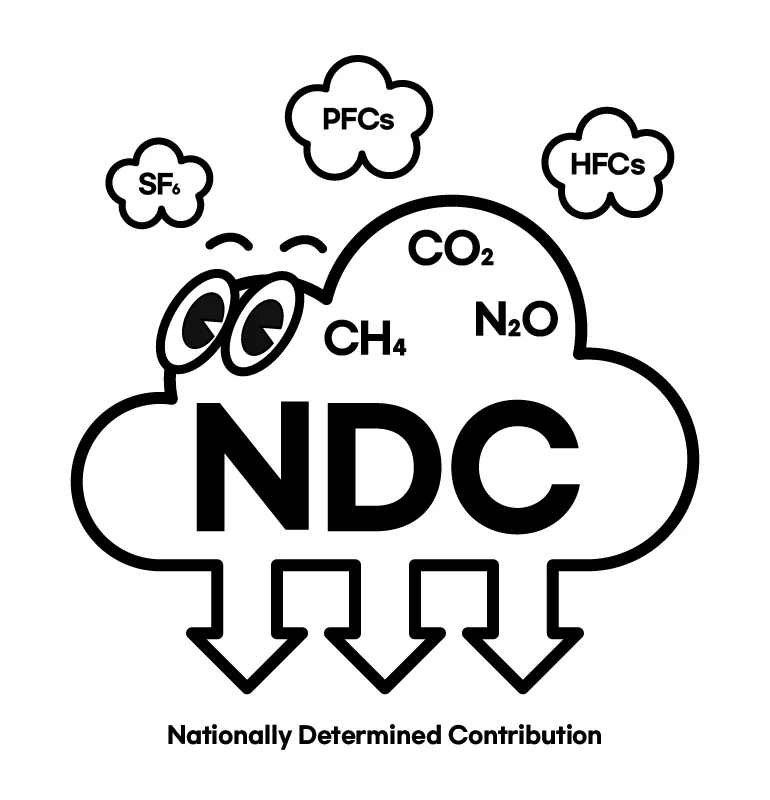
[Nationally Determined Contribution (NDC) Ⓟ ESG.ONL/ESG Today]
The Nationally Determined Contribution was first introduced in the 2015 Paris Agreement. Unlike the 1997 Kyoto Protocol, which imposed reduction obligations only on developed countries, the Paris Agreement requires all Parties to set their own reduction targets considering their national circumstances. Climate change response came to be recognized as a global task, not the responsibility of only certain countries. The goal is global carbon neutrality by 2050 to limit the global temperature rise to within 1.5°C. As the process toward that goal, participating countries autonomously set 2030 greenhouse gas reduction targets and aim to progressively achieve targets by raising them every five years.
South Korea significantly raised its ‘2030 Nationally Determined Contribution’ in 2021 from the previous 26.3% to 40%. This is an ambitious target of reducing greenhouse gas emissions by 40% by 2030 compared to 2018 levels. To this end, it is pursuing reduction implementation plans spanning all sectors, from expanding the deployment of renewable energy to electric vehicle transition, building energy efficiency, and industrial process improvement, and has also reorganized the Ministry of Environment, the relevant ministry, into the Ministry of Climate and Energy and Environment. Other countries are also participating in implementing NDCs as the core tool for limiting the global average temperature rise to within 1.5°C and as a symbol of global efforts to create a sustainable future. The United States has announced it will reduce greenhouse gas emissions by 50–52% compared to 1990 levels by 2030, and the European Union (EU) by at least 55% compared to 1990 levels. Japan has set a target of a 46% reduction compared to 2013 levels, while Germany has put forward the even more challenging target of approximately 49%. EU member states including France are actively participating in the energy transition centered on the abolition of coal-fired power plants and the expansion of renewable energy.
At a time when responding to the climate crisis has emerged as an urgent task, the successful implementation of NDCs has become a necessity, not a choice. The reduction targets presented by each country must now be converted into actual performance.
by Editor O