
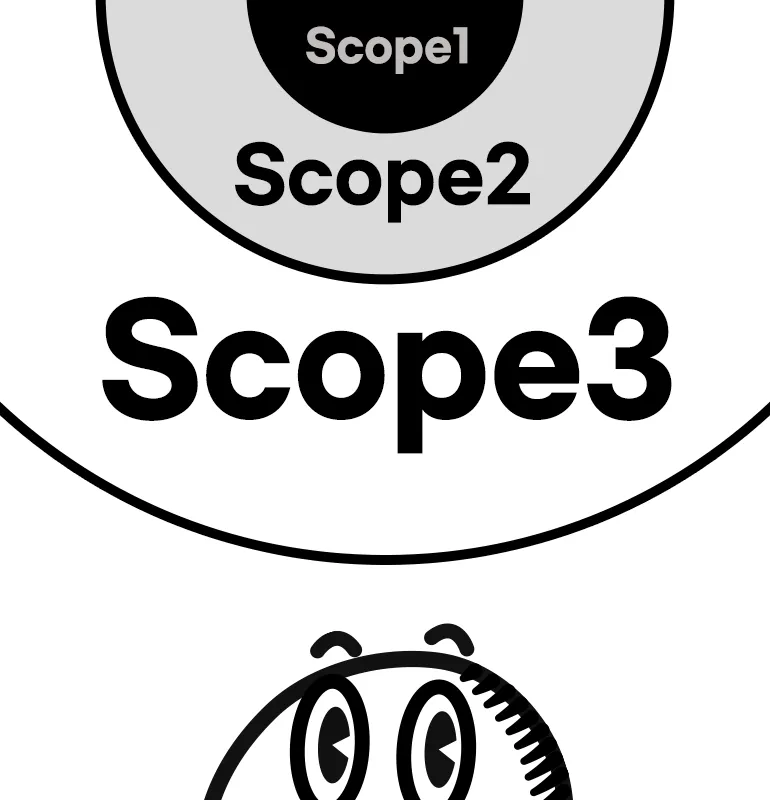
Scope 3 refers to indirect carbon emissions that a company cannot directly control. When greenhouse gas emission sources are categorized by degree of controllability, they are broadly divided into three tiers. Scope 1 covers direct emissions — from factory chimneys, company vehicles, and similar sources. Scope 2 covers emissions generated in the process of producing energy. Scope 3 then encompasses all emissions arising from resources not owned or directly controlled by the company — including carbon released during raw material extraction, employee commuting, and the use and disposal of products.
The Importance of Scope 3 in ESG Management
[ⓒESG.ONL]
Scope 3 is the subject of intense discussion in ESG management because it represents the largest share of carbon emissions in most industries — accounting for 70 to 90% of a company's total carbon footprint. Amid growing international regulatory pressure from the EU and the United States, and the broader trend toward mandatory climate disclosure, managing Scope 3 is becoming a central variable in ESG assessments. For companies seeking recognition as genuinely environmentally responsible, managing Scope 3 has become an essential requirement.

[ⓒESG.ONL]
Scope 3 Amid International Regulations and Mandatory Climate Disclosure
The EU's CBAM (Carbon Border Adjustment Mechanism) and U.S. climate disclosure laws are now demanding carbon data from overseas supply chains as well. Ignoring this requirement risks a loss of competitiveness and a reduction in ESG ratings. To manage Scope 3 effectively, companies need to collaborate with their suppliers to map the carbon intensity of raw material production processes, and take practical steps — starting with achievable actions such as increasing the use of recycled materials, optimizing logistics, and extending product lifespans.
Scope 3 Management Strategies and Practical Approaches
Digital carbon calculators — tools that help companies and individuals measure and manage their greenhouse gas emissions — can also assist with Scope 3 emissions management. By leveraging these tools, companies can efficiently manage their environmental impact across complex supply chains, strengthening both their ESG goal achievement and their long-term sustainable strategy.
by Editor O