
Efforts toward ESG are expected to continue in 2026 for everyone’s sustainable life. In 2025, with a new government taking office, much attention was focused on ESG-related pledges and policies, and overseas, changes in ESG policies suited to new political and economic circumstances also emerged. Let us examine what policies lie ahead in the new year.
Mandatory ESG Disclosure: Will It Progress This Year?
In 2026, many are focusing their attention on the mandatory disclosure of ESG. ESG disclosure refers to the disclosure by companies of non-financial information such as ESG-related activities and performance. If disclosure becomes mandatory, the currently fragmented ESG evaluation standards will be organized, making it possible not only to respond to global investment standards but also for people to understand the ESG information of many companies and make better consumption and investment decisions. Such mandatory disclosure is essential for promoting the practice of corporate ESG management. South Korea pre-announced phased mandatory disclosure in its 2021 ‘ESG Disclosure Roadmap,’ initially scheduled from 2025, but in October 2023 this was postponed to after 2026. Accordingly, disclosure standards and timelines were expected to be decided in 2025, but at the 5th ESG Financial Promotion Group meeting last April, this was effectively postponed once again. In March 2024, the Korea Sustainability Standards Board (KSSB) under the Korea Accounting Standards Board released a draft disclosure standard following ISSB standards, but this has yet to be finalized.
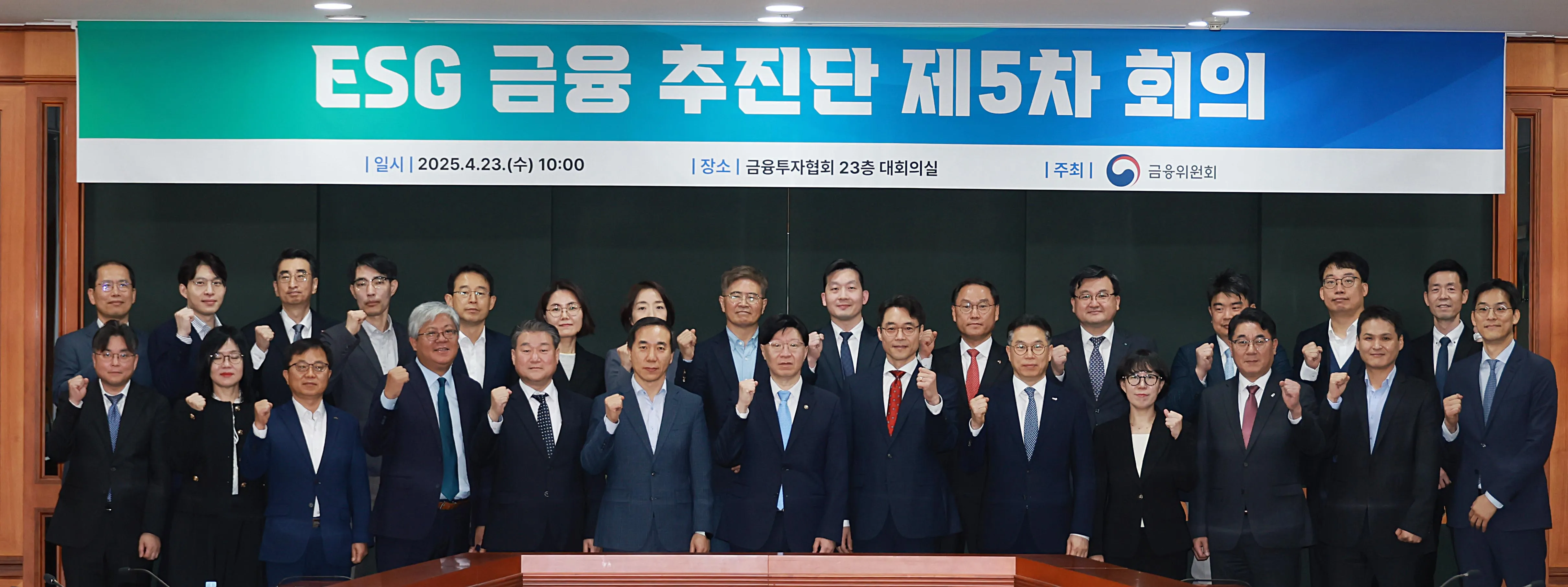
[5th ESG Financial Promotion Group meeting held last April Ⓟ Financial Services Commission]
However, as mandatory ESG disclosure is an international trend, substantive discussion is expected to continue this year. From 2025, the EU began mandatory disclosure in earnest under the Corporate Sustainability Reporting Directive (CSRD), and major Asian countries including Singapore, Taiwan, Hong Kong, and Japan have already scheduled or are in the process of mandatory disclosure. With the financial authorities currently reviewing a plan for ‘sequential application starting from listed companies above a certain size from 2026 onward,’ once the KSSB standards are finalized, phased mandatory implementation is highly likely. Plans to expand mandatory disclosure from large KOSPI-listed companies with total assets of KRW 2 trillion or more to all KOSPI-listed companies and large KOSDAQ-listed companies are being discussed in the market.
Although it is not ESG disclosure, there is another related information disclosure scheduled to take effect in 2026. The Ministry of Economy and Finance announced the ‘Public Institution ESG Guidelines’ last December. Accordingly, public institutions will be subject to disclosure and evaluation based on standardized ESG criteria including greenhouse gas emissions, safety management, labor-management relations, and board operations. Going beyond simple quantitative indicators, the plan is to disclose the degree of achievement against ESG targets, implementation processes, outcomes, and future plans, with measures to link these to management performance evaluations also being pursued. The disclosure of the Corporate Governance Report — which falls within the G dimension and discloses to shareholders whether companies are abiding by the core principles of governance — will apply to all listed companies on the securities market from 2026. The obligation, which was previously applied to 541 securities market-listed companies, will be expanded to the entire pool of 842.
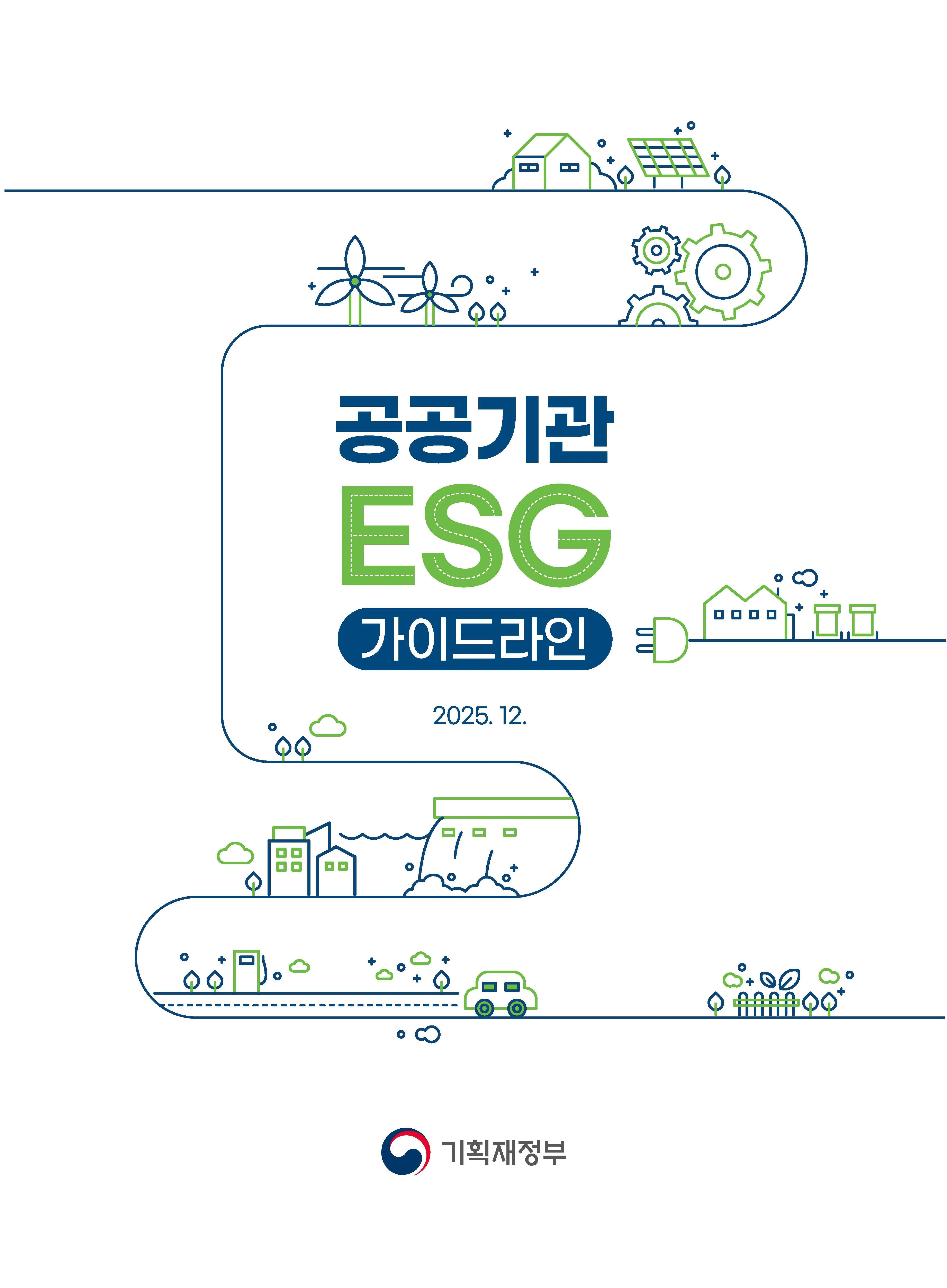
[Public Institution ESG Guidelines Ⓟ Ministry of Economy and Finance]
Government Moving Toward K-GX
Last November, the ‘2035 Nationally Determined Contribution (NDC)’ and the ‘4th Emissions Trading System (ETS) Allocation Plan’ were confirmed at a Cabinet meeting. Decided through six public hearings between the demands of industry and civil society, South Korea aims to reduce greenhouse gases by 53–61% compared to 2018 levels by 2030. When compared to the targets of the EU, the United States, or Japan, achieving the maximum of 61% would place Korea at a mid-to-upper international level. The ETS, in which the government sets per-company greenhouse gas emission allowances, will be operated based on the 53% reduction standard to ease the burden on companies. Companies that exceed their greenhouse gas emissions must purchase emission allowances, and this measure alleviates that purchase burden. In addition, the government has signaled that it will prepare and present a ‘K-GX (Green Transformation) Strategy’ by the first half of 2026.
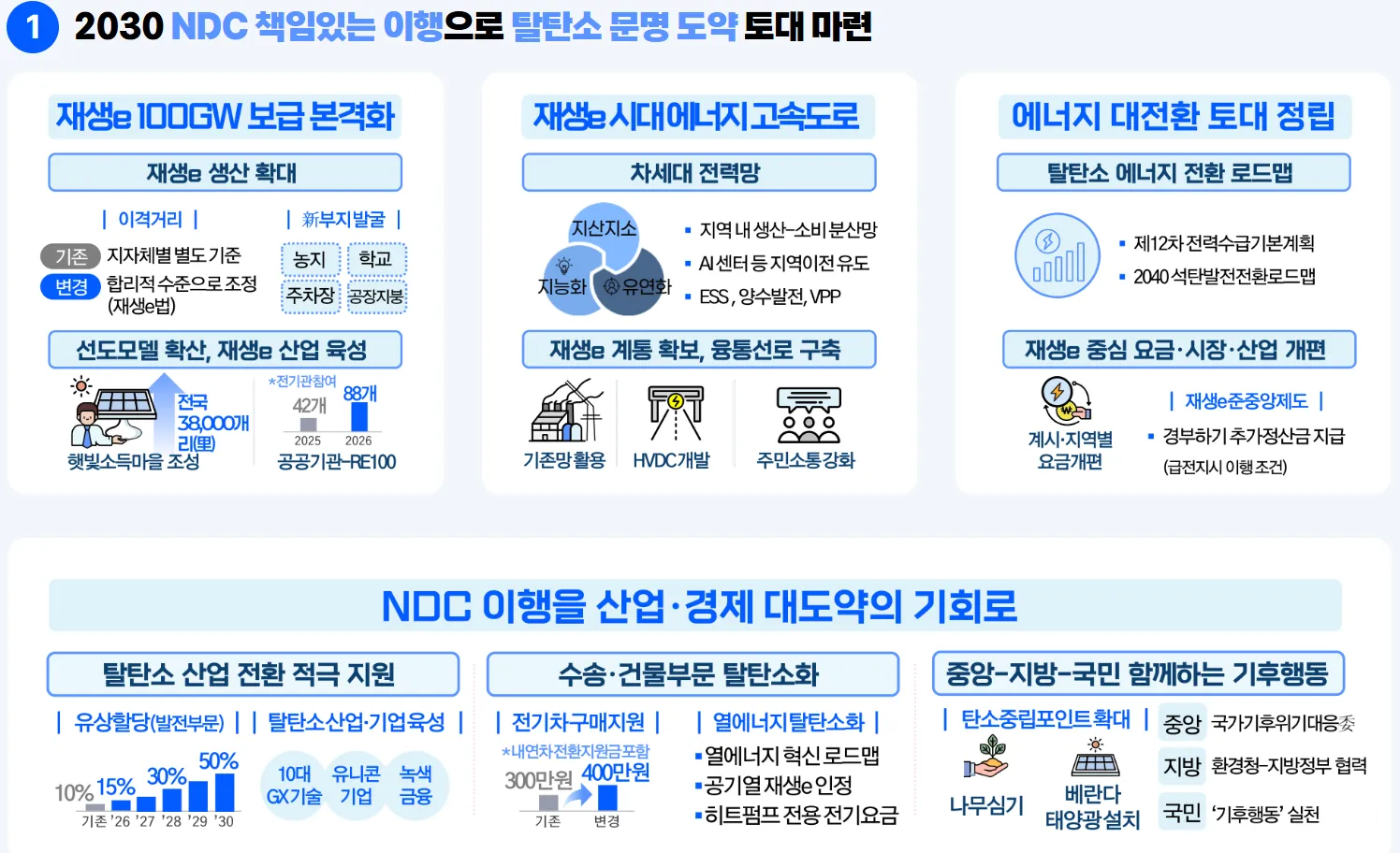 [Excerpt from the 2026 Ministry of Climate, Energy and Environment Key Work Promotion Plan press release Ⓟ Ministry of Climate, Energy and Environment]
Taken together, the NDC and ETS announcements and the Ministry of Climate, Energy and Environment’s 2026 work plan from last December suggest that 2026 will be a year of active amendment and enactment of legislation and establishment of policy plans for K-GX. First, a target has been set to expand renewable energy facilities from the current 34 GW to 100 GW by 2030. This year, a special law will be enacted to vitalize agrivoltaics, and new solar power sites will be sought through pan-governmental collaboration. Wind energy regulations will also be streamlined, and renewable energy development and demonstration will be supported. Furthermore, to assist companies’ transition to decarbonized industries, the processes of high-carbon-emission sectors such as steel and petrochemicals will be improved, and low-carbon technologies will be supported. In the second half of this year, the ‘Carbon Neutral Industry Act’ will be enacted to induce the transition to low-carbon facilities. Beyond this, electric vehicle deployment policies will be expanded, and legal arrangements for the decarbonization of building energy consumption will also proceed. The ‘12th Basic Plan for Electricity Supply and Demand,’ the 2040 ‘Coal-Fired Power Transition Roadmap,’ and a decarbonized power mix plan that mutually complements the issues of renewable energy and nuclear power will also be formulated. To this end, the Ministry of Climate, Energy and Environment announced that it will form a pan-governmental K-GX Promotion Group in the first half of the year to identify sector-specific tasks and gather industry opinions. More detailed information can be found in the Ministry of Climate, Energy and Environment Key Policy Promotion Plan.
2026 will be a year in which numerous regulations and plans for sustainability are established or scheduled. Not only in South Korea but in many countries around the world, ESG-related policies are being established or revised, adjusting to and accommodating the demands of companies, governments, and civil society. We look forward to seeing what changes will unfold in the ESG practice of governments and companies going forward.
by Editor L