
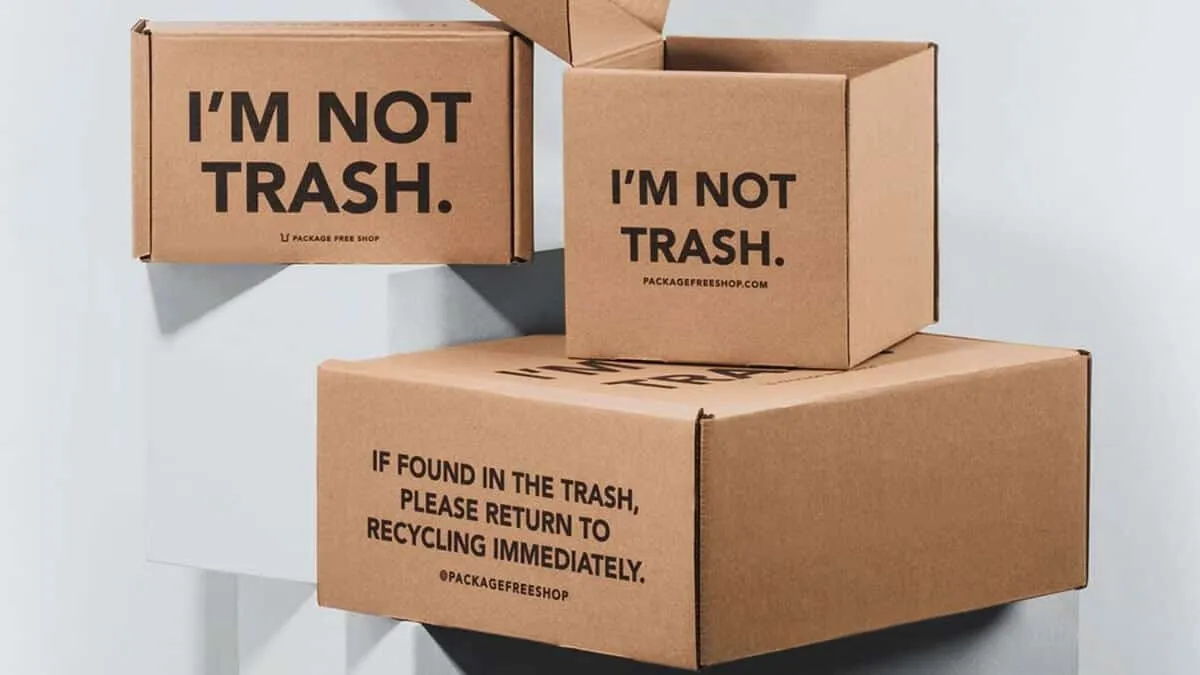
If you are someone who, at the mart, considers even the environmental impact and pays a little more attention to packaging material when choosing goods, you could also be called a "greensumer." As product types have become diversely subdivided and the "packaging industry" continues to develop to avoid the risk of content spoilage and to maintain freshness, the demands of consumers sensitive to the green trend have awakened companies. Consumers are also paying attention to whether product packaging is "eco-friendly or not." This is also because the environmental crisis has emerged as an important topic across industry as a whole, and, more broadly, across our society. In this way, eco-friendly packaging has become an important element from the standpoint of manufacturers' ESG management too.

[ESG Sustainable Packaging Fair @KINTEX]
Reflecting such a trend in the packaging industry, an "ESG Sustainable Packaging Fair" is also said to be held at KINTEX on Earth Day, April 22. Here, it is said, one can see renewable packaging materials with one's own eyes, experience AI-based smart packaging technology, and glimpse the revolutionary change of eco-friendly packaging.
So, let us look at domestic eco-friendly packaging cases worth noting in the packaging industry at this point, and how consumers responded to them.
From Material Development to Participatory Campaigns: A Sustainable Future Made Together with the CJ Group
A representative company in Korea that has steadily developed eco-friendly packaging is the CJ Group. The plastic CJ developed is said to decompose both in soil and in the sea. This eco-friendly material, made by fermenting plant-based raw materials, is called "polyhydroxyalkanoate (PHA)," and this material — hard even to pronounce — is second to none as a replacement for existing plastic. Currently, CJ is leading the eco-friendly trend by applying this PHA material to various product containers, such as the "Water Velvet Vegan Cushion" of the beauty brand "Wakemake" and the "Clean It Zero Cleansing Balm" of "Banila Co."
Also, CJ CheilJedang's bestselling product "Hetbahn" helped consumers join in resource circulation by collecting Hetbahn containers from consumers through a recycling campaign. The company recycled the collected containers to make various goods such as cheering sticks and humidifier kits and delivered them to consumers. Consumers communicated with the company that made "the product I chose" while also gaining an economic reward, so the response was hot. Moreover, consumers could gain, beyond economic utility, the satisfaction of joining in environmental protection that safeguards the Earth.

[Hetbahn containers are upcycled to become a model of the environment and resource circulation © CJ CheilJedang]
Don't Feel Guilty When Throwing Away Boxes: Thermolab Korea
The wrapping that piles up when buying products is a problem, but seeing the delivery boxes that pile up in front of the house every day, one also worries whether these boxes are being recycled well. "Thermolab Korea," which has a vision of zeroing out the environmental burden created in the product distribution process, is solving that problem. Thermolab Korea is a company sincere about eco-friendly, reusable packaging, providing delivery boxes to some 200 distributors such as Coupang and Market Kurly. Its main product is "Eco Liner," a waste-paper-recycled packaging material made from waste newspaper, delivery boxes, and the like. Thermolab Korea uses insulation and protective materials recycled from waste paper instead of hard-to-decompose styrofoam, and strives to achieve "zero environmental pollution" with ice packs filled 100% with water. As the whole nation habitually uses delivery, customer response to the packaging appeared immediately. Positive reviews continued that recycling is convenient because the paper and insulation can be easily separated.
Riding this momentum, Thermolab Korea is building its own technological capability, applying for some 40 intellectual-property rights. It is said that, beyond developing biodegradable materials, it will additionally develop AI predictive-analysis technology and combine it with sustainable packaging solutions. Furthermore, expanding its business scope with the single packaging business, it is preparing a leap into the Asian and North American markets.

[Thermolab's eco-friendly packaging material "Eco Liner" © Thermolab]
Packaging That Leads the Green Consumption Trend: SPC
SPC's effort for eco-friendliness is also contained in the packaging of foods consumers enjoy, such as Paris Baguette and Baskin Robbins. SPC, in collaboration with SKC, developed a "polylactic acid (PLA) film" that is 100% biodegradable from ingredients extracted from corn, sugarcane, and the like. This packaging, used for bread wrappers and ice-cream cake boxes, is said to completely decompose in soil within 180 days. Compared with ordinary plastic, which takes over 500 years to decompose, this is a groundbreaking eco-friendly material.
Also, for salad containers and disposable cups, it develops and uses "Bio-PET" material based on sugarcane in cooperation with Lotte Chemical. By utilizing Bio-PET material, the carbon footprint can be reduced by as much as 28% compared with existing plastic. Among the packaging materials from SPC, everything that looks like plastic does not become trash if disposed of properly. If well gathered in designated collection bins and separated for recycling, these packaging materials are recycled to make packaging for other SPC products. They can also be used as the outer packaging for "Kleannara" toilet paper. Through such a recycling system, an infinite-plastic-circulation ecosystem is created within SPC.
Consumers can also collect SPC's packaging materials to receive gift vouchers such as coffee coupons. A campaign that improves the recycling rate also affects the consumer-participation-based green consumption trend. SPC's dense efforts for the environment led even to the first green-specialist company certification in the food industry, contributing to improving the corporate image.
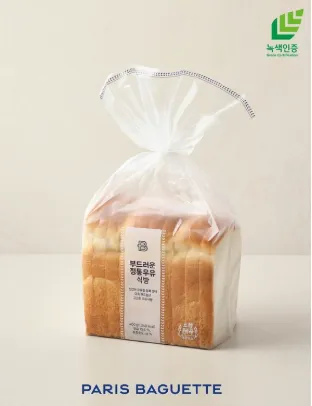
[SPC's eco-friendly packaging decomposes easily and is continuously recycled @SPC]
Eco-friendly packaging, which shows companies' sense of social responsibility, is thus establishing itself as consumers' choice. Consumers show active movement in the use of eco-friendly packaging and in participatory campaigns through which they can join in environmental protection while doing everyday consumption. If more companies well reflect this trend, the path of a "green revolution" created together by consumers and companies will be able to settle closer to our daily lives.

[Packaging is no longer trash © IMPAKTER]
By Editor L