
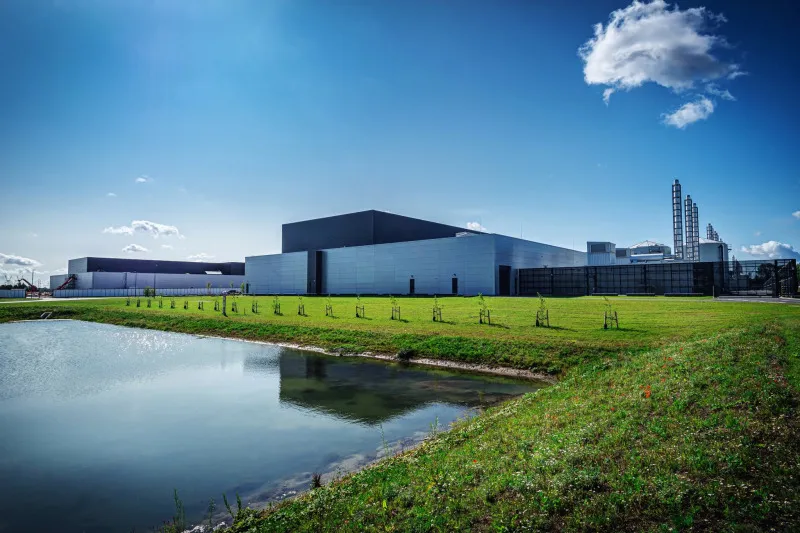
Now that the era of generative AI has opened, the ‘data center industry’ that processes and connects information is also growing rapidly. The Korea Data Center Association projects that the market size of KRW 6 trillion in 2024 will grow to KRW 10 trillion by 2028.
Meanwhile, data centers — facilities that house all the infrastructure needed to provide IT services such as servers, networks, and storage — consume enormous amounts of electricity and generate heat. Movements and research toward utilizing ‘waste heat,’ the thermal energy that goes unused in that process, have been gradually gaining momentum since the early 2020s. Let us examine the principles of data center waste heat utilization and the current state of waste heat utilization at domestic and international data centers.
How Can Waste Heat Be Utilized?
To understand methods of utilizing data center waste heat, we must first examine data center cooling methods. First, ‘air cooling’ is a method that introduces cool air inside the server to dissipate heat. While it has the advantage of low installation costs, there is criticism that it faces technical limitations given the increasing scale of data centers today. ‘Liquid cooling’ uses liquids with high specific heat capacity to cool, attaching pipes through which water flows to the circuit to dissipate heat. It is expensive but excels in heat control capability. Finally, ‘immersion cooling’ involves submerging the entire server in a special cooling liquid, showing the highest efficiency but costing more than double the initial expense of air cooling.
The heat generated by data centers is low-temperature heat at the 30–45°C level, which cannot produce electricity. However, research continues because if the temperature is raised by combining heat pump technology with liquid cooling methods, it can be utilized as residential hot water or heating water. In particular, AI data centers operate under 24-hour overload conditions, so their heat density is over ten times higher than conventional data centers. Analyses suggest that if large volumes of hot water can be secured by introducing the above methods, this could become a high-efficiency energy source.
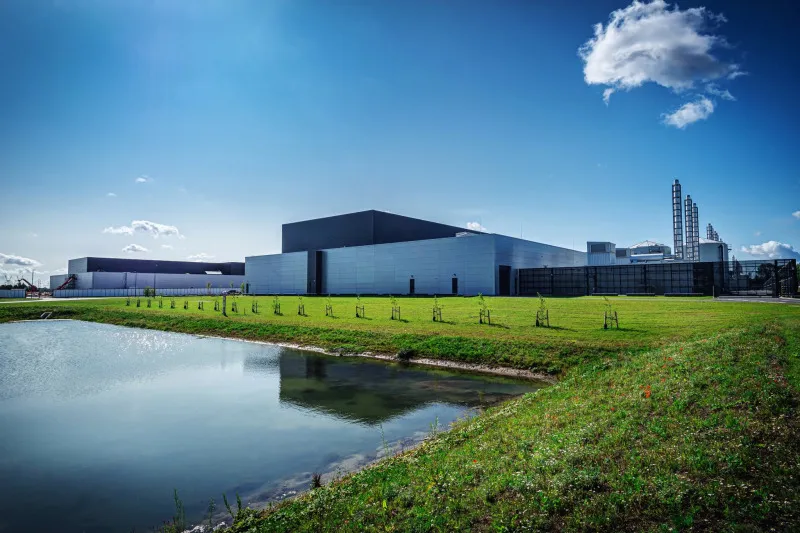
[Meta’s Odense data center in Denmark, providing district heating to approximately 100,000 nearby households through waste heat © META]
For District Heating and Swimming Pools — Current Data Center Waste Heat Utilization
Overseas, data center waste heat has long been utilized for district heating, with Finland being a representative example. Finland had well-established infrastructure for sending heating to districts from early on and had advanced heat recovery technology, making the introduction of waste heat technology relatively straightforward. Against this backdrop, the data center of telecommunications company Telia, located near the capital Helsinki, supplied thermal energy to approximately 7,000 homes and offices within one year of beginning waste heat utilization in 2024. Additionally, Google announced plans to invest €1 billion to expand its data center in Hamina, Finland. With thermal energy utilizing waste heat expected to meet 80% of the local heating network’s demand, Google stated that it plans to provide heating free of charge to local homes, schools, and public service buildings.
The UK startup ‘Deep Green’ has drawn attention as a case utilizing the immersion cooling method described above. By submerging data centers in oil with high heat absorption rates and installing them beneath swimming pools, the company maintained a constant water temperature, allowing the pool to save £20,000 (approximately KRW 39 million) in annual gas costs.
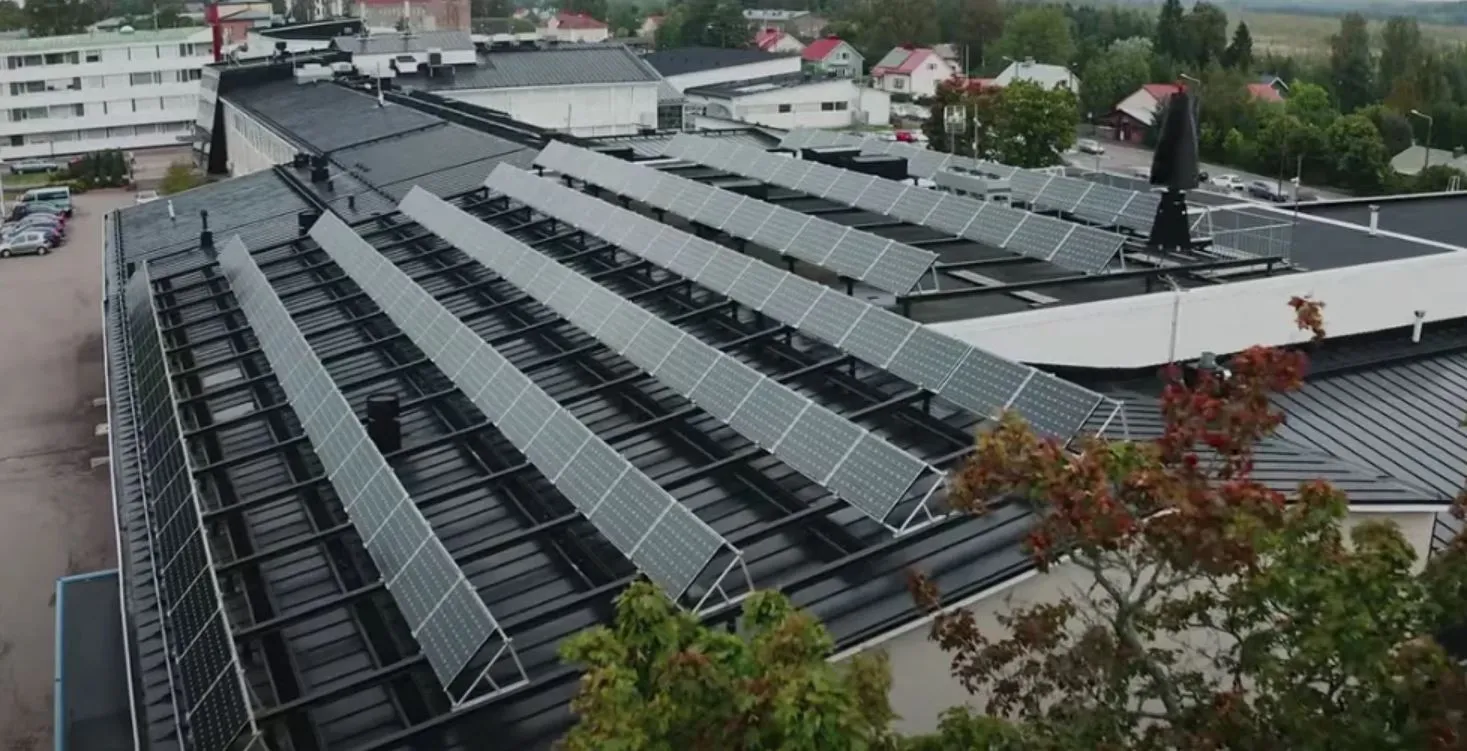
[Google’s data center in Hamina, Finland © blog.google]
Overseas, this is accompanied not only by such cases but also by policy regulation and support. In 2023, the EU specified the obligation to evaluate and review the utilization and recycling of waste heat in its Energy Efficiency Directive. Germany initiated an Energy Efficiency Act containing energy consumption reduction targets, requiring new data centers to establish criteria for utilizing at least 10–20% of waste heat, and setting phased waste heat reuse standards with fines for non-compliance. France, Denmark, and others have also made the establishment of systems for securing waste heat a mandatory condition for building permits and introduced related preferential tax treatment.
Domestic Data Center Waste Heat Utilization: Still Seeking Methods
According to the Korea Energy Economics Institute, the potential amount of waste heat from domestic private data centers is estimated to reach 1,539 thousand Gcal per year in 2023 (roughly equivalent to the heating energy needed by one 32-pyeong apartment unit for one month). This is a significant figure corresponding to 5.8% of the 2019 district heating and cooling supply. Yet domestically, data center waste heat goes unused and is discarded. A key reason cited is that waste heat utilization energy is not classified as new and renewable energy, excluding it from various support systems and slowing the development of related industries. Another limitation is that domestic data centers predominantly use air cooling instead of liquid cooling or immersion cooling, which are more conducive to waste heat utilization. Additionally, utilizing data center waste heat for district heating requires data centers to be located near residential areas, but building data centers in residential zones is challenging due to concerns over electromagnetic waves, noise, and heat island effects. Statistics showing that roughly one out of every two data centers that have received construction permits are delayed can easily be found.
However, signs of change are emerging. In 2024, the Korea District Heating Corporation, IGIS Asset Management, and the Ministry of Trade, Industry and Energy signed a business agreement on ‘Data Center Energy Utilization Efficiency and Collective Energy Low-Carbon Supply System Establishment.’ Through this, the plan is to expand the unused heat utilization rate from 13% to 20% by 2030. Chuncheon City in Gangwon-do and the Korea Water Resources Corporation are creating a Gangwon hydrothermal energy convergence cluster that cools data centers using 7°C deep water from Soyang Dam. Through this approach, not only is 75% energy savings expected, but the waste heat is also planned to be used as heating energy for nearby smart farms and housing.
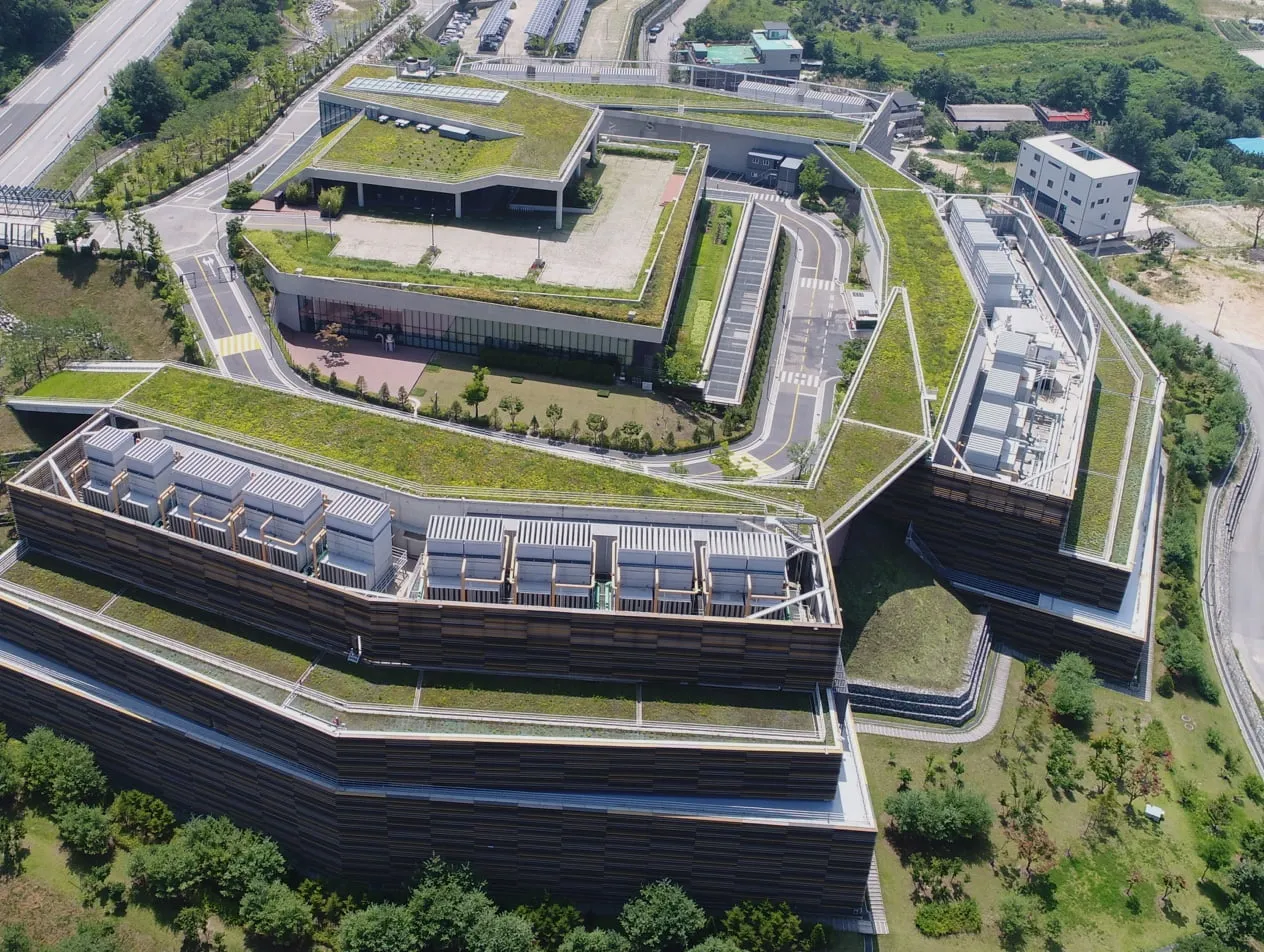
[Naver Data Center ‘Gak Chuncheon’ © NAVER]
Corporate-level efforts are also continuing. Naver has long been operating an eco-friendly data center called ‘Gak Chuncheon.’ The data center is cooled by the natural wind of Chuncheon, which is 2–3°C cooler than the capital region year-round, and waste heat is separately collected in a waste heat recovery unit within the server room. This warms antifreeze through special pipes installed beneath the road, melting snow on the road so that large cargo vehicles do not slip. It even uses waste heat to cultivate greenhouses. In 2025, SK Innovation and LG Electronics signed an MOU to jointly develop an AI data center energy-cooling integrated solution. SK Innovation will handle power supply and operational optimization, while LG Electronics will advance air and liquid cooling solution technologies to lower AI data center temperatures, jointly promoting a business of recovering and utilizing waste heat.
In South Korea, movements to utilize data center waste heat are gradually appearing as described, and now is the time when various institutional support, research, and active development are needed. As the location of AI data centers and the environmental issues of data centers are being actively discussed, let us imagine an even more eco-friendly future for data centers.
by Editor L