
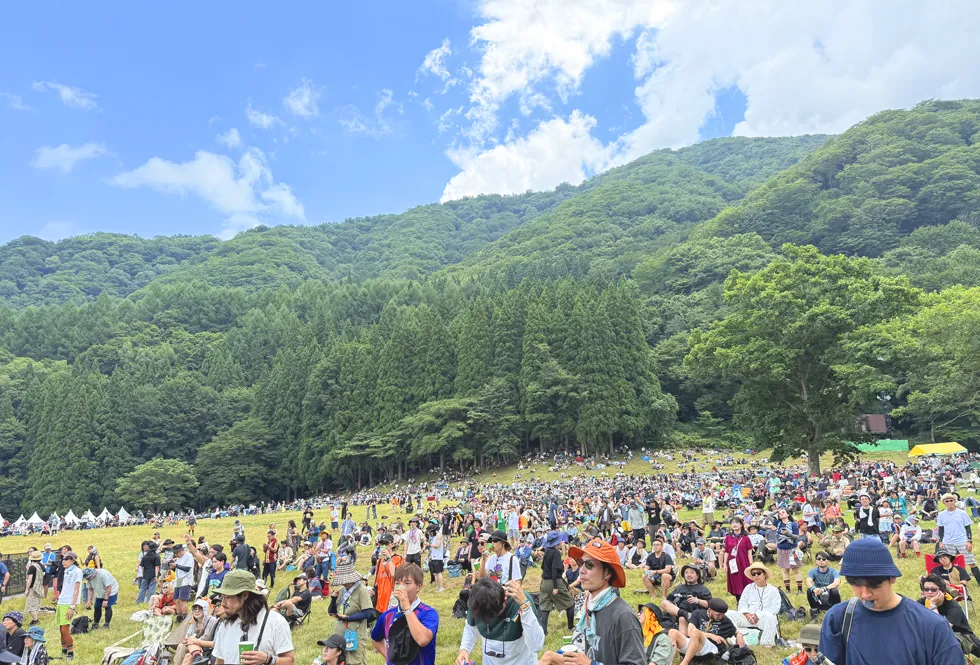
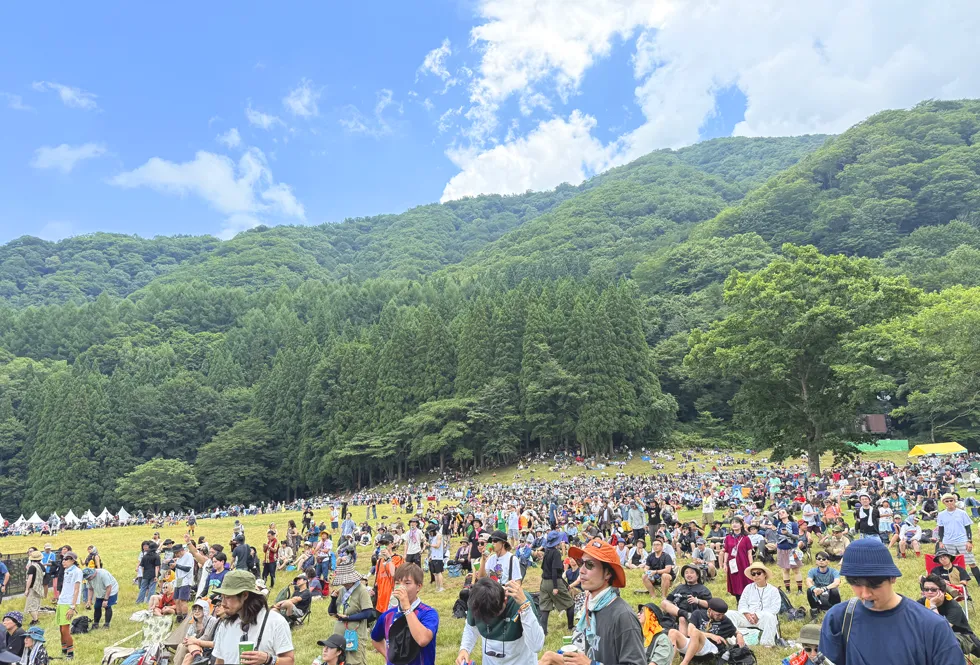
This year, for the first time, I took part in the Fuji Rock Festival held in Japan. The festival, first held next to Mt. Fuji in 1997, is now — after relocating — held at the Naeba Resort in Yuzawa, Niigata Prefecture, about 200 kilometers northwest of Tokyo. It was a space of drums and guitars echoing through the forest, a wave of people listening to music while treading the earth, and clear, transparent valley water brimming to wash away the heat. That atmosphere, in which freedom and solidarity mingled among people of all ages and various nationalities and races, was full of scenes hard to forget for a while.
But at the tail end of that romance, a question came to mind.
"Is there really no price for all this freedom and enjoyment?"
[Fuji Rock Festival © Kim Won-sang]
I do work for climate response at a climate-change NGO. It is the work of drawing out systems and policies for climate-change mitigation to lower greenhouse gases nationally. Naturally, I come to examine the carbon footprint I myself induce.
The car ride to and from home and the airport, the round-trip flight from Incheon to Tokyo, the round-trip Shinkansen from Tokyo to Niigata Prefecture, the round-trip bus shuttle to the resort, plus food and drink, trash, souvenirs, and lodging. The carbon footprint generated simply by taking part in the rock festival roughly exceeded 350 kg. It was, in effect, spewing out in a few days the carbon that 20 forest trees would have to absorb all year, and consuming 20% of my annual carbon budget in a few days. To think that the pursuit of happiness and keeping the Earth sustainable are in conflict.
To settle it simply with "just don't go" — the power of comfort and solidarity that music gives to many people's lives is too great. But it is also hard to just enjoy it while turning away. In the end, I arrived at the thought that the answer lies in changing the "way of participating."
[Fuji Rock Festival © Kim Won-sang]
What was somewhat comforting was that the Fuji Rock Festival aims to be an "environmental festival" more than any other event. This is because the Fuji Rock Festival carries a history that cannot help but be sensitive to the environment, having experienced the effects of climate change. The first event, held near Mt. Fuji in 1997, was disrupted by an extreme typhoon, and as participants suffered hypothermia, it was canceled after just two days. The following year it was held again on the Tokyo coast, but the scorching heat caused great concern, and it eventually settled in its current home at the foot of the mountains in Niigata Prefecture. This is why the Fuji Rock Festival holds the environmental slogan "efforts for coexistence with nature."
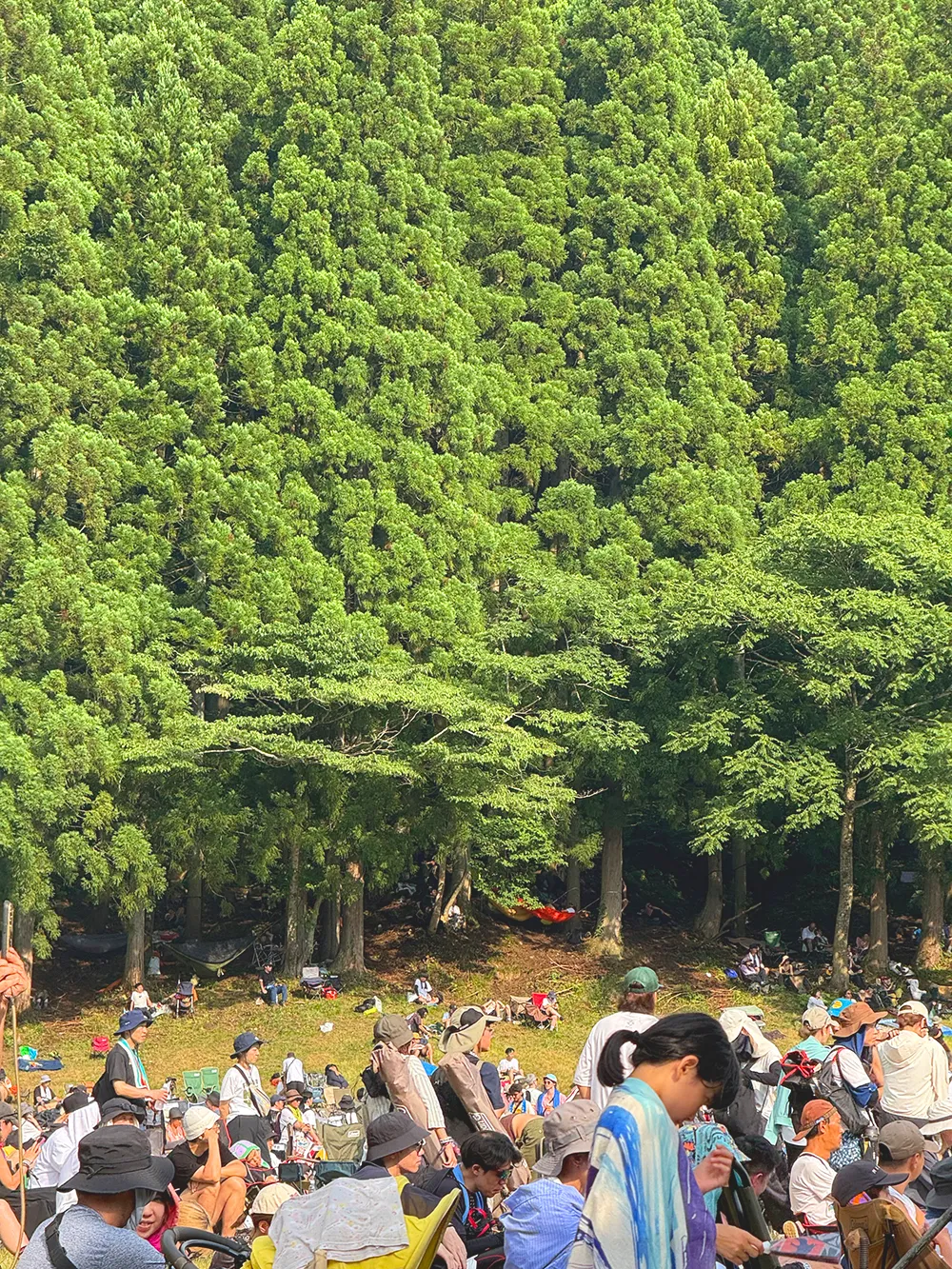
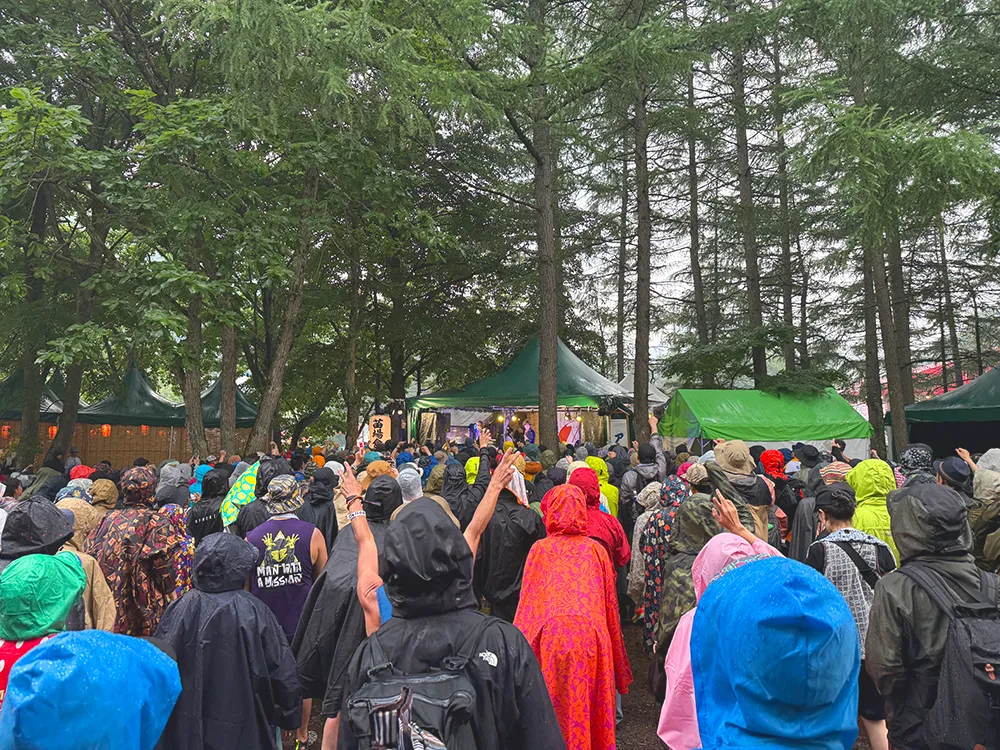
At the place where the Fuji Rock Festival is held, decking is laid to protect the forest paths and minimize humans' impact on the forest's biodiversity, and staff are stationed at all times to thoroughly carry out waste separation. Plastic bags made from inedible rice are distributed so participants can collect their trash, paper cups are collected and made into toilet paper for the following year, oil from fryers is reused as biofuel, and some energy is sourced from solar power. Booths that raise awareness of environmental conservation and sustainability, and stalls selling upcycled and eco-friendly products, are located here and there. In one corner, an NGO Village was set up, providing a platform for participants to discuss and communicate centered on climate and the environment. Most impressive of all is that a culture and atmosphere of "leave no trace" is created across the entire festival. It was a festival that shared its resonance not by setting up a stage against the backdrop of the forest but by becoming one with the forest.
[Fuji Rock Festival © Kim Won-sang]
Fortunately, such a refreshing movement is spreading across the performing-arts world as a whole.
"Coldplay" abruptly halted its concert tour in 2019. They judged that the enormous carbon emissions from their own musical activities were not sustainable. Afterward, over two years, they collaborated with a team of experts to prepare principles and methodologies and design a sustainable tour. They even secured assessment and verification systems. They declared they would reduce carbon emissions to less than half compared with the previous tour, and resumed their world tour in 2022, publishing on their website their performance methodology and promises regarding water, food, goods, trash, and more. "Massive Attack" also publicly declined to appear at Coachella, citing environmental burden. "Lukas Graham" completed a performance using only wind power and batteries. The UK comprehensive-arts festival "Glastonbury" began to operate entirely on renewable energy, and Chicago's music festival "Lollapalooza" achieved a 67% reduction in fuel use and greenhouse-gas emissions. The music world is now creating a new rhythm containing a transition for the climate.
In summers that grow ever hotter, festivals delayed by increasingly unstable extreme weather are appearing, and the environment in which one can enjoy music is gradually shrinking. The "Pentaport Rock Festival," counted as Korea's largest rock festival, is held in the first week of August each year, but recently, with rising temperatures, fans' demands that the timing should perhaps be adjusted are growing ever stronger.
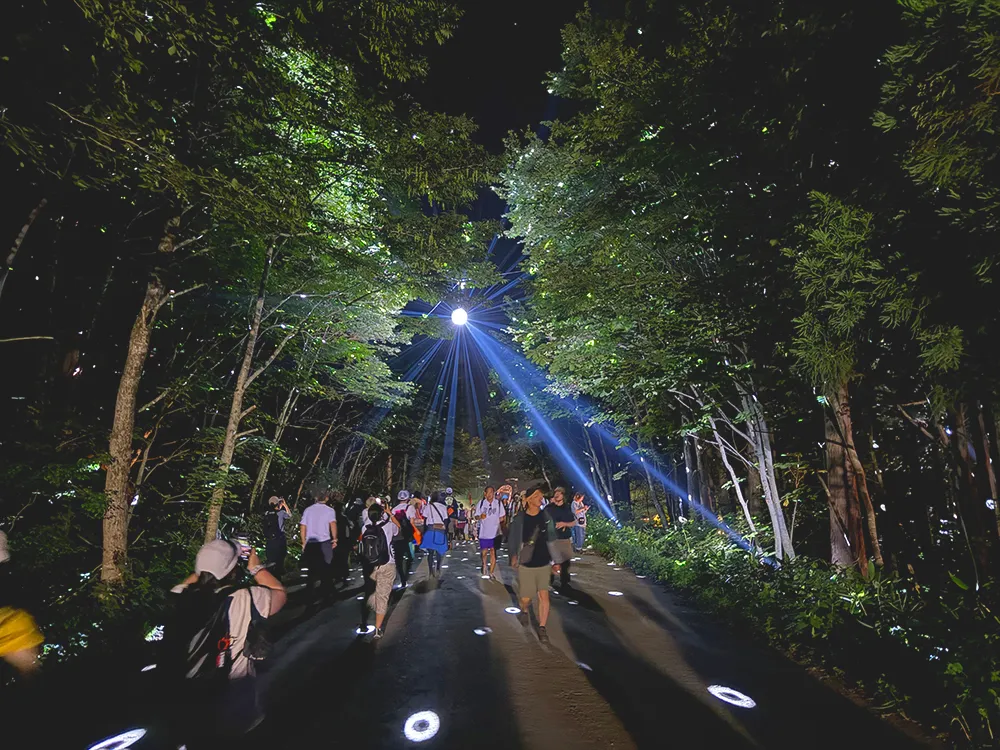
[Fuji Rock Festival © Kim Won-sang]
We must not stop at consuming music but must protect, together, the ground on which music can stand. It is not simple. We must feel some reflection and small responsibility about the dilemma that enjoying a hobby and preventing greenhouse-gas emissions are in conflict. I want to share with more people this complex and subtle emotion I felt after visiting the Fuji Rock Festival. The more we do, the closer I believe we can get to overcoming the climate crisis.
by Kim Won-sang (Media Communications, Solutions for Our Climate)