
Brown Taxonomy is a system that defines and classifies economic activities that are environmentally unsustainable or involve high carbon emissions. In other words, Brown Taxonomy is a concept that contrasts with Green Taxonomy. While Green Taxonomy is a system that labels ‘this is eco-friendly,’ Brown Taxonomy is a concept that brands ‘this is harmful to the environment.’
The EU Technical Expert Group on Sustainable Finance first formalized the need for the introduction of Brown Taxonomy in its 2020 final report. The need for introducing Brown Taxonomy arose from the recognition that activities incompatible with Europe’s carbon reduction targets — such as fossil fuels and high-carbon industries — were still receiving investment. That said, Brown Taxonomy does not simply mean an exclusion list. It is a financial infrastructure that systematically identifies how harmful certain activities are, steering capital away from them.
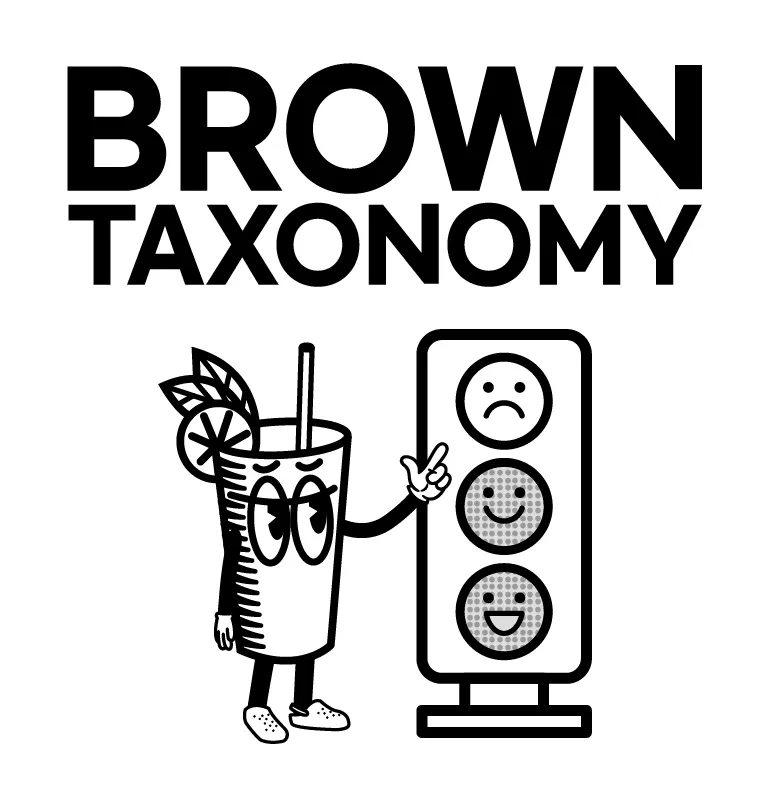
[Brown Taxonomy Ⓟ ESG.ONL/ESG Today]
In 2022, the EU Platform on Sustainable Finance (PSF) expanded the Green Taxonomy concept and proposed a ‘three-tier traffic light system’ consisting of three categories: Green, Amber, and Red.
1. Green: Same concept as the existing Green Taxonomy. This applies to activities that substantially contribute to at least one of the six environmental objectives while causing no significant harm to the remaining objectives.
2. Amber: Applies to activities that do not cause significant harm to the environment but are not yet green. They may receive investment conditional upon low-carbon transition plans.
3. Red: Applies to activities that cause significant harm to the environment. If low-carbon transition is possible, they move to Amber; if impossible, they are immediately subject to phase-out.
Brown Taxonomy corresponds to the Red category among these, and is therefore also referred to as ‘Red Taxonomy.’
Despite the PSF’s recommendation, Brown Taxonomy currently has no legal binding force. In the Omnibus Simplification Package announced by the European Commission in 2025, the Green Taxonomy regulation itself was simplified, and discussion on introducing Brown Taxonomy has yet to be concretized.
South Korea also operates the K-Taxonomy but has not yet discussed a classification system for harmful activities corresponding to Brown Taxonomy. If Green Taxonomy is the signpost pointing where to go, it is also necessary to prepare Brown Taxonomy as the milestone telling us where to stop.
by Editor O