
Transition Finance refers to funding that supports high-carbon industries with substantial carbon emissions to progressively decarbonize. The International Capital Market Association (ICMA) established the concept and principles of transition finance with the publication of the ‘Climate Transition Finance Handbook’ in 2020.
Transition finance began to draw attention as the transformation of existing high-carbon industries became essential for implementing the Paris Agreement and achieving carbon neutrality goals. The International Energy Agency (IEA) has analyzed that annual clean energy investments of over USD 4 trillion are needed by 2030 to achieve carbon neutrality by 2050, with a significant portion of this expected to be directed toward the transformation of existing industries.
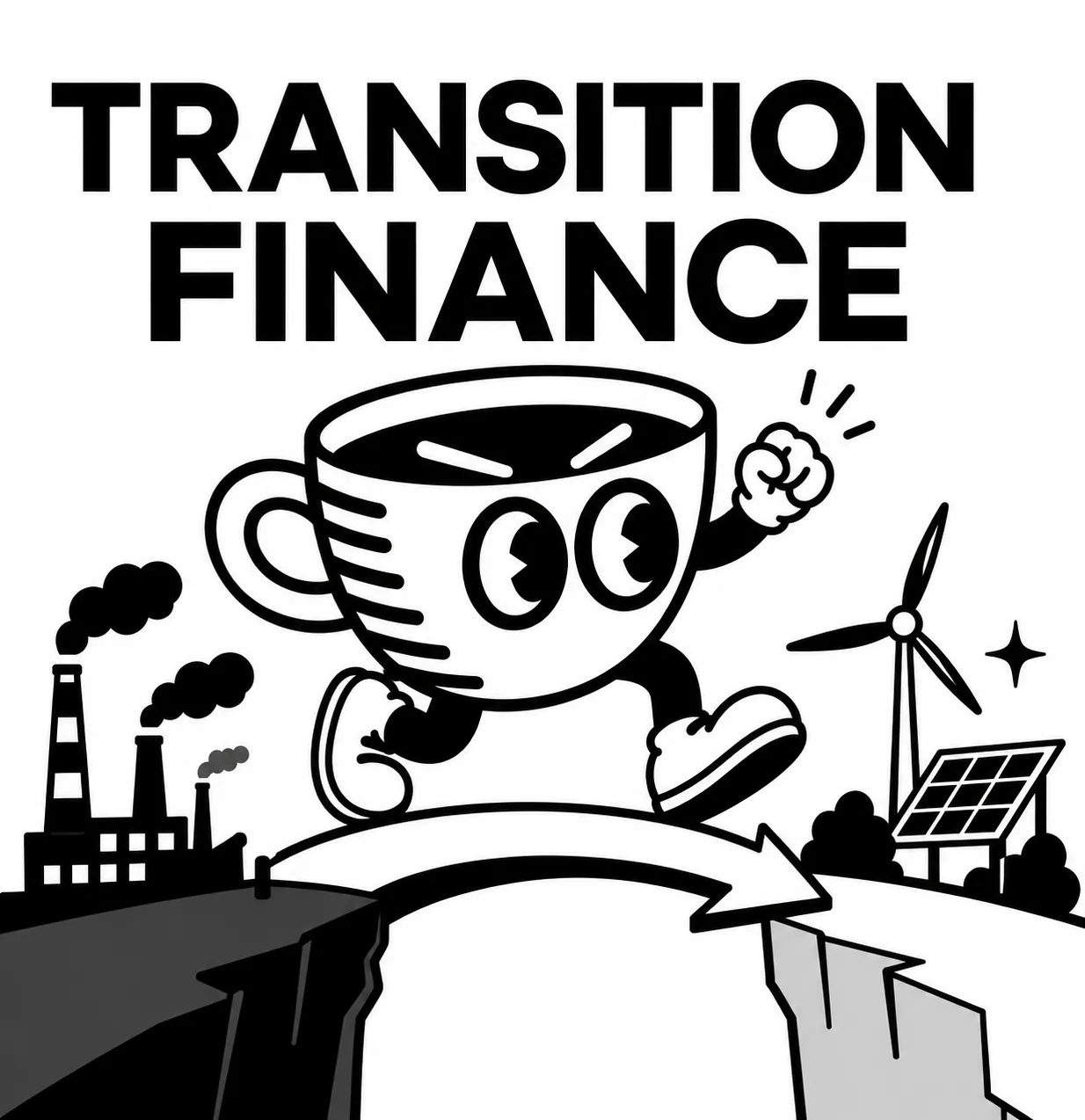
[Transition Finance(Transition Finance) © ESG.ONL/ESG Today]
The key element of transition finance is a credible transition plan. In 2023, the EU published the European Union Green Bond Standard (EU GBS) for transparent green bond issuance, stipulating that companies with credible, science-based carbon reduction transition plans may issue transition finance bonds. South Korea included a ‘transition sector’ in the Korean Green Taxonomy (K-Taxonomy) in 2021 to support the carbon neutrality transition process of companies, as the transformation of existing high-carbon industries toward decarbonization is an economic activity necessary for reaching the ultimate destination of carbon neutrality.
Transition finance carries the problem of not being free from greenwashing controversy. Concerns have been raised that companies could raise funds under the guise of transition finance without making substantive reduction efforts, or exploit it as a means to prolong fossil fuel operations. To prevent this, global financial institutions are strengthening transparent corporate disclosure and third-party verification when providing transition finance. Designing appropriate institutional frameworks and implementation processes to ensure transition finance leads to real carbon reductions is the key challenge.
by Editor O