
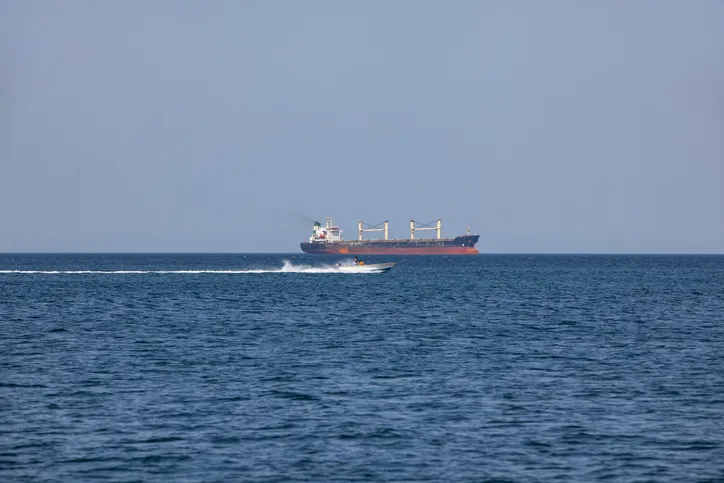
The Strait of Hormuz, called the ‘world’s energy artery,’ has been blockaded. The news that the Iranian Revolutionary Guard Corps (IRGC), which came under airstrikes from the United States and Israel, blockaded the Strait of Hormuz to block vessel passage reached us even before the March 1st Independence Movement Day holiday was over. The Strait of Hormuz is not merely a logistics passage. With approximately one-fifth of the world’s oil supply passing through it, it is a critical energy transport chokepoint. What changes will the blockade of the Strait of Hormuz — a wake-up call to our dependence on fossil fuels — bring across the world?
Energy Supply Shaken by a Single Strait
The economic research firm Capital Economics projected that due to the blockade of the Strait of Hormuz, international oil prices would rise to USD 100 per barrel and the global average inflation rate would increase by 0.6–0.7 percentage points. Global manufacturing companies that have declared RE100 also saw the reality surface that they have been heavily dependent on fossil fuels at every stage of raw material and component procurement, irrespective of their renewable energy transition roadmaps. The shipping and aviation industries, which had been putting their all into reducing carbon emissions ahead of the implementation of the Carbon Border Adjustment Mechanism (CBAM), faced the dual dilemma of surging oil prices and increasing carbon emissions. Domestic carrier Korean Air decided to fully suspend operations on the Incheon–Dubai route through March 8. The Strait of Hormuz is the very energy foundation of the global manufacturing supply chain, with most of the crude oil passing through it heading to Asia.
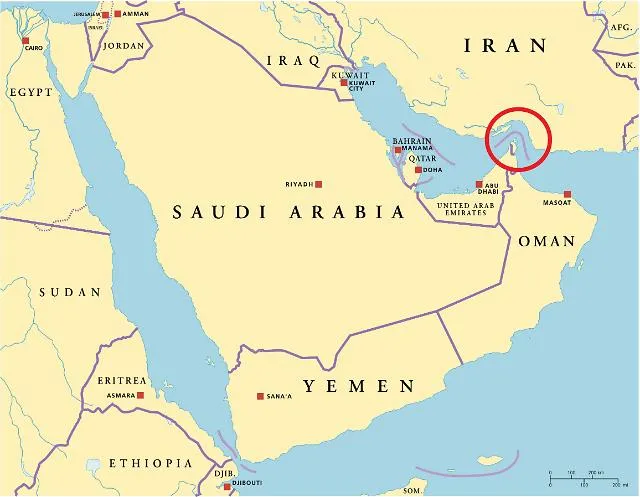
[The Strait of Hormuz (red circle location) © gettyimages]
One of the routes mentioned as an alternative to the Strait of Hormuz — the Saudi Arabia–UAE pipeline — has a transport capacity of only one-seventh of the daily crude oil cargo volume. Thus, the use of the alternative route around Africa’s Cape of Good Hope is expected to become unavoidable. If many vessels choose to detour around the Cape of Good Hope, transport distances will increase by thousands of kilometers, and vessel fuel consumption and carbon emissions will also surge substantially. In contrast to the trend in which the international community is making carbon emissions management mandatory for companies through ISSB disclosure standards and the TCFD framework, the risk that energy supply itself could be cut off has been placed in a blind spot.
The One Line ESG Reports Missed: Energy Supply Chain Uncertainty
South Korea stands at the front line of this crisis. It imports 70.7% of its crude oil and 20.4% of its LNG (liquefied natural gas) from the Middle East, and most of this cargo volume passes through the Strait of Hormuz. The Korea International Trade Association (KITA) foresees a chain of shocks: a 10% rise in oil prices leading to a 0.39% decrease in exports, a 2.68% increase in imports, and a 0.38% rise in corporate production costs. RE100 member companies such as Samsung Electronics and Hyundai Motor rushed to transition their own workplaces to renewable energy, but the energy supply chain uncertainty of their partner companies was beyond their control. Amid the trend of global ESG rating agencies strengthening the management of supply chain Scope 3 emissions, this incident has become one that confirmed in numbers the consequences that occur when energy supply is delayed.
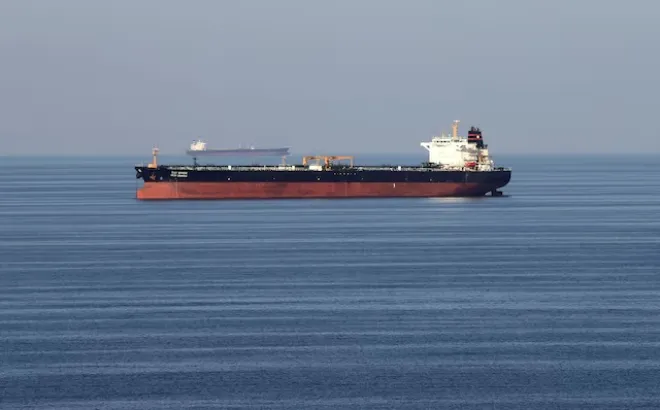
[Oil tankers passing through the Strait of Hormuz on December 21, 2018 (local time) © Reuters]
This incident, in which the Strait of Hormuz was blockaded, has laid bare the blind spots of ESG management head-on. While the ESG reports submitted by companies include climate scenario analysis, scenarios concerning energy supply chain uncertainty due to geopolitical risks are largely absent. Experts point out that the geopolitical risk of physical disruption to energy supply routes must be codified within the physical risk items of the ISSB S2 standard. A Vice Minister of Trade, Industry and Energy stated, “Given that a significant proportion of the oil and gas we import passes through the Strait of Hormuz, there is a need to closely examine the possibility of expanded oil price and maritime transport risks.”
Paradoxically, this crisis has also become an incident that proves the necessity of renewable energy transition and the expansion of energy import routes. This crisis has created new industrial opportunities for energy transition, expanded renewable energy investment, and supply chain restructuring. As long as the vulnerability of the energy supply structure — in which crude oil prices spike every time the Strait of Hormuz is blockaded — is repeated, RE100 and carbon neutrality declarations can only remain as half-baked ESG. Now is precisely the time for companies and governments to treat the geopolitical risks of the energy supply chain as a core variable of ESG strategy.
by Editor L