
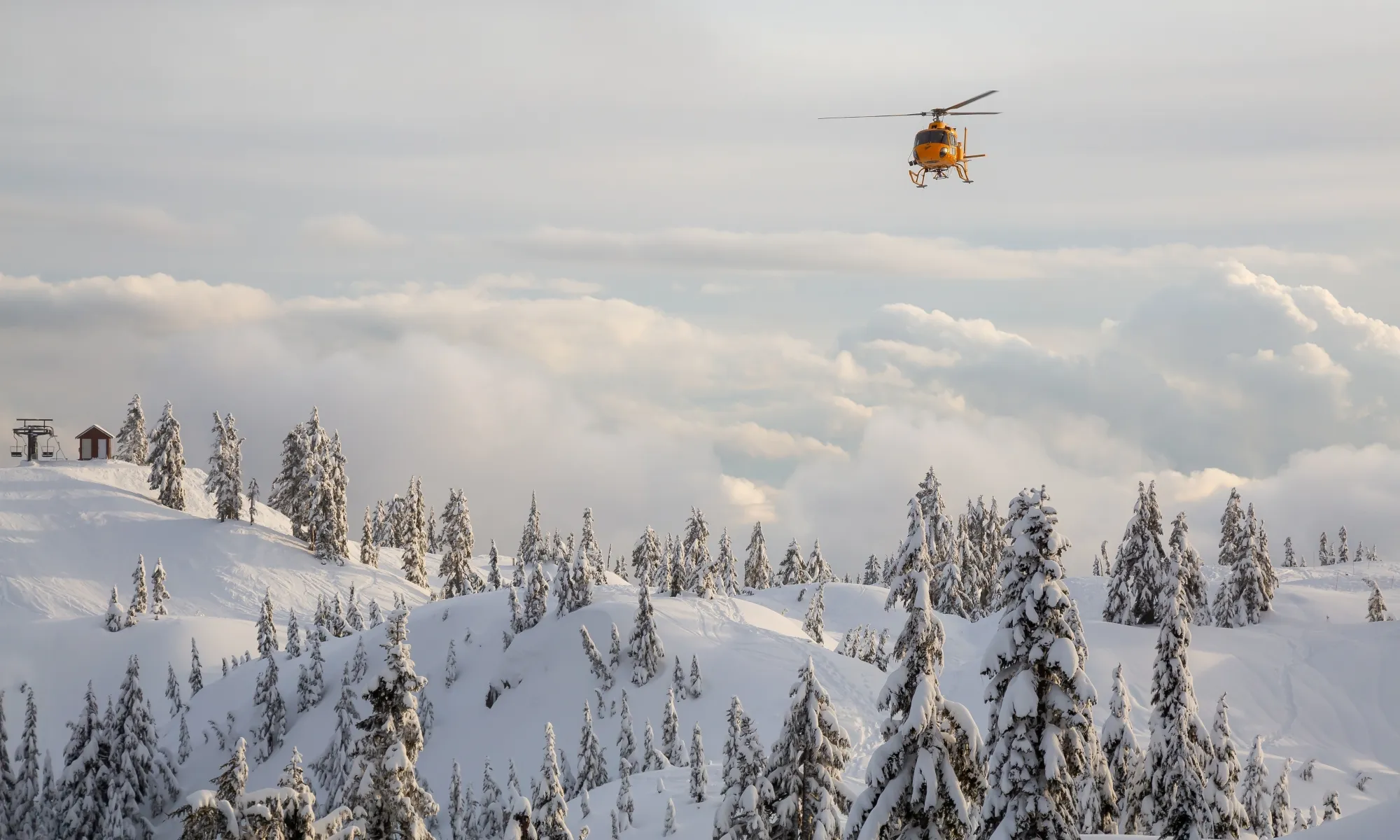
In recent years, as winter weather forecasts have increasingly gone awry, everyday inconveniences have also grown. Last March, unprecedented heavy snow warnings were issued across the country including Seoul, and the anomalous winter landscape that unfolded on the cusp of spring left many considerably shocked.
Why does this keep happening? Experts are focusing on La Niña, manifested through changes in sea surface temperatures, and the Sudden Stratospheric Warming (SSW) phenomenon occurring in the upper atmosphere.
The Causes of Extreme Weather Changes: La Niña and Sudden Stratospheric Warming
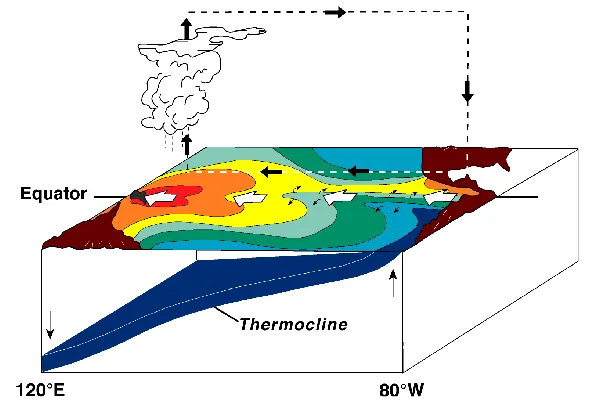
[La Niña occurrence mechanism © Namuwiki]
La Niña is a phenomenon in which trade winds strengthen, pushing the warm surface water of the eastern Pacific toward the western Pacific, with the vacated space filled by cold deep water, maintaining the sea surface temperature of the eastern Pacific below normal levels for several months or more. Although this explanation alone may not seem problematic, changes in sea surface temperature are not simple. When La Niña occurs, the overall atmospheric circulation pattern changes, and the variability of temperature and precipitation tends to expand significantly compared to before, with heavy snow and cold waves intensifying in some regions while mild weather continues in others.
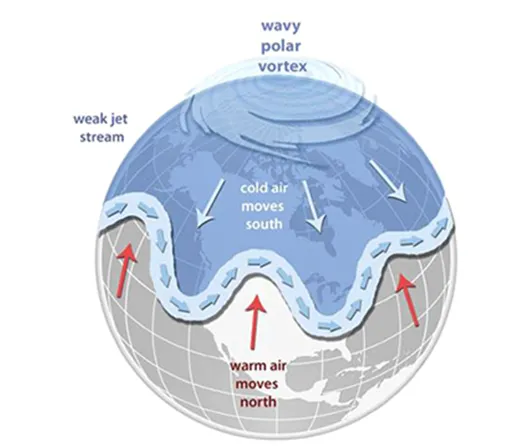
[Sudden Stratospheric Warming phenomenon © Climate Change Economics]
When the phenomenon of Sudden Stratospheric Warming overlaps with this, weather forecasting becomes even more difficult. Sudden Stratospheric Warming is a rare phenomenon in which the stratospheric temperature above the Arctic rises rapidly over a short period, and in the process, the structure of the Stratospheric Polar Vortex (SPV: a low-pressure mass accompanied by strong westerly winds that encircles the Arctic in the stratospheric polar region during the Northern Hemisphere winter) can weaken or become distorted. When the Arctic vortex weakens, cold air becomes more likely to descend to mid-latitude regions, increasing the possibility that stronger-than-normal cold waves or sudden heavy snow will appear in mid-latitude areas.
Extreme Winter Weather Disrupting Daily Life
Last year, temperatures in parts of Canada and the central United States dropped below -30°C, and residents of those areas experienced cold waves and heavy snow for the first time in decades. At the same time, winter storms with concentrated precipitation repeatedly occurred in California in the western United States as storm tracks shifted southward.
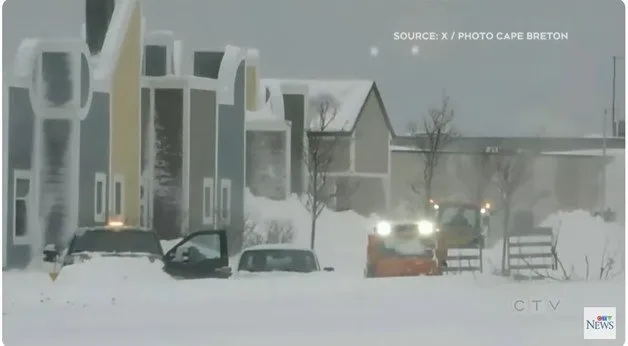
[Heavy snow in Canada © Dong-A Ilbo]
South Korea is no exception. Recently, days in which the daily temperature range in winter exceeds 10°C have increased, and a tendency for heavy snow of around 20 cm per day to be concentrated has also become prominent. Extreme weather phenomena that are difficult to explain through average temperature alone are repeating.
The extreme weather that is spiraling toward extremes is inflicting direct damage on our daily lives — including flight cancellations, road and rail transportation delays, and disruptions to commuting and logistics — with significant impacts also felt from safety accidents due to severe cold, crop damage, and surging energy demand.
Extreme Weather to Continue
Global weather experts have been warning that this winter as well, the convergence of La Niña and Sudden Stratospheric Warming could give rise to extreme weather. La Niña and Sudden Stratospheric Warming go beyond simple temperature changes in a single region, acting as compound factors that intensify extreme winter weather worldwide. As the instability of the climate system grows with global warming, the possibility that unpredictable weather phenomena will recur will remain valid.
Now more than ever, more precise observation and analysis, along with long-term climate response strategies, are critical.
by Editor L