
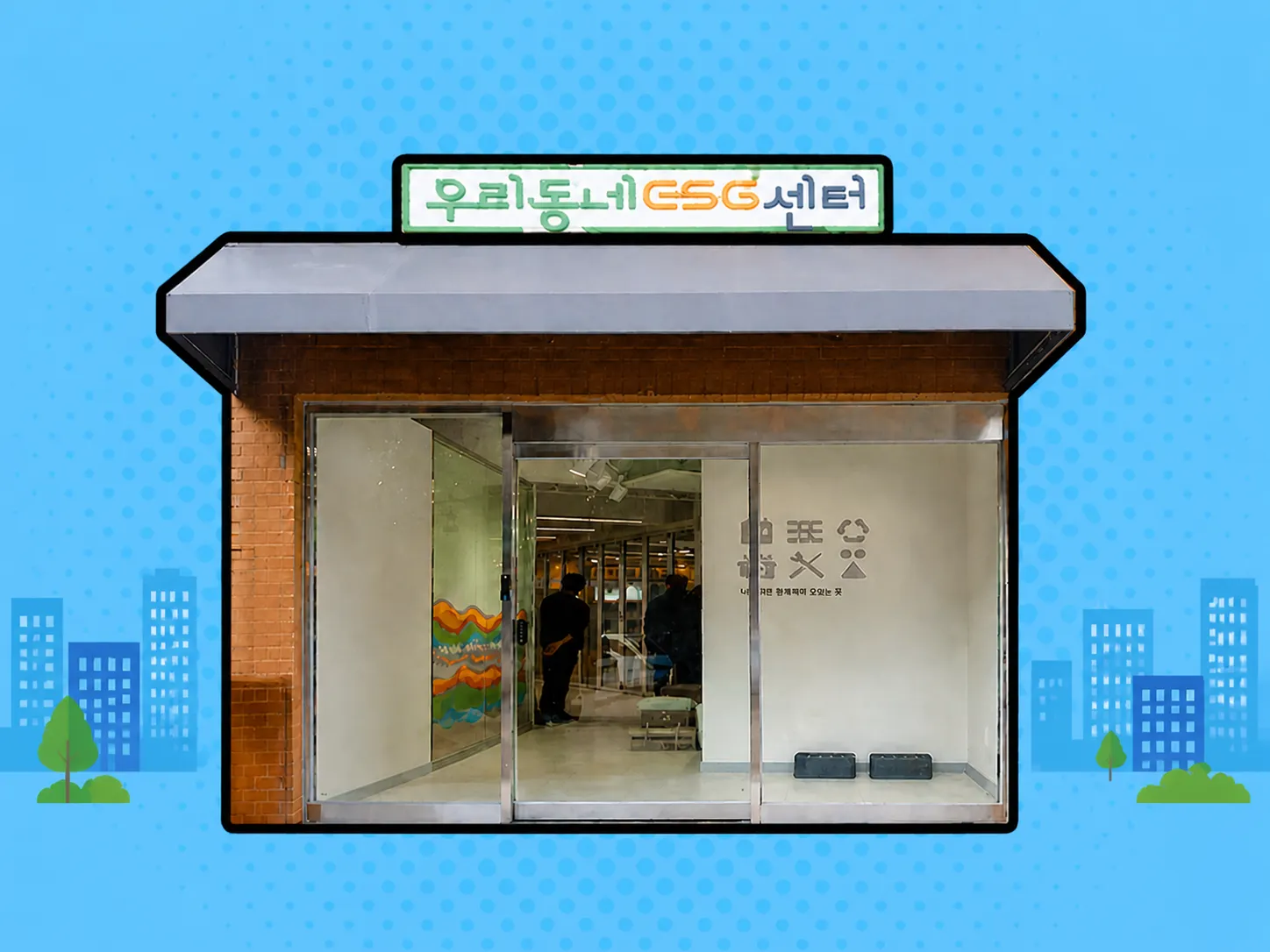
One can glimpse a company’s ESG status through its sustainability report. But how can citizens experience ESG in their daily lives? It is no easy task to think of ESG while sorting recyclables, or at a senior job site.
Busan Metropolitan City has embarked on a new challenge to bring ESG closer to citizens’ everyday lives. The ‘Our Neighborhood ESG Center’ is a living-zone hub that combines resource circulation with senior job programs, creating a space where citizens can experience ESG. Starting with the first center in Geumjeong-gu, Busan in 2022, it has spread across the city and continues to receive favorable assessments as a policy model that integrates environmental conservation and social care, reaching the opening of the seventh center this year. So what process has the Our Neighborhood ESG Center undergone, from the first to the seventh center, to arrive at its current form?
The Path to the Seventh ‘Our Neighborhood ESG Center’
The first center, which opened in Geumjeong-gu in 2022, upcycled approximately 30 tons of waste plastic to produce and distribute LED lighting, safety handles, baseball uniforms, and more. Alongside this, it linked senior job programs to establish an operating model combining resource circulation and welfare policies. The second center, which began expanding its functions in phases, introduced a sales structure for upcycled products to explore the potential for business self-sufficiency. The third center constructed a system that completes the resource circulation process within the region by having seniors carry out the entire process from washing and disassembling to compressing the waste plastic they collect.
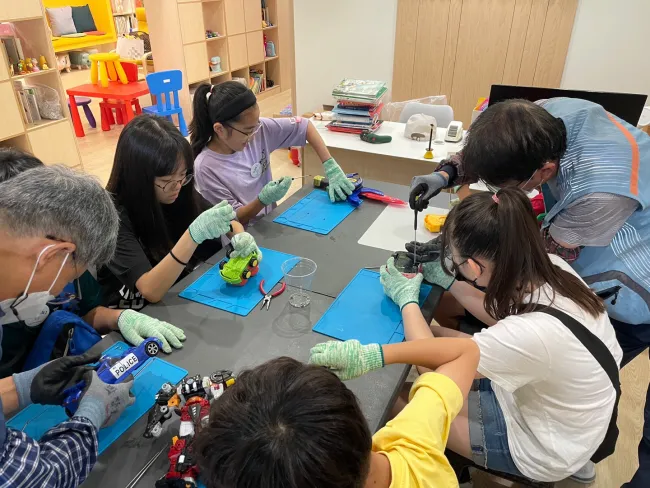
[Our Neighborhood ESG Center No. 1 (Geumjeong-gu, Busan) Ⓟ Busan Metropolitan City]
The fourth center broadened its scope, forming the ‘Coffee Grounds Resource Circulation Group’ in partnership with cafés in the Yeongdo area to expand the resource scope from plastic to coffee grounds. The fifth center then strengthened resident-participatory experience and education programs, transforming ESG into a ‘value to be experienced.’ The sixth center added community functions, expanding into a living-zone platform combining environmental education and local gatherings.
An Empty Space Becomes the Center of a Circular Economy
The seventh Our Neighborhood ESG Center, which opened this February in Jin-gu, Busan, can be said to epitomize the culmination of this accumulation. Newly created in the space of the now-closed Bohyun Daycare Center, this center transformed an urban idle space arising from low birthrates and an aging population into a composite hub combining environmental and caregiving functions. A space less frequented due to demographic changes has been transformed into a venue for regional circular economy and intergenerational connection.
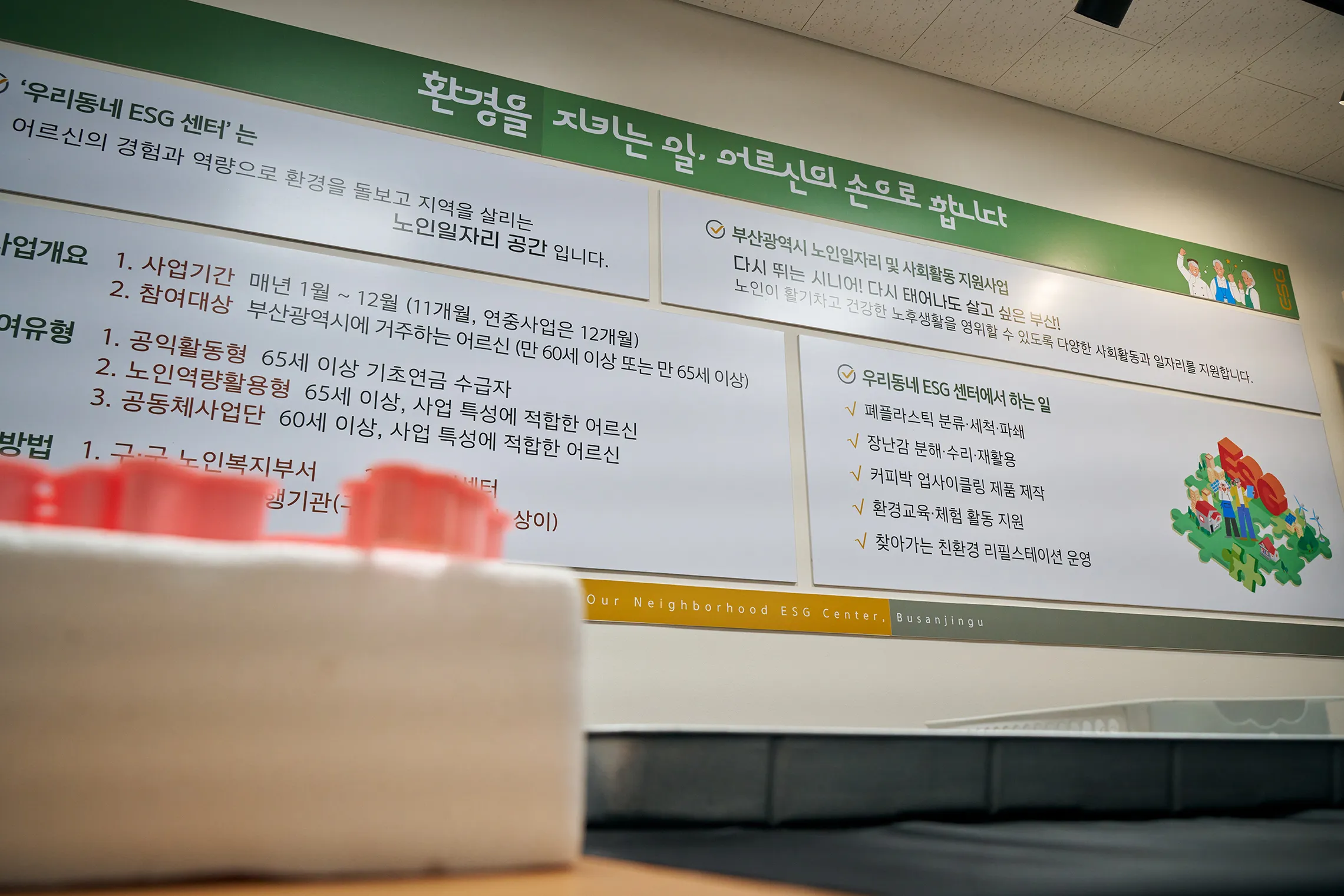
[Our Neighborhood ESG Center No. 7 (Jin-gu, Busan) Ⓟ Busan Metropolitan City]
At the seventh center, resident-participatory programs are operated on an ongoing basis, including resource circulation activities utilizing waste plastic, ice packs, and banners, as well as carbon neutrality environmental education and mini hydroelectric generator experiences. Going beyond merely being a facility that collects recyclables, it contributes to providing stable jobs and roles for local seniors, while creating an educational space that nurtures environmental sensitivity in children. It also offers opportunities for participating companies to practice their social responsibility.
Through Our Neighborhood ESG Center, practices for the environment that once felt distant have now become something citizens can experience right in their own neighborhoods. The seventh center has become an example that concretely demonstrates a sustainable lifestyle model along with the circular economy that residents, companies, and the local community build together.
The Achievements of the Seventh Center, the Future of the Sixteenth
By the time it reached the seventh center, Our Neighborhood ESG Center has grown into a pillar of the city’s strategy. To date, it has achieved approximately 3,500 senior job placements, the collection of 126 tons of plastic, and the participation of some 20,000 people in environmental education.
Busan City has announced plans to expand Our Neighborhood ESG Centers to 16 locations across the city within this year, in cooperation with public institutions and private companies. As this model combining environment, care, and participation spreads throughout the city, we look forward to seeing what changes ESG will create in citizens’ everyday lives.
by Editor N