
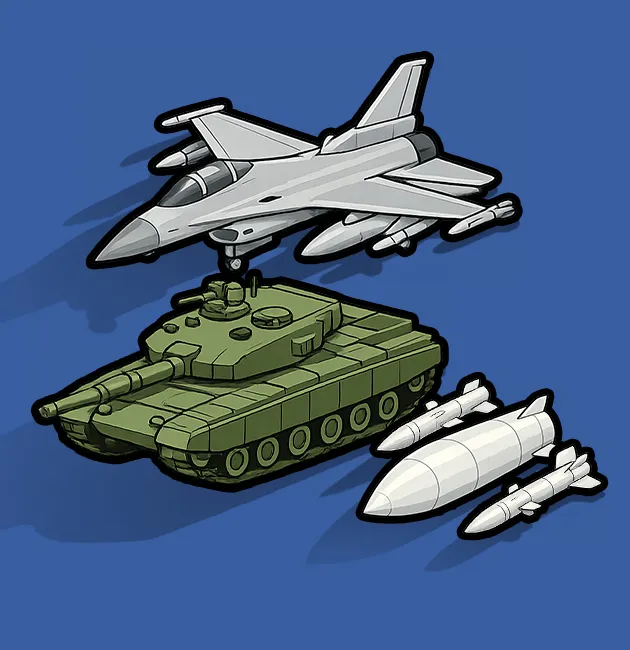
The 2008 Marvel film ‘Iron Man’ tells the story of Tony Stark, CEO of weapons manufacturer Stark Industries, who awakens as a superhero after witnessing the victims of the missiles he created. In this globally popular film, narratives also emerge in which those harmed by Tony Stark’s weapons awaken as villains. A weapon that is an instrument of ‘deterrence’ and ‘security’ for some can be the seed of anger and revenge for others. This paradox is not fiction. The U.S.-Iran war, which unfolded through the February 28, 2026 U.S.-Israeli airstrikes on Iran, the blockade of the Strait of Hormuz, and the death of Ayatollah Khamenei, summoned that paradox into reality.
The Defense Investment Frenzy Fueled by War Crisis
On March 3, 2026, the stock market opened after the holiday and war news with the KOSPI surging to the 6,200 level before plunging to the 5,800 level, while foreign investors unleashed a massive sell-off of approximately KRW 5.1 trillion, drawing sighs from investors. Yet on the same day, defense stocks moved in the exact opposite direction. Shares of LIG Nex1, a representative defense stock, surged 27.11% to KRW 647,000, hitting an all-time high, while Hanwha Aerospace shares rose 24.85% to KRW 1,492,000, also setting a record. Hanwha Systems shares also skyrocketed 29.40% to reach an all-time high. The strength of defense stocks continued the following day.
As it became known that the domestically produced air defense weapon ‘Cheongung-II’ deployed in the United Arab Emirates (UAE) had actually intercepted missiles launched by Iran in combat, it drew attention as a case in which superior domestically produced air defense weapons exported abroad were deployed in actual combat. The market, in effect, has already firmly classified defense as a ‘crisis beneficiary sector.’
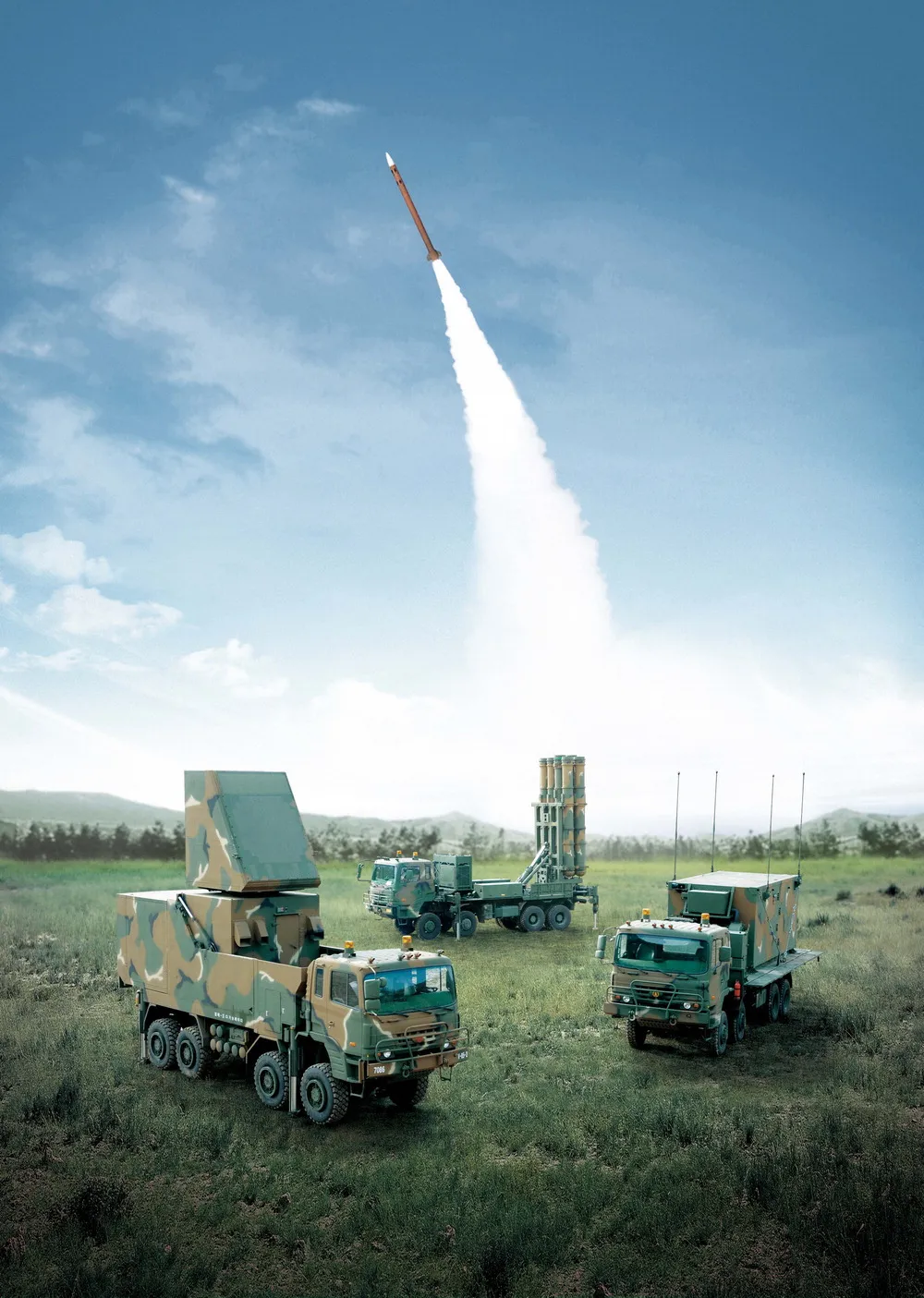
[Cheongung-II © LIG Nex1]
Lockheed Martin, the largest U.S. defense company, saw its stock price surge by more than 40% after the first airstrikes on Iran last June, and the returns of the American aerospace technology company Northrop Grumman (NOC), which possesses stealth bomber, drone, and radar technologies, also rose overwhelmingly. Europe is no different. Mikael Johansson, CEO of Swedish defense company Saab, revealed that the number of shareholders, which was about 50,000 before the 2022 Russia-Ukraine war, rose to more than 175,000 after the war. In Europe, movements to expand investment targets to sectors including defense are already becoming visible alongside the relaxation of ESG regulations.
Can the Defense Industry Be ESG?
Amid Middle East instability following the U.S. attacks on Iran, news also emerged that South Korea and the UAE have confirmed USD 35 billion in defense cooperation, going beyond simple weapons exports to build a full-cycle cooperation structure encompassing everything from design to maintenance. The securities industry predicts that, independent of the Iran situation, new order momentum will be highlighted, including the final approval of major projects within the EU SAFE program (a large-scale joint borrowing/defense capability enhancement project to strengthen EU defense capabilities) in March, and the resumption of Middle East business after Ramadan in April. However, domestic pension funds including the National Pension Service have yet to codify ESG investment criteria for defense companies. Amid a situation where defense stock prices are breaking all-time highs day after day, ESG fund managers face a vacuum in the criteria for judging inclusion.
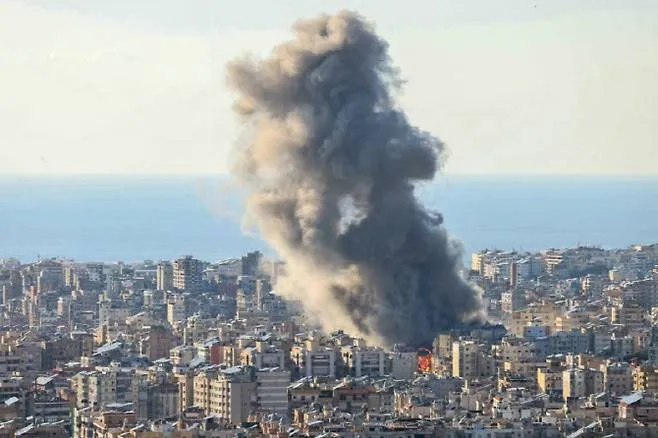
[Smoke rising following the Israeli airstrike on the southern suburbs of Beirut on the 2nd (local time) © AFP]
There is also strong opposition to including the defense industry in ESG. Like the villains that appeared in ‘Iron Man,’ if the weapons produced by defense companies cause civilian casualties or are supplied to authoritarian regimes, this directly collides with ESG’s ‘Do No Significant Harm’ principle. This war has dispelled the hypothesis that the era of expensive manned fighter jets is over and that the era of low-cost unmanned drones is coming, instead reaffirming the importance of stealth capabilities. While the logic that advanced weapons contribute to minimizing civilian harm could be used as a basis for ESG inclusion, the irony that the victims created by those weapons become the seeds of new threats remains unresolved.
Time for Criteria That Squarely Face the Light and Shadow of the Defense Industry
The securities industry diagnoses that since the outbreak of the Russia-Ukraine war in 2022, with conflicts expanding through Syria in 2024, Israel in 2025, and Iran in 2026, ‘the defense industry is a representative sector that cuts across the flow of the times.’ Conflicts are not one-off events, and clashes are not stopping. In this situation, the simple binary of excluding defense from ESG investment while including renewable energy no longer works. Just as Tony Stark established new principles after witnessing the damage his weapons had created, the investment industry is now at a point where it needs differentiated criteria that squarely face the light and shadow of the defense industry. Unless a multilayered evaluation system is put in place — encompassing the types of weapons, the human rights level of export destination countries, the presence of technology to minimize civilian harm, and governance transparency — the silence of ESG funds in the face of surging defense stocks can only continue.
by Editor N