

The ‘Food Safety Day’ observed every year on May 14 was designated to raise awareness of food safety and promote a safety-conscious mindset among food industry workers. Established by the Ministry of Food and Drug Safety (MFDS) in 2002, it was elevated to a statutory commemorative day through a 2016 amendment to the Framework Act on Food Safety. Now, ten years after becoming a statutory day, the meaning of ‘food safety’ has transcended the realm of simple food hygiene management. On Food Safety Day, we contemplate not only the safety of food but also the agenda of a society where everyone can eat safely without any members being left behind. From an ESG perspective as well, food safety is understood as an issue demanding responsibility toward the socially vulnerable and an institutional safety net.
Food Deserts That Still Exist
Near Exit 6 of Seoul’s Yeongdeungpo Station, by the roadside, stands a soup kitchen called ‘Thomas’s House.’ Opened in 1993, this soup kitchen provides lunch at a price of 200 won each day to homeless individuals, elderly people living alone, and jjokbang (small single-room dwelling) residents in the surrounding community who have difficulty feeding themselves. Serving an average of over 300 people daily, it has held its place for more than 30 years through the efforts of volunteers and individual donors, without support from local governments or the national government. It is a symbolic place showing that blind spots in the food safety net still exist in our society. Socially vulnerable groups such as children, the elderly, and persons with disabilities find it difficult to secure balanced nutrition on their own, and in the absence of systematic societal management, they are easily exposed to nutritional imbalances. It is also a reality that members of environments where hiring a professional nutritionist is difficult — such as small childcare centers or welfare facilities for the disabled — can hardly be guaranteed adequate hygiene management or nutritional balance. For food safety to establish itself as a social responsibility, a cooperative operational system tightly connecting the government, public institutions, and local governments is necessary.
Nutrition Management Supported by the Food Safety Management Institute
To build a food safety net, the MFDS is responsible for overseeing food safety policies based on the Framework Act on Food Safety, while local governments are entrusted with establishing and operating Children’s and Social Welfare Meal Service Management Support Centers to provide locally tailored services.
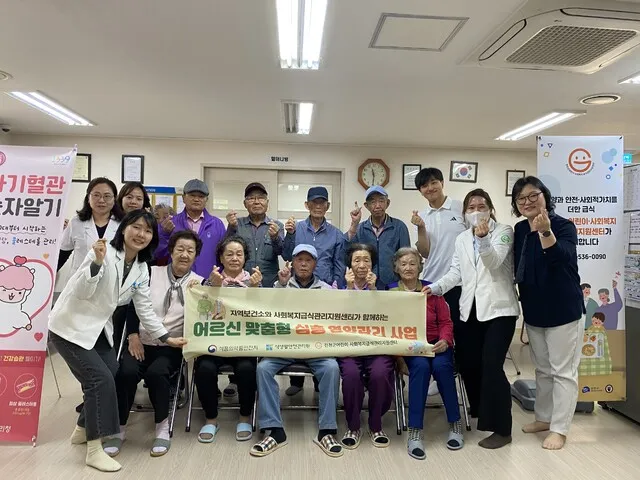
[Customized In-Depth Nutrition Management Special Project run by the Jincheon County Children’s and Social Welfare Meal Service Management Support Center in 2025 © Jincheon-gun, Chungcheongbuk-do]
The MFDS, in cooperation with its affiliated institution the Food Safety Management Institute, has established a meal service support system for vulnerable groups. The Food Safety Management Institute supports the improvement of dietary safety for nutritionally vulnerable groups through two key programs. The first is the operation of the Children’s Meal Service Management Support Centers. At these centers, responsible nutritionists make direct visits to small childcare centers and child welfare facilities that are not required to employ a nutritionist, providing巡回 guidance on hygiene and nutritional status. The centers also develop customized educational materials for children, provide tailored menus and standardized recipes, and conduct dietary education for children, kitchen staff, and parents.
The second key program is the operation of the Social Welfare Meal Service Management Support Centers, which began in 2023. These centers support customized hygiene and nutrition management for small-scale elderly and disabled welfare facilities that lack a nutritionist. Specifically, they design meal plans that account for the physical conditions and health status of elderly and disabled individuals requiring social care, and conduct hygiene inspections of cooking environments.
A Safe Meal That Must Be Guaranteed for All
Recently, in addition to the on-site visit support approach for food safety, the MFDS also operates digitally-based management programs to enhance transparency. A representative example is the website ‘Food Safety Korea’ operated by the MFDS. On this website, consumers can access the food history information menu, enter a product name or company name, and view information on every stage from production to sale. Food Safety Korea also offers a safety management certification product verification service, serving as a window through which consumers can access food safety information.
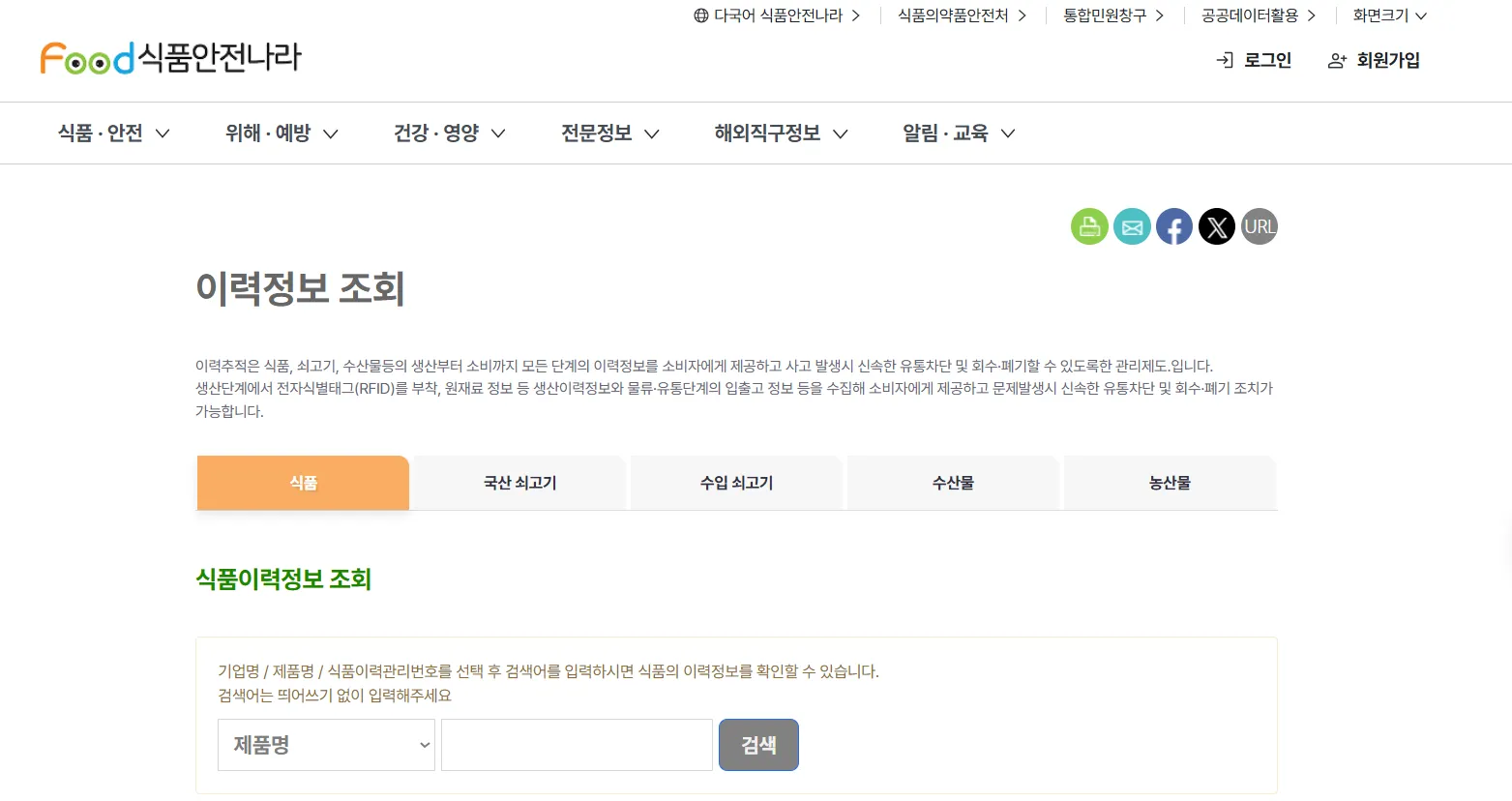
[Screen of the Food History Information Search menu on the Food Safety Korea website © Food Safety Korea]
When the institutional efforts of public agencies including the MFDS meet the dedication of private organizations like Thomas’s House, the food safety net will become even tighter. A safe and balanced meal for sustaining life is a universal right that must be guaranteed to every member of society, and a sustainable society is one where all members can sit at a safe table equally. Food Safety Day is one small step in that direction.
by Editor N