
For a long time, the ministry that set greenhouse gas reduction targets and the ministry that controlled the power policies needed to achieve them were separate. The Ministry of Environment proposed the reductions, while the Ministry of Trade, Industry and Energy decided the power generation mix and facility plans. Launched on October 1, 2025, the Ministry of Climate, Energy and Environment (hereinafter, the Ministry of Climate) is the result of combining these two functions in one ministry. With the Ministry of Environment taking over the Ministry of Trade, Industry and Energy’s energy policy functions, the same ministry now handles both target-setting and implementation measures.
The Ministry of Climate’s first year can be examined across three areas: institutional measures that put reduction targets into law and price emissions; renewable energy deployment, which must translate those measures into actual increases in generation capacity; and planning, which determines which power sources will meet rising electricity demand. The first two can be assessed through the past year’s results, while the third is emerging in the 12th Basic Plan for Long-Term Electricity Demand and Supply and the 2027 budget proposal currently being prepared. These are also the areas to watch in assessing the Ministry of Climate’s second year.
Put targets in law and put a price on carbon
The area that advanced most rapidly was greenhouse gas reduction targets and related systems. The Nationally Determined Contribution (NDC)is each country’s self-determined emissions reduction commitment submitted to the United Nations under the Paris Agreement. The government has submitted to the UN a target of reducing greenhouse gas emissions by 53% to 61% from 2018 levels by 2035.
The fact that targets after 2031 were left blank had already been identified as an issue in the Constitutional Court’s 2024 decision declaring the provision nonconforming to the Constitution. On August 26, 2026, the National Assembly amended the Framework Act on Carbon Neutrality to codify reduction ranges of 69% to 80% by 2040 and 84% to 90% by 2045. Two years after the decision, the pathway to carbon neutrality by 2050 was connected in law for the first time.
Carbon pricing also moved forward. The Emissions Trading Scheme (ETS) allocates emission allowances to companies and allows them to trade surplus or insufficient allowances. The government had required power generators to pay for and purchase only 10% of their allowances through 2025, but decided to raise this share to 50% by 2030. The remaining half will continue to be allocated free of charge, but power generators with higher emissions will have to purchase a larger volume of allowances. The Ministry of Climate said the allowance price rose from approximately KRW 10,000 per ton in November 2025 to approximately KRW 30,000 at the end of September 2026.
The price signal also appeared in the transport sector. Electric vehicles accounted for 23.2% of new vehicles sold in 2026. In setting targets in law and placing a cost on emissions, notable progress was made in just one year.
Between 40 GW and 100 GW: Where renewable energy capacity stands today
The pace at which institutional changes translate into actual capacity growth has been slower. The government has set a target of increasing renewable energy capacity to 100 GW by 2030. At a press briefing marking the Ministry of Climate’s first anniversary on October 1, 2026, Minister Kim Seong-hwan acknowledged that total capacity growth had been insufficient, saying current capacity was just under 40% of the target. Filling the remaining roughly 60 GW would require an average annual increase of about 15 GW from 2027 through 2030. Minister Kim forecast annual growth of more than 10 GW beginning in 2027, centered on solar power, but it remains to be seen whether actual deployment will reach the level needed to meet the target.
The Ministry of Climate also revised systems to accelerate deployment. The Renewable Portfolio Standard (RPS) requires large power generators to meet a set share of their electricity supply with renewable energy. The Ministry of Climate established the legal foundation for transitioning this system to a contract market centered on capacity deployment and competitive bidding, with the new system to take effect in 2027. It will also expand a flexible grid-connection system that permits connections subject to output restrictions during periods of concentrated power supply. Combined with energy storage and the reallocation of connection capacity, the government plans to increase the grid’s renewable energy hosting capacity in 2030 from the 119 GW in the existing plan to 171 GW. However, institutional reform and increased hosting capacity will take time to translate into actual growth in generation capacity.
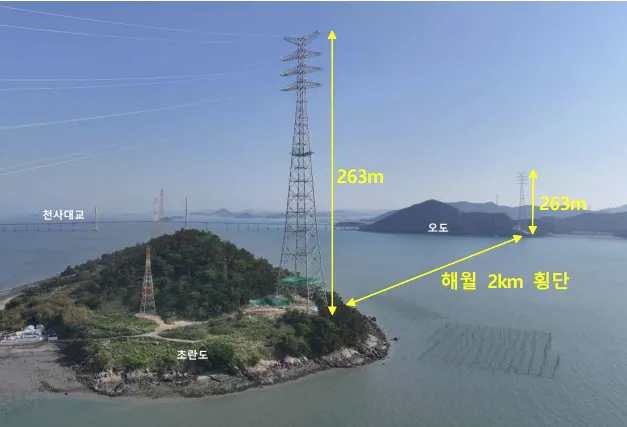
The pace of renewable energy deployment is also linked to emissions reduction performance. At the briefing, Minister Kim assessed that greenhouse gas reductions had fallen short of expectations, citing increased operation of some coal-fired power plants due to conflicts in the Middle East. Official statistics separately compiling emissions for the first year after the ministry’s launch have not yet been released. Nevertheless, the task remains to expand renewable energy, storage facilities, and the power grid together so that reductions can continue even when energy prices and supply conditions change.
The answer for year two lies in the electricity plan
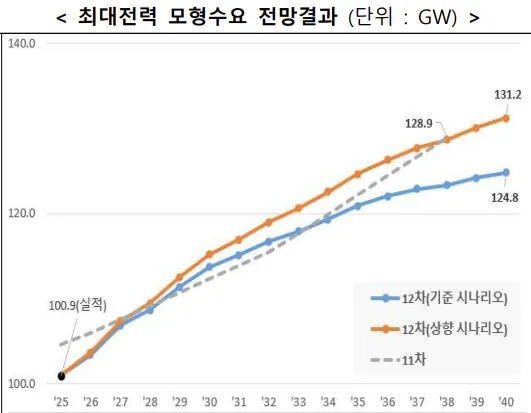
A revised electricity demand forecast presented at the August 2026 forum on the 12th Basic Plan for Long-Term Electricity Demand and Supply put peak electricity demand in 2040 at approximately 27 GW higher than the forecast issued in April 2026. The increase reflects demand from semiconductors and AI data centers. It is not confirmed additional supply capacity, but the increase in demand that must be prepared for. Since the reduction pathway will also depend on which power sources meet rising demand, the burden on renewable energy deployment will grow heavier.
The future of renewable energy and coal will be determined in the electricity plan. The plan is a statutory framework that determines electricity demand and the generation mix for the next 15 years. The Ministry of Climate had initially scheduled the government proposal for October, but said it would be delayed by two to three months due to public discussions over the role of nuclear power. A proposal to phase out the 60 coal-fired power plants currently in operation from the power market by 2040 is also under discussion. However, because retaining some of them as emergency security power sources is being considered as well, the timing of closures and replacement sources must await the final plan.
The 2027 budget proposal reveals the focus of the second year. Total spending is KRW 25.7319 trillion, up 18.3% from 2026 and the largest ever. Of this, the energy transition sector grew by 112%, accounting for 72.4% of the total increase, while the budget for renewable energy financial support rose by 133%. Whether the budget leads to actual capacity growth is therefore a key point to watch in the second year. By contrast, funding for climate disaster response rose only 0.8% over the same period, leaving the balance of fiscal allocation as another issue for consideration during the National Assembly’s review.
by Editor L