Loading Data
Please wait a moment...
Update Cal.
2026.08
03
Mon
04
Tue
05
Wed
06
Thu
07
Fri
08
Sat
09
Sun
Update Calendar
2026.08
01
Sat
02
Sun
03
Mon
04
Tue
05
Wed
06
Thu
07
Fri
08
Sat
09
Sun
10
Mon
11
Tue
12
Wed
13
Thu
14
Fri

Loading Data
Please wait a moment...
Morning features and interviews. A morning story over a cup.
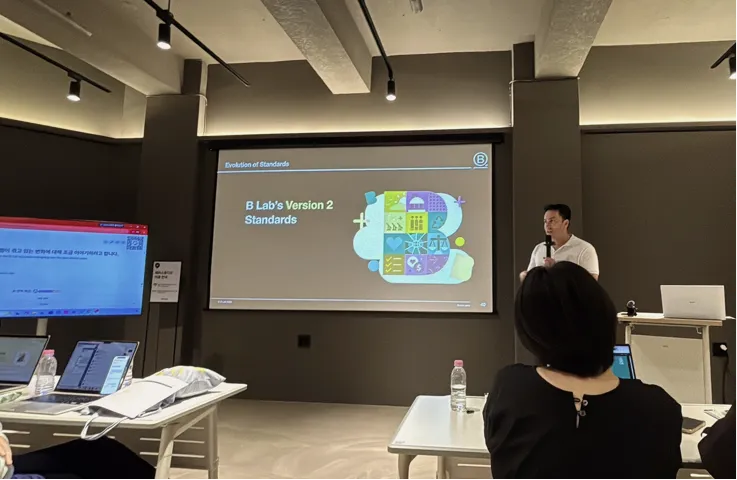
‘B Corp Certification’ is a global certification and corporate movement that recognizes businesses prioritizing social and environmental responsibility beyond profit-seeking. Currently, over 10,900 companies across more than 100 countries and 160 industries have obtained B Corp Certification. In South Korea, around 30 companies, including Toss Bank, DLG Law Firm, and Impact Square, are listed as B Corp Certified companies.B Lab, the global nonprofit organization that operates B Corp Certification, unveiled its newly revised certification standards in April 2025. The new standards have been applied to new certification applicants since March 2026 — the seventh revision since B Lab’s founding, and widely regarded as the most significant change in 19 years. B Lab has set ‘System Change,’ centered on continuous improvement and collective effort, as the goal of this standards revision. In this regard, B Lab Korea, B Lab’s Korean partner organization, held a ‘B Corp Certification Information Session’ on June 29 to introduce the new certification standards to domestic corporate representatives. The session covered the revised B Corp Certification evaluation methods, detailed criteria, and their significance.[B Lab Korea Executive Director Jeong Tae-eun explaining B Corp Certification at the session © ESG.ONL]All Seven Impact Areas Must Be Passed to Be CertifiedThe core of this certification standard revision is the abolition of the previous composite score summation method. Previously, a company could receive a high overall score by performing exceptionally well in one area, such as environment, which would offset weaker performance in other areas like governance or labor conditions. Under the new standards, such compensation is no longer permitted. Instead, companies must meet detailed sub-performance criteria across seven impact topics: ▲Corporate Purpose & Stakeholder Governance ▲Fair Labor ▲Justice, Equity, Diversity & Inclusion (JEDI) ▲Human Rights ▲Climate Action ▲Environmental Management & Circularity ▲Government Relations & Collective Action. Performance in one area can no longer fill the gaps in another. [The Seven Impact Topics of the Newly Revised B Corp Certification Standards © Captured from B Lab Korea Website] Examining some of the key topics among the seven: ‘Corporate Purpose & Stakeholder Governance’ requires companies to act according to a defined purpose and establish governance that monitors social and environmental performance. ‘Fair Labor’ addresses quality jobs, fair wage practices, and reflecting worker feedback in decision-making. ‘Climate Action’ requires establishing plans that contribute to limiting global warming to 1.5°C, and for large corporations, includes greenhouse gas emissions and Science Based Targets (SBT). ‘Government Relations & Collective Action’ covers corporate efforts to work collectively to promote systemic change. Beyond Regulatory Compliance, Toward Substantive ActionThe backdrop of this revision is the regulatory environment. The new standards were developed in compliance with the EU’s ‘Empowering Consumers for the Green Transition Directive,’ scheduled to take effect in September 2026. This regulation prevents companies from engaging in greenwashing, such as unsubstantiated eco-friendly advertising. Amid the global trend of tightening greenwashing regulations, B Lab has set a direction through the new standards for companies to go beyond regulatory compliance and take substantive action on social and environmental issues. Companies that have received B Corp Certification must continue to demonstrate compliance with the standards and show improvements at each evaluation cycle. [Billy Hanafee, B Lab Global Certification Operations Strategy Lead, explaining the new B Corp Certification standards © ESG.ONL]The more stringent performance criteria in the B Corp Certification process may pose a burden on small and medium-sized enterprises (SMEs). For companies with limited personnel and budgets, evaluating and meeting criteria across all seven areas is challenging. Reflecting these difficulties, the revision now varies the number of detailed requirements that companies must fulfill, ranging from a minimum of 20 to a maximum of 124, depending on size and industry sector. The structure applies more requirements to large enterprises and a more basic level of requirements for SMEs first. If we compare B Corp Certification to a corporate ‘health check-up,’ this revision can be seen as having increased the number of check-up items, while the application of those items can now be adjusted to fit the company’s weight class. Beyond just B Corp Certified companies, any company can freely measure its impact performance through the B Impact Assessment platform. The B Impact Assessment is a tool provided by B Lab for measuring a company’s social and environmental impact, evaluating corporate operations and business models across five areas: governance, workers, community, environment, and customers.Amid growing investment demand for ESG-managed companies, expectations for corporate B Corp Certification are also rising. In line with this trend, B Lab is refining its certification standards. As certification strengthens, obtaining B Corp Certification can serve as a competitive advantage for overseas business expansion and investment attraction. At the information session, a B Lab Korea representative emphasized the practical competitiveness of B Corp Certification as a management verification tool, noting that “Korean IT startup Eqpoall was able to gain a high level of trust in the North American market by promoting its B Corp Certification status.” The bar for B Corp Certification has been raised, but the weight of trust in the certification has shifted accordingly. Companies that prove their responsibility across all seven areas and have their implementation consistently verified at each evaluation cycle will serve as the standard demonstrating that B Corp Certification is not a checkpoint but a continuous practice. by Editor L
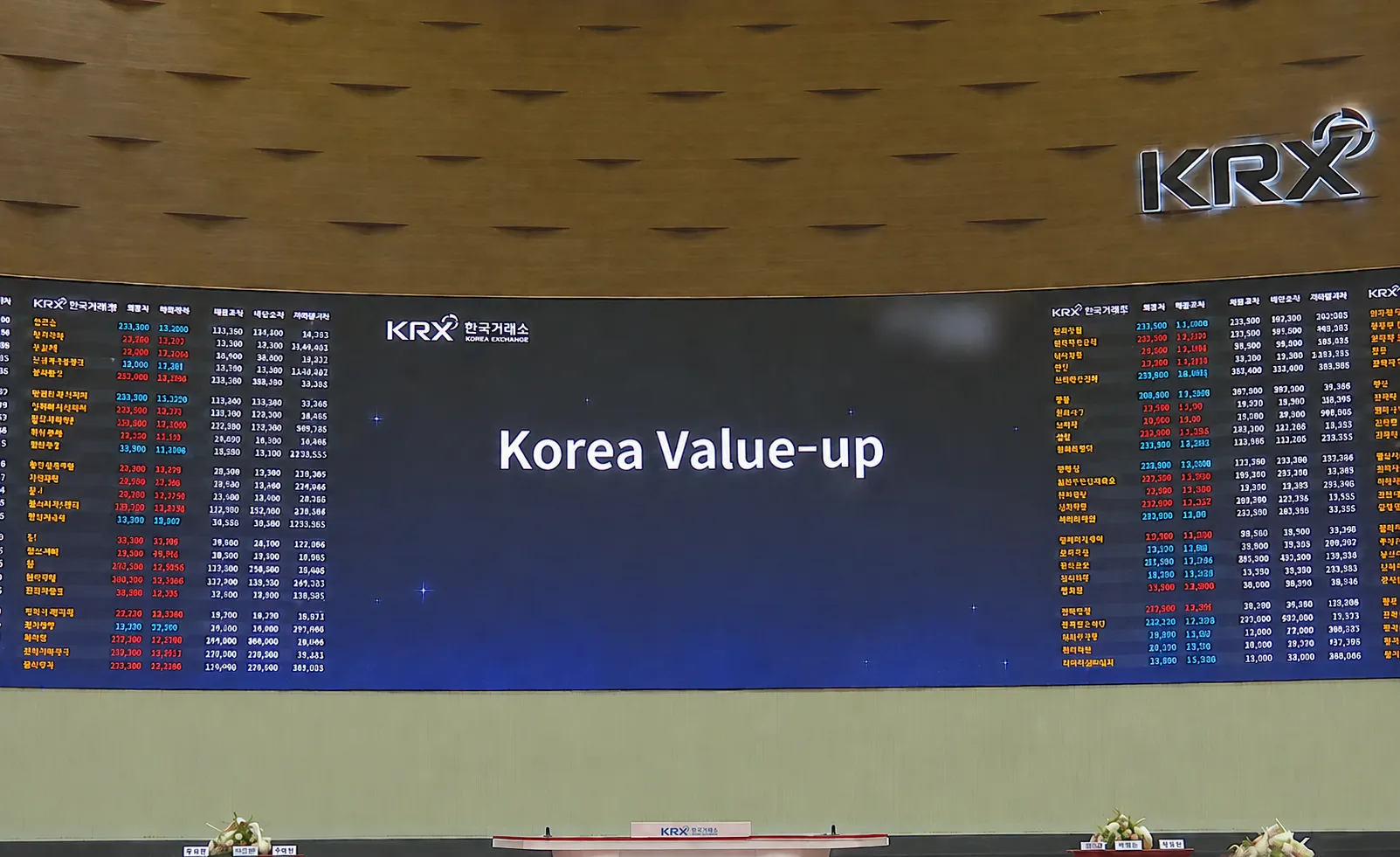
The Korea Exchange (KRX) confirmed the regular rebalancing of the Korea Value-Up Index constituent stocks through the Index Operation Committee on May 21, and the results began to be fully reflected in the market starting June 12. With 20 stocks added and 19 removed in this rebalancing, all 100 constituents have now been filled with companies that have disclosed corporate value enhancement plans roughly two years after the index’s launch. The core of this regular rebalancing lies not in the numerical reshuffling itself, but in the shift in the index’s operational direction. The Korea Value-Up Index had only 7 disclosing companies among its constituents when first announced in September 2024. The disclosure ratio steadily expanded thereafter — reaching 25% in December 2024 and 61% in June 2025 — and with this adjustment, it has reached 100%.[Korea Value-Up Index additions and removals © Korea Exchange]Disclosure Compliance Determines the Fate of StocksThis regular rebalancing is the ‘Phase 3’ measure — the final stage of the phased operational plan outlined by the KRX. In Phase 1, which began in 2024, companies that made early disclosures of their corporate value enhancement plans were granted special inclusion, allowing them to remain in the index for two years, thereby encouraging voluntary participation. Starting with Phase 2 the following year, special inclusion was applied to companies recognized as Value-Up Excellence Companies, and incentives such as relaxed evaluation criteria were provided to disclosing companies. Conversely, penalties were imposed on previously included companies that failed to disclose, such as tightened criteria for market valuation and market capitalization. Phase 3, applied this month, constitutes the index centered on disclosing companies, while non-disclosing companies may be preferentially removed.Under this direction, industry-specific performance trends and disclosure compliance determined the fortunes of individual stocks in this rebalancing. In the industrial goods sector, major shipbuilding and power infrastructure companies such as HD Hyundai Heavy Industries, HD Korea Shipbuilding & Offshore Engineering, and HD Hyundai Marine Solution were added in significant numbers. In the IT sector, SK Square and Tes were included; in consumer staples, APR; in healthcare, Caregen; and in finance, NH Investment & Securities — a total of 20 stocks newly entered the index. Conversely, major industrial and IT companies such as Hyundai Rotem, Hyosung Heavy Industries, POSCO DX, and Poongsan, which had recently seen rising stock prices, were removed. A clear signal has been sent to the market that even companies with solid performance metrics can hardly remain in the index without disclosure.Constituent Count from 99 to 100, Market Cap Share Expands to 54.6%The Korea Value-Up Index constituent count had decreased to 99 last December due to the merger of HD Hyundai Infracore, but was readjusted to 100 through this regular rebalancing. After the rebalancing, the market capitalization share of the index constituents relative to the total KOSPI and KOSDAQ market capitalization reached approximately 54.6%. With the large-scale inclusion of key companies from market-leading sectors such as shipbuilding, defense, and IT, the index’s market representativeness can be assessed as having broadened further. The changes will also be automatically reflected in the asset composition of exchange-traded funds (ETFs) that track the Korea Value-Up Index as their underlying asset. As of the end of March 2026, the total net assets of 13 Value-Up ETFs stood at ₩2.6 trillion, a 439.4% increase from their initial launch. With this reorganization expected to increase the weight of shipbuilding and infrastructure stocks while reducing that of some consumer goods and healthcare stocks, ETF investors’ portfolio shifts also warrant attention. Since its base date of September 30, 2024, the Korea Value-Up Index has recorded returns exceeding the KOSPI’s increase by 31.8 percentage points, driving capital inflows. [Korea Value-Up Corporate Disclosure Status © Korea Exchange KIND]Tax Incentives as a Catalyst for Accelerated Disclosure ParticipationBeyond the phased operational plan, another backdrop to this reorganization is the explosive increase in the number of companies participating in disclosure. With the December 2025 revision of the Special Tax Treatment Control Act, separate taxation was introduced for dividend income from stocks of high-dividend companies meeting certain requirements, excluding it from aggregation with other financial income. Following the revision, disclosure became mandatory for high-dividend companies seeking dividend income tax benefits. Individual shareholders with financial income of ₩20 million or less had their dividend income withholding tax rate lowered from 14% to 9%, and companies could deduct 5% of the excess from corporate tax if their total shareholder return increased by 5% or more compared to the average of the preceding three years.These tax incentives became a decisive driver of corporate participation in disclosure. In March 2026 alone, a total of 409 companies newly disclosed corporate value enhancement plans, of which 405 were high-dividend companies. The cumulative number of listed companies that have disclosed totaled 590, comprising 307 on KOSPI and 283 on KOSDAQ, a sharp increase from 181 at the end of February to 590 in a single month. As the tax benefit requirements for high-dividend companies are linked to the disclosure obligation, value-up disclosure is rapidly establishing itself as essential capital market infrastructure.[Cumulative Trend in Number of Companies Filing Main Disclosures © Korea Exchange ‘Monthly Corporate Value Enhancement Status’]The KRX stated, “We plan to manage the index according to the phased operational plan, aiming to support the spread of a corporate value enhancement culture by constructing the index centered on companies that have disclosed value enhancement plans.” However, while the formal goal of a 100% disclosure system has been achieved, the completion of disclosure does not guarantee the improvement of corporate value. Demands for qualitative criteria such as the substantive depth of disclosure content, the traceability of plan implementation, and whether they are linked to shareholder return performance are emerging as the next challenge. Whether this reorganization prompts additional listed companies to participate in disclosure and how well existing disclosing companies fulfill their promises will be the yardstick for measuring the substantive performance of the Value-Up Program. by Editor L

The argument that ESG has a substantive impact on corporate value has now moved beyond the realm of theory. Stock price data is brutally honest. The market capitalization of companies that have internalized ESG as a core strategy is rising, while those that merely pay lip service to it or act counter to it are receiving harsh judgment from the market through opposite results. As investors have begun to consider the non-financial performance of companies as an investment factor, ESG has become a variable that directly affects stock prices. Microsoft: ESG Becomes a PremiumThe company most frequently cited as a representative ESG success story is Microsoft. Microsoft already achieved carbon neutrality in 2012 and has set a target of becoming ‘Carbon Negative’ — where carbon absorption exceeds emissions — by 2030. It has also continuously earned the highest ESG rating of AAA from Morgan Stanley Capital International (MSCI), ranking in the top 7% of the software development industry as of 2023–2024. According to MSCI research, a statistically significant gap in the cost of equity exists between top-tier and bottom-tier ESG companies. Microsoft is evaluated by investors as a ‘safe growth stock’ and continues to experience steady capital inflows. As a result, it has benefited from low capital procurement costs, raising large-scale funds at far lower interest rates than competitors. Since 2020, Microsoft’s stock price has consistently outperformed the S&P 500 index average, which is analyzed as the result of a synergistic combination of AI business expansion and ESG management.[Microsoft Carbon Negative Target Strategy © Microsoft Official Blog]BP: Investment Structure That Diverged from Campaign LanguageConversely, there are also cases of ESG management failure, and their repercussions were far greater than the success stories. British Petroleum (BP) changed its name to the present BP alongside a rebranding campaign in 2000. In that campaign, BP adopted the slogan ‘Beyond Petroleum’ and a green logo, declaring a leap forward as an eco-friendly energy company. The reality, however, was different. Around the same time, BP acquired the American oil company ARCO (Atlantic Richfield Company) for USD 26.5 billion to expand its oil exploration domain. Then in 2010, BP’s image as an ‘eco-friendly energy company’ collapsed in an instant due to the Deepwater Horizon oil spill. On April 20, 2010, the Deepwater Horizon drilling rig operated by BP in the Gulf of Mexico exploded and sank, causing a massive crude oil spill. The spill continued for 87 days and left 11 people dead. Immediately after the accident, BP’s stock price plummeted by approximately 50% over several months. It was the outcome of ‘image ESG’ — where ESG was put forward but not backed by substantive investment. Perhaps conscious of this, BP announced a ‘strategic reset (Reset BP)’ in early 2025, cutting clean energy investment by over USD 5 billion and raising fossil fuel production targets by 60%. In effect, it declared a break with its own mistake of 20 years ago.[BP International Business and Technology Centre © Broadway Malyan (architecture firm that designed the BP building) Official Website]Unilever: Erosion of Investor Trust Triggered by ESG RollbackThere are also cases that serve as a warning from the midpoint between ESG success and failure. Under former CEO Paul Polman from 2010 to 2019, the British cosmetics company Unilever established itself as a symbolic ESG company by pursuing the ‘Unilever Sustainable Living Plan’ as its growth strategy. However, newly appointed CEO Hein Schumacher in April 2024 significantly rolled back Unilever’s key ESG targets, including downgrading the previous target of reducing new plastic use by 50% by 2025 to a 40% reduction by 2028.Outside observers assessed this strategic shift as the result of capitulating to shareholder pressure, given that Unilever’s stock price had been in a prolonged slump since peaking in 2019. Meanwhile, institutional investors unleashed a torrent of criticism over Unilever’s ESG strategy change. This shows that the market reads not only whether a company implements ESG, but also the very act of retreating from stated commitments as a risk signal.[Cover of Unilever’s 2025 Climate Policy Engagement Review © Unilever Website]How Does the Stock Market Read ESG?The common thread running through all three cases is clear. The market judges ESG not as a matter of morality but as a matter of risk management capability. When ESG is deeply embedded in business strategy, as with Microsoft, substantive financial benefits follow in the form of lower capital costs and institutional investor preference. Conversely, when a company builds an image through ESG-themed campaigns without changing its actual investment structure — and when an environmental disaster is added on top — the brand image that had been accumulated collapses in an instant, as with BP. Unilever proved how costly a choice it is to retract trust once it has been established. At a time when mandatory ESG disclosure is being phased in from 2028, stock price data is already showing that ESG has shifted from being ‘the story of a good company’ to ‘an indicator of viability.’ by Editor L

ESG is now a familiar term to many. And today, once again, we have logged onto ESG Today to reflect on the meaning of ESG. While ESG is widely known today, its origins and history have not been sufficiently shared. On the occasion of Teachers’ Day, let us trace the history of ESG, focusing on the pioneers and mentor-like figures of this field.1950s–Early 1990s: From CSR to ESG, the Evolution into SustainabilityThe beginnings of ESG can be seen in the development of the concepts of Corporate Social Responsibility (CSR) and sustainability. The concept of CSR first appeared in American economist Howard Rothmann Bowen’s 1953 book, ‘Social Responsibilities of the Businessman.’ In it, Howard Bowen argued that businesspeople must follow policies and make decisions that align with the goals and values of our society. Considering the prevailing view of the time, which regarded the sole purpose of business as maximizing profit, the argument for corporate social responsibility was novel. [Howard Bowen © University of Illinois]Entering the 1960s, CSR research continued while various citizen movements arose. In 1962, American marine biologist Rachel Louise Carson published ‘Silent Spring,’ a book that demonstrated the comprehensive, negative impacts of indiscriminate pesticide use on ecosystems, and became a catalyst for the global spread of the mass environmental movement. From the mid-1960s to the early 1970s, the anti-Vietnam War movement opposing U.S. intervention in Vietnam also emerged. [Rachel Carson and her book <Silent Spring> © U.S. Fish and Wildlife Service Official Website / Ecolibre Publishers]Entering the 1980s, the full-fledged emergence of the ESG concept began. In 1987, the World Commission on Environment and Development (WCED) of the United Nations Environment Programme (UNEP) published the report ‘Our Common Future’ — better known as the Brundtland Report — which introduced the agenda of ‘sustainable development’ for the first time. The Brundtland Report defined this agenda as ‘development that meets the needs of the present without compromising the ability of future generations to meet their own needs.’ The sustainability agenda played a decisive role in establishing policy strategies enabling humanity to continue economic progress while protecting environmental values. After 1990, meaningful discussions began to take shape in each of the Environmental (E), Social (S), and Governance (G) domains. In 1992, with the adoption of the Rio Declaration containing fundamental principles on environment and development, the world’s three major environmental conventions (UNFCCC, Convention on Biological Diversity, and UN Convention to Combat Desertification) were advanced, establishing global evaluation criteria for the E domain of ESG.1990s: John Elkington’s ‘Triple Bottom Line’ — The Full-Fledged Emergence of the ESG ConceptThe most significant event in ESG history during the 1990s can be said to be writer and entrepreneur John Elkington’s introduction of the Triple Bottom Line (TBL) concept in 1994 — an authority in the field of sustainable management. TBL is the concept that forms the foundation of corporate ESG evaluation, signifying that when assessing corporate performance, not only financial profit but also the impact on the environment and society must be considered. The evaluation elements consist of the 3Ps (Profit, Planet, People), representing economic gain, environmental impact, and social responsibility, respectively. Conventionally, corporate profit is calculated at the bottom line of the income statement, but given the extensive influence companies have on society, social and environmental impacts should also be integrated into the final net profit. Starting from the emergence of TBL, the call for companies to shift from profit-centered management to sustainable management grew louder. In the 2020s, John Elkington even criticized TBL, arguing that it was being misused as a mere accounting tool contrary to its original intent. While TBL was conceived as a concept necessary for tracking what environmental and social value corporate activities create, it had come to justify even unethical corporate behavior. Subsequently, in his 2021 book ‘Green Swan,’ John Elkington emphasized that beyond the evaluation and transformation of individual companies, change is needed to overcome the pan-human crisis of climate change and environmental destruction.[John Elkington and his book <Green Swan> © Board Intelligence Official Website / Dunan Publishers]2000s: ESG First Appears as an Official Term in Kofi Annan’s <Who Cares Wins> ReportFinally, in the 2000s, the term ESG made its appearance. In 2004, ESG officially appeared for the first time in the report ‘Who Cares Wins,’ published by the United Nations Global Compact (UNGC). UN Secretary-General Kofi Annan, who led the establishment of the UNGC and the drafting of this report, sent letters to the heads of 55 financial institutions, persuading them to create guidelines for sustainable investment. The report, created together with 20 financial institutions, contains concrete recommendations from the financial industry for integrating ESG agendas into financial analysis, asset management, and securities trading. It also declares that companies must consider ESG if they wish to achieve sustainable growth. [Kofi Annan © UN]Based on this report, the Principles for Responsible Investment (PRI) was launched in 2006. PRI is an international code of conduct established under UN auspices with the goal of having investors reflect Environmental (E), Social (S), and Governance (G) factors in their corporate investment decision-making processes. PRI served as an important catalyst driving the global spread of ESG, and as of 2024, more than 5,000 financial institutions have signed on to PRI. South Korean institutions and companies, including the National Pension Service, are also PRI signatories.2020s: Larry Fink’s Annual Letter Makes ESG an Essential Corporate Management StrategyLarry Fink, CEO of BlackRock, the world’s largest asset manager, made ESG an essential management strategy for global corporations through his 2020 annual letter to the executives of the companies he had invested in. In that annual letter, Larry Fink declared he “would not invest in companies that fail to properly respond to climate change,” and stated that “investments may be withdrawn from companies that do not disclose their environmental, social, governance, and business performance.” In 2021, he also specifically requested that companies disclose business plans aligned with the goal of achieving ‘net zero.’ Larry Fink, once called the father of ESG management, abruptly declared in 2023 that he would no longer use the term ESG, citing that it had been weaponized by extremist politicians. Thereafter, Larry Fink began using the term ‘Transition Investing’ instead of ESG, while also stating that ESG activities themselves would continue. In 2024, after BlackRock acquired Global Infrastructure Partners (GIP), Larry Fink pledged to invest large-scale funds in renewable energy, AI, and decarbonization industries. [Larry Fink © BlackRock Official Website]The history of ESG and the definition of its concept have not been created and upheld by a single person or institution alone. It is a paradigm shaped by the efforts of numerous countries, companies, and international organizations, as well as changes in each domain of Environmental (E), Social (S), and Governance (G). Looking back at its history and the figures who had the greatest impact, let us once again reflect on the essence of ESG. by Editor L

‘Energy transition’ refers to the long-term structural shift from fossil fuel-centered energy systems — based on coal and oil — to low-carbon energy sources such as solar, wind, and hydrogen. The energy transition company currently in the spotlight, GE Vernova, was established when the energy division of General Electric (GE) was spun off as an independent company in 2024. It has a portfolio spanning the full range of power generation and transmission and distribution, from gas power generation equipment, wind turbines, and nuclear and hydroelectric power facilities to electrification software. On April 22, GE Vernova’s stock price surged by over 13% in a single day on the New York Stock Exchange, hitting an all-time high. Its Q1 2026 earnings released the same day far exceeded Wall Street expectations, with revenue up 16% year-on-year to USD 9.3 billion. GE Vernova’s growth is a signal that the structure of the energy industry itself is changing. As the explosive power consumption of AI data centers simultaneously drives up orders for both gas power generation and power grid equipment, companies serving as a bridging role in the decarbonization transition process are drawing the attention of both investors and the industry.[View of GE Vernova’s UK operations, a key hub for power conversion and transmission technology © GE Vernova Official Website]The Paradox of Energy Transition Created by AIEnergy transition companies place the transition process itself at the center of their business: maintaining reliable power supply while progressively lowering carbon emissions. The global energy transition market was valued at USD 3.08 trillion as of 2024 and is projected to reach USD 5.56 trillion by 2030, growing at an annual average rate of 10.3%. The reason this market is drawing particular attention now is the ‘paradox of AI.’ As AI technology advances, the power consumption of data centers increases exponentially. In this situation, weather-dependent energy sources such as solar and wind cannot reliably supply hundreds of megawatts around the clock. Ultimately, companies supplying power to Big Tech — Microsoft, Google, Amazon, Meta — have begun to move to simultaneously secure generation capacity without abandoning their renewable energy targets. This is the background for the dual effect in which the AI revolution has explosively driven up not only demand for renewable energy transition but also demand for energy generation infrastructure.[Amazon data center sourcing over 95% of its power from renewable energy © Amazon News Official Website]GE Vernova and Siemens: Energy Transition Companies Racing TogetherThe areas that energy transition companies actually cover are broadly divided into three pillars: power generation, power grids, and renewable energy. What is interesting is that all three areas are expanding simultaneously under the single impetus of surging AI demand. The hottest area is the gas power generation equipment market. Since being spun off from GE in 2024, GE Vernova has emerged as the biggest beneficiary in the gas power equipment market. In Q1 2026 alone, its Power segment achieved USD 10 billion in orders, a significant portion of which are contracts for securing power for data centers. Siemens Energy, which competes in the same market, also announced in its February earnings release that its net profit had roughly tripled year-on-year. The simultaneous benefit accruing to both companies shows that the gas power equipment market has now shifted into what is known as a ‘seller’s market.’ Long-term contract structures in which actual delivery takes years after equipment orders have become commonplace, and pricing initiative is shifting to the supplier side.The Long-Term Goal Is Renewable EnergyPower grid infrastructure is another key area. GE Vernova strengthened its grid supply capability last quarter by fully acquiring the remaining 50% stake in transformer specialist Prolec GE. In its Electrification segment alone during Q1, equipment orders for data center support reached USD 2.4 billion — a figure that surpassed the previous year’s full-year performance in just a single quarter. Siemens Energy is also moving in the same direction, putting its Grid Technologies division forward as a core growth engine. The renewable energy sector is a different story. GE Vernova’s Wind segment saw Q1 revenue fall 23% year-on-year, with losses expanding to approximately USD 382 million. GE Vernova has stated that the Trump administration’s offshore wind regulatory changes are creating a challenging business environment, though there is no issue with project execution. While raising the share of renewable energy is the long-term goal, in the short term, gas power generation and power grids are the structure driving growth. [GE Vernova Wind Turbine © GE Vernova Official Website]GE Vernova has set a target of achieving an order backlog of USD 200 billion by 2027 — a goal advanced by one year from the original plan. However, there are also variables. GE Vernova estimates cost increases from the 2026 global tariff shock at USD 250 to 350 million. U.S.-China trade conflict and supply chain uncertainty could affect both equipment parts procurement and pricing. A more fundamental question is alignment with climate goals. The role publicly claimed by energy transition companies is that of a temporary bridge reducing carbon, not one that perpetuates fossil fuel use. Yet currently, their profits are concentrated in gas power equipment, while the renewable energy segment is still generating losses. The direction of the transition is clear, but the pace and center of gravity are still pointing elsewhere. by Editor L
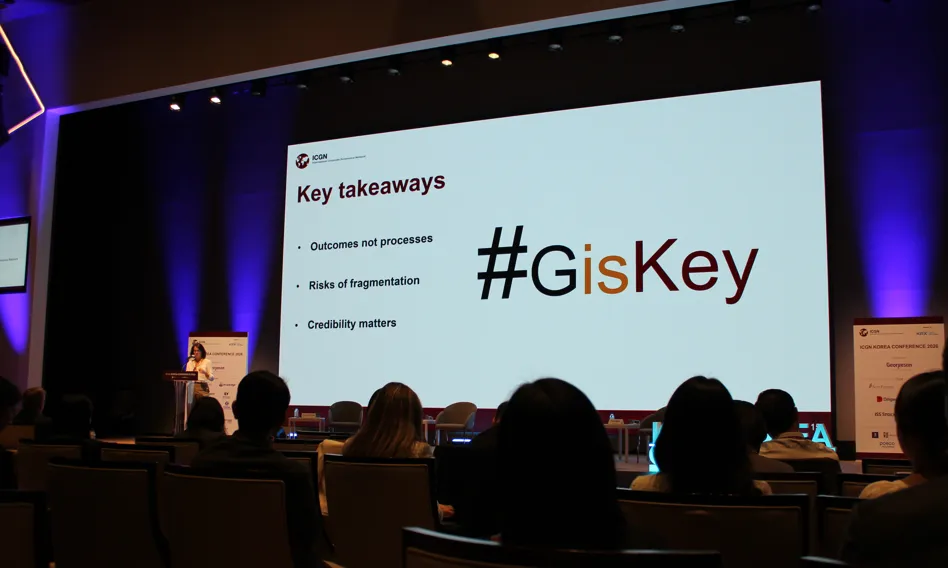
The KOSPI 6,000 era. At a time when the Korean stock market is attracting high interest from the international investor community, the gaze of global investors turned not to financial performance but to the board of directors. On April 14, at the Korea Exchange Conference Hall, speakers from South Korea, Japan, the United Kingdom, the United States, and other countries repeatedly posed a single question: Is corporate governance fulfilling its proper role? The ‘ICGN Korea Conference 2026,’ co-hosted by the International Corporate Governance Network (ICGN) and the Korea Exchange, was a forum for diagnosing the structural changes in the Korean capital market within a global context. The experts gathered at the conference focused their discussions on the performance of the Value-Up Program, the evolution of the Stewardship Code, and the standards that investors demand of companies.[ICGN Korea Conference 2026 Official Poster © Korea Exchange]What the Numbers Say About Value-Up PerformanceThe overall assessment of the rapidly growing Korean securities market was positive. At the center of the assessment was the Value-Up Program, which began in July 2024. The Value-Up Program is a policy that encourages listed companies to voluntarily go through the process of diagnosing their current state, setting targets, formulating plans, implementing them, and communicating, thereby enhancing shareholder value and transparently disclosing those efforts to investors. Aimed at resolving the so-called Korea Discount — the undervaluation of domestic companies — and promoting market growth and shareholder value enhancement, a revision to the Commercial Act was also carried out last February. Amid this trend, the Value-Up Program has taken root in the market, and the results have begun to appear in numbers. This year, the KOSPI surpassed 6,000, the scale of share buybacks and cancellations — an indicator of growing shareholder returns — roughly doubled year-on-year, and the market capitalization share of Korea Value-Up Index disclosing companies, launched in September 2024, reached approximately 72% of the total market. A change as noteworthy as the numbers is the shift in corporate decision-making criteria. Previously, discussions among board members only occurred after investors exercised opposing voting rights at shareholders’ meetings, but recently, a shift in communication methods has been observed in which board members proactively reach out to ask for investors’ perspectives. It is a signal that corporate governance is shifting its direction from post-facto response to preemptive improvement.Substantive Changes Unable to Keep Pace with Institutional SpeedHowever, the conference also highlighted challenges we must overcome. Cases were raised in which companies dispersed director terms or reduced the board’s overall size to effectively neutralize the cumulative voting system, which was designed to allow candidates favored by minority shareholders to enter the board. The corporate practice of establishing vague ‘business purposes’ in the articles of incorporation when disposing of treasury shares also came under criticism, as it was pointed out that this runs directly counter to the intent of the Commercial Act revision to strengthen shareholder returns.The substantive independence of independent directors also remains an unresolved challenge. Because director appointments are typically made through personal networks, the form may be in place, but genuinely checking management is difficult. The problem is deepened by the fact that even global proxy advisory firms fail to properly capture this gap. The shared conclusion of the conference sessions was that, as institutions change rapidly, the speed of filling in measures that give life to their intent must also keep pace.[Panel discussion on ‘Korean Corporate Governance Reform: Today’s Changes and Tomorrow’s Opportunities’ at the ICGN Korea Conference 2026 © ESG.ONL]Investor Standards Co-Evolving with the Stock MarketAs the Korean stock market is showing unprecedented growth, the criteria by which global investors paying attention to our market evaluate companies are also changing. At the core is the Stewardship Code. This private-sector self-regulatory code, which requires institutional investors to go beyond being mere shareholders and responsibly engage in the management of investee companies, had been maintained without significant change. However, last December, the Financial Services Commission, the Korea ESG Standards Institute, and other relevant ministries and agencies announced the ‘Stewardship Code Substantiation Plan,’ setting in motion a major transformation. Specifically, the substantiation plan contains a phased development direction for this year onward, prioritizing inspections starting with asset management firms and pension funds, and strengthening implementation reviews for institutional investors. This is not a movement unique to South Korea. The United Kingdom operates a structure in which Stewardship Code signatory institutions report on their actual activities each year, while Japan is accelerating reform by releasing draft amendments to its Corporate Governance Code during the conference period. Hong Kong and Singapore are also showing movement toward advanced disclosure.What Global Investors Are Actually Looking ForWhile ICGN participating countries are jointly shaping such changes, in the United States, the Securities and Exchange Commission (SEC)’s shift in attitude since the Trump administration took office — moving away from substantive review of shareholder proposals — has become controversial. Previously, when a company sought to exclude a shareholder proposal from the agenda of a shareholders’ meeting, SEC pre-review was required, but from 2025, the SEC has declared that it will not provide substantive judgment on exclusion requests. This effectively expands companies’ discretion to exclude agenda items on their own, raising concerns that shareholder proposals may be neutralized from an ESG perspective. The situation in the European Union is different. The Omnibus Package announced by the European Commission last February raised concerns that it would reduce the scope of sustainability regulations including the Corporate Sustainability Reporting Directive (CSRD) and relax disclosure obligations. Criticism that this is the result of accepting industry backlash over excessive regulation of companies is substantial. The trend of strengthening ESG disclosure and the trend of weakening it are operating simultaneously. [ICGN CEO Jen Sisson presenting at the ICGN Korea Conference 2026 © ESG.ONL]Despite this, the standards that investors demand of companies are becoming more concrete. Rather than whether a company operates an ESG committee, what global investors are actually examining is whether the committee’s discussions actually lead to capital allocation decisions, whether ESG objectives are reflected in executive compensation and performance evaluations, and whether the results are reported to the full board. The English-language ESG portal newly established by the Korea Exchange now functions as the first window through which foreign investors assess Korean companies. Starting this year, all KOSPI-listed companies must submit a corporate governance report, and from May, KOSPI-listed companies with assets of KRW 2 trillion or more must begin comparative disclosure of executive compensation against company performance. Disclosure standards in each country are also increasingly aligning with the global standards set forth by the International Sustainability Standards Board (ISSB). The message delivered by this conference is clear: the Korean capital market is already within the radar of global investors, and the criteria they are looking at are shifting from numbers to structure and actual practice. by Editor L

We consume an average of three to four hours of entertainment every day. We watch dramas, variety shows, and sports broadcasts, spending our time laughing and crying. Until now, there was no need to scrutinize what processes the content that brought us joy in those hours had gone through to be made. However, now that climate change is no longer an issue confined to a specific field, one question may be worth adding: What processes did this content we enjoy go through to be created, and how much greenhouse gas was left behind in that process? This question is not meant to criticize entertainment. Rather, it is closer to a proposal to harness the influence and scalability of entertainment to expand the space in which more citizens can be naturally exposed to and participate in the theme of climate change response. Climate Disclosure for Sustainable EnjoymentGenerally, ‘information’ becomes a tool that broadens consumers’ discernment, and this in turn has led to a virtuous cycle that raises the competitiveness of the entire industry. When buying food, we check the nutrition facts label, and through the eggshell code stamped on eggs, we examine the rearing environment and production history. Even when buying clothes, information on raw materials and country of manufacture is close to the default. Such information broadened the criteria for choice rather than shrinking consumption, and before we knew it, consumers verifying information about the production and operation processes has become an established practice. If entertainment content also came accompanied by such information, it could become ‘yet another point of interest worth knowing’ for viewers.This trend is already partially emerging in the sports industry. Some European football clubs disclose their energy use in stadium operations, carbon emissions from travel, and renewable energy transition plans. Several clubs in the English Premier League are attempting to reduce away-match travel, operate eco-friendly stadiums, and run emission-reduction campaigns linked to fan travel, and similar cases are being observed in the K League as well. This is not about giving up sports but closer to an experiment in enjoying sports more sustainably.[Tottenham Hotspur Stadium, using 100% renewable energy © Populous]The ‘Process’ by Which Content Is Made Matters as Much as the ‘Message’ of the ContentThe entertainment industry has also begun to take its first steps. Domestically, Studio Dragon has attempted climate disclosure by measuring and publicly releasing the environmental impact of its production processes. The global OTT platform Netflix is also calculating the carbon emissions from the filming and production processes of some of its productions and operating production guidelines and pilot projects to reduce them. Disney, through its ESG sustainability report, specifies the greenhouse gas emissions occurring during the film and drama production process as objects of management and is pursuing the energy efficiency of filming sites and the expanded use of renewable energy. Warner Bros. Discovery is also treating energy use and travel reduction at production sites as one pillar of its sustainability strategy. While it is difficult to say that this has spread across the entire entertainment industry, it is significant in showing that not only the ‘message’ of content but also the ‘process’ by which content is made can become a subject of social discussion.[Studio Dragon Sustainability Report © Studio Dragon]Beyond this, what we should pay attention to is the ‘scope’ and ‘reliability’ of such climate information. This is because not only the physical travel of the production site but also the ‘digital carbon footprint’ generated in the process by which the completed content reaches us cannot be overlooked. The climate impact of entertainment can be fully grasped only when the power consumption of the data centers operating for high-definition streaming is transparently disclosed as well. Moreover, if such figures are derived not through the arbitrary calculations of the production company but through authoritative production guidelines or standardized calculation tools, the credibility of the information felt by viewers will increase further.A New Culture to Be Formed Through the Disclosure of Climate InformationSuch disclosure of climate information can become a new arena for experimentation and competition, rather than regulation or obligation. One production company might reduce travel, another might utilize renewable energy, and yet another might offset unavoidable emissions with reduction efforts in other ways. In this process, a new axis of competition could form among creators: ‘who created content more creatively and with fewer emissions.’For viewers as well, change approaches not as coercion but as a new form of participation. A culture could form in which people discuss per-episode emissions, voluntarily compare them online, and pose questions about the production methods of content they enjoy. This produces the effect of naturally bringing the climate crisis into everyday conversation topics without heavy preaching.Entertainment is an industry that creates social imagination. Adding one line of ‘climate information’ to that imagination does not take away the enjoyment. On the contrary, it can become an opportunity to make us recognize together on what kind of world the enjoyment we experience rests. In that sense, the disclosure of climate information in entertainment is closer to a new invitation through which more citizens can indirectly participate in climate response.by Kim Won-sang (Climate Solutions, Media Communications)

The pace at which the world is changing is incomparably faster than in the past. Some decisions are swiftly automated, and some judgments become the domain of algorithms instead of people. The more technology evolves, the more organizations must respond quickly and flexibly. Amid such changes, companies face the most fundamental question: ‘With whom, and based on what values, are we working right now?’ This is not simply a matter of organizational culture. It is a question that asks whether a company can earn the long-term trust of the market, and by what data such sustainability can be evaluated. Confirming Organizational Health Through Objective DataMany companies speak of sustainable management and hold up ‘respect’ and ‘inclusion’ as core values. However, whether such abstract words are actually reflected in the systems of the real organization, or whether they merely remain as declarative phrases, cannot be known until one becomes a member of the organization and experiences it. Until now, diversity and inclusion within organizations were areas difficult to measure, closer to variable factors that changed depending on the personal inclinations of good colleagues or leaders. Thus, proving the health of an organization to external stakeholders was a vague task. It is precisely here that DEI (Diversity, Equity, and Inclusion policy) reports gain their significance. Key data points — such as who enters and exits the organization, whether caregiving responsibilities lead to career interruptions for certain members, and whether formal governance that manages discomfort is functioning — are not mere personnel statistics. Through DEI reports, one can confirm that the concepts of ‘respect’ and ‘inclusion’ have been transposed into data in the form of figures and structures. Such data serves as a key indicator that objectively diagnoses the previously vague state of an organization’s health and gauges its resilience.[Image of the datafication of value concepts © ChatGPT]Our Own Benchmark, Not Answers for the Sake of EvaluationOf course, indicators are always a double-edged sword. Quantified data can serve as powerful evidence proving corporate performance, but at times, it also starkly reveals gaps that need to be addressed. In this context, defining a company’s DEI report merely as promotional material showing that the company is fulfilling its ‘social responsibility’ is a one-dimensional approach. The essential value of a DEI report lies in examining ‘by what criteria the organization was designed’ and in reading the meaning of the data. Since each company differs in size and industry, there is no single correct answer, but it is important for companies to approach the data not by filling their DEI reports with answers aimed merely at showing off, but with criteria unique to the organization.In this context, the case of the ‘2026 Lush Korea DEI Report’ is intriguing. Lush Korea did not list short-term campaigns or token systems in its DEI report. Instead, it chose the approach of transparently disclosing the default values that drive the organization and showing them in figures and language. From the forms of address and work modes of its members to the customized job design for the employment of persons with disabilities and the governance through which childcare and caregiving are viewed — all these elements are designed not as temporary benefits for specific groups but upon a reality that acknowledges diverse ways of living. [Lush Korea DEI Report © Lush Korea]Particularly impressive is the fact that the ‘feedback culture that embraces mistakes’ is being measured as a quantified indicator of the psychological safety net. The figure showing that 76.8% of all members responded that they ‘exchange improvement-oriented feedback rather than blame when mistakes happen’ demonstrates that the value of inclusion is functioning as the organization’s substantive operating system, going beyond mere declaration. The ‘2026 Lush Korea DEI Report’ is, in effect, the outcome of calmly recording the intangible values that Lush Korea has been pursuing and proving them through data. An Essential Foundation for Sustainable ManagementCompanies in this era must transparently show not only what they count as performance but also their attitude toward their members. For this, not mere words but ‘structures’ and ‘data’ must back it up. The DEI report is not merely a means to pass external evaluation, but an essential foundation for companies to continue sustainable management without wavering in a rapidly changing environment. Through DEI reports, we can confirm not the completion of an organization but the image of an organization responsibly moving forward toward a better future. In the end, a company’s true sustainability is proven not by grand declarations but by the concrete systems that support those promises in places unseen. by Editor L