

The argument that ESG has a substantive impact on corporate value has now moved beyond the realm of theory. Stock price data is brutally honest. The market capitalization of companies that have internalized ESG as a core strategy is rising, while those that merely pay lip service to it or act counter to it are receiving harsh judgment from the market through opposite results. As investors have begun to consider the non-financial performance of companies as an investment factor, ESG has become a variable that directly affects stock prices.
Microsoft: ESG Becomes a Premium
The company most frequently cited as a representative ESG success story is Microsoft. Microsoft already achieved carbon neutrality in 2012 and has set a target of becoming ‘Carbon Negative’ — where carbon absorption exceeds emissions — by 2030. It has also continuously earned the highest ESG rating of AAA from Morgan Stanley Capital International (MSCI), ranking in the top 7% of the software development industry as of 2023–2024. According to MSCI research, a statistically significant gap in the cost of equity exists between top-tier and bottom-tier ESG companies. Microsoft is evaluated by investors as a ‘safe growth stock’ and continues to experience steady capital inflows. As a result, it has benefited from low capital procurement costs, raising large-scale funds at far lower interest rates than competitors. Since 2020, Microsoft’s stock price has consistently outperformed the S&P 500 index average, which is analyzed as the result of a synergistic combination of AI business expansion and ESG management.
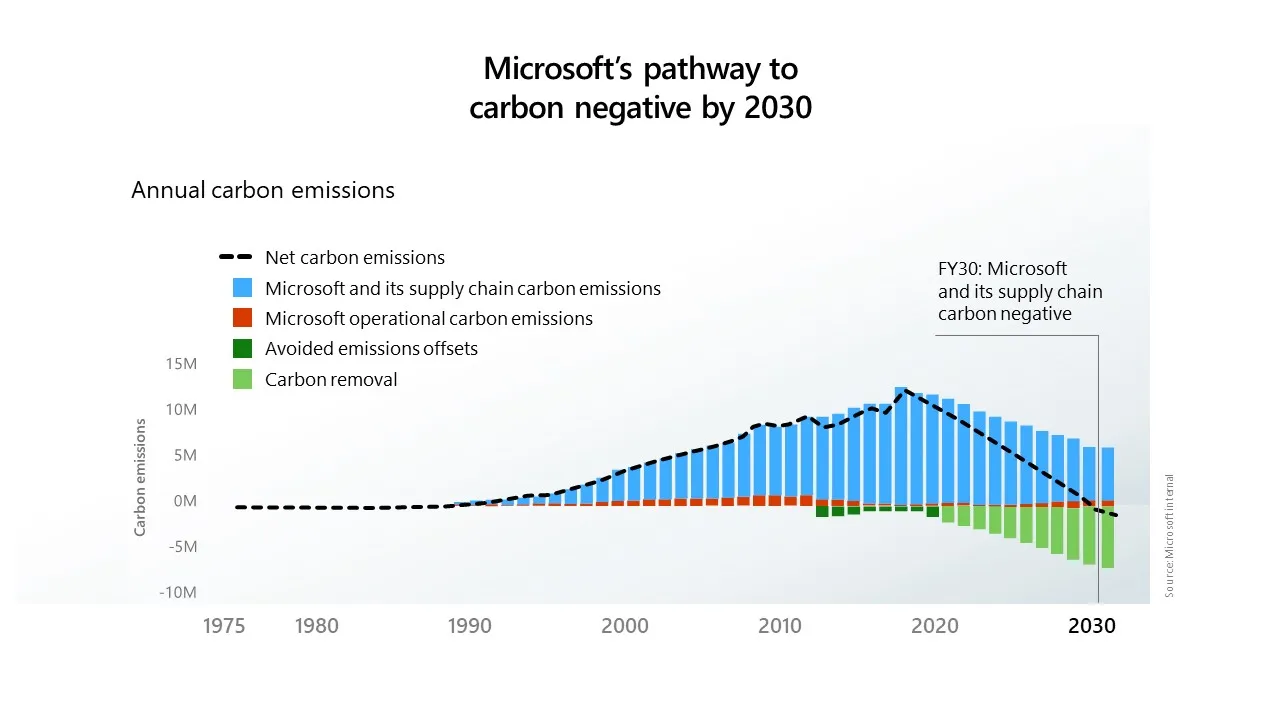
[Microsoft Carbon Negative Target Strategy © Microsoft Official Blog]
BP: Investment Structure That Diverged from Campaign Language
Conversely, there are also cases of ESG management failure, and their repercussions were far greater than the success stories. British Petroleum (BP) changed its name to the present BP alongside a rebranding campaign in 2000. In that campaign, BP adopted the slogan ‘Beyond Petroleum’ and a green logo, declaring a leap forward as an eco-friendly energy company. The reality, however, was different. Around the same time, BP acquired the American oil company ARCO (Atlantic Richfield Company) for USD 26.5 billion to expand its oil exploration domain.
Then in 2010, BP’s image as an ‘eco-friendly energy company’ collapsed in an instant due to the Deepwater Horizon oil spill. On April 20, 2010, the Deepwater Horizon drilling rig operated by BP in the Gulf of Mexico exploded and sank, causing a massive crude oil spill. The spill continued for 87 days and left 11 people dead. Immediately after the accident, BP’s stock price plummeted by approximately 50% over several months. It was the outcome of ‘image ESG’ — where ESG was put forward but not backed by substantive investment. Perhaps conscious of this, BP announced a ‘strategic reset (Reset BP)’ in early 2025, cutting clean energy investment by over USD 5 billion and raising fossil fuel production targets by 60%. In effect, it declared a break with its own mistake of 20 years ago.

[BP International Business and Technology Centre © Broadway Malyan (architecture firm that designed the BP building) Official Website]
Unilever: Erosion of Investor Trust Triggered by ESG Rollback
There are also cases that serve as a warning from the midpoint between ESG success and failure. Under former CEO Paul Polman from 2010 to 2019, the British cosmetics company Unilever established itself as a symbolic ESG company by pursuing the ‘Unilever Sustainable Living Plan’ as its growth strategy. However, newly appointed CEO Hein Schumacher in April 2024 significantly rolled back Unilever’s key ESG targets, including downgrading the previous target of reducing new plastic use by 50% by 2025 to a 40% reduction by 2028.
Outside observers assessed this strategic shift as the result of capitulating to shareholder pressure, given that Unilever’s stock price had been in a prolonged slump since peaking in 2019. Meanwhile, institutional investors unleashed a torrent of criticism over Unilever’s ESG strategy change. This shows that the market reads not only whether a company implements ESG, but also the very act of retreating from stated commitments as a risk signal.
[Cover of Unilever’s 2025 Climate Policy Engagement Review © Unilever Website]
How Does the Stock Market Read ESG?
The common thread running through all three cases is clear. The market judges ESG not as a matter of morality but as a matter of risk management capability. When ESG is deeply embedded in business strategy, as with Microsoft, substantive financial benefits follow in the form of lower capital costs and institutional investor preference. Conversely, when a company builds an image through ESG-themed campaigns without changing its actual investment structure — and when an environmental disaster is added on top — the brand image that had been accumulated collapses in an instant, as with BP. Unilever proved how costly a choice it is to retract trust once it has been established. At a time when mandatory ESG disclosure is being phased in from 2028, stock price data is already showing that ESG has shifted from being ‘the story of a good company’ to ‘an indicator of viability.’
by Editor L