Loading Data
Please wait a moment...
Update Cal.
2026.08
03
Mon
04
Tue
05
Wed
06
Thu
07
Fri
08
Sat
09
Sun
Update Calendar
2026.08
01
Sat
02
Sun
03
Mon
04
Tue
05
Wed
06
Thu
07
Fri
08
Sat
09
Sun
10
Mon
11
Tue
12
Wed
13
Thu
14
Fri

Loading Data
Please wait a moment...
Morning features and interviews. A morning story over a cup.
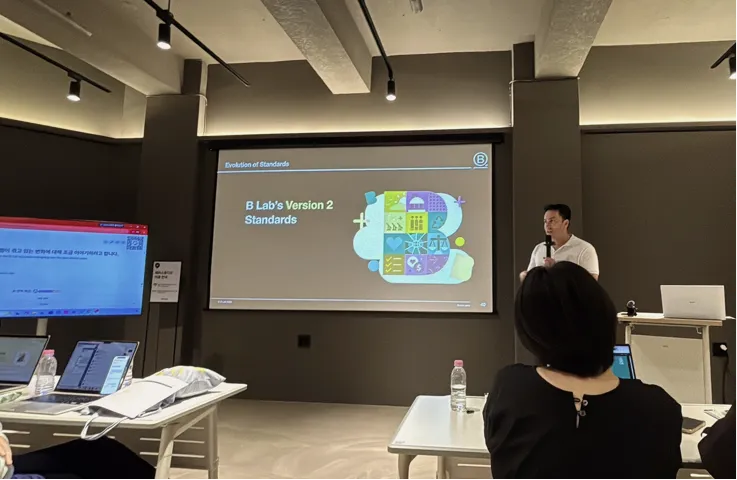
‘B Corp Certification’ is a global certification and corporate movement that recognizes businesses prioritizing social and environmental responsibility beyond profit-seeking. Currently, over 10,900 companies across more than 100 countries and 160 industries have obtained B Corp Certification. In South Korea, around 30 companies, including Toss Bank, DLG Law Firm, and Impact Square, are listed as B Corp Certified companies.B Lab, the global nonprofit organization that operates B Corp Certification, unveiled its newly revised certification standards in April 2025. The new standards have been applied to new certification applicants since March 2026 — the seventh revision since B Lab’s founding, and widely regarded as the most significant change in 19 years. B Lab has set ‘System Change,’ centered on continuous improvement and collective effort, as the goal of this standards revision. In this regard, B Lab Korea, B Lab’s Korean partner organization, held a ‘B Corp Certification Information Session’ on June 29 to introduce the new certification standards to domestic corporate representatives. The session covered the revised B Corp Certification evaluation methods, detailed criteria, and their significance.[B Lab Korea Executive Director Jeong Tae-eun explaining B Corp Certification at the session © ESG.ONL]All Seven Impact Areas Must Be Passed to Be CertifiedThe core of this certification standard revision is the abolition of the previous composite score summation method. Previously, a company could receive a high overall score by performing exceptionally well in one area, such as environment, which would offset weaker performance in other areas like governance or labor conditions. Under the new standards, such compensation is no longer permitted. Instead, companies must meet detailed sub-performance criteria across seven impact topics: ▲Corporate Purpose & Stakeholder Governance ▲Fair Labor ▲Justice, Equity, Diversity & Inclusion (JEDI) ▲Human Rights ▲Climate Action ▲Environmental Management & Circularity ▲Government Relations & Collective Action. Performance in one area can no longer fill the gaps in another. [The Seven Impact Topics of the Newly Revised B Corp Certification Standards © Captured from B Lab Korea Website] Examining some of the key topics among the seven: ‘Corporate Purpose & Stakeholder Governance’ requires companies to act according to a defined purpose and establish governance that monitors social and environmental performance. ‘Fair Labor’ addresses quality jobs, fair wage practices, and reflecting worker feedback in decision-making. ‘Climate Action’ requires establishing plans that contribute to limiting global warming to 1.5°C, and for large corporations, includes greenhouse gas emissions and Science Based Targets (SBT). ‘Government Relations & Collective Action’ covers corporate efforts to work collectively to promote systemic change. Beyond Regulatory Compliance, Toward Substantive ActionThe backdrop of this revision is the regulatory environment. The new standards were developed in compliance with the EU’s ‘Empowering Consumers for the Green Transition Directive,’ scheduled to take effect in September 2026. This regulation prevents companies from engaging in greenwashing, such as unsubstantiated eco-friendly advertising. Amid the global trend of tightening greenwashing regulations, B Lab has set a direction through the new standards for companies to go beyond regulatory compliance and take substantive action on social and environmental issues. Companies that have received B Corp Certification must continue to demonstrate compliance with the standards and show improvements at each evaluation cycle. [Billy Hanafee, B Lab Global Certification Operations Strategy Lead, explaining the new B Corp Certification standards © ESG.ONL]The more stringent performance criteria in the B Corp Certification process may pose a burden on small and medium-sized enterprises (SMEs). For companies with limited personnel and budgets, evaluating and meeting criteria across all seven areas is challenging. Reflecting these difficulties, the revision now varies the number of detailed requirements that companies must fulfill, ranging from a minimum of 20 to a maximum of 124, depending on size and industry sector. The structure applies more requirements to large enterprises and a more basic level of requirements for SMEs first. If we compare B Corp Certification to a corporate ‘health check-up,’ this revision can be seen as having increased the number of check-up items, while the application of those items can now be adjusted to fit the company’s weight class. Beyond just B Corp Certified companies, any company can freely measure its impact performance through the B Impact Assessment platform. The B Impact Assessment is a tool provided by B Lab for measuring a company’s social and environmental impact, evaluating corporate operations and business models across five areas: governance, workers, community, environment, and customers.Amid growing investment demand for ESG-managed companies, expectations for corporate B Corp Certification are also rising. In line with this trend, B Lab is refining its certification standards. As certification strengthens, obtaining B Corp Certification can serve as a competitive advantage for overseas business expansion and investment attraction. At the information session, a B Lab Korea representative emphasized the practical competitiveness of B Corp Certification as a management verification tool, noting that “Korean IT startup Eqpoall was able to gain a high level of trust in the North American market by promoting its B Corp Certification status.” The bar for B Corp Certification has been raised, but the weight of trust in the certification has shifted accordingly. Companies that prove their responsibility across all seven areas and have their implementation consistently verified at each evaluation cycle will serve as the standard demonstrating that B Corp Certification is not a checkpoint but a continuous practice. by Editor L
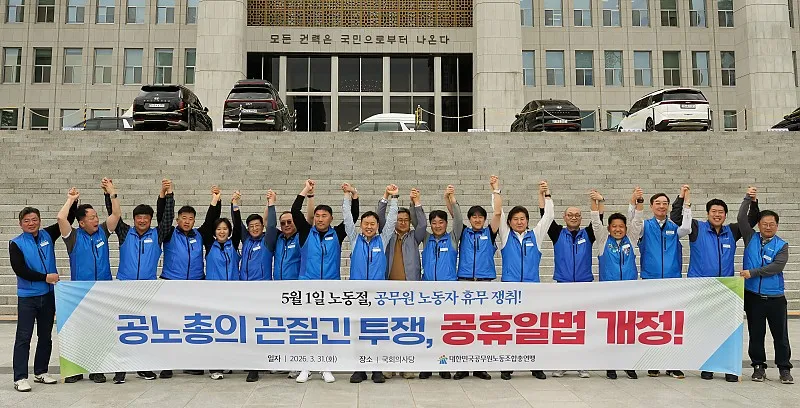
On May 1, 2026, South Korea marks its first Labor Day on which all workers take the same day off. The two changes — the restoration of the name and its designation as a statutory holiday — are not mere institutional fine-tuning but a societal answer to the age-old question of ‘who is a worker.’[Labor Day-related post © Ministry of Employment and Labor Instagram]In 1963, the word ‘labor’ was erased from the law. After seizing power through the May 16 military coup, the government restructured labor-related legislation in a direction that suppressed the autonomy of the labor movement, and in that process, the ‘Act on the Designation of Workers’ Day’ was created. The choice was ‘geullo’ (diligent work) instead of ‘nodong’ (labor). According to the National Institute of Korean Language, ‘geullo’ means working diligently, while ‘nodong’ means working by moving the body. One demands an attitude; the other describes a fact. It was a choice aligned with the spirit of the times, which emphasized the faithful provision of labor services over workers’ rights. After being maintained for 63 years, on October 26, 2025, the National Assembly passed a full revision of the ‘Act on the Designation of Workers’ Day’ into the ‘Act on the Designation of Labor Day.’ A single word changed, but considering the weight of the era contained in that word, this is not merely a name swap. And the change did not stop at the name.What Has Changed and What Has NotAlongside the statutory holiday designation, new criteria also emerged. The Ministry of Employment and Labor issued an official interpretation that substitute holidays are not permitted for Labor Day. This is because, unlike other public holidays, the special act directly fixes the date of May 1. If work is unavoidable on Labor Day, employers must choose between paying premium wages or granting compensatory leave under a written agreement. The elimination of size thresholds also heightens the sense of change, as Labor Day is guaranteed as a paid holiday regardless of workplace size. Until now, workplaces with fewer than five employees had effectively fallen into a legal blind spot, but the principle of Labor Day, at least, applies uniformly regardless of size.[Public servants also included in this year’s Labor Day holiday © Korean Government Employees’ Union]However, there are places this standard does not reach. Workers in special types of employment are often not recognized as workers under the Labor Standards Act, so time off is not legally mandated for them. The government is aware of this gap. The Ministry of Employment and Labor is promoting a labor-respecting legislative package for 1.44 million workers in special employment types who are not protected by labor laws as AI advances. It is also working on introducing a ‘worker presumption system,’ under which a person is presumed to be a worker and protected by labor law unless the employer proves otherwise. From the Conditions of a Worker to the Definition of a WorkerWhen Chicago workers took to Haymarket Square in 1886 demanding the eight-hour workday, the core issue was ‘how long do we work.’ Now, 140 years later, the issue has shifted to ‘who is recognized as a worker.’ And this question does not remain confined to the workplace.[The Haymarket affair, the origin of Labor Day © Wikipedia Commons]Amid the trend of strengthening global supply chain due diligence standards, the working conditions and rest rights of workers employed by partner companies are being elevated to quantitative indicators in sustainability reports reviewed by investors. Yet, workers who are not legally ‘workers’ go uncaptured even in these reports. They are labor actually utilized by companies, yet they exist outside disclosure indicators. Just because a risk is not yet visible does not mean it does not exist. Global buyers and institutional investors have begun looking directly into supply chains. If the reality of labor forces not captured in reports is revealed during due diligence, it leads to questions of disclosure reliability and the very business relationship can be shaken. The definitional vacuum around ‘whom to consider a worker’ accumulates unmanaged, eventually bursting as a risk all at once. This institutional change has partly raised that baseline. The statutory holiday designation has broadened the language of ‘worker’ somewhat, but for Labor Day to truly become a day for everyone, a broader structural change is needed beyond a single line of law. This May 1 marks the starting point of that journey. by Editor L

Can virtual assets be donated? Even when individuals or companies holding virtual assets wished to participate in donations for public interest purposes, doing so had been difficult. This was because no official procedure had been established for non-profit corporations to receive and convert such assets into cash within the institutional framework. However, virtual asset donations, which had long remained only a possibility, have now begun to actually materialize. The Institutionalization of Virtual Asset DonationsIn June 2025, the financial authorities announced guidelines for the sale of virtual assets by non-profit corporations and virtual asset exchanges, and permitted qualified non-profit corporations to open real-name accounts for selling such assets. These guidelines are significant in that they focus on ensuring internal control systems for non-profit corporations and virtual asset exchanges, imposing pre- and post-sale disclosure obligations, and preventing money laundering. The conditions of public interest and transparent operation necessary for virtual assets to be utilized as public benefit resources have thus been institutionally established. [Comparison of Sale Guidelines for Non-Profit Corporations and Virtual Asset Exchanges © Financial Services Commission]How Virtual Asset Donations Are OperatedFrom December 18, 2025, to March 18, 2026, Korbit, South Korea’s first virtual asset exchange, and the non-profit corporation Social Solidarity Bank conducted a virtual asset donation campaign to support the self-reliance of vulnerable groups. Korbit utilized its technical capabilities to build a donation platform environment and support donors in safely and conveniently donating virtual assets. The donations raised through the campaign will be used to strengthen the foundation for self-reliance of vulnerable groups supported by the Social Solidarity Bank. This campaign is an example demonstrating the conditions and procedures required for virtual asset donations to be converted into actual public benefit resources.[Korbit x Social Solidarity Bank Virtual Asset Donation Campaign Representative Image © Social Solidarity Bank]In the specific operational stages of the campaign, the two organizations verified whether participants qualified as related parties based on the participant list, and established operating procedures for a Virtual Asset Donation Review Committee, disclosing the appropriateness of the donations and the monetization plan to internal and external stakeholders. They also enhanced operational transparency by proceeding with monetization without delay according to the schedule announced by the Review Committee and informing participants of the results. Beyond Investment Instruments, Toward Tools for GivingThe Social Solidarity Bank announced its plan to use the virtual asset donations raised through this campaign for the ‘Together Warmth Fund.’ The Together Warmth Fund is a social finance fund operated by the Social Solidarity Bank, aimed at supporting the livelihood stability and financial education of the financially vulnerable. [Korbit x Social Solidarity Bank Virtual Asset Donation Campaign Image © Social Solidarity Bank]This campaign, in which Korbit and the Social Solidarity Bank collaborated, demonstrated the possibility that virtual assets — which had until now only been used as investment vehicles and means of payment — can play a role as social finance and be connected to sustainable funding sources. The campaign is also a meaningful attempt in that participants familiar with existing financial structures and asset flows resonated with the fund operation model in which they help those outside the institutional financial system achieve self-reliance and ensure that such support continues steadily.This campaign, which has broadened the scope of virtual asset utilization by one step, will serve as one answer to the question of how companies can design virtual asset donations for public interest purposes and build the trust of donation participants. by Editor L
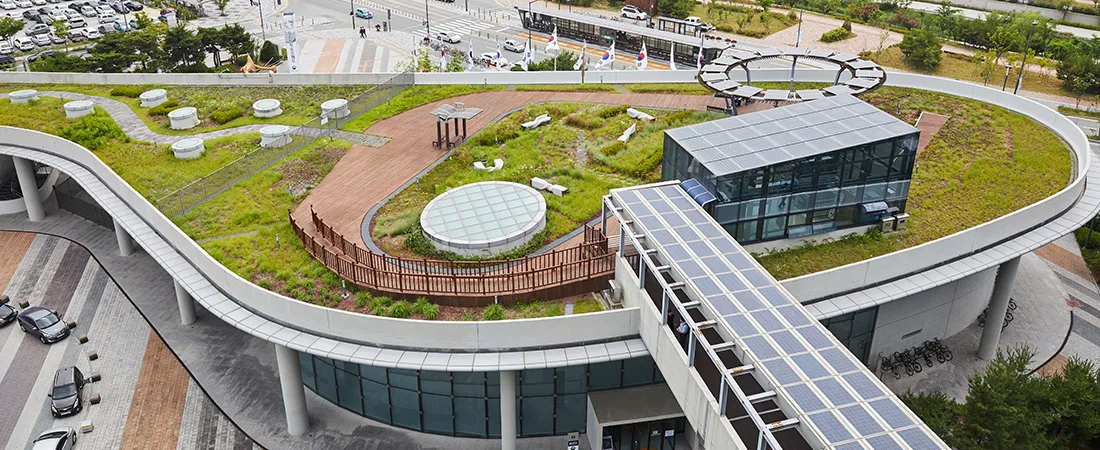
April 11 is ‘Urban Agriculture Day,’ a day to raise awareness of the importance of urban agriculture. Designated as a statutory commemorative day in 2017, the date was chosen by combining April, when spring farming begins, with 11, symbolizing soil (土). Urban agriculture, literally the fusion of ‘urban’ and ‘agriculture,’ refers to the act of utilizing land, buildings, or various living spaces within the city to cultivate crops, trees, or flowers, or to raise insects such as beekeeping. From tending rooftop gardens to growing lettuce on the balcony, we encounter agriculture in the city far more often than we think. As Urban Agriculture Day marks its 10th anniversary this year, let us explore the effects and examples of how urban agriculture is closely linked with ESG in daily life.The History and Value of Urban AgricultureUrban agriculture in South Korea began with the weekend farms of the Seoul Metropolitan Government Agricultural Technology Center in 1992. Entering the 2000s, as leisure time increased with the five-day workweek and wellness culture gained popularity, urban agriculture activities began to gradually increase. In the 2010s, amid concerns over imported agricultural products, controversies over genetically modified foods, and the mad cow disease scare, more people began to consume or directly grow eco-friendly organic produce. In 2011, the Act on the Promotion and Support of Urban Agriculture was enacted, establishing the legal basis for national and local government support of urban agriculture, and from 2017, the Urban Agriculture Manager certification system began fostering specialized urban agriculture personnel. [Urban Garden Participation Status © Everyone Is an Urban Farmer (Korea Agency of Education, Promotion and Information Service in Food, Agriculture, Forestry and Fisheries)]The total economic, social, and environmental value of urban agriculture exceeded KRW 5 trillion as of 2023. Urban agriculture is assessed to have generated not only economic effects from consuming agricultural products and creating related jobs, but also social value worth KRW 1.3416 trillion and environmental value worth KRW 768.1 billion. Social value includes strengthening bonds and building community, environmental education, and mental relaxation. Environmental value includes promoting biodiversity, reducing carbon, and mitigating the urban heat island effect. Additionally, utilizing waste heat for farming or converting building rooftops into gardens can cut heating and cooling costs by 16.6%, so the value of urban agriculture is by no means small.Urban Agriculture Sites: From Subway Stations to RooftopsVarious forms of urban agriculture sites exist around us, from school gardens to rooftop gardens of public institutions. There are three representative examples of urban agriculture. First, let us examine ‘Metro Farm,’ the smart farms in subway stations that we frequently encounter. The Seoul Metropolitan Government and Seoul Metro have created Metro Farms in unused spaces within subway stations, using ICT technology to cultivate and supply crops regardless of season or climate. Metro Farms are currently located in five stations: Sangdo, Dapsimni, Cheonwang, Chungjeongno, and Euljiro 3-ga. The farms primarily grow leafy vegetables and herbs, a choice designed to avoid causing harm to farms that grow leafy wrap vegetables.[Minister of Agriculture, Food and Rural Affairs Song Mi-ryung visiting the Sangdo Station Metro Farm © Ministry of Agriculture, Food and Rural Affairs]Incheon Metropolitan City’s ‘Ieum Garden’ pursues not only farming but also climate crisis response, community building, and social contribution. Created on idle land in Songdo-dong, Incheon, the Ieum Garden is operated by citizens who have formed their own steering committee. While there is no participation fee, community operation education is mandatory, and participants must carry out required activities including shelter maintenance, drainage repair, and volunteer work on donation garden farming. The operation office uses electricity generated through solar and small-scale wind power, and farming is done using rainwater instead of tap water or groundwater — points also worthy of note. In 2025, the Ieum Garden had 334 citizen participants and 26 organizations, and spread the value of urban agriculture by donating a total of 872 kg of produce to the local community over 14 occasions. Finally, ‘urban beekeeping’ is also a representative example of urban agriculture. Urban beekeeping may be a somewhat unfamiliar concept, but it is making a significant contribution to urban ecosystem restoration. Paradoxically, as the overall bee population declines due to the climate crisis, cities have become a favorable environment for small honeybees, with lower risks from pesticides and the like. The Seoul Metropolitan Government operates urban beekeeping training programs in each autonomous district. Gwanak-gu has installed and operated an urban apiary at the Nakseongdae garden since 2015, harvesting a total of 1,597.5 kg of honey by 2022. Meanwhile, companies are also turning their attention to urban beekeeping as part of ESG activities. Last year, IKEA conducted urban beekeeping projects on the rooftops and outdoor spaces of its Gwangmyeong and Goyang stores in collaboration with the urban beekeeping social venture Urban Bees Seoul, and the harvested honey was sold at pop-up stores inside IKEA. [IKEA, which carried out an urban beekeeping project © IKEA Korea]Each year, on the occasion of Urban Agriculture Day, government-level commemorative events and various hands-on programs are held. During the Urban Agriculture Day commemorative week from April 7 to 12, the Ministry of Agriculture, Food and Rural Affairs is promoting Urban Agriculture Day events in collaboration with the Sejong National Arboretum. Various companion plant and seed sharing events will also be held in conjunction with local governments.Let us enjoy the coexistence of the city and nature around us by participating in the diverse events demonstrating that urban agriculture is expanding beyond the environment into community and culture, and by taking part in urban agriculture sites. by Editor L

The bustling March campus filled with students returning for a new semester has passed, and April, when cherry blossoms bloom and fall, has arrived. In this season of new beginnings, ESG Today met with members of the ‘Seoul National University Society for Sustainable Business Management (SSBM)’ — the only ESG-specialized academic society at Seoul National University — to hear about their activities and what they have learned from studying corporate ESG. From CSR Origins to an ESG-Specialized Academic SocietySince its founding in 2006, SSBM has been analyzing corporate activities from a student’s perspective and pinpointing the current state of ESG management. SSBM’s roots lie in an academic society called ‘SNU CSR,’ which studied corporate social contribution. Entering the 2020s, as ESG emerged as a keyword across the business landscape, the scope of research broadened to encompass both CSR and ESG, and the name was changed to the current SSBM. The approximately 20 members of SSBM conduct up to 12 sessions per semester to study ESG. The sessions conducted by SSBM are broadly divided into four stages. The first is the ‘ISSB Disclosure Session.’ Reflecting the recent trend in which ESG disclosure is being legally mandated under International Sustainability Standards Board (ISSB) standards, the disclosure session devotes two weeks to studying ISSB disclosure standards. SSBM has built a unique position bridging academia and industry through ongoing industry-academia collaboration with major companies such as Samjong KPMG, KB Financial Group, and CJ CheilJedang. Since all of the society’s sessions are designed with the final stage — industry-academia collaboration, i.e., hands-on experience — in mind, the second session, ‘ESG Management Strategy Study,’ brings together past and current cohorts of members to create and solve ESG problems relating to management strategies by industry sector.In the third session, key companies are selected by industry sector and ‘corporate ESG analysis reports are written.’ The reports primarily evaluate the key ESG issues of companies that have recently attracted notable attention, conducting in-depth analysis centered on corporate sustainable management policies. The final stage of the sessions is ‘industry-academia collaboration.’ After completing industry-academia collaboration — an opportunity to empirically unpack the content studied over the semester — one semester draws to a close. In addition to these main sessions, the society’s activities also include ‘guest lectures by external speakers.’ These are occasions to hear lectures on ESG practice from company professionals and engage in Q&A; last semester, ESG experts from companies such as HD Hyundai Oilbank and ERM gave lectures. [Guest lecture by an external speaker (ERM Korea Partner Shin Eon-bin) © SSBM]Experiencing ESG in the Field: What Industry-Academia Collaboration Has LeftFor university society members, industry-academia collaboration — working alongside corporate practitioners — inevitably carries special meaning. SSBM President Moon Han-bit, who participated in the CJ CheilJedang collaboration, revealed, “Before becoming a society member, I vaguely imagined an industry-academia collaboration project as something like an internship experience. But having gone through it, what the corporate contacts actually wanted from us was the perspective of students,” acknowledging the gap between a student’s approach and a corporate approach. Vice President Lim Jae-young, who took part in the Samjong KPMG collaboration, also noted, “It is easy to assume that ESG strategy is usually aimed at achieving a leading position within the industry, but I learned that this is not necessarily always the case.” It was a fresh discovery for the students that among companies pursuing ESG consulting, some approach ESG at the level of mere regulatory compliance, or as a means to explain ESG regulatory compliance to the board, rather than aiming to lead the industry through ESG. Member Moon Na-young, who participated in the Sopung Ventures collaboration, said, “It was refreshing to be able to experience the startup ecosystem, the investment perspective of venture capital, and ESG approaches that are normally difficult to observe directly.” President Moon Han-bit summarized that industry-academia collaboration was a time that provided not only experience but also assistance in setting the direction of research from the perspectives of corporate management and ESG management.[SSBM President Moon Han-bit discussing industry-academia collaboration © ESG.ONL]Capturing the State of ESG: The Society Journal <Sustainability Review>SSBM also publishes what it has learned through study sessions in its journal. Members of SSBM regularly publish the society journal Sustainability Review (SR). Members themselves write and edit articles on topics closely tied to ESG, such as COP30 and RE100. SR primarily covers issues that have recently drawn social attention — such as Commercial Act amendments or changes in labor issues following the introduction of AI — as well as topics that individual students find difficult to study alone. For instance, Vice President Lim Jae-young, who recently contributed an article on the European Sustainability Reporting Standards (ESRS) to SR, explained the editorial direction, saying, “While ISSB is the usual focus for disclosure standards research, with ESRS being introduced in Europe but still not applied by any domestic company, it was a difficult topic to study together with society members. That is why I took it up as a topic for SR.” He added that members also contribute to SR by developing topics covered in their various major courses.[SSBM group photo © SSBM]Beyond Theory, Broadening HorizonsPresident Moon Han-bit explained the reason for participating in the society: “In university courses, the focus is on theory rather than practice, so there are inevitably limits to what one can learn. Activities at SSBM provide a great opportunity to satisfy the thirst for both theory and practice.” Considering that most society members are keenly interested in the consulting industry and the companies with which they have conducted collaborations, and that they are concretizing their career paths by expanding into those companies after industry-academia collaboration, these students are poised to grow into the talent that will create and lead ESG practice at companies in the future. Vice President Lim Jae-young added, “I came to feel that realizing ESG at the corporate site ultimately requires financial performance to back it up, and now I am accumulating financial knowledge,” explaining that society activities are simultaneously broadening career paths and horizons. In South Korea, it is still difficult to say with confidence that ESG is perceived as a key indicator influencing corporate value. The SSBM members’ aspiration to hasten the day when ESG is regarded as being as important as financial metrics in corporate management stands not on grandiose slogans but on the practical sense honed at the sites of industry-academia collaboration and the knowledge they have meticulously built up. When the steps they are now preparing accumulate and ESG becomes the authentic language of the corporate field, how will our business environment change? The first page of that transformation is being written by today’s university students. by Editor L

A life form that breathes oxygen and a life form that evolved in an ammonia atmosphere shared no biological commonality. Their sensory organs, methods of communication, and the physical conditions of their existence were all different. Yet in the film ‘Project Hail Mary,’ the two beings — Ryland Grace (played by Ryan Gosling, hereinafter Grace) and Rocky — cooperated. They shared a single commonality: the fact that their respective home stars were on the verge of extinction from the same threat.[Scene 1 from the film ‘Project Hail Mary’ © Sony Pictures]‘Project Hail Mary’ is based on the 2021 novel of the same name by American author Andy Weir. When humanity faces extinction due to the microbe ‘Astrophage,’ which consumes solar energy, science teacher Grace is dispatched on a mission to save humankind. Waking up alone light-years away in space, he encounters the alien being Rocky, and the two communicate through the medium of mathematics and frequency. This film contains questions too precious to be consumed merely as a sci-fi blockbuster. Is cooperation possible even when the conditions of existence differ? And that question points precisely to the point at which international ESG governance is currently stuck. A Reality Different from the FilmIn the film, Grace and Rocky could not communicate at first. There was no common language between a being that speaks through sound waves and one that speaks through light. The two invented their communication system from scratch, using mathematics and frequency as intermediaries. There was one premise that made that cooperation possible: the shared crisis that if the stars died, both would perish. Real-world ESG governance satisfies only half of that premise. Developed and developing countries recognize the shared threat of the climate crisis, but for 30 years they have been unable to narrow their differences over ‘who should reduce first and by how much.’ While IPCC reports urge immediate action, the nations gathered at the negotiating table first pull out safety nets for protecting their own industries. When Europe introduced the Carbon Border Adjustment Mechanism (CBAM), developing countries pushed back, calling it ‘climate colonialism.’ In effect, the crisis was shared, but no common language was created to solve it together.[Scene 2 from the film ‘Project Hail Mary’ © Sony Pictures]A Half-Baked Common Language Amid Countless StandardsWhen the International Sustainability Standards Board (ISSB) issued the IFRS S1 and S2 standards in 2023, many welcomed it, saying “at last a common language for global ESG disclosure has emerged.” But adoption was left to each country, and the mandatory application timeline, disclosure scope, and third-party verification requirements all varied. The European Union (EU) began phased mandatory disclosure from 2024 through the Corporate Sustainability Reporting Directive (CSRD). The U.S. Securities and Exchange Commission (SEC) had its climate disclosure rules suspended by litigation after introduction. The Taskforce on Nature-related Financial Disclosures (TNFD) released a biodiversity disclosure framework, but corporate adoption rates remain at an early stage. It is not that standards are lacking; it is that there are too many, and no one is reconciling how they differ from one another.The absence of a common language manifests identically at the corporate level. Korean export companies are experiencing ESG fatigue as they face different disclosure standards from each client. For the ISSB framework to function, regulatory authorities and companies in each country must submit comparable data, but if standards exist without data, the common language exists only in the dictionary. The solution is not unification into a single standard but the establishment of ‘interoperability.’ The ISSB is already working with the Global Reporting Initiative (GRI) to reduce duplicative disclosures. The direction is right; the problem is speed.A Climate Crisis That Does Not WaitIn the film, Grace was on a deadline. He had to find a solution before the Astrophage consumed all the sun’s energy. There was no leisure to deliberate over cooperation, so cooperation was not optional. Climate science sends the same warning. The IPCC Sixth Assessment Report specifies that mitigation actions by 2030 will significantly determine climate risks in 2100. This means there is not much time to sort out the fragmentation of ESG governance. Now, with regulations in each country, global supply chains, and the ESG demands of capital markets all changing rapidly at the same time, what Korean companies need is a strategy not for ‘which standard to follow’ but for ‘how to flexibly connect between the standards.’ The fact that beings who share a crisis reached out their hands is sometimes, in itself, a sufficient beginning. by Editor L

Few titles in the Pokémon series have ever put forward such a somber starting point. The world the gamer will encounter is withered; humans have vanished, leaving only ruins and wasteland. Yet paradoxically, this game is showing signs of being regarded as a masterpiece of the Pokémon series. This is the story of ‘Pokémon Pokopia,’ the game series released on March 5. Pokémon Pokopia is the first slow-life simulation game in the Pokémon franchise, selling 2.2 million copies worldwide and one million in Japan alone within four days of release. It received a favorable 89 points on the game review site Metacritic and, with sell-outs continuing at major retailers, it even drove a reverse momentum surge for the Nintendo Switch 2 console. Ecosystem Crisis Becomes the Game’s SettingThe basic premise is also quite different from the familiar grammar of Pokémon games up to now. The game user becomes a Ditto in human form and must restore a land that once was home to Pokémon and humans together but has now withered and been abandoned. Gathering materials to craft items and building houses and habitats, the player creates an environment to which Pokémon can return. The in-game time is linked to real time, and weather and day-night changes are reflected as well. It is not a game about catching stronger Pokémon or raising captured ones as in the existing series. It is simply a game about rebuilding a world where humans and Pokémon can live.Previous entries in the Pokémon universe had already hinted at climate change and ecosystem threats through the cases of certain Pokémon such as Koffing and Corsola. The traces of industrialization spewing air pollutants and bleached coral reefs showed that the shadow of the ecological crisis was seeping into an IP beloved by children and the public. Pokémon Pokopia took that implication one step further. This time, climate and ecosystem issues did not remain as background decoration but became the very rules of gameplay. The gamer comes to realize how the world was devastated through dialogue, diaries, letters, and books. The story does not move forward unless the withered world is restored. [Pokémon Pokopia © Pokémon Pokopia Official Website]The Game Teaches the Grammar of SymbiosisWhat makes this game interesting is that its core loop itself can be read as a metaphor for environmental management. The more you restore the devastated village and create habitats where Pokémon can thrive, the more Pokémon come to visit. The game features an ‘environmental level’ indicator; as you maintain the village, restore nature, and make Pokémon comfortable, the value rises. This unlocks new materials and opens up facilities. In short, the more livable an environment you create in the game, the more the world comes back to life, and the more rewards return to the gamer.In this respect, Pokémon Pokopia displays a different ethic from existing Pokémon games. Whereas past Pokémon games were closer to the logic of capture, battle, and the growth narrative of becoming stronger than opponents, Pokémon Pokopia centers on building a good home for Pokémon to live together. For instance, instead of borrowing Pokémon’s moves to fight, Ditto uses them to grow grass, draw water, and clear terrain. Bulbasaur adds vegetation to barren land, and Squirtle breathes vitality into that greenery. In this way, the ‘moves’ that Pokémon possess perform the role of tools for stewardship and restoration, not as means of destruction or competition. Another impressive aspect is the way it handles diversity. Each Pokémon prefers a different environment. Some prefer dry places, some prefer the waterside, and some prefer greener, more humid settings. Therefore, instead of building a uniform village, the game user must design multi-layered habitats where different conditions can coexist. It is not about making all environments the same, but about harmonizing so that different beings can live together under their own conditions. At this point, Pokémon Pokopia portrays not only the restoration of ecosystems but also the value of diversity — of different beings living together — in a very gentle grammar.[Pokémon Pokopia gameplay scene © Nintendo Official YouTube Channel]Conveying a Way of Embodying CoexistenceOf course, there are clear limitations. Pokémon Pokopia is not a game that directly accuses the climate crisis. What the official introduction and core systems emphasize is not the language of real-world politics — ‘carbon, fossil fuels, energy transition, responsible agents’ — but the language of restoration: ‘restoration, gardening, habitat creation, comfort level.’ So rather than sharply criticizing the problems of cause, power, and capital, this work is closer to a healing-type reconstruction narrative that repeatedly instills the intuition that “when you nurture the environment, life returns.” Yet it is precisely because of this that it can reach a broader audience. This is because it persuades through resonance and experience rather than direct criticism. Ultimately, the achievement of Pokémon Pokopia lies here. Rather than delivering environmental issues in a heavy and difficult manner, it makes the sensation that “when you create a good environment, more life returns, more diverse beings can live together, and the community also becomes richer” something that is learned through gameplay. It has transformed Pokémon from targets to be caught into neighbors to live with, moves from means of attack into tools of restoration, and growth from competition into action for coexistence. Content that deals with climate and the environment need not always mobilize the fear of disaster or guilt. Sometimes, this kind of imagination of gentle recovery can emerge from the most somber worldview. The educational potential is also great, in that it is a case of seamlessly integrating climate crisis and ecosystem collapse into gamification. Pokémon Pokopia, in that sense, can be called both a transformation of Pokémon and a clever evolution of climate and environmental communication. by Kim Won-sang (Climate Solutions, Media Communications)
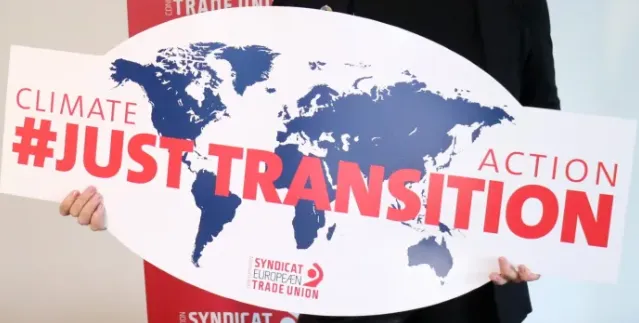
Every March, hundreds of thousands of job seekers organize their resumes and portfolios as recruitment season arrives. And 2026 is a year when the statement that AI is quietly but rapidly replacing positions that once required human hiring feels more real than ever. Now, with the benefits and harms of technological transition unfolding simultaneously, just transition is no longer solely the story of coal miners.Entry-Level Positions Quietly Disappearing Every Recruitment SeasonThe National Data Agency’s ‘Korean Social Trends 2024’ analyzed that approximately 2.7 million domestic jobs — 10% of all jobs — can be replaced by AI. The World Economic Forum (WEF) projected that while 92 million jobs will disappear due to AI over the next five years, 170 million new jobs will be created. At first glance, this seems positive, but more important than the sum of the numbers is ‘who occupies the positions that are disappearing.’ Companies facing change prefer not to dismiss existing employees but rather not to hire new ones in the first place. According to 2025 U.S. labor market research, companies that adopted generative AI reduced new-graduate hiring by 7.7% one and a half years after adoption compared to companies that did not. In contrast, experienced hiring was relatively maintained or showed an increasing trend.In this situation, the decline in new-graduate hiring in South Korea is even steeper. According to an analysis by the employment platform Catch, regular new-graduate job postings at large companies dropped by 43% year-on-year in 2025. In particular, the IT and telecommunications sector reduced new-graduate hiring by 67% over the same period. A situation is also emerging in which roughly half of those who passed the certified public accountant exam are effectively unemployed. This is because AI has replaced the simple repetitive tasks that first- to third-year new accountants used to handle, prompting accounting firms to reduce new hires altogether. This is not simply a job shortage but a signal that the very structure of labor market entry is changing.[© gettyimages]Countries That Designed the TransitionNew jobs do not naturally come to those who have lost their jobs to new technology. Unless someone designs it deliberately, the benefits of labor transition will be concentrated among a few, while the costs will be borne by the many. German labor circles, judging the phase-out of coal as central to the energy transition for carbon neutrality, launched the ‘Coal Commission’ in 2018, composed of 28 members including workers, companies, the government, and regional stakeholders. After six months of deliberation, it adopted a roadmap to phase out coal mines and coal-fired power plants by 2038. In this process, it promised social security for workers who could lose their jobs and decided to invest finances for 20 years in regions hosting coal-fired power plants for regional development. The same principle applies in the AI transition phase. The German Metalworkers’ Union (IG Metall) identified participation, co-determination, retraining, collective agreements, and a strong social safety net as the key elements of the transition process, emphasizing that workers are not ‘objects of protection’ but ‘future skilled professionals.’ Italy has moved to proactively secure financial resources for the AI era. The Italian government allocated €30 million for employed workers at high risk of losing their jobs to AI automation and for the unemployed. Of this, €10 million is directed toward upskilling employed workers at high risk of automation replacement, and the remaining €20 million toward developing the digital capabilities of the unemployed and the economically inactive population. It is significant in that it includes not only those already unemployed but also those who are still working yet at risk.South Korea’s response is just beginning to gain momentum. With the launch of the New Economic, Social and Labor Council on March 19, 2026, the tripartite social dialogue among labor, business, and government, which had been suspended for over a year, has resumed. The ‘Labor-Management Win-Win Committee for AI Transformation’ is scheduled to discuss labor-management cooperation models in response to the changing job environment brought about by the introduction of AI. [© gettyimages]Just Transition: The ConditionsEvery year when the March recruitment season comes around, applicants face the question of ‘what qualifications are needed.’ But the answer to a more fundamental question still remains society’s responsibility. Only when the cost of labor transition is not borne by individuals alone, a social safety net guarantees income during the transition period, and a consensus structure is established in which business, society, and government share the costs — only then can the word ‘fair’ be placed in front. Ensuring that technological progress does not result in the profit of a few and the anxiety of the many is why ESG’s ‘S’ remains important even in the AI era. by Editor L