Loading Data
Please wait a moment...
Update Cal.
2026.08
03
Mon
04
Tue
05
Wed
06
Thu
07
Fri
08
Sat
09
Sun
Update Calendar
2026.08
01
Sat
02
Sun
03
Mon
04
Tue
05
Wed
06
Thu
07
Fri
08
Sat
09
Sun
10
Mon
11
Tue
12
Wed
13
Thu
14
Fri

Loading Data
Please wait a moment...
Morning features and interviews. A morning story over a cup.

As of February 2026, the number of non-wage workers classified as ‘workers without rights’ in the Republic of Korea reaches approximately 8.7 million — an increase of roughly 80,000 from 2023. Their numbers are continuously growing due to the expansion of the platform economy and the diversification of employment forms. Against this backdrop, let us examine the ‘Workers Without Rights Protection Package Legislation’ that the government is pursuing with a target of the upcoming Labor Day on May 1. Workers Without Rights and Changes in Corporate GovernanceFrom insurance salespeople, home-school teachers, and delivery riders to IT freelancers and broadcast writers, workers without rights form a substantial pillar of our economy, yet they stand in a legal blind spot. Although they effectively exhibit forms of labor similar to wage workers, under the name of ‘sole proprietors,’ they have been excluded from basic social safety nets such as severance pay, minimum wage protection, and the four major social insurances. The blind spots in the law not only threaten the lives of individual workers but can also bring back legal risks to companies in the form of massive claims for unpaid allowances and severance pay. This is also the backdrop for the government’s push for the ‘Workers Without Rights Protection Package Legislation.’ [Workers Without Rights image © ChatGPT]The core of this legislation is the introduction of the ‘Worker Presumption System.’ Previously, workers had to prove their own worker status themselves, but under the amendment, as long as the fact that they directly provided labor for another person’s business is confirmed, they are first presumed to be a worker. If an employer wishes to claim that the person is not a worker, the employer must now find that evidence themselves. In addition, the authority of labor inspectors to directly verify data from the National Tax Service is strengthened. The intent is that the state, on behalf of workers who lack informational resources, will secure substantive labor data such as income reporting records to prove their dependency. A mediation procedure that can swiftly resolve worker status disputes at the stage before court litigation is also being established.In the ESG Era, a Shift in Corporate Perception of Labor Is NeededHowever, because this legislation does not expand the coverage by changing the definition of ‘worker’ itself under the Labor Standards Act, tasks remain to be resolved. At this point, labor circles have raised questions about the effectiveness, criticizing that ‘merely shifting the burden of proof while leaving the scope of workers unchanged is protection in name only.’ In particular, there is also criticism that if the provisions for improving treatment are limited to non-binding ‘duty to endeavor,’ companies could evade them under the logic of having done their best under the circumstances, making it difficult to bring about substantive change on the ground.[Framework Act on the Rights of Working People © Ministry of Employment and Labor]Although this legislative push is controversial in terms of its effectiveness, companies should not dismiss this change as something to merely observe. The discussion of institutionally protecting various forms of labor providers ultimately demonstrates that social inclusion is settling in as a key indicator of ESG evaluation. Companies must now accept this not as mere regulatory tightening but as a process in which the governance of labor practices itself is fundamentally changing. This is because legal risk management related to human resources is no longer a matter of choice but an issue directly tied to corporate survival. Until now, companies have drawn the line with the logic that ‘if they are not directly employed affiliates, there is no responsibility.’ But they must break away from such practices and recognize all human resources that support the substantive pillar of their business as ‘partners within the system.’ They must bring previously unclear risks within the institutional framework to manage them transparently and design a win-win structure with these partners. by Editor L
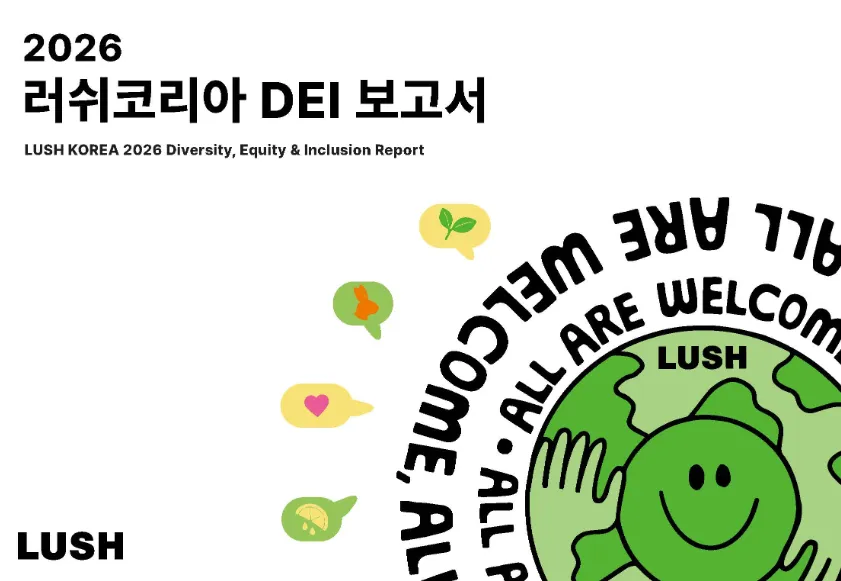
The pace at which the world is changing is incomparably faster than in the past. Some decisions are swiftly automated, and some judgments become the domain of algorithms instead of people. The more technology evolves, the more organizations must respond quickly and flexibly. Amid such changes, companies face the most fundamental question: ‘With whom, and based on what values, are we working right now?’ This is not simply a matter of organizational culture. It is a question that asks whether a company can earn the long-term trust of the market, and by what data such sustainability can be evaluated. Confirming Organizational Health Through Objective DataMany companies speak of sustainable management and hold up ‘respect’ and ‘inclusion’ as core values. However, whether such abstract words are actually reflected in the systems of the real organization, or whether they merely remain as declarative phrases, cannot be known until one becomes a member of the organization and experiences it. Until now, diversity and inclusion within organizations were areas difficult to measure, closer to variable factors that changed depending on the personal inclinations of good colleagues or leaders. Thus, proving the health of an organization to external stakeholders was a vague task. It is precisely here that DEI (Diversity, Equity, and Inclusion policy) reports gain their significance. Key data points — such as who enters and exits the organization, whether caregiving responsibilities lead to career interruptions for certain members, and whether formal governance that manages discomfort is functioning — are not mere personnel statistics. Through DEI reports, one can confirm that the concepts of ‘respect’ and ‘inclusion’ have been transposed into data in the form of figures and structures. Such data serves as a key indicator that objectively diagnoses the previously vague state of an organization’s health and gauges its resilience.[Image of the datafication of value concepts © ChatGPT]Our Own Benchmark, Not Answers for the Sake of EvaluationOf course, indicators are always a double-edged sword. Quantified data can serve as powerful evidence proving corporate performance, but at times, it also starkly reveals gaps that need to be addressed. In this context, defining a company’s DEI report merely as promotional material showing that the company is fulfilling its ‘social responsibility’ is a one-dimensional approach. The essential value of a DEI report lies in examining ‘by what criteria the organization was designed’ and in reading the meaning of the data. Since each company differs in size and industry, there is no single correct answer, but it is important for companies to approach the data not by filling their DEI reports with answers aimed merely at showing off, but with criteria unique to the organization.In this context, the case of the ‘2026 Lush Korea DEI Report’ is intriguing. Lush Korea did not list short-term campaigns or token systems in its DEI report. Instead, it chose the approach of transparently disclosing the default values that drive the organization and showing them in figures and language. From the forms of address and work modes of its members to the customized job design for the employment of persons with disabilities and the governance through which childcare and caregiving are viewed — all these elements are designed not as temporary benefits for specific groups but upon a reality that acknowledges diverse ways of living. [Lush Korea DEI Report © Lush Korea]Particularly impressive is the fact that the ‘feedback culture that embraces mistakes’ is being measured as a quantified indicator of the psychological safety net. The figure showing that 76.8% of all members responded that they ‘exchange improvement-oriented feedback rather than blame when mistakes happen’ demonstrates that the value of inclusion is functioning as the organization’s substantive operating system, going beyond mere declaration. The ‘2026 Lush Korea DEI Report’ is, in effect, the outcome of calmly recording the intangible values that Lush Korea has been pursuing and proving them through data. An Essential Foundation for Sustainable ManagementCompanies in this era must transparently show not only what they count as performance but also their attitude toward their members. For this, not mere words but ‘structures’ and ‘data’ must back it up. The DEI report is not merely a means to pass external evaluation, but an essential foundation for companies to continue sustainable management without wavering in a rapidly changing environment. Through DEI reports, we can confirm not the completion of an organization but the image of an organization responsibly moving forward toward a better future. In the end, a company’s true sustainability is proven not by grand declarations but by the concrete systems that support those promises in places unseen. by Editor L

In Korean society, the issue of young people is primarily explained through two images: young people who stay indoors, disconnected from society, or adults who have failed to achieve independence. However, between these two lies a far more colorful reality. ‘Youth who have left home’ are one part of that. There are young people who chose to leave home as a survival strategy due to repeated domestic violence, economic exploitation, and control and abuse.Forced Independence for Survival: A Blind Spot of Family-Centered SystemsSome may ask this: “I understand that the situation was difficult, but aren’t they adults now? The difficulty of becoming financially stable after leaving home is something most young people who become independent go through.” But this statement misses a critical premise: for young people who have left home, independence is closer to a forced separation that begins in a state stripped of care, relationships, and safety.Young people cut off from their family of origin work without rest to sustain their livelihoods, yet their housing remains perpetually unstable. They have almost no one to rely on when they are sick. Moments in which they have to repeatedly explain their circumstances even in ordinary conversation continue, and relationship fatigue accumulates.[Image of youth who left home © Unsplash]Then why have young people who left home — a group that should have been addressed at the institutional level, beyond individual choice — been so invisible? The reason can be found in the fact that the basic premise of the administrative system still rests on the family. In the contradiction of being severed from their parents yet still administratively bound to them, young people who left home are pushed outside the system.The various youth support systems operated by the government are also often designed based on parental income or consent, making it easy for these young people to fall into blind spots of welfare policy. After leaving home, their lives continue with the universal protection and support of their family of origin cut off, and with the institutional protection of the state also failing to function smoothly. It is a continuous stretch of time in which the individual must bear economic and emotional responsibilities and risks entirely alone.[Canada’s Housing First for Youth (HF4Y) © Homelessness Learning Hub]The HF4Y model in Canada asks young people who have left home this question: “Do you have a safe place to stay tonight?” Because when housing is unstable, no form of independence can be sustained. This model first provides housing as the starting point of recovery, then, at the next stage, integrates support for mental health, education, employment, and social recovery. It is a method of first establishing the minimum conditions that make independence possible, before demanding proof of qualifications.The one-stop youth centers in the United States also depart from the same recognition of the problem. The issues of housing, medical care, legal assistance, counseling, and employment that young people who left home face are intertwined with each other, yet under existing systems, they had to visit different service windows for each. The one-stop centers view this structure itself as a problem and are designed so that related support services are connected in a single space, ensuring that young people do not have to repeatedly explain their harm and deprivation.The Conditions Preceding Youth IndependenceThese two overseas cases overturn the existing perception surrounding independence. Until now, independence in South Korean youth policy has primarily been understood in terms of employment and income. However, these policies take as their starting point the recognition that if the conditions for maintaining a working state — namely, housing stability, the restoration of relationships, and emotional stability — are not first established, no job can be sustained.What these cases commonly show is clear. For the independence of young people, employment is an important requirement, but it cannot be the starting point for solving the problem. Amid housing instability, severed relationships, and the absence of emotional recovery, employment is easily interrupted. That is why the creation of social infrastructure in which they can work and live must take priority.In South Korea, Seoul City recently proposed the ‘Ordinance on Support for Youth Who Have Left Home,’ beginning to call out by name, in the language of policy, those who had stood outside the system. This is a signal that severance from family is to be recognized not as an individual choice but as a state that requires additional protection. However, the ordinance is merely a starting point; how far housing and care will be designed as a public responsibility remains a challenge to be resolved.Youth who left home are a case that reveals how Korean society has defined youth independence and what premises it has taken for granted in that process. In a place where protection and support have disappeared and only individual responsibility remains, no life can be sustained. How we answer the question posed by the existence of young people who left home is also a matter of choosing the direction in which youth policy will proceed going forward. by Editor L
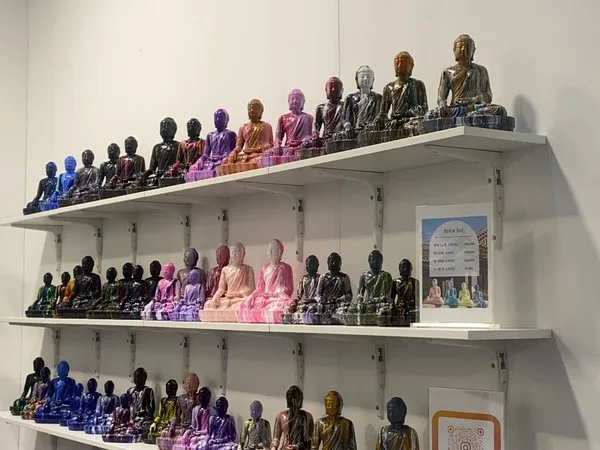
The ‘2025 Seoul International Buddhist Expo’ surpassed 200,000 visitors. That Buddhism is hip is now a proposition the MZ generation would at least nod to. At a time when Buddhism and its teachings are creating a trend beyond religion, Buddhism is also participating in the ESG trend. Although ESG and Buddhism may seem distant at first glance, ESG.ONL has already had conversations about ESG with Ven. Seonji. And in Buddhism, an important ESG-related event was held at the start of the year. Today, let us talk about the ‘Second Bhutan International ESG Forum,’ held at the Royal University of Bhutan on January 9.ESG from a Buddhist Perspective Found in the Buddhist Country of BhutanThe ‘Bhutan International ESG Forum’ is a gathering where officials from the government, academia, and industry of South Korea and Bhutan discuss climate crisis response, ESG, and Bhutan’s national governance philosophy of ‘Gross National Happiness (GNH).’ GNH in Bhutan, a Buddhist country, is the concretization of the core Buddhist value of ‘practicing compassion’ as a national development philosophy. It encompasses sustainable and equitable economic development, environmental protection, and good governance, making it similar to the concept of ESG. The Jogye Order, which participated as part of the Korean Buddhist delegation, also emphasized in the congratulatory address of Ven. Jinu that ‘the way of practicing various Buddhist ideas is ESG management.’ In the keynote lecture, Ven. Wongul explored ESG ethics, policy, and industrial practice measures from a Buddhist perspective under the theme of ‘Buddhist Ecological Philosophy and Environmental Activities of Korean Buddhism.’[Poster for the 2021 Seoul International Buddhist Expo themed ‘Wisdom for a Sustainable Life’ Ⓟ Seoul International Buddhist Expo][2025 Seoul International Buddhist Expo ‘Budda-e Butda’ goods exhibition Ⓟ Consumer Evaluation]The Buddhist community has already been consistently speaking about ESG for a long time. In 2020, Buddhist Climate Action began, and the 2021 Seoul International Buddhist Expo held an environment-related exhibition under the theme of ‘Wisdom for a Sustainable Life.’ In 2022, Ven. Muwon, who was inaugurated as the Chief Administrator of the Cheontae Order, spoke in his inaugural address of ‘strengthening sustainable management that prioritizes the environment and life,’ while the Jogye Order held a forum in 2023 under the theme ‘ESG Management Expansion: How Will Social Welfare Be Practiced.’ This trend gained greater visibility after Ven. Seonji’s book <Buddha Management> was published in 2025. [Buddha Management Ⓟ Dam & Books]Values Shared by ESG and Buddhism: Transparent Management, Practicing Respect for the Environment and LifeWhat is always mentioned when discussing Buddhism and ESG is ‘Dependent Origination (Pratītyasamutpāda).’ Dependent Origination is a core Buddhist doctrine meaning the truth that nothing exists in isolation but exists within relationships. It is the recognition that life, society, the nation, and nature are not separate entities but are situated within an interdependent network of relations, which can be interpreted as meaning that companies should act by harmoniously considering not merely the pursuit of profit but also the coexistence of humanity and the interests of society. Related to this, ‘Non-Duality (Advaya)’ is the concept that elements that appear to be in opposition are not different from each other and are situated in a relationship of mutual dependence. Concretely, in relation to the E dimension, it can be interpreted as meaning that humans are likewise not different from nature or its rulers but are a part of nature, and in the G dimension, it can be interpreted as meaning that corporate executives and employees are not different from each other, thereby creating a safe working environment.[2023 2nd Jogye Order Social Welfare Foundation Future Welfare Forum on ESG Management Ⓟ Jogye Order Social Welfare Foundation]The Five Precepts (Pañcaśīla), the five most fundamental ethical guidelines in Buddhism, can likewise be interpreted as basic principles in the E dimension. At the Bhutan Forum, Ven. Wongul linked four of the Five Precepts — not killing (Ahiṃsā), not stealing (Asteya), not engaging in sexual misconduct (Kāmamithyācāra), not lying (Mṛṣāvāda), and not taking intoxicants (Madyapāna) — excluding not engaging in sexual misconduct (meaning to preserve marital fidelity), to the environmental dimension. First, not killing, meaning ‘respect life without destroying it,’ becomes the basis for management activities that minimize ecosystem damage. Not stealing, meaning ‘do not take what is not given,’ relates to the meaning of not taking resources that future generations will use, and can thus be interpreted from the perspective of resource conservation. Not lying, meaning ‘do not speak falsehoods,’ is practiced in the form of facing squarely the current climate crisis and transparently disclosing environmental information. Not taking intoxicants means not drinking alcohol, but it also carries the meaning of guarding against a state of intoxication in which a clear mind cannot be maintained — this is connected to individuals living through the climate crisis refraining from addictive consumption and maintaining a temperate lifestyle.ESG Cases Demonstrated by the Domestic Buddhist CommunityThe ‘Third Korea ESG Awards’ ceremony held last December was an occasion to confirm cases of ESG practice by the Buddhist community. Dongguk University, operated by the Jogye Order, won the Grand Prize in the comprehensive category for outstanding achievements in establishing an on-campus greenhouse gas inventory and in ESG education and research based on the Buddhist spirit. The Ulsan Buddhist Environmental Solidarity won the Grand Prize in the Religious Category E domain for its ‘Friday Climate Action Campaign’ held every Friday and the operation of eco-friendly dharma assemblies that do not use disposable products. In the Religious Category S domain, Jiongsa Temple in Miryang won the Grand Prize in recognition of its social contribution activities for children from multicultural families.[60th Anniversary Dharma Assembly commemorating the enshrinement of the Bronze Standing Buddha Ⓟ Dongguk University]In this way, the expansion of ESG practice methods based on the Buddhist spirit continues. Going forward, it is hoped that this will go beyond inducing individual practice based on Buddhist doctrine to become an ESG practice that the religious community, the state, and the industrial world ponder together. by Editor L
Having run hard throughout 2025, ESG Today is growing together with you, our readers. Under the name of ‘today’s magazine for tomorrow,’ ESG Today is always busy recording the changes in the ESG ecosystem, digging into curious stories, and sometimes turning its attention to topics that have not received the spotlight. From the AM menu, which we wish could stay with you like a morning cup of coffee or a piece of bagel, to the NOON menu for sharing a single word of knowledge at lunchtime, and the PM menu delivering today’s trending news like a busy afternoon — ESG Today is striving to create better content filled with interesting stories, and it quietly marked its second anniversary on December 21.Today, we would like to introduce ESG Today’s ‘today’ to all of you.[ESG.ONL Logo Image Ⓟ ESG.ONL]About 2,500 people visit ESG Today each day.First of all, pleased to meet you, everyone. Having undergone a period of reorganization in 2024, ESG Today communicated with you through 151 articles this year. Issuing an average of three articles per week, we delivered stories that spanned the Environmental (E), Social (S), and Governance (G) domains. As a result, more readers have been receiving coffee coupons.There are even readers who have earned lunch coupons, no less. As readers who frequently visit ESG Today may well know, after signing up as a member, you can accumulate ONL points by clicking the ONL mark below the title of an article that has been uploaded ‘today.’ And when you collect 50 of these points, you can receive a coffee coupon; when you collect 100, you can receive a lunch coupon along with contact from an ESG Today staff member. The increasing number of readers receiving coffee and lunch coupons in this way carries special meaning for ESG Today’s editors. After all, it is proof that there are people who diligently check our articles on the very day they go up. For those who visit each time a new article is posted, ESG Today’s editors go forth today as well in search of good topics.The topic that drew the most attention in 2025 was Governance.Looking at the topics covered by ESG Today this year, it appears that Environment accounted for roughly 40%, Social roughly 35%, and Governance roughly 25%. The reason for the vague expression is the characteristic of ESG-related content, in which it is difficult to say that a single article is strictly confined to one domain. It is ironic that despite the relatively low volume of articles on Governance, the content that drew views and reactions was the articles on Governance. The articles most read by you this year were ESG and Evaluation Standards and News from Government Ministries. As the executive branch underwent major changes this year, many readers took an interest and checked articles on what thoughts the presidential candidates held regarding ESG and what impact the newly established Ministry of Climate, Energy and Environment would have. The article on ESG evaluation standards, published ahead of the mandatory disclosure scheduled for 2026, also drew much attention despite being recent. Of course, readers also showed great interest in environmental topics, which accounted for the highest volume of articles, and as the impacts of climate change have become part of daily life, the view counts of environment-related keywords such as Greensumer and Flash Drought were remarkably high. In 2026, We Will Share More ‘Todays.’ESG Today is contemplating more opportunities and points of contact so that the record of ‘today’ it is accumulating does not merely remain as a news archive. We will strive to serve as a partner for co-prosperity in the ESG ecosystem, as essential information for corporate practitioners tackling ESG as a task, and as a medium that explains to general readers, who live day by day in the ESG field, how ESG connects to our lives. In this way, today’s record for tomorrow continues. We hope you, our readers, will be with us on this journey. Thank you sincerely to everyone who has been with ESG Today throughout 2025.By ESG.ONL

Year-end is a period with many gatherings and appointments. The streets that wrap up one year and welcome the new are filled with dazzling lights and colors enough to make one forget the cold. The Salvation Army’s charity pots and briquette volunteering are also special scenes visible around the time one’s nose stings from the cold. Year-end is certainly a bountiful and generous period, but there are people who exist in places that warmth does not reach.Until now, the ‘alienated neighbors’ of year-end have mainly been represented by the elderly living alone. Of course, this remains an important issue. However, a new form of isolated group encompassing young people and the middle-aged has recently been rapidly increasing. The terms used to refer to them — such as hikikomori (social recluses), isolated and withdrawn youth, and the like — are also becoming increasingly segmented. Although their specific characteristics differ, what they share in common is that they have been severed from economic activities and social relationships. Among these, the most widely used expression, ‘hikikomori,’ is a Japanese term referring to people who stay at home for long periods and extremely avoid contact with society, or that state itself, which emerged as a full-fledged social issue in the early 2000s. It was the result of the combined effects of school bullying (ijime), school refusal, youth unemployment due to the bubble economy, and prolonged recession in the 1970s and 1980s. In South Korea as well, amid the deepening employment instability and spread of individualism following the 1997 IMF financial crisis, the number of people falling into social isolation due to employment failure or workplace maladjustment increased, emerging as a social issue.[Japan’s ‘8050 Problem’ aggravated by aging hikikomori Ⓟ NHK Special]Withdrawal and isolation are often dismissed as due to an individual’s will or lack of ability. Yet examining the statistics reveals structural factors that are difficult for individuals to overcome. In January 2025, the job-to-applicant ratio compiled by the employment service platform ‘Employment 24’ dropped to 0.28, meaning there were two jobs for every ten jobseekers. Recently, even job vacancies have decreased. Job vacancies, which stood at 185,000 in July last year, dropped by 27,000 over the course of a year to 158,000 this July. Even jobs that had been unpopular have become scarce. As jobs have shrunk, the number of those pushed out of the job-seeking competition has increased, and some quietly exit the social system.Employment failure is not the sole cause of isolation. For various reasons — domestic violence, school violence, maladjustment or harassment in the military and workplace, business failure, relationship failure, illness, and existential skepticism — people give up on life and go into seclusion. Even people who had a normal social life in the past can become lethargic after experiencing fraud, betrayal, office politics, or unexpected dismissal. Isolation is not a problem of specific individuals but closer to a risk that can befall anyone.[Seoul Isolated and Withdrawn Youth Performance Sharing Event Ⓟ Nae Son Ane Seoul]The problem is that individual isolation leads to social costs. Young people who have been in a prolonged state of ‘resting’ are highly likely to grow into middle-aged kangaroo tribe members. Delayed independence of the youth increases the economic burden on the parent generation, leading to poverty in old age. In fact, according to the Seoul Institute’s report ‘Changes in the Life Course of Seoul Citizens and Poverty Risk,’ the proportion of those living with their parents at age 35 rose sharply from 22.8% among those born in 1971–1975 to 41.1% among those born in 1981–1986. In Japan, the ‘8050 problem’ — in which parents in their 80s live with and continue to provide financial support for children in their 50s — has already drawn attention as a social issue.Nevertheless, systematic management and response remain insufficient. Because isolated individuals lose even the energy to seek help themselves, ‘outreach support’ is important. In this process, it is necessary to broadly identify the isolated across age and situation — including the middle-aged, youth, and single-person households — and provide appropriate forms of support tailored by type.[Year-End Street Scene Ⓟ Jeonju City Hall Facebook]A joint study on ‘Youth Isolation Typology’ conducted by the Youth Foundation and the Seoul Women’s University Industry-Academic Cooperation Foundation emphasizes the need for customized support by type. The researchers pointed out that substantive recovery is possible only when approaches are tailored to the individual’s way of life and the cause of isolation, rather than judging solely by the duration of withdrawal. The ‘Seoul Youth Gijigae Center’ operated by the Seoul Metropolitan Government classifies the degree of youth social isolation into three types for diagnosis and systematically supports over 50 customized programs. Programs conducted in December also consist of a diverse range, from sewing clubs and companion plant programs to basic competency enhancement training and year-end performances.What is interesting is the approach utilizing online content, which is encouraging in that it actively generates social discussion on isolation and withdrawal issues through online channels with high diffusion power. The YouTube content ‘Fearless Series’ jointly produced by the Youth Foundation and the hikikomori support organization ‘Fearless Company’ contains content in which Korean young people with experiences of isolation and withdrawal directly covered the issue of hikikomori, a longstanding social problem in Japan. The Naver webtoon ‘Armadillo’ is also a work that features a hikikomori as its protagonist. For those whose external activities are extremely limited, online platforms are communication channels with a relatively low barrier. The comment sections of online content are becoming spaces for people to share their own experiences and offer comfort.The issue of isolation and withdrawal is an indicator that gauges how finely the social support system operates. Life expectancy is increasing, but jobs are decreasing. It is now time for society as a whole to pay attention to the quality of life. Looking back at those quietly isolated behind the dazzling lights — perhaps that should be yet another way in which we spend the year-end at this time. by Editor L
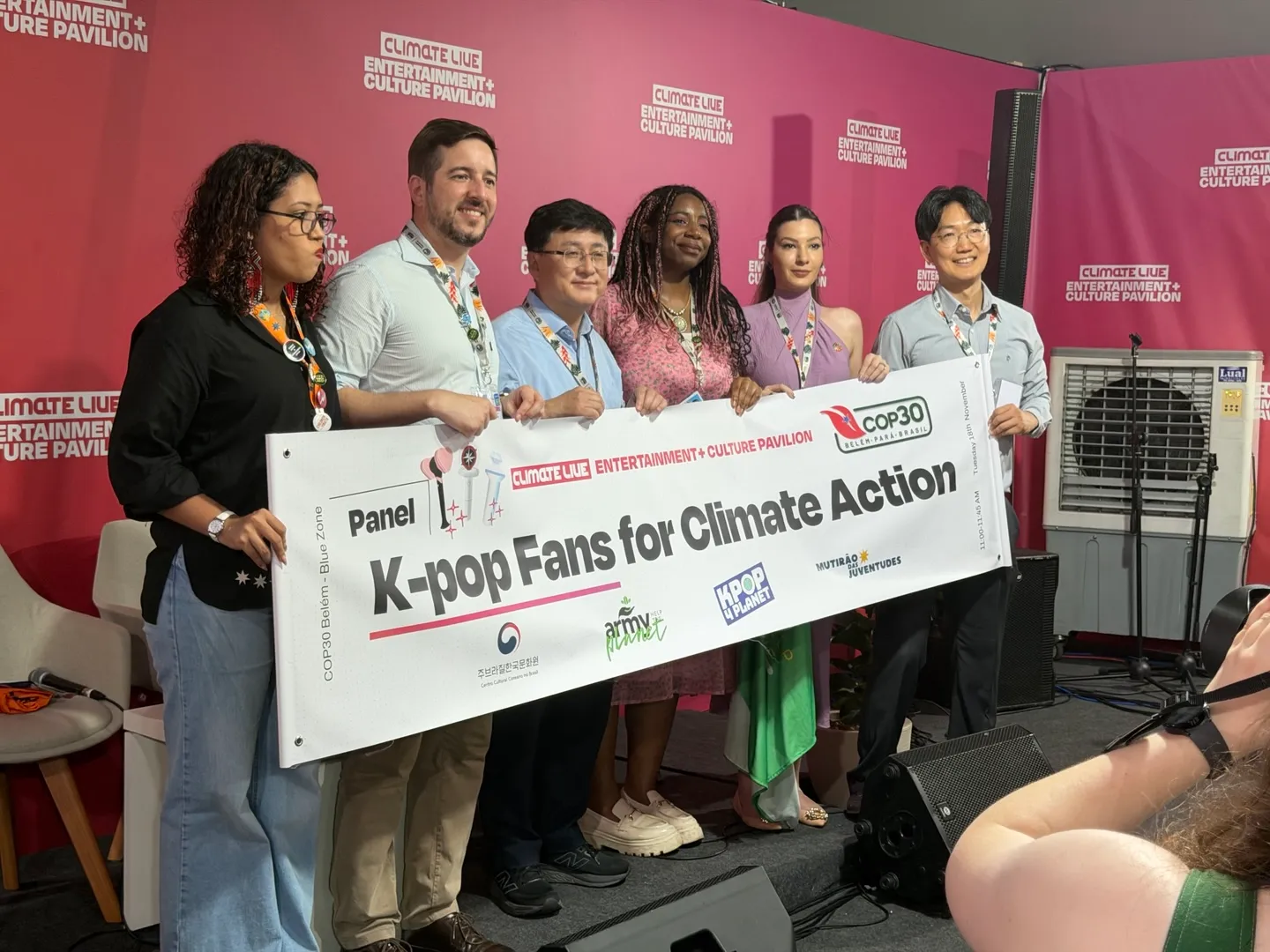
Last November, the COP30 venue (the 30th Conference of the Parties to the United Nations Framework Convention on Climate Change, held in Belém, Brazil from November 10–21, 2025), located in the city of Belém at the mouth of the Amazon with a population of 1.5 million, was a point where the urgency of the climate crisis and the harsh reality of international politics intersected. Climate negotiations are frequently stalled or in a standstill as economic interests and political and diplomatic calculations become complexly entangled. This General Assembly likewise once again failed to codify the phasing out of fossil fuels, leaving room for regret. But what was witnessed in the gaps of this sluggish negotiation was a completely different possibility: the ‘power of culture’ that unties the knots that politics could not.[COP30 Venue © Kim Won-sang, Climate Solutions Media Communications]At this General Assembly, Climate Solutions teamed up with global organizations to carry out actions calling for an end to fossil fuel investment. What breathed life into this campaign, which could have been stiff and formulaic, was the cosplay of characters from the animated film ‘K-Pop Demon Hunters.’ Perhaps thanks to the power of global content, the response from participants and press was heated. Multiple foreign media outlets including the AP gave it concentrated coverage, and this soon became an opportunity for climate issues to be translated into popular language and delivered across the globe. This trend even led to actual discussion venues, with a session themed around K-pop and climate response being organized. When Minister of Climate, Energy and Environment Kim Sung-hwan, who visited the venue, delivered an encouraging message through a congratulatory speech, a natural point of connection was formed through which the cultural approach linked to policy interest.The anecdotal experience of a journalist I met on site was even more dramatic. When covering indigenous people in the Amazon rainforest, where public access is strictly restricted, the people who were normally exclusive toward outsiders changed their attitude at the journalist’s single remark that they had ‘come from Korea.’ They mentioned Korean dramas they had watched on Netflix and called out actors’ names, showing goodwill. It was the same at street marches held in downtown Belém. Citizens welcomed them simply for being Korean, and reached out first to take photos together or share social media accounts. The ‘finger heart’ that appeared in every group photo was a symbol of cheerful solidarity that transcended ideology and language.[COP30 Venue © Kim Won-sang, Climate Solutions Media Communications]Such experiences did not flow only one way. To an average Korean, the communities of Pacific island nations were distant both geographically and emotionally. But the ‘Moana Pavilion’ they set up was different. Drawn in by a name made familiar through a famous animated film, people listened at length to the reality of the climate crisis they faced and the messages they conveyed. It was a moment in which the suffering of others, which would have been passed by without culture, was transposed into one’s own issue through the catalyst of culture. Amid the COP30 venue, filled mostly with stiff language and business attire representing companies or nations, the only point of contact that eased the tension and evoked a warm feeling was this kind of informal cultural exchange.As a longtime football fan, Brazil had been a distant country connected only through football. Prior to this, I had only vaguely known of the vast nature of the Amazon ecosystem and had no experience whatsoever of perceiving the indigenous communities within it or their culture. I was able to encounter a country I was uncertain I would ever visit in my lifetime, thanks to the unfamiliar stage of the Climate Assembly, and the two countries broke down each other’s psychological barriers through culture. In the enormous international task of climate response, what is as important as technological solutions or policy consensus is ultimately ‘the will to connect.’ This is because no matter how sophisticated the policy, it is difficult to gain momentum if it cannot move the hearts of the public.[COP30 Venue © Kim Won-sang, Climate Solutions Media Communications]The role of culture as one axis of climate negotiations will become even more important going forward. Even if we do not share a language and even if our political stances differ, we watch the same films and enjoy the same songs, thereby recognizing each other’s existence. This soft link could become the key to solving the planetary conundrum of the climate crisis. This is why more cultural artists and influencers must gather under the value of climate. The power to rescue climate politics from deadlock may lie not on the cold negotiating table but in the site of the vibrant culture we enjoy together.by Kim Won-sang (Climate Solutions, Media Communications)
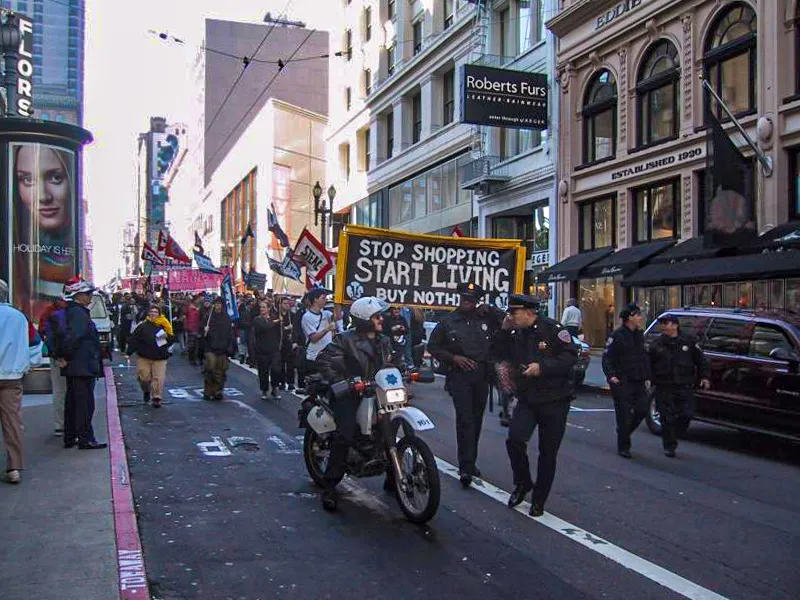
How much did we consume this autumn? From late October through early December, many of our favorite shopping malls — SSG.com, AliExpress, Musinsa, Olive Young, and others — held sales. Amid the relentless sale relay surrounding Black Friday, our wallets opened ceaselessly as well. Musinsa, which recorded the highest-ever sales for this Black Friday in the heat of the moment, disclosed that it sold products worth over KRW 1.5 billion every hour. In the United States, where Black Friday originated, it was projected that 186.9 million people would go shopping this year, from Thanksgiving through Black Friday to Cyber Monday, the online shopping mall discount event. The U.S. retail market is in high spirits, with expectations of USD 11.7 billion in online sales on Black Friday, an 8.3% increase from the previous year, and USD 14.2 billion on Cyber Monday, a 6.3% increase from the previous year.[Musinsa Black Friday Poster Ⓟ Musinsa]Is Black Friday, which sways our hearts in this way, simply a good day to purchase the things we want cheaply? Is it not spurring indiscriminate consumption at low prices and causing the waste of countless resources? The last Friday of November, the same day as Black Friday, is also ‘Buy Nothing Day.’ The anti-consumerism movement also began around this day, giving it great significance. Today, let us examine ‘Black Friday’ on the last Friday of November, ‘Cyber Monday’ on the following Monday, and ‘Buy Nothing Day.’[U.S. Walmart Black Friday Promotion Poster Ⓟ Walmart]Black Friday + Cyber Monday vs. Buy Nothing DayBlack Friday is the day after Thanksgiving, the fourth Thursday of November, and is the shopping day boasting the largest discount rates in the United States. The expression ‘black’ originates from the fact that it is the day retailers first record profits in black ink for the year. After spending the biggest holiday, Thanksgiving, Americans take the following Friday off to visit stores and sweep up goods. Cyber Monday, the online version of Black Friday, is the first Monday after Black Friday. The New York Times has reported that this day records the largest annual internet shopping sales, because office workers who have returned to work after the four-day Thanksgiving holiday shop using the fast internet at their workplaces. Based on this, Cyber Monday, which began around 2005, now draws even more attention than Black Friday, as online shopping has become ubiquitous.[Buy Nothing Day Ⓟ Wikipedia]Buy Nothing Day is, contrary to the above commemorative days, a day to reflect on the environmental destruction, labor issues, and unfair trade problems caused by excessive consumption, and to look back at ourselves, addicted to trends and shopping. Begun in 1992 by advertising industry professional Ted Dave, and promoted annually by the non-profit organization ‘Adbusters Media Foundation,’ composed of activist artists, this day began its campaign in South Korea in 1999 led by Green Korea United. Brands Participating in Buy Nothing DayIt is fascinating to see brands that should promote consumption either halt product sales on Buy Nothing Day or lead sustainable consumption. The Swiss brand Freitag, which recycles truck tarpaulins into bags, and the American eco-friendly fashion brand Patagonia are representative examples. Freitag launched the bag exchange platform ‘S.W.A.P (Shopping Without Any Payment),’ and from 2020 has redirected consumers accessing its online store on Black Friday to this platform. Going further, in the past two years, it did not sell products at its official stores and online stores worldwide for the one day of Black Friday. Instead, in 2023 it ran a free bag rental campaign, and in 2024 it encouraged people to experience the S.W.A.P bag exchange service offline. This year, it opened a new bag repair center in Zurich timed for Black Friday, and in celebration, ran a first-come, first-served free bag repair service at select stores worldwide. Patagonia, which gained fame in 2011 by running the advertisement ‘Don’t Buy This Jacket’ on Black Friday, likewise does not hold Black Friday discounts. Instead, through its official website, it introduces clothing repair services and repair methods and shares information on grassroots environmental protection activities across the country. It has also released ‘Reading Hate Comments’ content in which employees themselves cheerfully explain why Patagonia does not have a sale on Black Friday, and why and how it strives for environmental protection.[Freitag’s New Repair Studio Ⓟ Freitag][Patagonia’s ‘Don’t Buy This Jacket’ Campaign Ⓟ Patagonia Korea]Beyond these, the Canadian beauty company Deciem’s brand The Ordinary, noting that Black Friday encourages impulse buying with short sale periods and high discount rates, runs the ‘Slowvember’ campaign, discounting products throughout the month of November. It provides time to consider what the skin needs and even presented a ‘Guide to Distinguishing Fake Benefits’ that spur unnecessary purchases. South Korea’s online shopping platform 29cm commemorated ‘Buy Nothing Day’ this year by releasing interview content on sustainable consumption with stand-up comedian Won So-yoon and YouTuber Jimmy Jo. By recommending environmentally related products such as vegan items, it naturally heightened interest in ‘Buy Nothing Day’ and ‘sustainable consumption.’Buy Nothing Day and the YONO Consumption TrendAnti-consumerism has spread in earnest from Buy Nothing Day as its starting point. Anti-consumerism rejects consumption itself, recycles to reduce social and environmental problems, and may even boycott specific products or brands based on political or social beliefs. This anti-consumerism, which began in the 1990s, has appeared in various forms including the emergence of freeganism* and the popularity of minimalist lifestyles.*Freeganism: A compound of ‘free’ and ‘veganism,’ an anti-consumerist, anti-capitalist movement of consuming and using discarded food and goods.[<Low Consumption Life> Ⓟ RH Korea]The recently spotlighted trend ‘YONO (You Only Need One)’ is a movement to minimize current consumption and possessions. As a concept opposite to YOLO (You Only Live Once), which gained popularity a few years ago, it aims not to buy unnecessary items, to buy quality items and use them for a long time, and to seek out secondhand transactions when purchasing. The fact that the usage of major domestic secondhand transaction applications has nearly doubled in four years also attests to this trend. Recently, it has also been referred to as ‘underconsumption core’: the book <Low Consumption Life>, which deals with the low-consumption lifestyle of Japanese YouTuber Kazenotami, became a bestseller in both Korea and Japan, and videos under the ‘#Underconsumptioncore’ hashtag on TikTok gained popularity with total views exceeding 60 million. Although it is a trend that has surged due to the prolonged high inflation, economic downturn, and low growth since the pandemic, that is not the only reason. The younger generation that is reducing consumption uses eco-friendly materials, purchases local products that reduce carbon emissions, and rejects fast fashion. It can also be seen as one facet of sustainable consumption that considers society and the environment.We have examined brands that participate in Buy Nothing Day, rather than Black Friday, and the related consumption trends. If you have already pressed the purchase button countless times for Black Friday, how about resolving to be ‘the me who buys nothing’ next Black Friday? It will become the simplest environmental movement — one practiced not by doing something but simply by not buying. by Editor L