
Year-end is a period with many gatherings and appointments. The streets that wrap up one year and welcome the new are filled with dazzling lights and colors enough to make one forget the cold. The Salvation Army’s charity pots and briquette volunteering are also special scenes visible around the time one’s nose stings from the cold. Year-end is certainly a bountiful and generous period, but there are people who exist in places that warmth does not reach.
Until now, the ‘alienated neighbors’ of year-end have mainly been represented by the elderly living alone. Of course, this remains an important issue. However, a new form of isolated group encompassing young people and the middle-aged has recently been rapidly increasing. The terms used to refer to them — such as hikikomori (social recluses), isolated and withdrawn youth, and the like — are also becoming increasingly segmented. Although their specific characteristics differ, what they share in common is that they have been severed from economic activities and social relationships. Among these, the most widely used expression, ‘hikikomori,’ is a Japanese term referring to people who stay at home for long periods and extremely avoid contact with society, or that state itself, which emerged as a full-fledged social issue in the early 2000s. It was the result of the combined effects of school bullying (ijime), school refusal, youth unemployment due to the bubble economy, and prolonged recession in the 1970s and 1980s. In South Korea as well, amid the deepening employment instability and spread of individualism following the 1997 IMF financial crisis, the number of people falling into social isolation due to employment failure or workplace maladjustment increased, emerging as a social issue.
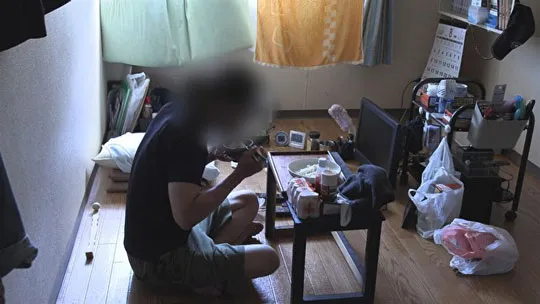
[Japan’s ‘8050 Problem’ aggravated by aging hikikomori Ⓟ NHK Special]
Withdrawal and isolation are often dismissed as due to an individual’s will or lack of ability. Yet examining the statistics reveals structural factors that are difficult for individuals to overcome. In January 2025, the job-to-applicant ratio compiled by the employment service platform ‘Employment 24’ dropped to 0.28, meaning there were two jobs for every ten jobseekers. Recently, even job vacancies have decreased. Job vacancies, which stood at 185,000 in July last year, dropped by 27,000 over the course of a year to 158,000 this July. Even jobs that had been unpopular have become scarce. As jobs have shrunk, the number of those pushed out of the job-seeking competition has increased, and some quietly exit the social system.
Employment failure is not the sole cause of isolation. For various reasons — domestic violence, school violence, maladjustment or harassment in the military and workplace, business failure, relationship failure, illness, and existential skepticism — people give up on life and go into seclusion. Even people who had a normal social life in the past can become lethargic after experiencing fraud, betrayal, office politics, or unexpected dismissal. Isolation is not a problem of specific individuals but closer to a risk that can befall anyone.
[Seoul Isolated and Withdrawn Youth Performance Sharing Event Ⓟ Nae Son Ane Seoul]
The problem is that individual isolation leads to social costs. Young people who have been in a prolonged state of ‘resting’ are highly likely to grow into middle-aged kangaroo tribe members. Delayed independence of the youth increases the economic burden on the parent generation, leading to poverty in old age. In fact, according to the Seoul Institute’s report ‘Changes in the Life Course of Seoul Citizens and Poverty Risk,’ the proportion of those living with their parents at age 35 rose sharply from 22.8% among those born in 1971–1975 to 41.1% among those born in 1981–1986. In Japan, the ‘8050 problem’ — in which parents in their 80s live with and continue to provide financial support for children in their 50s — has already drawn attention as a social issue.
Nevertheless, systematic management and response remain insufficient. Because isolated individuals lose even the energy to seek help themselves, ‘outreach support’ is important. In this process, it is necessary to broadly identify the isolated across age and situation — including the middle-aged, youth, and single-person households — and provide appropriate forms of support tailored by type.
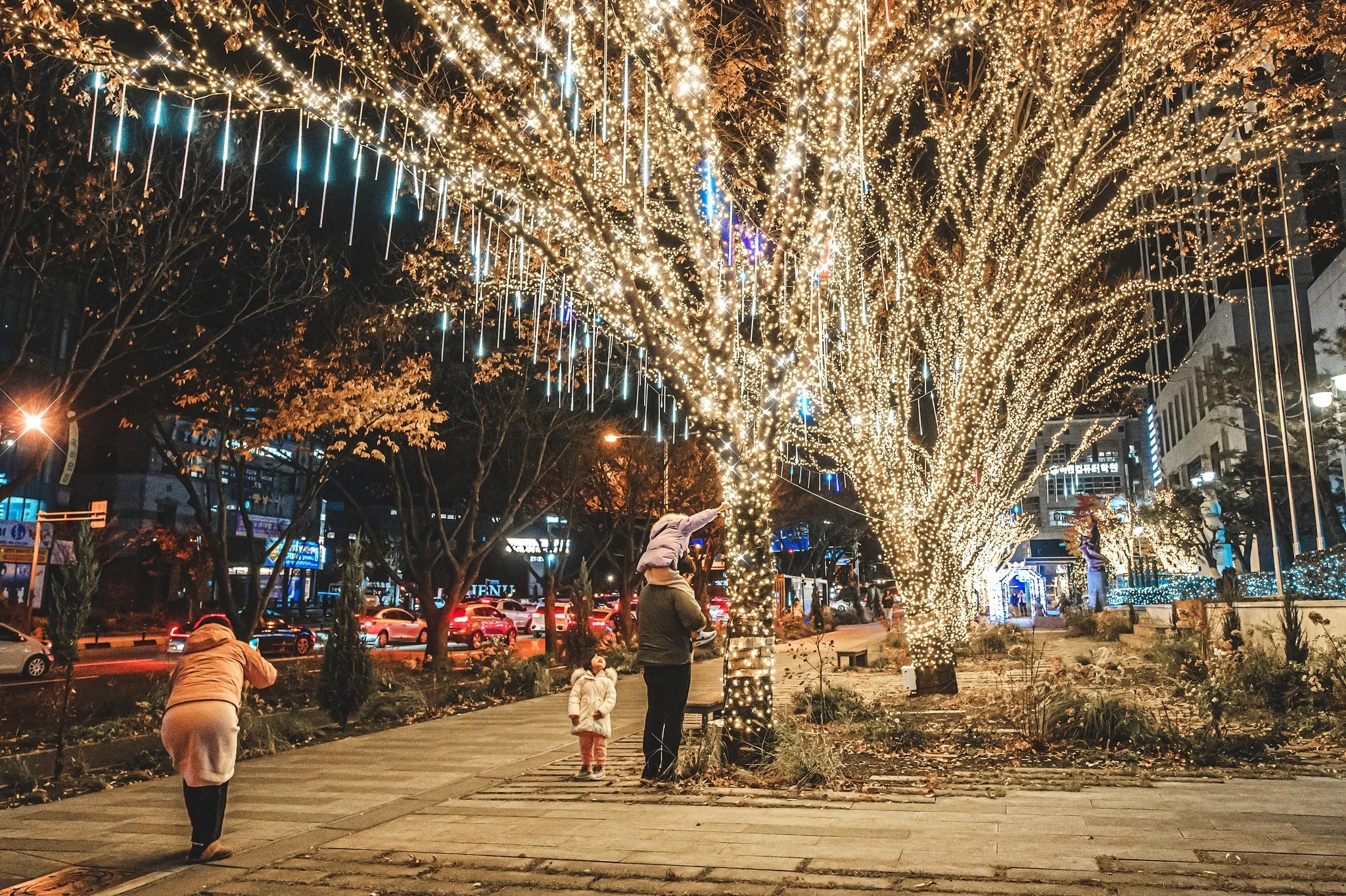
[Year-End Street Scene Ⓟ Jeonju City Hall Facebook]
A joint study on ‘Youth Isolation Typology’ conducted by the Youth Foundation and the Seoul Women’s University Industry-Academic Cooperation Foundation emphasizes the need for customized support by type. The researchers pointed out that substantive recovery is possible only when approaches are tailored to the individual’s way of life and the cause of isolation, rather than judging solely by the duration of withdrawal. The ‘Seoul Youth Gijigae Center’ operated by the Seoul Metropolitan Government classifies the degree of youth social isolation into three types for diagnosis and systematically supports over 50 customized programs. Programs conducted in December also consist of a diverse range, from sewing clubs and companion plant programs to basic competency enhancement training and year-end performances.
What is interesting is the approach utilizing online content, which is encouraging in that it actively generates social discussion on isolation and withdrawal issues through online channels with high diffusion power. The YouTube content ‘Fearless Series’ jointly produced by the Youth Foundation and the hikikomori support organization ‘Fearless Company’ contains content in which Korean young people with experiences of isolation and withdrawal directly covered the issue of hikikomori, a longstanding social problem in Japan. The Naver webtoon ‘Armadillo’ is also a work that features a hikikomori as its protagonist. For those whose external activities are extremely limited, online platforms are communication channels with a relatively low barrier. The comment sections of online content are becoming spaces for people to share their own experiences and offer comfort.
The issue of isolation and withdrawal is an indicator that gauges how finely the social support system operates. Life expectancy is increasing, but jobs are decreasing. It is now time for society as a whole to pay attention to the quality of life. Looking back at those quietly isolated behind the dazzling lights — perhaps that should be yet another way in which we spend the year-end at this time.
by Editor L