Loading Data
Please wait a moment...
Update Cal.
2026.08
03
Mon
04
Tue
05
Wed
06
Thu
07
Fri
08
Sat
09
Sun
Update Calendar
2026.08
01
Sat
02
Sun
03
Mon
04
Tue
05
Wed
06
Thu
07
Fri
08
Sat
09
Sun
10
Mon
11
Tue
12
Wed
13
Thu
14
Fri

Loading Data
Please wait a moment...
Morning features and interviews. A morning story over a cup.
According to the 2023 Informatization Statistics Survey released by the Ministry of Science and ICT, about 28% of domestic businesses with 10 or more employees were using AI in 2023. This is an 11-fold increase in three years compared with 2020, when AI-using companies were a mere 2.5%. Among large companies, the AI-technology utilization rate reaches a full 36.4%. Riding that trend, this article introduces a conversation about "the future of ESG" that we had with ChatGPT-4, which opened the AI era and was included in "Nature's 10," the journal Nature's annual list of those who helped shape science in 2023.[The thumbnail for this article, drawn by the image-generating AI DALL·E — from DALL·E]L: Hi :) I'm Editor L, who writes articles at the ESG webzine "ESG.ONL." I'm in charge of tenacious, long-form, sustainable stories. Today I'd like to talk about ESG with ChatGPT-4—is that okay?GPT-4: Hello, Editor L! Of course! A Q&A about ESG with ChatGPT-4—how interesting. I'm also curious about how AI technology like GPT-4's capabilities can be applied to ESG communication. Go ahead and ask. I'll do my best to answer!L: The topic of this article is "the future of ESG." I want to explain to readers how ESG will change the perspective of companies and brands in an era of low growth. If ChatGPT-4 were to interview an expert on the theme of "the future of ESG," what questions would you want to ask?GPT-4: Based on the background you've given, if I were to conduct an expert interview on the theme of "the future of ESG," I could consider the following questions. These questions would help draw out an expert's in-depth insights and outlook on "the future of ESG."1. The importance of ESG in an era of low growth — Why is ESG important to corporate strategy in a low-growth economy?2. The relationship between ESG and financial performance — How can ESG initiatives affect a company's long-term financial performance?3. Changes in sustainability strategy — How are companies' sustainability strategies changing in response to the recent economic environment?4. Consumer perception and ESG — How is consumer perception of ESG changing, and how is this affecting brand strategy?5. The role of technology — How can the latest technologies, such as AI, contribute to companies achieving their ESG goals?6. Changes in the regulatory environment — How are governments' ESG-related regulations and policies affecting corporate strategy?7. ESG investment trends — How can ESG investment contribute to corporate growth and innovation?8. The importance of global cooperation — Why are international cooperation and partnerships important for solving ESG-related problems?9. Risk management — How can ESG-related risks be managed and mitigated?10. Future vision — What changes do you expect ESG to bring to corporate activity and industry over the next 10 years?L: Thank you. Of the 10 questions, I'd like to ask further about "No. 1, the importance of ESG in an era of low growth." As an era of low growth and high prices continues, there are voices from companies saying it's too hard to even consider ESG. What do you think?GPT-4: This is a very important matter. In a situation of slowing economic growth, companies come to focus on cost-cutting and improving efficiency, and in that process they may regard considering ESG factors as a burden. ESG must be viewed from a long-term perspective. Investing in ESG is an essential measure for a company's sustainability and long-term success. Environmental protection, social responsibility, and transparent governance become key factors in a company maintaining competitiveness in the market over the long term and managing risk. A strategy centered on ESG plays an important role in strengthening a company's brand value and reputation and in inducing long-term investment and customer loyalty. Therefore, in a low-growth era when consumers and investors move more cautiously, the value of a sustainable, ethical business model will shine all the brighter.L: Would it be okay to view a company's survival through these two distinctions—short-term survival and sustainable survival?GPT-4: Yes, that's right. Viewing the importance of ESG as a criterion that distinguishes short-term survival from sustainable survival is a very useful perspective. Comparing these two concepts helps us better understand the key factors a company must consider for long-term success.[Short-term survival] Mainly a method companies focus on to survive amid current economic challenges and crises. It includes cost-cutting, cash-flow management, and crisis-response mechanisms. Short-term survival emphasizes overcoming immediate problem situations and maintaining competitiveness in the present market.[Sustainable survival] Focuses on strategies that guarantee a company's growth and prosperity from a long-term perspective. It includes ESG factors such as environmental protection, social responsibility, and ethical governance. Sustainable survival emphasizes a company adapting to market changes over the long term, managing risk, and growing in a sustainable manner.It is very important for a company to find a balance between short-term survival and long-term goals. Pursuing only short-term survival strategies risks neglecting long-term sustainability or the company's social responsibility. On the other hand, a sustainable-survival strategy may involve greater costs and effort in overcoming short-term challenges, but it will contribute to building a stronger and more solid company over the long term.L: I largely agree. Then let me ask the next question. Do you know that ESG disclosure for Korea's large companies has been postponed from 2025 to 2026? What do you think caused it?GPT-4: As for the postponement of ESG disclosure for Korea's large companies, several causes can be cited for such a decision. The exact reasons may differ depending on the policy-making process of the government and relevant agencies, but looking at generally considerable factors, they are as follows. Of course, this is only speculation, and the actual background of the decision could be explained in more detail by the Korean government or relevant agencies.1. Insufficient preparation period: It may be postponed to allow companies enough time for the data collection, management-system building, and internal-process improvements needed for ESG disclosure.2. Clarifying regulatory standards and guidelines: More time may be needed to make the regulatory standards and guidelines related to ESG disclosure clearer and to help companies understand and comply with them.3. Consideration of economic conditions: A decision to postpone disclosure requirements may be made so as not to place an additional burden on companies amid economic uncertainty or challenges.4. Reflecting stakeholder opinions: More time may be needed to gather the opinions of companies, investors, and other stakeholders and to reflect their requirements.5. Harmonization with international standards: It may be postponed to adjust domestic regulations to align with global ESG standards and to provide an adaptation period for this.L: Right, there must be more complex circumstances. Then what impacts can ESG disclosure have on ordinary consumers? Could you talk about the positive and negative aspects?GPT-4: Let me explain the impact of ESG disclosure on consumers.[Positive aspects]1. Increased transparency: Through ESG disclosure, companies more transparently reveal their activities and performance regarding the environment, society, and governance. Consumers can make careful purchasing decisions based on more information.2. Building trust: Disclosing a company's efforts and performance on ESG leads consumers to trust that company more, and companies can raise customer loyalty over the long term.3. Inducing better corporate behavior: ESG disclosure leads companies to pay more attention to environmental protection, social responsibility, and transparent operation. This can result in providing consumers with more sustainable and ethical products and services.[Negative aspects]1. Information overload: If too much ESG information is provided, consumers may have difficulty properly understanding and processing it. It can also make the consumption or investment decision-making process more complex.2. The risk of inadequate disclosure: Some companies may perform ESG disclosure only as a formality or omit important information. In this case, there is a risk that consumers make consumption or investment decisions based on incorrect or insufficient information.3. Cost pass-through: The costs of strengthening and disclosing ESG-related activities may be reflected in the prices of products or services. Accordingly, consumers' economic burden may increase.In conclusion, ESG disclosure is an important means of strengthening transparency and corporate responsibility, but the information must be provided in a way consumers can understand and must be well managed over the long term.L: ESG may make companies operate more ethically, but it sounds like you're saying that, whether policy or information, judging with a sense of balance is ultimately the consumer's part. I'm also curious whether you think ESG is a short-term fad or a theme that will operate over the long term.GPT-4: I believe ESG is not a passing fad but is settling in as a long-term trend. There are several reasons.1. A change in social awareness: Over the past few years, worldwide awareness of environmental protection and social responsibility has changed greatly. More and more people are supporting sustainable, ethical business models. This change in awareness is strong grounds that ESG will be a long-term trend.2. Growing investor interest: Investors, especially large institutional investors, regard ESG factors as an important part of investment decisions. They tend to invest, for long-term returns, in companies that act sustainably and in a socially responsible way.3. Strengthening of regulation and policy: Worldwide, regulations and laws related to ESG are being strengthened. This regulatory environment is forcing companies to take ESG more seriously and include it in their long-term strategy.4. Risk management: Considering ESG factors becomes an important risk-management tool for companies. For example, managing environment-related risks or strengthening diversity and inclusion will be advantageous to a company over the long term.5. A company's competitive advantage: Companies that focus on ESG tend to experience better customer loyalty, brand-value perception, and employee satisfaction. These factors will strengthen a company's competitiveness over the long term.In this way, ESG is settling in not as a short-term fad but as a core element of corporate operation. As part of a worldwide movement toward a sustainable future, it will continue to grow in importance.L: Thank you for giving consistent answers from beginning to end. I'm about to wrap up the interview now—could you say one last word to the readers of ESG.ONL?GPT-4: A sustainable future depends on all of our choices and actions. ESG is not a mere trend but an essential path for our society, our environment, and future generations. Please recognize each of your roles and responsibilities and join in moving forward together toward sustainable development. Your small interest and effort can gather to create big change. The road of ESG is not easy, but I believe that if we all work together, we can create a better future.L: It's okay if I ask for another interview next time, right? After all, there are still 9 questions left that you gave me on "the future of ESG."GPT-4: I look forward to being able to have deep and useful conversations about the remaining questions on "the future of ESG" as well. Please contact me anytime. Thank you for conducting a good interview!—And so the interview with ChatGPT-4 about "the future of ESG" came to a close. ESG, which is still closer to its nascent stage. We may not be able to hastily predict the future, but one thing is clear: ESG is presenting a new guide for how we look at companies.by Editor L
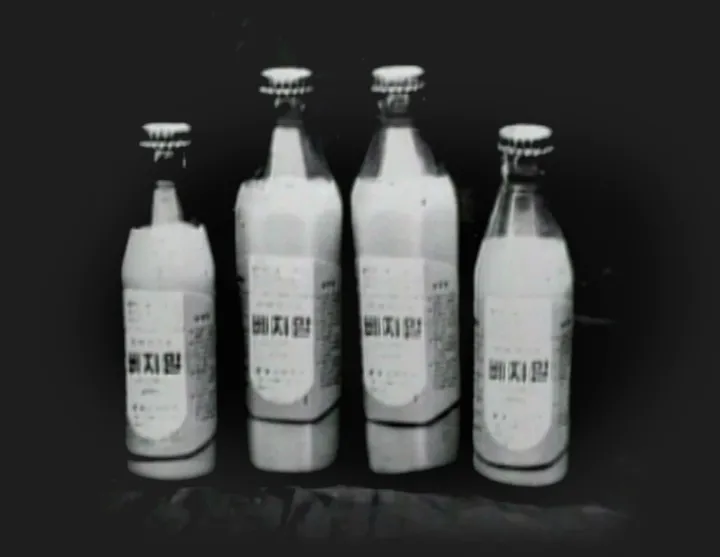
"Vegemil," made by putting a doctor's mission into a single bottle of an ordinary drinkLove that gives back as much as it received, through the Hyechun Scholarship FoundationDr. Chung's Food is not a company that publishes a sustainability report every year. But considering the value of "Vegemil," the drink that represents Dr. Chung's Food, the concepts of Dr. Chung's Food and sustainability feel fairly close. Vegemil began as a therapeutic food created in 1967 by the late Honorary Chairman Chung Jae-won, Dr. Chung's Food's founder and honorary chairman. Honorary Chairman Chung, who was working as a pediatrician, learned of a disease called "lactose intolerance" while studying in the United States. Realizing that the cause of death for many children was that they could not properly digest the lactose contained in breast milk or cow's milk, he set out to develop a substitute food free of lactose. And after long, repeated research, in 1967 he created the plant-based nutritional milk "Vegemil."Dr. Chung's Food's Sustainable Management 1. A Heart for Human Health[The very first Vegemil, developed in a hospital basement © Dr. Chung's Food]As can be understood from Dr. Chung's Food's founding ideal, "To devote this body to the culture of human health," Vegemil is a product made out of a single doctor's mission—to save children. The Vegemil born this way prepared for full-fledged sale after patenting and approval, but there were difficulties in immediately running a factory system. So Honorary Chairman Chung brought a small machine into the basement space next to his own pediatric clinic, which he was running in Hoehyeon-dong at the time, and produced soy milk as a cottage industry. Made by hand, only 500 bottles a day, Vegemil was dispensed at the pediatric clinic as a therapeutic food for young children then suffering from lactose intolerance. Later, to handle growing demand, a factory was built in Singal, Gyeonggi Province, in 1973, and Dr. Chung's Food began in earnest.Dr. Chung's Food established itself as the No. 1 company leading the soy-milk industry over the past 50-odd years. Not stopping there, in 1991 it introduced Korea's first enteral-nutrition brand, "Greenbia." Greenbia, Korea's first food for special medical purposes, was developed for patients with special conditions who felt burdened by high import prices or had difficulty consuming products that did not suit the Korean constitution. Because demand is very limited given the nature of the product, it could not contribute greatly to corporate sales, but the birth of Greenbia reduced the cost burden for patients with special conditions and made it possible to supply nutrition suited to Koreans' nutritional requirements. Initially produced mainly with products for diabetic and kidney patients, Greenbia now produces about 20 kinds of various enteral-nutrition foods, helping a small number of patients with special conditions.Dr. Chung's Food's Sustainable Management 2. Love That Gives Back as Much as It Received[The 39th scholarship award ceremony, held in May 2023 ©Hyechun Scholarship Foundation]A representative social-contribution activity of Dr. Chung's Food is the "Hyechun Scholarship Foundation," established in December 1984. The Hyechun Scholarship Foundation, named after Honorary Chairman Chung's pen name "Hyechun," began from his single-minded wish that "I want to make it so that no one has to agonize over their studies." Through the Hyechun Scholarship Foundation, which marks its 40th year since its birth this year, a total of 2,553 students have received support, and the cumulative scholarship amount alone reaches about 2.8 billion won. In 2020, amid a social atmosphere thrown into confusion by COVID-19, it increased the award amount by about 7 million won compared with the previous year for students facing difficulty in their studies due to economic hardship, paying out scholarships worth a total of 160 million won. The Hyechun Scholarship Foundation expands the number of scholarship recipients and the scale of scholarships every year so that more students can pursue their dreams, grow into excellent talent, and contribute to national development; this year, too, it paid scholarships to 45 undergraduate and graduate students with excellent academic records.Dr. Chung's Food also steadily carries out social-contribution activities together with consumers. A representative example is the "GOOD_BUY" ethical-consumption campaign, conducted since 2009 with Good Neighbors, a global non-governmental organization (NGO) specializing in children's rights. It attached a campaign logo in the form of a "red heart on a box" to all Vegemil products so that part of the proceeds is used as funds to help operate local children's centers and vacation classes for low-income children who go without meals. To date, it has provided a total of about 400 million won in donations and products to children who go without meals, and through this it is striving to build a society in which children can grow up as whole persons. The "Vegemil of Love Thermometer Campaign," steadily conducted since 2012, is another social-contribution activity not to be left out. When consumers leave a like (empathy) or comment on a campaign post on Dr. Chung's Food's SNS channels, or upload a photo including Vegemil with the required campaign hashtags, the Vegemil of Love thermometer rises by 1℃ per action, and Dr. Chung's Food donates Vegemil in proportion to the temperature that has risen. The Vegemil gathered this way is delivered to donation recipients such as ChildFund Korea and the Korea Social Welfare Society, and is donated to many places in need, such as children's facilities, senior welfare centers, and welfare facilities for people with disabilities. In addition, as a regular sponsor of the Korea Blood Cancer Association and the Korea Heart Foundation, it donates a set amount each month, helping patients who cannot receive treatment due to economic hardship and their families live healthy and happy lives.As if in return for the warm will to give the love it received back to society, Dr. Chung's Food has held the No. 1 spot in the soy-milk sector and No. 1 in Korea Industry Brand Power for 50 years. We look forward to the social-contribution activities carried on from its founding ideal continuing to serve as a great driving force for Dr. Chung's Food's sustainability.by Editor L
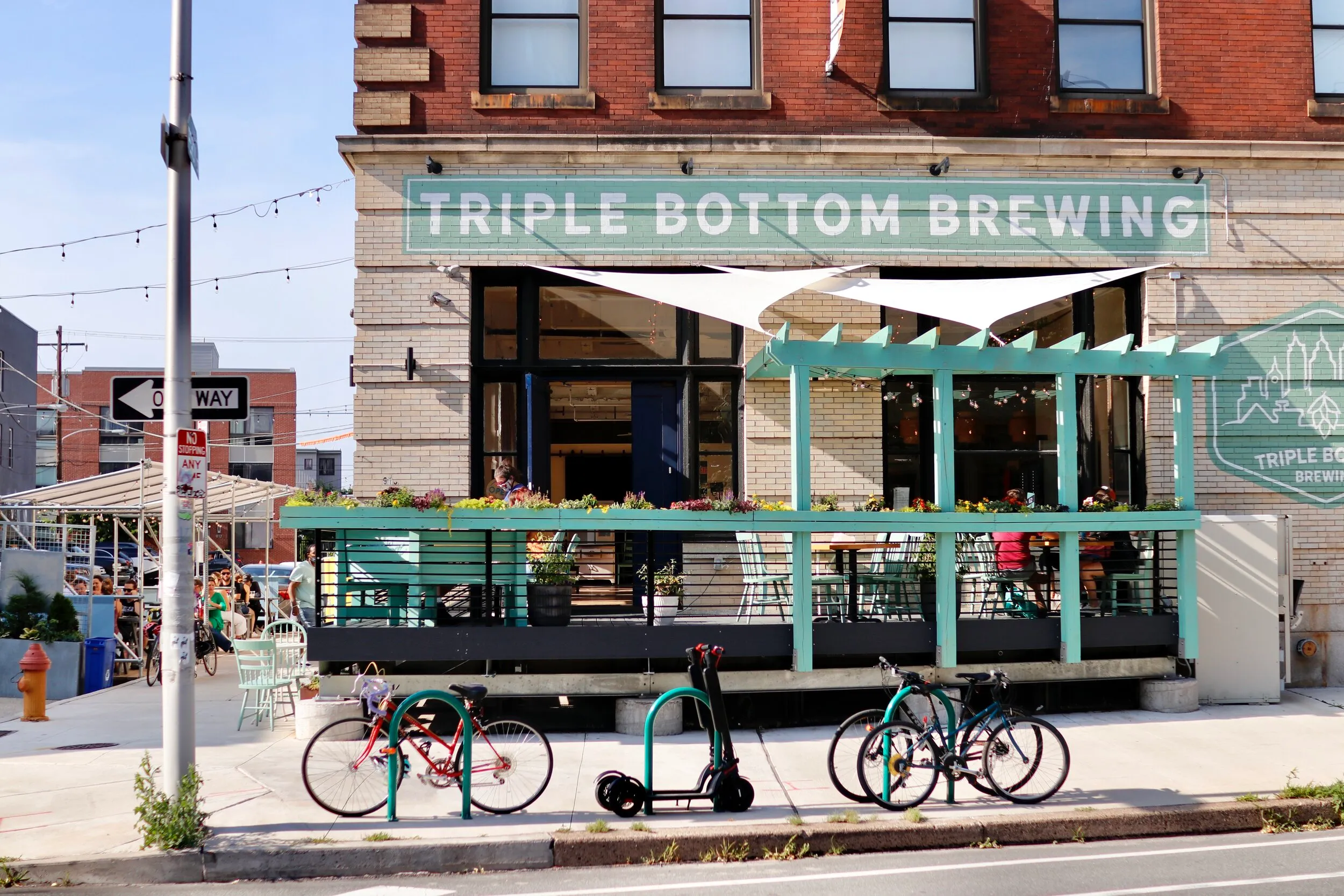
Triple Bottom Brewing, a brewery that solves local-community problemsWinner of "B Corp certification" for its contribution to social development and environmental protectionThere are stories of brands that challenged the various worries and difficulties of modern society and created innovative solutions. The brand we introduce this time is "Triple Bottom Brewing," which presented a locally rooted solution to the problem of imbalance in development between regions. Triple Bottom Brewing is a social enterprise located in Philadelphia, USA—a beer-making company that pursues the "triple bottom line (Profit, People, Planet)." The brand's founder is a woman named Tess Hart, who studied for an MBA and environmental management at Yale University and came to take an interest in beer-making and social enterprise. Having worked as a political consultant, she met Kyle Carney, who had extensive beer-making experience, founded Triple Bottom Brewing in 2016, and officially opened in 2019. The distinctive point of this rather plain founding story is that the founder made it a business goal to create social, environmental, and economic value through beer, to provide employment opportunities, and to cooperate with the local community.From a Small-to-Mid-Sized Region, the Limits of a Small Brewery[A view of the Triple Bottom Brewing store ©Triple Bottom Brewing]Triple Bottom Brewing started as a small-to-mid-sized local brewery. So in the early days it could only secure limited recognition and profits that did not extend beyond the surrounding area. They took as the essence of their problem the fact that, due to the brand's limited recognition and low competitiveness in the beer market, their products and values were not being sufficiently conveyed.Leadership and Capability as Internal Motivation, Customer Connection as External DirectionAs with all founders, Triple Bottom Brewing's founders, too, were putting passion and effort into beer-making. On top of that, they added connectivity with the local community and sustainable production methods. And through the strong motivation and pride gained from this, and the positive change it brought to the local community, they discovered their own differentiated value. And Triple Bottom Brewing reflected on the question, "Why do we look at beer only as beer?"—strengthening its connection with customers. They saw the beer they produce as having the value of a work of art rather than a simple drink, and pondered its very being. They respected the characteristics of the region where the beer was born and the characteristics of the raw materials produced in the region. They led their customers to feel that, simply by drinking the beer, they were supporting and contributing to the local community and culture.Triple Bottom Brewing also built a powerful brand message. It contained their problem definition and direction for development, described above. They promised to be "a brewery that makes high-quality beer while growing in a way that respects the local community and the environment." This promise added meaning to customers' act of buying beer and helped form trust and loyalty toward the brand. And by keeping this promise, Triple Bottom Brewing was able to create sustainable growth and social influence.[Triple Bottom Brewing, which received B Corp certification in 2019 ©Triple Bottom Brewing]A Good Problem Definition Creates a Good AnswerTriple Bottom Brewing set its corporate goals as increasing production, strengthening sustainability, strengthening its brand image, and contributing to the local community. And to effectively achieve these goals, it actively worked on communication. It introduced an internal communication platform to enhance smooth communication between teams and actively shared ideas for improving the production process. Increased production and improved efficiency followed. It also did not miss out on active communication with consumers. Its social-media and online-community activities drove the rise of brand recognition and value. Strengthening sustainability together with the region and the environment was also an important task. On the basis of improved internal communication, it shared and realized the need to strengthen the eco-friendliness of the production process. In 2019, it also obtained "B Corp certification" for its contribution to sustainability and high-quality production. This certification recognized Triple Bottom Brewing's social and environmental responsibility and acknowledged the achievement of the following results. • Social impact: Contributing to social development through positive interaction with the local community• Environmental impact: Contributing to environmental protection through eco-friendly production methods and recycling• Governance and transparency: Efficient internal communication within the organization and strengthened governanceAnd so Triple Bottom Brewing's problem is being solved. The Brand Promise Discovered Through Solving Problems [Triple Bottom Brewing in its new branding from 2022 ©Smith & Diction]The promise that the brand Triple Bottom Brewing conveys to customers can be summarized as follows. First, Triple Bottom Brewing produces beers of various styles and flavors on the basis of outstanding skill and experience. As with this article, the world is paying attention to the social value this brand creates, but in fact this company's beer is a capable brewery that shows flavors rich and varied enough to captivate the palates of beer lovers.Second, drinking Triple Bottom Brewing's beer is not only enjoying the beer's rich foam and the aroma of hops but also supporting a business model that seeks to have a positive impact on the local community and the environment. Triple Bottom Brewing is a social enterprise pursuing a triple bottom line that embraces Profit, People, and Planet, and it encourages customers to feel satisfaction and pride that they are taking part in a good cause while drinking its beer. As a social enterprise, it shares its vision and values with customers, presenting a direction for looking at beer and society from a new perspective. Third, the region and local culture that Triple Bottom Brewing loves are always with it as the foundation of the brand. If you want to buy Triple Bottom Brewing's beer, you have to go at least near Philadelphia. To buy the beer, you must visit the Triple Bottom Brewing taproom in Philadelphia in person or order online. Triple Bottom Brewing continually emphasizes the fact that it is positioned as a regional company rooted in the region. Triple Bottom Brewing, which resolved a regional problem through high-quality beer and individual social pride, also touches on the regional extinction that is being raised as a social problem in Korea as well. Distinctive regional brands that are like a hope for solving the problem are also increasing. Of course, we all know that the environment is not easy. Protecting a region, and coexisting with it, is not as easy as it is said or as it is felt. No—it is difficult without question. But we have pride as inhabitants of Earth, and the value of culture and the arts, which will be an answer that dissolves all difficulties.by Editor L
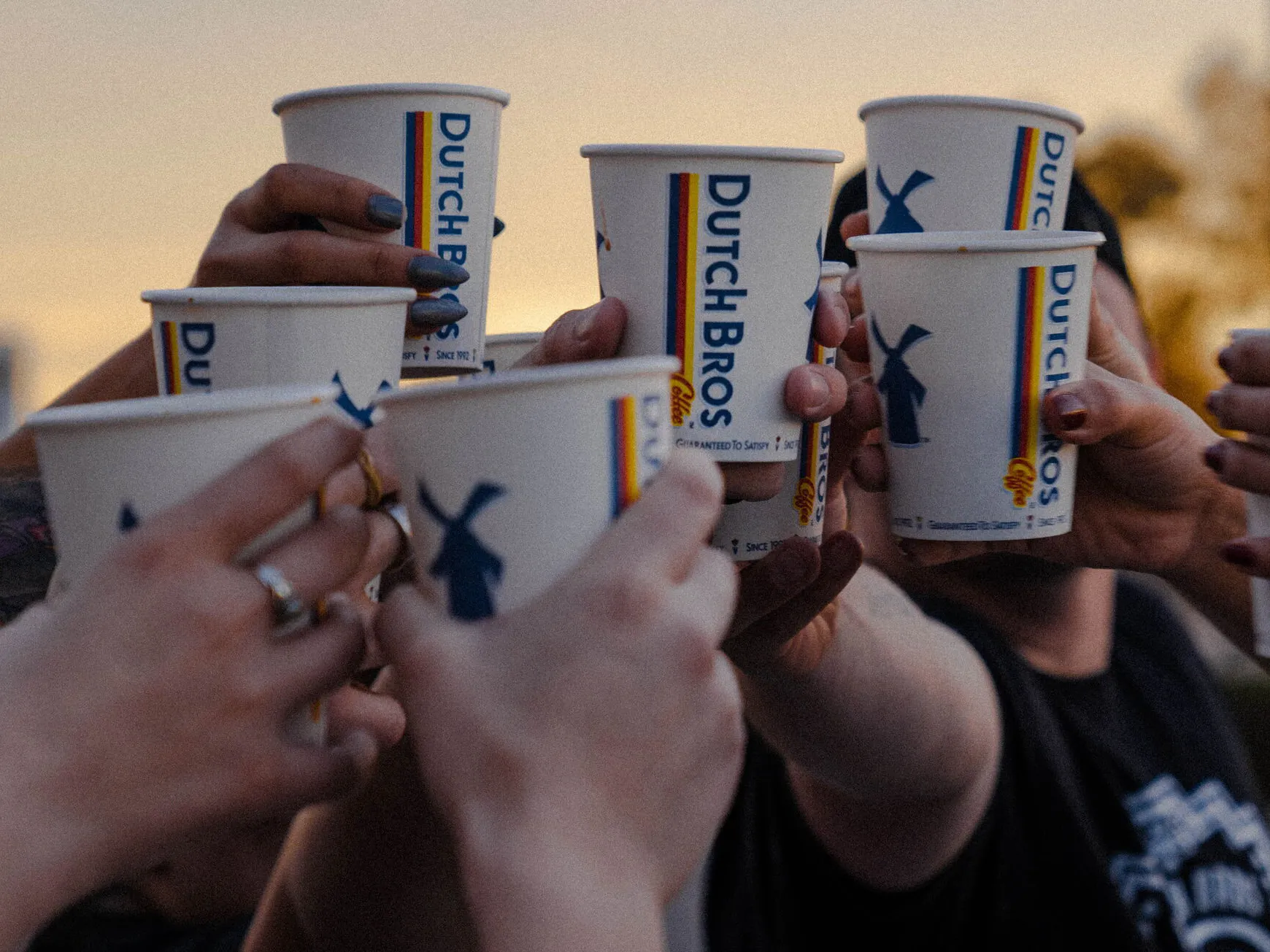
'Dutch Bros', a Coffee Chain Emerging as the Next StarbucksEmployee rating on company review site is 4.0, higher than Starbucks (3.9)Focusing on 'how money is made' beyond just making money... proven by industry's lowest turnover rateThere are no declining industries, only declining companies. - Tadashi Yanai, Chairman of UniqloIn 2020, the IBK Economic Research Institute released a study on the impact of the pandemic on Korea's small and medium-sized enterprises. According to the survey, 82% of 1,000 SMEs with fewer than 300 employees responded that they had suffered damage on the sales side due to COVID-19. For now, taking on debt and holding on while only hoping for the end of the pandemic. This seemed to be the sole survival strategy and methodology of the era.On May 9, 2023, when the threat of the pandemic had somewhat subsided, one franchise café company released IR materials."In the first quarter, we opened 45 shops for the first time since starting the company, and revenue increased by about 30%. Labor efficiency and the ratio of G&A (Selling, General & Administrative Expenses) also improved considerably, creating meaningful operating profit. I am proud of the way our team responded swiftly and decisively to the economic environment. This was proven by our expansion in shop scale and our strengthened profitability."This company is Dutch Bros, the next Starbucks, which achieved an IPO listing amid the pandemic in 2021 and has since shown astonishing growth. This franchise café brand is focusing, beyond making money, on "how you make money." And this process is leading to the industry's lowest turnover rate, one of the indicators of a healthy corporate culture.[Dutch Bros store view ⓒdutchbroscoffee instagram]Dutch Bros Doesn't Sell Coffee. It Sells Love.[The atmosphere of receiving a Dutch Bros drink at the drive-through; depending on the situation, all the staff sometimes come out ©dutchbroscoffee Instagram]If customers who visit a shop love the staff, how much does the scarcity of those staff rise? Starbucks, which accounts for more than 50% of the Korean café market's sales, maximizes the offline experience to create a value that differentiates it from other shops—namely, scarcity.Dutch Bros, which has operated all of its shops in a drive-through format since 1992, signaled continuous growth through its IPO even when the global F&B market was reeling from the pandemic. And at the drive-through shops the brand has insisted on, an event occurred that made the impact of the Dutch Bros brand visible. A single photo became known—of all the staff at a shop coming out to pray for a customer who had lost her husband.In this way, Dutch Bros became a brand that gives a special resonance in a world where the effort to chase operating profit amid infinite competition is taken for granted.It did not give resonance only to consumers. On the U.S. site "Indeed," similar to Korea's Jobplanet, Dutch Bros' employee rating in reviews is 4.0, higher than Starbucks' 3.9. You can see reviews such as a fun environment, great colleagues, an enjoyable and exciting workplace, and super fun. It can be interpreted to mean that while customers who receive love rather than coffee are happy, the side selling the love is quite happy, too.A Three-Year Promise to Run a Local Shop, and a Turnover Rate of About 0% Brought by a Sustainability Policy[Dutch Bros' secret menu is its friendly staff ⓒdutchbroscoffee instagram]Until its IPO, Dutch Bros operated only through directly run shops. But afterward it began creating franchise shops, and franchise shops now account for about 3% of all shops.Dutch Bros has a special policy for selecting franchise-shop owners: it gives the opportunity only to employees who have worked at Dutch Bros for at least three years. It regards three years as the minimum period needed to embody Dutch Bros' culture, its attitude toward customers, and its relationships with colleagues.Is it a reward for three years of effort? The head office bears most of the costs for opening a shop, from site selection to construction to interior work. This is a different approach from the usual franchise-opening process, in which one starts operating the brand while taking on a debt that cannot be ignored. Employees can start their own business at low cost, and Dutch Bros can entrust a shop with confidence to a proven person, so management risk is clearly reduced. A structure is created in which neither side has anything to lose. With this sustainability policy, new employees come to Dutch Bros dreaming of their own shop and work passionately. Dutch Bros employees' turnover rate is 66%, more than half lower than the industry average (144%), and the turnover rate at the regional-operator level is close to 0%. According to Dutch Bros, there are currently more than 200 regional-operator candidates, and it stated that, with their capabilities, it expects to be able to open about 1,000 more shops. This brightens the future outlook for the Dutch Bros brand.Support for ALS Patients That Began with a Founder's Death, Reaching 2.5 Million Dollars in Donations Before Long [Donations to end ALS have surpassed $2.5 million ⓒdutchbroscoffee instagram]In 2005, while Dutch Bros was undergoing astonishing growth, one of its founders, Dane Boersma, was diagnosed with Lou Gehrig's disease (hereafter ALS). ALS is a degenerative disease that affects nerve cells in the spinal cord and brain, and a person who contracts it gradually loses motor function and the ability to move freely. Dane Boersma fought ALS symptoms for more than five years before passing away.Dane Boersma's death had a profound influence on Dutch Bros' community spirit and culture. A key factor in Dutch Bros' success was his passion, and his devotion to developing himself as an entrepreneur and leader influenced the company's culture as a whole.Dutch Bros colleagues, who held his spirit in high regard, have carried on donation events under the slogan #EndALS, and recently shared the news that they had reached donations amounting to 2.5 million dollars.[A view of a Dutch Bros shop, sharing the specialness of a place where emotions are shared ©dutchbroscoffee Instagram]In an era when the faces at the counter are being replaced by kiosks, Dutch Bros is, paradoxically, drawing a picture of success by emphasizing the power of people and of love. Even if the resources that go into labor can be replaced, the joy of the exchange shared between people cannot be replaced.by Editor N