Loading Data
Please wait a moment...
Update Cal.
2026.08
03
Mon
04
Tue
05
Wed
06
Thu
07
Fri
08
Sat
09
Sun
Update Calendar
2026.08
01
Sat
02
Sun
03
Mon
04
Tue
05
Wed
06
Thu
07
Fri
08
Sat
09
Sun
10
Mon
11
Tue
12
Wed
13
Thu
14
Fri

Loading Data
Please wait a moment...
Morning features and interviews. A morning story over a cup.
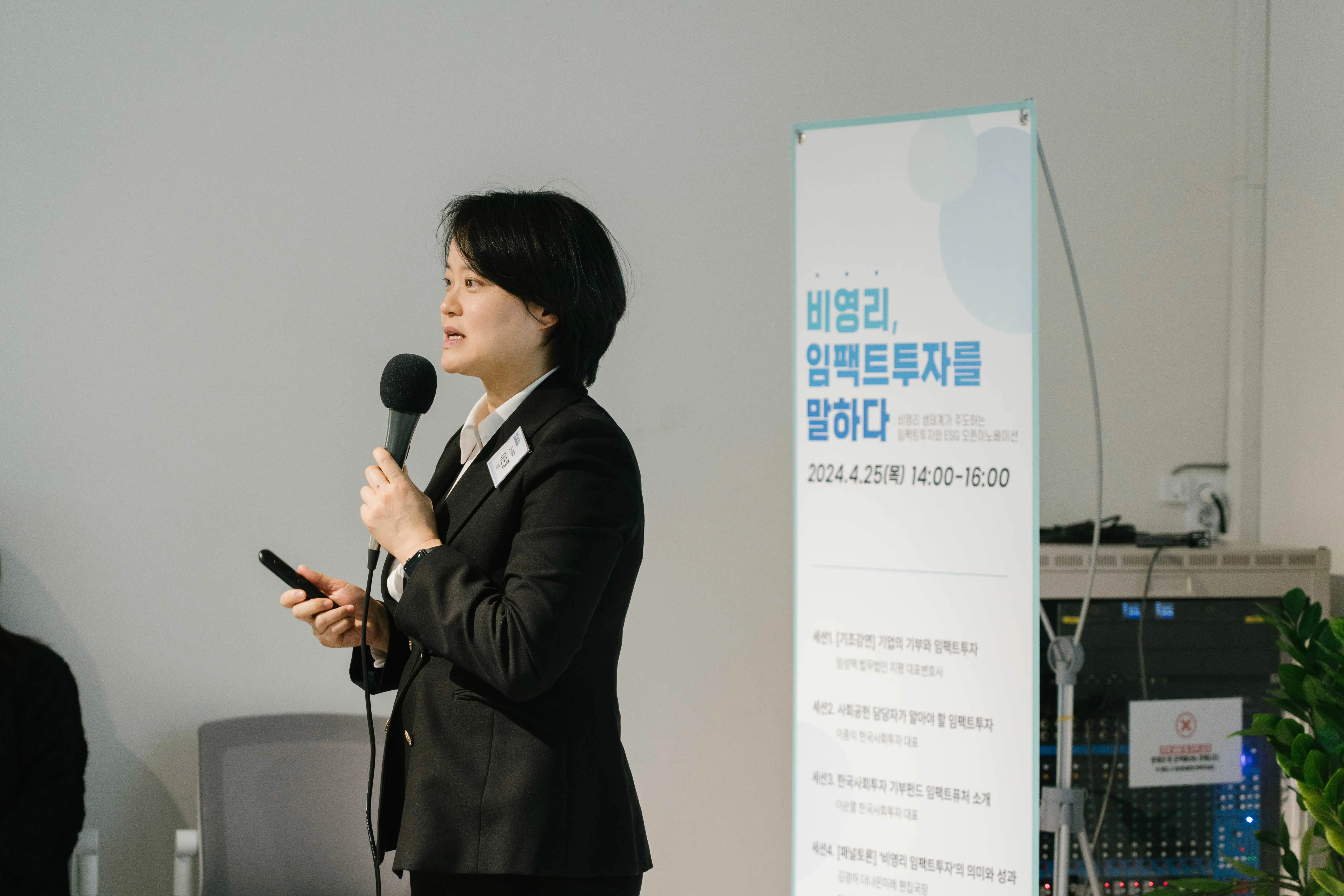
On April 25, Korea Social Investment (hereafter KSI) held a seminar under the theme "Nonprofits Speak of Impact Investing," together with experts from various fields — academia, the legal community, nonprofits, and the private sector. Through expert presentations and discussion, this seminar shone a light on donation-based nonprofit-ecosystem impact-investing activities and the results of ESG open innovation. Founded in 2012, KSI is an ESG and impact-investing firm that, under the mission "We support the growth of businesses that make a better world," focuses on investment in ESG and social-impact fields such as climate tech, social services, and agri-food.["Nonprofits Speak of Impact Investing" seminar © Korea Social Investment]"Impact investing," counted as the most active method among ESG investments, refers to investment that considers businesses which, through the investment, deliver not only returns but also a positive impact on society and the environment. It is similar to socially responsible investment (SRI)* in that it excludes so-called "bad companies" and invests in "good companies," but it differs in that it invests long-term, with concrete rates of return, in businesses that can exert a positive influence on social or environmental problems.*Socially Responsible Investment (SRI): a financial activity that invests in companies using not only their financial performance but also various social achievements — such as human rights, the environment, labor, and community contribution — as a yardstick."Impact Future," for the Sustainability of ESG StartupsThe donation fund "Impact Future," which KSI unveiled in February this year, began from a question like "What would 'impact investing' based on donation funds look like?" The main financial resource of Impact Future — which drives the sustainability of a future society by considering both the economic and the social aspects — is corporate donations. When investment capital is gathered through donations from various companies that are interested in or agree with the investment targets and fields KSI focuses on, investment is made in domestic startups and global impact companies after evaluating their impact-creation and social-problem-solving capacity, business sustainability, and more.That KSI could carry out impact investing at scale in earnest owes much to the "Hana ESG Double Impact Matching Fund," one of Hana Financial Group's ESG projects, in 2022. The Hana ESG Double Impact Matching Fund is operated with Hana Financial Group's donations, and it invests in 10 or more ESG startups each year, drawing out the business scale-up of companies and the spread of social impact. KSI CEO Lee Soon-yeol (hereafter CEO Lee) emphasized the role of donations, saying, "The most important thing when actually doing impact investing is to properly fulfill the role of capital," and, "In a situation where you must not only wait a long time after investing in a target company until full-fledged commercialization takes place, but where the possibility of an exit is also not high, donations must play the role of patient capital."[KSI CEO Lee Soon-yeol explaining Impact Future © Korea Social Investment]And as important as the "initial investment" that serves as the priming water for a company's commercialization is "follow-on investment." CEO Lee says, "Because the donation becomes first-loss capital, it can lower the investment risk and play the role of catalytic capital so that other for-profit capital can come in." In other words, once a company receives investment through Impact Future, it has been "verified" within the investment market as one that KSI has already invested in, making it easier to draw follow-on investment from other investment firms. In fact, when impact investing was carried out, the investment results also proved high. Korea Social Investment executed investments totaling 2.9 billion won in 24 startups in 2022, and totaling 2.7 billion won in 15 startups in 2023. To date, Korea Social Investment has executed investments in 53 startups, and two of them are already preparing for an IPO.*Exit: refers to an exit strategy after investment — a way for the investor to recover funds.The Virtuous Cycle of Investment to Be Achieved Through Impact FutureThere are for-profit and nonprofit institutions in impact investing too. One of the most important criteria is "who takes the returns when an investment profit is made." So then, who takes the investment profit generated at a company that received investment through Impact Future? The recovered investment profit becomes a business resource for Impact Future and a donation for yet another impact company, playing the role of patient capital and catalytic capital. Usually, even with impact investing, if the investment is made through a for-profit investor, the owner or shareholders take the investment profit as dividends; but in the case of a nonprofit organization, because there is no owner, when profit arises it does not end up as a specific person's profit. Therefore it can be reinvested, and the "virtuous cycle of finance" — most important in impact investing — can also be realized. It is a structure in which, as a company's business is run sustainably, social value is also continuously created, and those results return to the donor so that investment can continue — a structure where company and company can each win (win-win).[(From left) Lee Soon-yeol, CEO of Korea Social Investment; Jang Hee-jin, Deputy General Manager of Hana Financial Group's ESG Planning Team; Jeong Ho-yoon, Head of Management Innovation at World Vision; Kim Kyung-ha, Editor-in-Chief of The Better Future; Lee Ji-hwan, Professor of Management Engineering at KAIST; Lee Hye-mi, Director of Korea Social Investment © Korea Social Investment]At the seminar that day, a panel discussion under the theme "The Meaning and Achievements of Nonprofit Impact Investing" was also held so that participants could gain insight related to nonprofit impact investing. Asked what the achievements would be of using impact through corporate donations and of operating a donation fund through social contribution or ESG activities, Lee Ji-hwan, a professor of management engineering at KAIST who participated in the panel discussion, emphasized the value that the expanded reproduction of impact investing through donation provides. "As part of impact investing, by donating to sustainable businesses, they can run self-sustainingly without an organization, and there is ample room to use this to draw a new S-curve (growth curve) in an existing business." He also explained that corporate participation is important, saying, "If large corporations actively step up to operate donation funds, the effect spreading across society as a whole will of course occur greatly," and, "Ultimately, we will be able to achieve a greater effect in solving the social problems we seek to solve."Social problems are becoming more advanced by the day. As the saying goes, "Let companies solve social problems. The answer is in companies," to solve social problems more surely, we cannot but call for companies' interest and active movement. KSI's Impact Future will become a novel and meaningful investment model in social and environmental terms. We look forward to the expansion of ESG investment through donation funds bringing a greater impact to our society.by Editor L
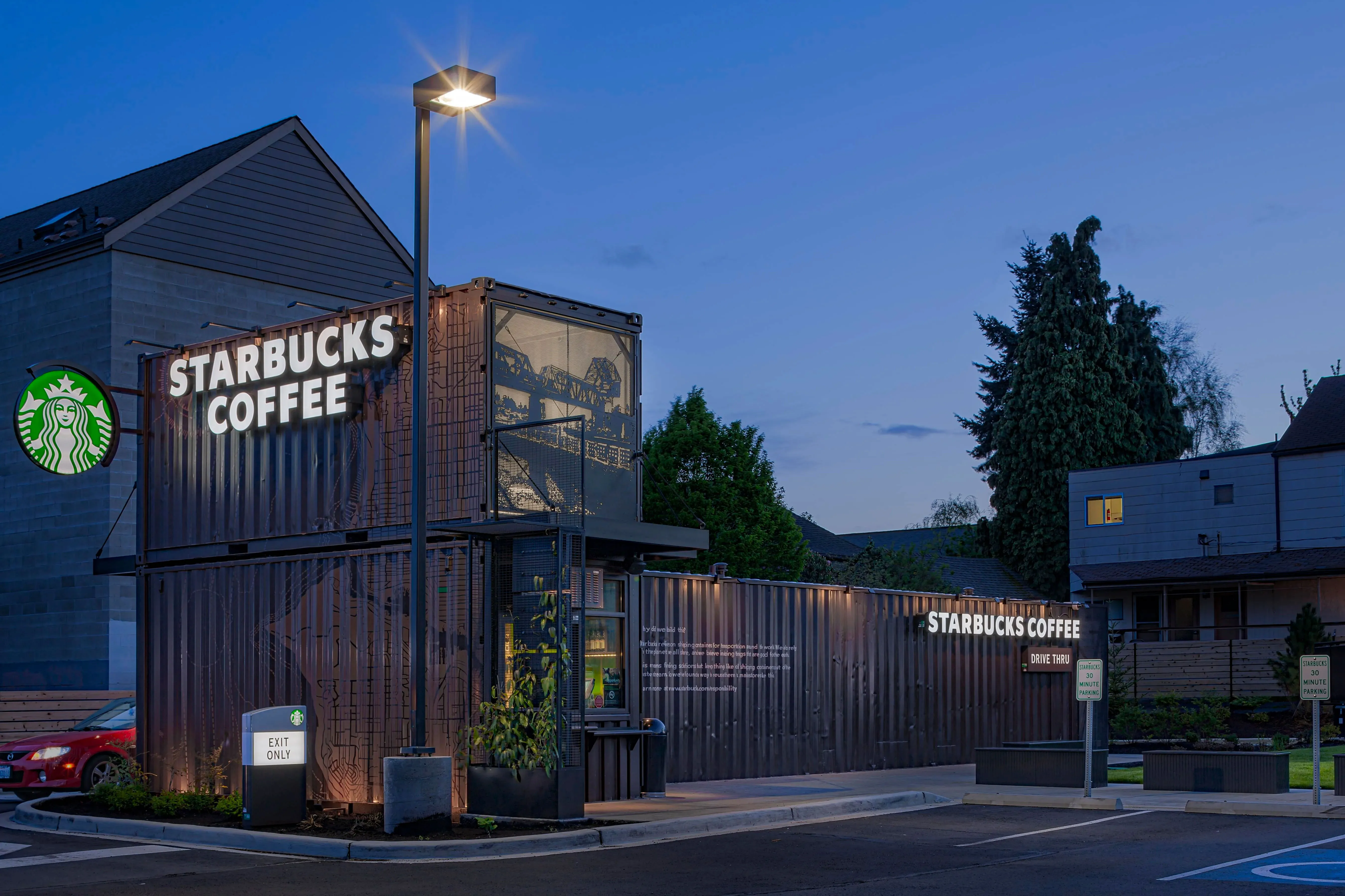
Only Happy Employees Can Provide Happy ServiceFrom back when it was a small coffee company with only four stores, Starbucks has carried out value-centered management based on a corporate philosophy that puts people first. Starbucks' own value-centered management can be said to have begun with and been built by former CEO Howard Schultz, called the father of Starbucks. In "Pour Your Heart into It," a book he published in 1999 — the year Starbucks first entered Korea — he said that employees come first, customers second. Howard Schultz believed that happy employees provide excellent service and create happy customers. Accordingly, during his time as CEO he always called employees "partners," and under the belief that the company's profits should be shared together, he provided a stock option called "Bean Stock" to all employees, including part-timers.[Howard Schultz, Starbucks Chairman Emeritus © AFP/Yonhap News]Managing risk from a social and ethical perspective is also one condition of good governance. Remembering his difficult childhood, Howard Schultz provided health-insurance benefits to all employees including contract workers, and this was firmly maintained even amid the crisis around the 2008 economic crisis, when Starbucks' stock price fell 42% and it closed 7,100 stores across the US. He also raised his voice to reduce wage gaps by race and gender. In particular, he showed a favorable attitude toward the poor and refugees. In 2011 he opened a "Community Store" in New York's Harlem, notorious as a high-crime area, hiring Harlem residents to create jobs and investing part of the profits in the local community. In 2017 he announced that Starbucks would hire 10,000 refugees over five years, thereby also standing against former President Donald Trump's anti-refugee policy.In 2024, Starbucks announced a new store-design direction for the convenience of employees and customers with disabilities. Starbucks has, all along, made store accessibility and inclusivity core elements of the consumer experience. The core of this announcement is that it will apply to offline store spaces this value that it had also shared on its online channel, the mobile application. The new design plan, called the "Inclusive Spaces Framework," was first applied at a new Starbucks store located in Washington, and Starbucks said it plans to apply it to about 4% of the 16,000 stores located in North America going forward.Greener "People" and "Places"[A Starbucks Greener Store in Shanghai, China © Starbucks]Beyond the social and ethical perspective, managing risk in environmental terms is also a condition of good governance. In 2018, Starbucks, together with the "World Wide Fund for Nature (WWF)," announced a plan to create 10,000 "Greener Stores"* by 2025, and to date has opened more than about 6,000 stores in 44 countries worldwide. A Greener Store is designed to use 30% less energy than existing stores, and the amount of energy saved this way is equivalent to the annual electricity use of more than 30,000 households. It also reduces water use by more than 30% each year, contributing to the company's sustainability goal of cutting carbon emissions, water use, and landfill waste by nearly 50% by 2030. As we are well aware, the coffee beans used at Starbucks have their origin and entire distribution process disclosed through a program called "Bean to Cup."** The realization of the fair-trade value implemented through this leads to consumer trust.In 2018, Starbucks' headquarters announced that it would "phase out the use of single-use plastic straws at 28,000 stores worldwide," and Starbucks Korea is currently pursuing an eco-friendly campaign under the slogan "Greener Starbucks Korea — A Promise for the One and Only Earth." Through introducing paper straws, using eco-friendly packaging materials, and making natural fertilizer by recycling coffee grounds, its goal is to reduce carbon emissions by 30% going forward. It is also spurring product development for coexistence and shared growth with local regions. Starting with the Mungyeong Omija Fizzio in 2016, it has steadily developed and released beverages using Korean agricultural products — such as the Icheon New-Harvest Rice Latte and the Goheung Yuja Fizzio — and plans to expand these to as many as 10 kinds by 2025.*Greener Store: a store that directly practices eco-friendly activities to reduce waste, energy, and water use in order to realize a sustainable future. To receive Starbucks' Greener Store certification, a store must meet 25 essential criteria across 8 environmental areas developed through a partnership between the World Wide Fund for Nature (WWF) and SCS Global Services, and must be certified by an external auditing body.**Bean to Cup: a program that lets you scan the QR code attached to the coffee-bean packaging with a smartphone to check the bean's growing region and place of production, how Starbucks supports the farmers of that region, and more. Beyond the origin, it also provides detailed information such as the farm and farmer, the coffee's roasting time, and tasting notes.The presence of the brand Starbucks has long surpassed the level of a company that merely sells coffee. Like the taste and aroma of coffee, which has settled unchanged over a long time as an essential beverage in our lives, let us look forward to Starbucks' own sincere ESG management taking root naturally in our lives.by Editor LKorea translates the G (Governance) of ESG as "control structure (jibae gujo)" and uses it that way. But if we translate "control structure" back into English, it is not governance. "Control structure" literally means a company's "decision-making and profit-distribution structure" itself. The globally accepted meaning of governance is closer to the conduct and processes of the people who lead a company. ESG.ONL's "In Search of Governance" series introduces cases of domestic and overseas companies with good governance, for a more accurate understanding and use of governance.

Pursuing shared growth with local communities and partner companiesSocial-contribution activities grounded in employee participation, such as the POSCO 1% Foundation and the POSCO Talent Volunteer CorpsThe bond between POSCO and the city of Pohang began the moment Pohang was confirmed as the site for the new steelworks in June 1967. As POSCO grew into a global steel company, Pohang, the city where POSCO is based, grew along with it. Now, more than half a century after POSCO and Pohang came together, Pohang has become the leading city of the Gyeongbuk region with a population of 500,000 and the mecca of Korea's steel industry. In the course of the city's growth, POSCO offered a variety of support from its earliest days—actively running education projects to cultivate local talent and creating spaces where citizens could enjoy culture and the arts. In Part 2, we examine POSCO's community-based social-contribution activities, focusing on the "Pohang Community Report" and the "Gwangyang Community Report."POSCO's Sustainable Management 1. Shared Growth[POSCO's four supply-chain management strategies and eight shared-growth programs ©2022 POSCO Corporate Citizenship Report]POSCO began activities for shared growth in the late 1990s, when the very term "shared growth" was still unfamiliar. In 2005 it formed a dedicated shared-growth organization and continued support for coexistence with small and medium-sized enterprises. Using its eight shared-growth programs, it helped suppliers solve problems and, beyond mere social-contribution activities, sought to grow together with SMEs and strengthen the supply chain of domestic industry. With the inauguration of POSCO Group Chairman Choi Jeong-woo in 2018, the company signed the "With POSCO Shared-Growth Practice Agreement," which included support for coexistence management with partner companies, closing wage gaps, and expanding shared-growth programs, and it extended shared-growth benefits down to second-tier partner companies. Since 2021 it has operated a Shared-Growth Support Group to assist not only partner companies but also local SMEs, identifying improvement tasks centered on four areas—building smart factories, resolving ESG issues, equipment and energy efficiency, technological innovation—and encouraging local SMEs to strengthen competitiveness on the basis of sales expansion and cost reduction.[Pohang citizens holding a celebration on July 19, 1985, welcoming the approval to establish Pohang University of Science and Technology ©2022 Pohang Community Report]POSCO has, from its earliest days, considered growing together with the local community—not just local companies—to be a corporate social responsibility. Based on its management philosophy of being "a corporate citizen that develops together with others," it divided its focus into three areas—local community, future generations and vulnerable groups, employees—established three strategies accordingly, and sought directions in which more social value could be created by making the most of the company's strengths. A notable undertaking is its education-support project for building a sustainable local community. Beginning with the Jecheol Scholarship Foundation in 1971, its early founding period, it established the Jecheol Academy school foundation in 1976. The total number of graduates produced through POSCO's education foundation is 129,112; as of 2022, it accommodates 5,489 (10%) of Pohang's 55,521 elementary, middle, and high school students, providing a high-quality educational environment. After establishing the middle- and high-school foundation, it founded Pohang University of Science and Technology, "POSTECH," in 1986 and the Research Institute of Industrial Science & Technology (RIST) in 1987, then opened "Technopark," which supports venture start-ups, in 2000 and the start-up support space "Change Up Ground" in 2021, thereby building a world-class industry-academia-research cluster in Pohang. As of 2022, Pohang Change Up Ground housed a total of 98 companies with a combined corporate value of 1.4018 trillion won. Moreover, through the operation of Pohang Change Up Ground, it attracted 60 billion won in investment.POSCO's Sustainable Management 2. Sharing Through VolunteeringThe strength that enables POSCO to carry out active social-contribution activities lies in the voluntary and active participation of POSCO's employees. The funds of the "POSCO 1% Foundation," a nonprofit public-interest foundation established in November 2013, are raised when employees of POSCO Group and its partner companies donate 1% of their salaries. Over the past ten years the number of donors alone has reached 34,818, and donations recorded 10.17 billion won, an increase of about 131% compared with 2013, the first year of establishment. Project expenditures likewise reached 12.55 billion won compared with 2013, providing generous support to future generations, vulnerable groups, people with disabilities, and multicultural families. In 2022 the donation participation rate through the 1% Foundation was 98%, with 275,147 cumulative beneficiaries and 85.5 billion won in cumulative funds raised.[Composition of major talent-volunteer corps by region ©2022 Pohang Community Report]POSCO also operates volunteer organizations. The "POSCO Volunteer Corps," founded in 2003, is likewise run on the basis of voluntary employee participation. In particular, it steadily maintains relationships with the local community through talent-volunteer activities that make use of individual employees' job characteristics and special skills, and it also runs a special volunteer week, the "Global Model Citizen Walk," to build a better local community. Cumulative volunteer hours alone reach 346,855, and the number of volunteer participants is 13,096.[Pohang Clean Ocean Volunteer Corps ©2022 Pohang Community Report]The Pohang "Clean Ocean" volunteer activity, launched in 2009, carries out activities for the marine ecosystem. The marine debris collected by the Clean Ocean Volunteer Corps to date totals 2,060 tons, and over the past 15 years 19,368 people have taken part in preserving the marine ecological environment and in underwater cleanup activities, amounting to 77,472 volunteer hours.Through the highlights of its Corporate Citizenship Report, POSCO makes it easy for the general public to understand its achievements to date, including its corporate-citizenship management philosophy and ESG strategy framework. It also provides files that the POSCO Talent Volunteer Corps recorded as audiobooks through the Good Voice volunteer group, so that POSCO's efforts and achievements can reach diverse stakeholders. As the title of POSCO's 2022 Corporate Citizenship Report suggests, we look forward to the better future that POSCO and its local community will create together.by Editor N

Binggrae's sense of social responsibility, revealed through active social-contribution activitiesPursuing sustainable growth of Binggrae, its employees, and its partner companies by building a Shared-Growth TF TeamThe social responsibility of "Binggrae"—familiar to us as an ice-cream company—is revealed through active social-contribution activities. Over the past few years Binggrae has built up remarkable achievements in the ESG field: an A+ grade in the social category of the 2023 Korea ESG Research Institute evaluation, an "A" grade for four consecutive years since 2019 in the KCGS ESG evaluation, and the top grade of AA for three consecutive years in the Sustinvest ESG evaluation.Binggrae's Sustainable Management 1. Responsibility for the Next GenerationTo strengthen its sustainable-management framework, Binggrae has, since 2018, reorganized its existing capabilities and systems and established a mid- to long-term strategy. Accordingly, each year through its board of directors it reviews and resolves on non-financial risks, the setting of the next year's ESG management goals, and its sustainable-management strategy, and it has built an organizational structure consisting of an ESG officer reporting directly to the CEO, dedicated staff for each ESG field, and cooperating departments. In addition, to identify sustainable-management issues related to its business and reflect them in management strategy, it conducts a double-materiality assessment,* setting goals and performance according to the priority of the issues surrounding the company and reporting them in its sustainability report.*Double-materiality assessment: an assessment that adds, to the materiality assessment that selects key issues based on the impact of sustainability issues such as environmental or social problems on corporate value, further consideration of the impact the company has on the environment and society.[Binggrae products developed with eco-friendly packaging ©2023 Binggrae Sustainability Report]Binggrae also practices eco-friendly management. Based on an environmental management system (ISO 14001), it established a sustainable supply-chain operating strategy, pursued Life Cycle Analysis of its products, and sought to minimize environmental impact. It also developed eco-friendly product packaging to reduce carbon emissions, and it is active in developing packaging optimized for resource circulation after incineration or landfill. These efforts led to reductions in greenhouse-gas emissions. The greenhouse-gas emissions Binggrae reduced in 2022 through raw-material recycling, material improvement, and weight reduction were about 6,588 tCO₂eq, equivalent to the effect of planting about 53,000 pine trees.* *Assessment basis: Korea Forest Service carbon-tree calculator.[Binggrae's eco-friendly campaign ©2023 Binggrae Sustainability Report]Each year it runs eco-friendly campaigns with diverse and fun concepts alongside consumers, drawing active participation. In particular, the "Danji Washing Machine" produced through the 2020 Banana-Flavored Milk campaign "Save the Earth, Banana" showed consumers how to sort and dispose of waste in a fun and intuitive way. It not only won a great response but also went on to receive awards at prestigious domestic and international marketing award ceremonies such as the "Korea Advertising Awards," the "& Awards," and the "Effie Awards."Binggrae's Sustainable Management 2. Leading Shared ValueBinggrae is accelerating its creation of social value to put its management philosophy into practice. As a food manufacturer that procures raw and subsidiary materials from a variety of suppliers, it works hard on sustainable supply-chain management to stabilize costs and prices. To grow together with partner companies and farms, it has set up a shared-growth fund of about 10 billion won with IBK Industrial Bank of Korea to support partners struggling with financing, and it has built a channel for ongoing communication with partner companies through its "Happy Together with Partners!" program. During the COVID-19 period, it supported its partners and partner companies with Binggrae products, seeking to overcome the difficult times together, and through its Shared-Growth TF Team within the Compliance Management Team reporting directly to the CEO, it seeks improvement measures to resolve partners' suggestions and grievances.[2023 scholarship award ceremony for descendants of independence patriots ©Binggrae]Beyond this, Binggrae is also carrying out various social-contribution activities for coexistence with local communities. Since 2013 it has sponsored the Korean Red Cross by donating Binggrae products or a portion of sales proceeds. In 2022 it also donated 300 million won worth of rice and goods to disaster-vulnerable groups, including people displaced by the wildfires in the Gyeongbuk and Gangwon regions. Furthermore, it is actively carrying out activities to carry on our culture and spirit. As a company with a pure Korean name, it has been distributing the Binggrae Hangul font since 2016, and it established the Binggrae Public Interest Foundation to run a scholarship program for descendants of independence activists and persons of national merit. In 2019 it signed an agreement with the National Police Agency to sponsor scholarships for descendants of independence patriots connected to the police, and since 2021 it has expanded the scholarship program to include the children of police officers who died in the line of duty while also increasing the scholarship amount; in 2022 it delivered 40 million won in scholarships to a total of 26 scholarship recipients, including 13 descendants of independence activists and 13 children of police officers who died in the line of duty.Binggrae's company name embodies the "spirit of the nation's smile, Binggrae," which Dosan Ahn Chang-ho emphasized. Just as a smile that wells up in daily life without worry, sorrow, guilt, or turbidity is called "binggrae," we hope the company can fulfill its role as a contributor that promotes the health and happiness of the people through the production and development of good products.by Editor N
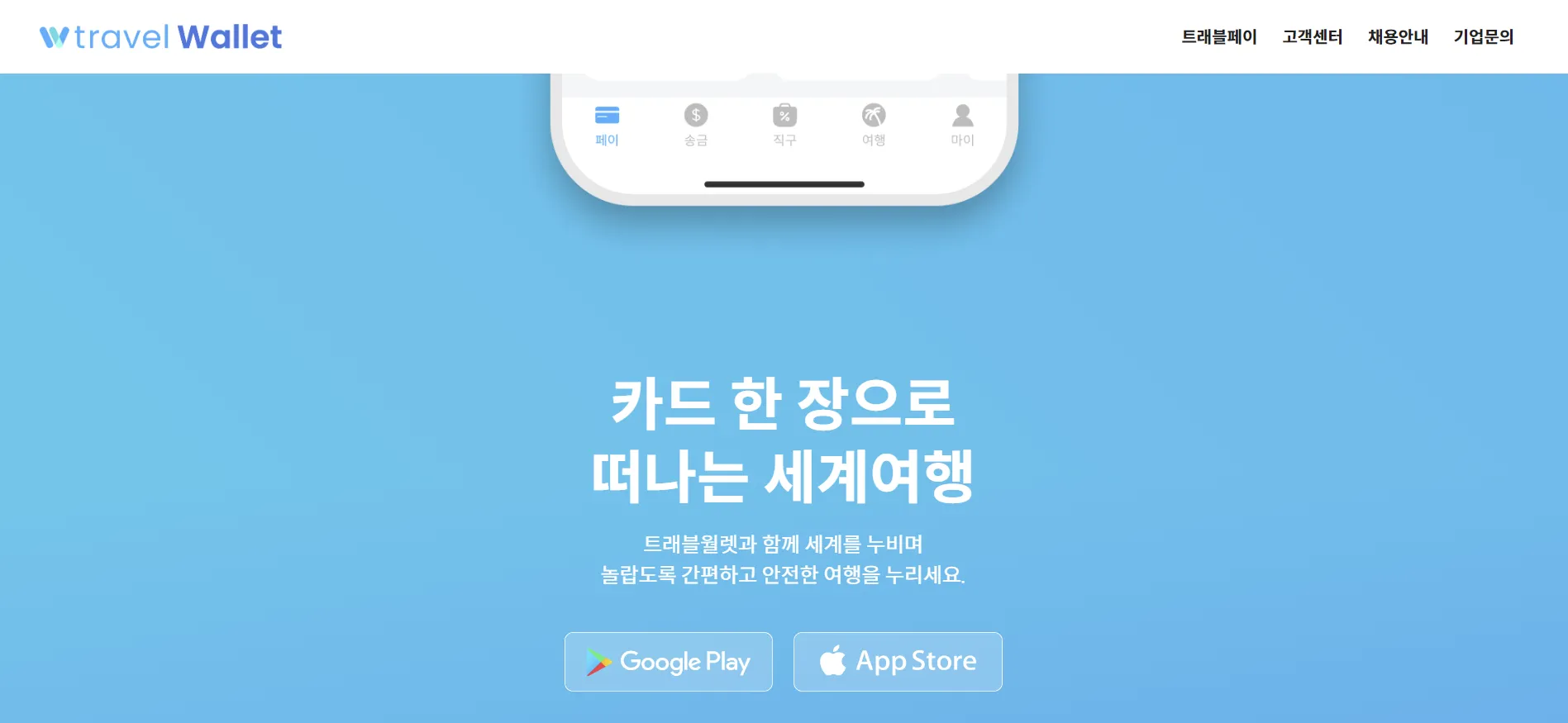
In preparing for a trip, currency exchange has never been optional. Even back in the days when travelers used not cash but traveler's checks, they still exchanged money. In 2023, when travel became part of everyday life again after the pandemic, there was one service that travelers shared with a "you have to try this"—the "Travel Wallet" we introduce today.From the moment it first appeared on the market, Travel Wallet had deeply internalized ESG pillars. The way its service is designed does not stop at simply expanding financial convenience; it puts forward the idea that, through the financial service, users protect the environment, secure their personal information and security, and gain transparency of information.[Travel Pay, launched by Travel Wallet]Travel Wallet Seen Through an ESG LensOn the environmental side, Travel Wallet has a clear stance on environmental protection. To reduce the negative impact of travel on the environment, it cut down on paper-based currency-exchange processes and unnecessary waste of resources and concentrated its service in a mobile application. As a result, the printed materials that naturally come and go when exchanging money at a bank—receipts, vouchers, and the like—become unnecessary. And through its application channel it has also sent out messages encouraging the use of modes of transport that can reduce fossil-fuel use.On the social-responsibility side, to have a positive impact on the global tourism economy, it encouraged travelers to use a prepaid card that lets them contribute directly to the local economy. The prepaid card becomes a trustworthy means of payment for local merchants and service providers, and at the same time, in that a traveler's transactions are not bound solely to a card company, it results in greater financial inclusion. As a link connecting travel across borders, Travel Wallet lets users access the currencies and local services of many countries around the world through a single platform, helping them carry out financial transactions without linguistic or cultural barriers.On the governance side, Travel Wallet strives to practice transparency and overwhelming regulatory compliance. It lets users carry out detailed tracking and auditing of all financial activity conducted through the platform. Travel Wallet cards are easily accessible with no annual fee, all conditions from exchange fees to withdrawal limits are clearly disclosed, and it provides information on what impact users' choices will have in the global market. In this respect, it can be said that Travel Wallet prioritizes strengthening trust in the financial industry and providing an authentic experience to users around the world.Travel Wallet holds itself out as an innovative financial brand pioneering new horizons through a sustainable travel culture and sound ESG practice. Sharing these values makes travelers aware that their travel can be connected to larger social and environmental change beyond mere personal fulfillment. In the long run, the result can bring about positive change for destinations around the world and the people who live there.[Travel Wallet website main page]A Trip Around the World with a Single CardTravel is, for humanity, a challenge and an amusement, a rest and a lesson. We have come to recognize the negative impact that such travel has. Travel Wallet's service helps us understand a positive way of approaching problems such as the global environmental issues that the travel process generates—carbon emissions and resource depletion—the points where conflict with local communities arises, and the accessibility of the preparation process for going on a trip. Let us pay attention to the message of Travel Wallet, which presents a sustainable travel paradigm out of a sense of responsibility toward travelers and the Earth, beyond being an innovative financial tool.by Editor N

The Day We First Used a Credit CardIn the American novelist Edward Bellamy's novel "Looking Backward," a future in which money has vanished appears. Instead, a single card holding a year's wages is people's means of payment. The first appearance of the credit-card concept was the content of a novel depicting an unknown future. By 1949, this concept actually became reality. The American businessman Frank McNamara, drawing on an awkward experience of visiting a restaurant after leaving his wallet in a hotel room, devised a membership service that connected acquaintances with nearby restaurants so that one could pay with a single membership card without cash and settle the total amount at the end of the month. This was the start of "Diners Club," and the start of the credit-card service we are still using at this very moment. Later, bank-consortium-based Mastercard and Visa introduced a revolving function allowing repayment after consumption. Cashless consumer life became possible. We will explain how this story connects to ESG.Environmental Challenges and Mastercard's Response[Targets for carbon neutrality by 2050 ©Mastercard]Mastercard shares its strategic moves for responding to the climate crisis. First, to prevent global warming, it sets targets in line with the Science Based Targets initiative (SBTi) and actively responds to climate change. It has also joined RE100, with a goal of cutting Scope 2 (indirect emissions) greenhouse-gas emissions by 38% from 2016 levels by 2025, and discloses its progress through its sustainability report. It seeks to use 100% renewable energy company-wide, and to realize this it contributes to promoting the use of renewable energy as it spreads worldwide.As a card company, it also responds to environmental problems related to single-use plastics. When producing Mastercard cards, it develops cards using materials grounded in sustainability—bio-materials, recycled plastics, ocean waste, and the like—instead of conventional PVC plastic. Through this, the amount of plastic consumed in card manufacturing can be dramatically reduced.These moves also include planting 100 million trees by establishing an organization called the "Priceless Planet Coalition." The organization primarily runs global campaigns to offset carbon emissions and enhance biodiversity. It carries out direct tree-planting activities for the environment, but what it places greater emphasis on is playing a role in bringing in customers, partners, and employees to induce broader community, interest, and action.Social Challenges and Mastercard's ResponseMastercard also has initiatives for resolving social inequality. It seeks to strengthen financial access worldwide and provide everyone with opportunities for inclusive growth; to this end, it expands digital payment systems that anyone can use easily through innovative technology and partnerships, and it develops inclusive-finance programs for communities with poor access to financial services. Along with these solutions, it runs education programs to improve individuals' financial skills, helping consumers better understand and manage their own economic circumstances. Such education raises the quality of individuals' financial decision-making and, in the long run, can promote economic independence and financial soundness.[A poster for the Social Innovation Incubator (SII), through which Mastercard, together with the women's organization Women Choice, creates employment opportunities for women across the Middle East and North Africa (MENA) ©Mastercard]In this context, Mastercard also operates social initiatives for small businesses and women-owned businesses. It provides specialized payment solutions so that small businesses harmed by the pandemic can smoothly join the digital economy, and it uses analytical tools such as big data to help businesses understand market trends and establish appropriate business strategies. To women entrepreneurs it provides financial services that improve access to capital and resources, while also offering various non-financial support such as business consulting, networking opportunities, and leadership education programs.With a declaration to bring 25 million women-owned businesses into the digital economy by 2025 as a goal of its ESG activities, it continuously invests resources toward the goal of the economic empowerment of women-owned businesses and works to bring about positive change.Governance Challenges and Mastercard's Response[A supply-chain code of conduct produced by Mastercard ©Mastercard]Mastercard seeks sustainable growth by building trust with both the inside and outside of the organization. Taking responsibility and transparency as core values, it has established comprehensive rules and a systematic management structure and applies ethical judgment criteria to all areas of its business. It also raised the transparency of corporate governance by forming an independent board of directors and expert committees, and through its "Business Ethics and Compliance program" it built a system of practice that applies not only legal compliance but also the company's values and principles. This program encourages all employees to observe various rules and standards through continuous education and strict internal management, and it also includes a reporting system that can handle violations swiftly and fairly. It has also introduced a compensation system that links performance and compliance indicators for employees at all levels. Through a reward system based on ESG indicators, it strengthened ethical choices and proved that fulfilling social responsibility is possible within the scope of business.On the basis of these initiatives, Mastercard strengthened its leading position in the ESG field, and this led to the desirable effect of increasing long-term investor returns and the company's social value.The Truly Precious Moments in Life That Money Cannot BuyMastercard's communication message is very famous. The message "Priceless" left a powerful impression on people's minds in that a company providing financial services proposes something money cannot buy. Known as a TV advertising campaign from 1997, this message says that, beyond the mere experience of using products and services made possible by using a card, we should create unique and unforgettable moments of life. Over time this message elevated Mastercard's presence to a value inseparable from people's lives, becoming a brand asset and identity connecting consumers and Mastercard. Now is the time to pay attention to the "Priceless" ESG moves that Mastercard will unveil.by Editor N
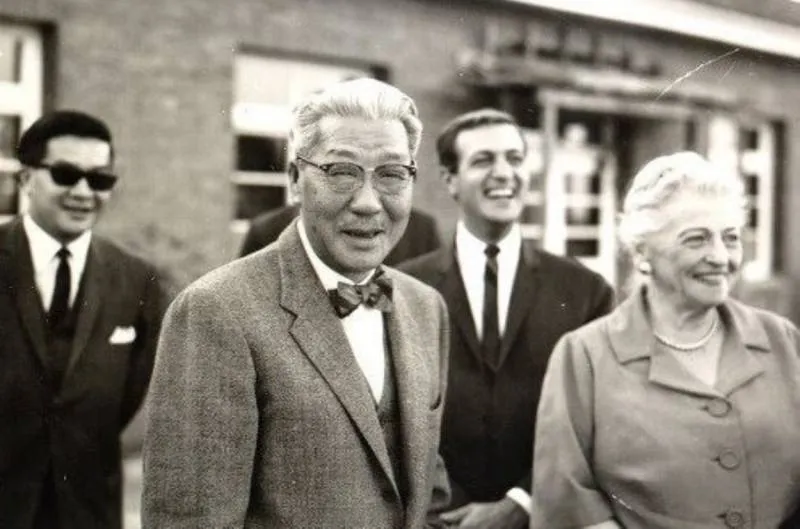
ESG management carried on from the founding spirit of Dr. Ilhan NewThe start of a sound corporate governance in which ownership and management are separatedThe year 1926, when Yuhan Corporation was established, was under Japanese colonial rule—a time when it was difficult even to grow a company, let alone imagine the kind of active ESG management activities of today. Yet, on the basis of the founding ideal to "make the best products and be of help to the nation and its people," it laid the cornerstone of social-contribution activities. Ahead of its 100th anniversary in 2026, Yuhan Corporation newly established a dedicated organization reporting directly to the CEO, the "ESG Management Office," in 2022 for more strategic ESG management. Not only does the CEO directly oversee ESG management, but the company also published its first sustainability report containing its management achievements to date, communicating with numerous stakeholders. As a result, it took first place as the "Most Respected Company by Koreans" for 20 consecutive years, and in 2022 it also received the Minister's Award for the bio- and healthcare sector at the "Korea ESG Company of the Year Awards" hosted by the Environmental Foundation.Yuhan's Sustainable Management 1. Human Health, a Better 100 Years[The joint declaration ceremony for the practice of ESG management, held at Yuhan Corporation's headquarters in Daebang-dong, Seoul, in April 2023 ©Yuhan Corporation]For Yuhan Corporation, ESG management is not a new management activity. From its establishment in 1926 to the present, it has found the reason a company must exist in advancing the interests of our society, and on the basis of the spirit of its founder, Dr. Ilhan New—that "a company's profits must be returned to the society that raised it"—it led the beginning of ESG management in Korea. Yuhan's social contribution takes place within a social-return system centered on ▲Yuhan Corporation ▲the Yuhan Foundation ▲the Yuhan School Foundation. This is a system unique to Yuhan, created when founder Dr. Ilhan New donated his entire fortune to the Yuhan Foundation and the Yuhan School Foundation in 1971: when the company's profits are delivered through dividends to the public-interest foundations that are its largest shareholders, they are used as funds for the foundations' purpose projects, such as social welfare and education. Through this structure, a certain portion of the profits Yuhan generates can be returned to our society, and it created the framework for strategically operating social-contribution activities that make the most of the nature of its business.Yuhan's social-contribution activities are also grounded in the active participation of its employees. The message "A Healthy Tomorrow, Yuhan Together," which reveals Yuhan's aspiration, was selected through an in-house CSR contest in March 2023. Talent-donation-based volunteer corps by employees are also active for the development of local communities. All expenses needed for volunteer-corps activities are borne by the company, and it promotes active employee participation by giving awards to outstanding volunteers each year. In addition, at year-end it converts employees' volunteer hours into monetary value and makes donations for local communities and patient support.[Results of Yuhan employee participation activities ©2022–2023 Yuhan Corporation Sustainability Report]Volunteer-corps activity is pursued as an important social-contribution activity to the extent that, when volunteer-corps activities were suspended due to COVID-19, employees voluntarily carried out volunteer work centered on non-face-to-face online education. And by communicating continuously with 48 local social-welfare institutions and NGOs, it actively seeks project evaluation and directions for development. The volunteer corps runs a variety of programs, such as the Happy Home Repair Volunteer Corps, which directly repairs homes or makes furniture for families with members who have disabilities, and the Beodeul Science Career Camp, which cultivates future talent for the bio-pharmaceutical industry among young people.Yuhan's Sustainable Management 2. Sound Corporate Governance[Yuhan Corporation's shareholder composition ©2022–2023 Yuhan Corporation Sustainability Report]Yuhan Corporation is counted as an exemplary company in the area of governance. Yuhan's largest shareholder is the public-interest corporation the Yuhan Foundation; as of the end of 2022, the public-interest corporation's stake in Yuhan was 38.2%. The biggest reason Yuhan was able to have this unique social-contribution system, with a public-interest corporation as its largest shareholder, is the result of founder Dr. Ilhan New donating all of his shareholdings to ▲the Yuhan Foundation ▲the Yuhan School Foundation ▲Yonsei University ▲the Health Scholarship Association before he passed away in 1971. Furthermore, to put into practice the founding spirit that a company belongs to society, it introduced a professional-management system in 1969 so that the founding family does not directly participate in company management, thereby preemptively blocking the arbitrariness of an owner. It had major management decisions determined through consultation between the board of directors and the management, encouraging rational and responsible management by professional managers, and it granted independence so that oversight of management could be carried out efficiently by composing more than a majority of the board with outside directors. The form in which dividends are paid to shareholders is also carried out through a board resolution and shareholders'-meeting approval, and over the past seven years it has conducted a 5% bonus issue each year. In addition, to enhance shareholder value, in February 2022 it newly signed a treasury-stock acquisition trust contract worth 20 billion won, and through continuous treasury-stock acquisition, Yuhan's treasury-stock holding ratio as of the end of 2022 reached about 8.5% (*on a treasury-stock basis).Yuhan Corporation also obtained certification for an anti-bribery management system (ISO 37001) in March 2018, because it prepared measures to control the company's potential corruption risks with the goal of spreading an anti-corruption culture and creating a sustainable management environment to root out corrupt practices company-wide. Beyond this, through the operation of internal consultative bodies, it continuously operates the YCPM (Yuhan Compliance Program Meeting)* and the Clinical Trial Review Committee to respond to compliance risks company-wide.*YCPM: an internal consultative body in which the heads of the sales, marketing, and compliance-management teams review and discuss compliance issues across sales activities as a whole, such as the Pharmaceutical Affairs Act, the Fair Trade Act, and the Fair Competition Code.** Clinical Trial Review Committee: an internal consultative body in which review members, including the head of the compliance-management team, review the academic purpose, research funding, appropriateness of the scope of drug support, and plans for using research results for individual clinical projects, in order to mitigate risks that may arise during clinical-trial support activities.Yuhan Corporation is preparing for certification of ISO 22301, a business-continuity management system. Aiming to obtain certification in the second half of 2023, it has formed a company-wide TFT to carry out the related work; in addition, to build a stable management foundation, it has established a company-wide risk-management organization and a risk-management framework by type, continuously monitoring potential risks and thereby establishing and managing response measures.ESG is not expressed merely in numbers. The non-financial, intangible value that Yuhan creates has kept it at the top in sales among traditional pharmaceutical companies and is becoming the driving force of a 100-year company. Its sustainability report may have started late, but the beginning of ESG management in Korea came faster for Yuhan than for anyone; we look forward to Yuhan's good influence being as sustainable as ESG itself.by Editor N
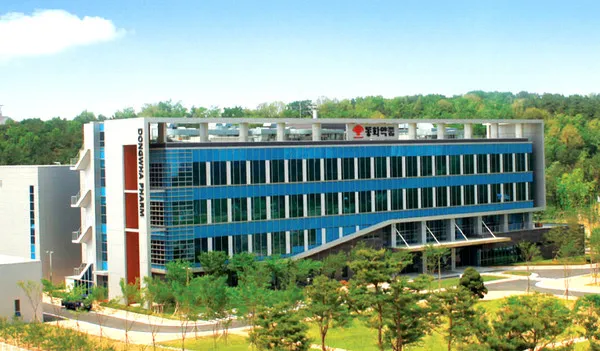
ESG within a management philosophy carried on for 127 yearsSocial-contribution activities that stir up a healthy wind in the worldDong Wha Pharm, familiar to us for "Whal Myung Su," is a company with neither a dedicated ESG-management department nor a sustainability report. Yet it publishes quarterly business reports every year and shares the value of sustainable management while communicating with numerous stakeholders. Dong Wha Pharm's contribution to our society cannot but draw particular attention: first, it has a record of producing three independence activists during the Japanese colonial period, including its first president, Min Kang. Within Dong Wha Yak Bang, Dong Wha Pharm's predecessor, it also has a history of sparing no devotion for the nation and its people—establishing the "Seoul Yeontongbu," a secret administrative agency connecting the country's interior and abroad, and using the sales proceeds of Whal Myung Su as funds for the independence movement.Dong Wha Pharm's Sustainable Management 1. ESG Hidden in Its Management PhilosophyDong Wha Pharm's current management philosophy is: "Do not make it unless it is good medicine. Dong Wha belongs to the whole Dong Wha family, and also to this nation, so lead it as a company where the entire family gives its all and everyone can live well together." Using this philosophy—carried on since the time of the fifth president, Bodang Yoon Chang-sik—as a foundation, in April 2008 the late Chairman Yoon Kwang-yeol and his wife, Madam Kim Sun-nyeo, established the nonprofit foundation the "Buchaepyo Gasong Foundation." This is Dong Wha Pharm's representative social-contribution activity; through the foundation, Dong Wha Pharm established the "Yoon Kwang-yeol Medical Prize," the "Yoon Kwang-yeol Pharmacy Prize," and the "Yoon Kwang-yeol Dental Medical Service Prize," carrying out projects to support medical and pharmaceutical academic research and to provide scholarships to talented university students facing economic hardship.[The 13th Yoon Kwang-yeol Medical Prize award ceremony ©Dong Wha Pharm Gasong Foundation]It also actively carries out environmental-management activities. Centered on its Chungju plant, it is implementing the introduction of clean fire extinguishers as fire-suppression agents, reductions in production-waste discharge, and reductions in energy and greenhouse-gas use. As a result, it obtained good indicators in ESG evaluation as well, including quality management (ISO 9001) and environmental management (ISO 14001) in 2017 and safety and health management (ISO 45001) in 2018.Dong Wha Pharm's Sustainable Management 2. Social Contribution for the Future[Poster for the 8th Summer Saengsaek Exhibition, 2023 ©Dong Wha Pharm]Dong Wha Pharm is also carrying out various social-contribution activities for cultivating talent in culture and the arts and for children, through the "Gasong Art Prize"—derived from its corporate logo, the "Buchaepyo" (folding-fan mark), and its company name, "Dong Wha"—as well as the "Summer Saengsaek Exhibition," the "Clear Wind Campaign," and the "Water That Saves Lives Campaign." The Gasong Art Prize was established in 2012 to newly define and support the meaning of traditional culture on the theme of the "jeopseon (folding fan)" and to cultivate talent in the visual-arts world. The jeopseon is one of Korea's traditional arts carried on since the Goryeo period, and Dong Wha Pharm unveils the Gasong Art Prize winning works each year through the Summer Saengsaek Exhibition.The Clear Wind Campaign is a social-contribution activity that carries Dong Wha Pharm's wish to stir up a healthy wind in the world. Just like Dong Wha Pharm's wound-treatment product "Fucidin"—as famous as Whal Myung Su—so that children can pursue their dreams without wounds to body and mind, it has sponsored the "Hong Myung-bo Children's Soccer Class" since 2010 to promote youth sports in Korea. In addition, drawing on the meaning of Whal Myung Su—"water that saves lives"—it is carrying out the "Water That Saves Lives" campaign, which delivers clean water to children around the world whose lives are threatened because they cannot receive safe drinking water; it raises the campaign's support funds using the sales proceeds of Whal Myung Su.Dong Wha Pharm's sustainable management may not stand out greatly compared with other companies. But Dong Wha Pharm has a rich 127-year history of devotion to a nation and its people. Let us keep an eye on the sustainable management activities of Dong Wha Pharm, which will continue its beautiful journey alongside society on the basis of the Dong Wha spirit that pursues a healthy and happy life.by Editor L