Loading Data
Please wait a moment...
Update Cal.
2026.08
03
Mon
04
Tue
05
Wed
06
Thu
07
Fri
08
Sat
09
Sun
Update Calendar
2026.08
01
Sat
02
Sun
03
Mon
04
Tue
05
Wed
06
Thu
07
Fri
08
Sat
09
Sun
10
Mon
11
Tue
12
Wed
13
Thu
14
Fri

Loading Data
Please wait a moment...
Morning features and interviews. A morning story over a cup.

The trendiest place in Seoul right now is without a doubt Seongsu. The reason the former factory district of Seongsu-dong has risen to become a hot place in just a few years is precisely pop-up stores. Now, one can encounter pop-up stores not only in Seongsu-dong but anywhere with a high young floating population. The boundaries of brands operating pop-up stores have also expanded. Beyond consumer goods such as fashion and beauty, IT companies like Lenovo are also opening pop-up stores. Pop-up stores, to which the concept of ‘limited-edition spaces’ has been added, are currently the most attractive marketing tool.The explosive growth of pop-up stores is because they satisfy the needs of both consumers and companies. As social media has become a means of self-expression beyond a communication channel, demand for visually ostentatious content has increased. A pop-up store, which shows a brand at its most dazzling for a limited period, is material second to none for uploading to social media. For companies for whom a long-term offline space is burdensome, the pop-up store is a convenient method that can deliver a message with impact while minimizing risk. Through pop-up stores, consumers are provided with visual content they can share, while companies can enjoy high visitor numbers and social media diffusion effects in a short period.[‘Pop-Up Guidebook’ created by Seongdong-gu, the mecca of pop-up stores Ⓟ Seongdong-gu Office]What Pop-Up Stores Leave Behind After They DieIn Seongsu-dong, the landscape changes after just a few days. It is a vibrant landscape created by the countless pop-up stores that open and fade away. So where do all the decorative elements that have transformed the space overnight go?According to Seongdong-gu Office, an average of around 90 pop-up stores go up and disappear in the Seongsu-dong area each month. As Seongsu-dong has become a mecca for pop-up stores and space rental costs have risen, the operating period of pop-up stores is trending shorter. The average operating period of pop-up stores, which was still 22.6 days in 2024, decreased to 15.7 days in May 2025. The shorter the operating period of pop-up stores, the more waste increases. Given the temporary nature of pop-up stores, quick installation and dismantling are necessary, so interior structures and one-off installations are made from cheap materials. Most of these materials are unavoidably damaged in the dismantling process, making recycling difficult.Each time a single pop-up store is dismantled, roughly 3 containers of waste are discharged. Since this is not construction waste such as brick or concrete, it is classified as general waste and is either incinerated or landfilled without any particular regulation. The volume of general workplace waste generated within Seongdong-gu has increased more than tenfold, from 51.2 tons in 2018 to 518.6 tons in 2022. The influence of pop-up stores is not insignificant. Such repetitive and continuously occurring resource loss and waste disposal increase corporate carbon footprints and local community environmental costs. A red light has come on signaling a transition into ESG risk.The Possibility of Sustainable Pop-Up StoresAs if conscious of the environmental problems caused by pop-up stores, some brands are operating sustainable pop-up stores. The beauty brand Tone28, at its pop-up store held last year, minimized new installations by utilizing equipment previously used at its headquarters and laboratory for booth construction. Additionally, Maeil Dairies operated the pop-up store ‘Amazing Oat Café’ built with eco-friendly interiors, such as presenting chairs made from rice straw material in 2022 and utilizing discarded wood pallets in Seongsu-dong.Specialized interior companies that create sustainable pop-up stores have also emerged. A representative example is ‘Buildweller.’ Buildweller developed the ‘Store Module System,’ eliminating adhesive methods that make material dismantling difficult and designing the system so that materials used for short periods can be easily separated and collected. Dismantled modules are reassembled to suit the brand concept, creating an entirely new space.[‘JOODOC’ Pop-Up Store created by Buildweller © Buildweller]Preparing pop-up stores in a new way requires the reorganization of existing operating methods and cost structures. Those who operate pop-up stores will inevitably worry about profit and loss. Yet for companies today that seek to contribute to sustainability, the gains that can be made in terms of resource efficiency and brand reputation cannot be ignored.Quality of Experience vs. Overconsumption: Where Will We Open Our Wallets?Although the environmental issues of pop-up stores are endlessly discussed, substantive change is minimal. This is because people visit even without such deliberation. Currently, the management of pop-up store waste is entrusted entirely to corporate voluntarism. However, the responsibility for operating sustainable pop-up stores cannot be left solely to companies. Those who enjoy, record, share, and consume pop-up stores — everyone in the pop-up ecosystem — bears this responsibility. We cannot simply wait for companies to change in the absence of individual and policy changes.We can express our intentions by choosing where to pour our limited resources. This connects to policy discussions. When institutional mechanisms such as regulations on one-off exhibition structures and waste, and environmental impact assessments are strengthened, companies will naturally adopt more sustainable methods. Furthermore, companies will strategically interpret consumer choices and the regulatory environment to redefine the quality of the brand experience from an ESG perspective. The environmental problems created by pop-up stores will not be easily resolved without multifaceted efforts to change all together: individual awareness, government-level support and regulation, and the need for ethical corporate management.Pop-up stores have added vitality to the run-down Seongsu-dong, but the rapidly increasing environmental costs are hard to ignore. When designs and operating methods that take ESG standards into account spread, pop-up stores will be able to establish themselves not as a mere ‘trend’ but as a sustainable brand experience platform. by Editor L

The Together Making the World (Social Solidarity Bank) has, over the past 20-plus years, been practicing unsecured and unguaranteed microloans for single parents, debt-burdened youth, low-income self-employed individuals, and others with difficulty accessing finance. Under the vision of ‘finance that believes in potential, not credit’ and ‘a small social bank that anyone can turn to at any time,’ it has been connecting opportunities for self-reliance centered on people’s stories and will. A Small Social Bank That Listens to Lives and StoriesThe Together Warmth Fund, launched in 2024 based on this philosophy, is a virtuous financial cycle model created through donations from supporters and companies. Rather than simply lending money, it connects someone’s anxious today with a tomorrow of possibility through relationship-based finance that includes counseling, education, and emotional support.[The Together Warmth Fund introduced by the Together Making the World (Social Solidarity Bank) Ⓟ Together Making the World]1. Pre-Startup Funding Loans“Not ‘why can’t you,’ but ‘how can we make it possible.’”Institutional finance, with its assessment system based on credit scores and collateral, is a particularly high and solid wall for freelancers, non-regular workers, and those with career breaks. In the gaps of this structure, the Pre-Startup Funding Loan Program comprehensively examines personal stories, readiness, and the will to execute, providing initial startup funds of up to KRW 30 million at an annual interest rate of 2–4%. Not every applicant’s loan can be approved. But looking at the faces of those ultimately selected, there clearly exists a history of steady preparation and sincerely built capabilities even amid the hardships of life. The Pre-Startup Funding Loan Program is not a ‘loan that unconditionally lends large amounts’ but companion funding for ‘starting a business prepared together.’ The screening process of this program remains not as an experience of rejection but as a time of deliberating together.2. Together Warmth Fund Personal MicroloansCrisis is about timing more than amount; repayment is about planning more than pressure.A crisis arrives suddenly not so much when one is ‘very short on money’ as at the moment when immediately needed cash is cut off. When unexpected expenses — rent, credit card bills, hospital fees, sudden family care costs — flood in all at once, people end up choosing high-interest loans or robbing Peter to pay Paul. The Together Warmth Fund Personal Microloans aim not at finance that encourages excessive borrowing but at finance of recovery that bridges the break in a crisis. The core principles are reviewing existing debt, assessing necessity and urgency, and designing repayment plans based on life patterns, and participants say, “The money I repay becomes the next person’s opportunity.”3. Fence Loans for Youth Preparing for IndependenceA ‘second chance’ for young people in a policy gap period.Five years after the end of institutional care, many young people preparing for independence are naturally excluded from various policy supports. This period is also when major life transitions — such as study, employment, job changes, and relocation — converge all at once. Fence Loans help young people in this period maintain their foundation for independence by providing essential funds at a low interest rate of 2% per annum or less. Young people who could not even come up with deposits or moving costs were able to stably secure housing through Fence Loans. At a time that is easy to miss at the boundary of policy, it seeks to keep a small promise — “We will not make you bear your independence alone” — through the medium of finance.[New Opportunities Created Through Financial Independence Support Ⓟ Together Making the World]From Repayment to Solidarity, from Solidarity to the Next OpportunityThe structure in which repaid funds circulate again as the next person’s opportunity is the defining feature of the Together Warmth Fund. Some participants in the startup funding program have voluntarily transitioned into becoming supporters, and many participants say, “Someday, I want to become someone’s Together Warmth Fund.” The Together Warmth Fund is proving that finance can be a stepping stone to recovery rather than a burden.We hope the warmth of the Together Warmth Fund reaches those for whom the path of self-reliance feels arduous and distant before the high threshold of finance. From being recipients of help to being reborn as agents who provide help — when independence becomes something dreamed of and supported together rather than alone, our society will become a little healthier and more resilient.Going forward, the Social Solidarity Bank will continue to listen steadily to the lives and stories beyond the numbers, to remain a ‘small social bank’ that those dreaming of self-reliance can turn to at any time.by Won Jun-hyuk, Deputy Manager, Together Making the World (Social Solidarity Bank)[Learn Together]▶ A Chance to Rise Again Through Finance: The Together Warmth Fund▶ A Startup Born from a Personal Story: One Year of the Together Warmth Fund Pre-Startup Funding Loan Program▶ Time to Catch Your Breath Again: Speaking About Together Making the World’s Personal Loans

November 13 is the date of the 2026 College Scholastic Ability Test (CSAT). On this day of one of the nation’s major events, let us tell the story of another type of CSAT. Seventy-five days before today, on August 30, 81 middle and high school students took a special CSAT. What these anxious-looking students received was the ‘2025 Climate CSAT Climate Section’ question paper, which closely resembled an actual CSAT paper. The students, holding the provided computer marker pens and mechanical pencils while pondering, looked no different from any other test-takers. After the exam ended, students checked their answers as with the CSAT and some even shed tears of regret. [2025 Climate CSAT Poster Ⓟ Korea Environmental Foundation]Another CSAT: The ‘Climate CSAT’The Climate CSAT hosted by the Korea Environmental Foundation marked its second edition this year. It is a project carried out by the Foundation’s Children’s Environment Center, now in its 13th year, together with the Ministry of Environment and the Ministry of Education, designed to help young people understand the climate crisis and build the capacity to respond proactively. Participants solve 38 multiple-choice questions and 2 short-answer questions in 60 minutes, drawn from the 2022 revised middle school environmental textbook and the latest climate and environmental issues. This year’s Climate CSAT handwriting verification passage was a quote from Rachel Carson’s other book, <The Lost Woods>: “Wonder and humility are wholesome emotions, and they do not exist side by side with a lust for destruction.” It seemed to encapsulate the fundamental mindset we must hold in responding to the climate crisis. The average score was 69.8, up 6.8 points from last year, but the difficulty remained high. A number of concepts somewhat unfamiliar to adolescents appeared, such as RCP scenarios*, intergenerational equity**, and the EP100*** campaign, and the graph interpretation questions were reminiscent of the CSAT.*RCP scenarios: One of the climate change scenarios that predicts how the climate will change by forecasting changes in the Earth’s greenhouse gas concentrations.**Intergenerational equity: A concept often mentioned in environmental issues, meaning the fair sharing of resources, opportunities, and burdens between current and future generations.***EP100: A campaign launched in 2014 that aims to double product energy efficiency and reduce greenhouse gas emissions.[2024 Climate CSAT Venue Ⓟ Korea Environmental Foundation]Before the exam, the Korea Environmental Foundation provided a wealth of preparation materials on the Children’s Environment Center blog, as with the actual CSAT, helping both students and the general public study climate. It published environment textbook preview pages, core keywords for the exam, mini mock tests, and past exam questions. The 1st Climate CSAT questions and explanations can be downloaded from the Children’s Environment Center blog, and this year’s exam can be taken by anyone on the Climate CSAT website. Those scoring 60 or above can receive a ‘Climate Leader Certificate,’ and various events are held in connection with the actual CSAT.The Foundation of the Climate CSAT: Climate Education NowPrior to the exam, climate CSAT exam setter and Seoul’s only environmental teacher, Shin Kyung-jun, stated that “despite the increasingly severe climate crisis, domestic environmental education is in a very poor state.” While the 2022 revised national curriculum’s general guidelines include content reflecting ecological and environmental education responding to climate and environmental change across all subjects, and the revised environmental education explicitly states ‘climate crisis’ and ‘strengthening ecological transition,’ environmental education still remains a neglected subject compared to major ones. The proportion of schools offering environmental subjects among middle and high schools nationwide is only 7.9% for middle schools and 31.7% for high schools. The higher rate at high schools was sadly reported to be because environmental education hours can be used as ‘self-study time.’Overseas, climate education is being made mandatory to respond to the climate crisis, actively encouraging student participation. The North of Tyne region in the UK decided in 2020 to place one climate and environment teacher in every public school, and Italy became the first in the world to adopt climate change as a mandatory subject, providing 33 hours of compulsory education annually to students aged 6–19. Finland, which has added climate and environmental education as a required credit, is even promoting participatory education in which students directly collect and interpret environmental data.Do Other Countries Have a Climate CSAT?Just as the CSAT is a uniquely Korean exam, the ‘Climate CSAT’ is rare overseas. However, there are a few noteworthy exams. The French Ministry of Education announced that it would introduce a ‘Green Knowledge Certification Exam’ for fourth-year middle school students starting in 2024. It covers desirable dietary habits and waste sorting and disposal, and can evaluate students’ climate change knowledge and response capabilities. In India, the ‘Green Olympiad’ is hosted by the non-profit research institute The Energy and Resources Institute (TERI). It began in 1999 in the form of an environmental quiz and is now held at approximately 2,000 schools in India and abroad. It targets grades 4–12 and covers diverse topics such as global warming, sustainable development, and eco-friendly technologies. The Hong Kong Observatory conducted an online exam related to climate change and gave souvenirs to the first 100 people with the most correct answers.[India Green Olympiad Introduction and Awards Ceremony Ⓟ TERI]The Climate Change IQ Test produced by the international body UN CC:Learn can be taken by anyone at any time. UN CC:Learn is an international learning platform created through the cooperation of 36 multilateral organizations to strengthen knowledge and capacity for responding to climate change. The Climate Change IQ Test takes the online format of solving 20 questions in 15 minutes. After taking the test, it provides learning content from UN CC:Learn and information on the status of climate crisis-related campaigns around the world.Both domestically and internationally, there is consensus that ‘climate education’ is necessary for everyone’s future amid the climate crisis. How about taking the ‘Climate CSAT’ on this CSAT day? Regardless of the score, testing how much we know and do not know about climate will be a great help for future learning and small actions. by Editor L

People say: tell me what kind of food you like, and I’ll tell you what kind of person you are. That formula holds for music, cars, and clothes. Whether someone wearing a Patek Philippe Nautilus is being pretentious, expressing a hobby, or showing a way of respecting themselves — no one but that person can know. It doesn’t matter if it’s both or neither, but the truth that desire is always dual in nature is something even they cannot deny. (Just as the ubiquitous term ‘luxury bag’ — the emotion that tacky coinage evokes exceeds the physical reality of what is, after all, an expensive bag.) In any case, in the backyard of the mind that opens the wallet, comparison, images of power, and perhaps some degree of frustration are bound to simmer.One Thursday, a nouveau riche acquaintance of mine went to buy a watch. No, he believed he went to buy a watch. The watch boutique he saw was a kind of religious edifice. Beyond the glass door, priests were handling metal with solemn expressions. The waiting line before the door seemed elated, like devotees awaiting the Holy Sacrament. But entry was denied; the air did not circulate. The gatekeeper, without letting him in, treated him kindly but coldly: “There is no availability at the moment. Shall I put you on the waiting list?”Those abused despite having money no longer asked the price but pleaded, “When can I receive it?” The staff, however, did not speak of time but asked about qualifications. He had to prove not the qualification of money, but the qualification of time.He had asked himself: “What kind of person will I become if I wear this watch?” “Will time dominate me, or will I possess time?” But the doubt immediately became meaningless. Because he immediately stood on the side of the possessed. Not a slave of time, not a servant of the watch, but an attendant of the brand and a part of the merchandise. On the price tag, there was no tax, but attached to it was a vanity tax — a kind of toll imposed by society.The watch shining on the display stand was no longer a mere object but a metallic gene that lives longer than humans. The second hand of the watch in the boutique, collecting desire and polishing it, reflecting it like a mirror, did not move. The stopped second hand, inversely, followed the human heart. How could an object in which time does not flow become a symbol of time? And yet, to possess that time, one must surrender a certain level of self. The deficiency of the machine that trades in the sense of time, calculating rank in the marketplace, and precisely designing instinct was almost ontological. In the bottomless waiting, he measured his own sense of existence. “How long can I wait?” That was precisely the new ethics of time tamed by capital. Why does a watch that snubs you even when you want to buy it reign atop the artificial device of scarcity?If limited supply functions as a device that inflates value in the market, that watch would be wrapped in multiple layers of psychological, social, and economic shells rather than being an eco-friendly, pro-social object. This is why watches that ‘cannot be bought even with money’ keep appearing. Brands that once engraved their names in the world of wristwatches through technical prowess and durability promote that their watches are designed to fulfill long-term functions and can be passed down for several generations, but before that, the watch has now become the world’s most powerful event or self-aggrandizing narrative. A symbol of the status quo, a consolidation of status, an object of wealth and taste, a value that can open closed doors. A message that lives on beyond death — not durability but a persistent concept that transcends time.Wearing a watch is an act of making time visible. The moment metal glints on the wrist, time becomes a visual sign. But what is visible presupposes what is concealed. The watch shows the surface of time but conceals the texture of the life flowing within it. The glittering machine he wanted to place on his wrist was a composite of market and ideology. Because he deceived himself into believing he could connect the adventure and prestige that the watch offers to himself. To be honest, I was curious: why do people so badly want such expensive watches? Because it feels like owning time? But isn’t the illusion of controlling time merely a still life of luxury and a reflection of vanity? To speak plainly, rather than “I have grown this much,” the statement “I express my value through an object. I wear a watch” seems more courageous. Because that is a declaration of, “I have stood upon this much time.” As a manifesto of what time I have lived and will live through.In fact, a particular watch summons a message of prestige and class. “You dare wear this watch?” Is it not because even with that money, one becomes shabby before the boutique — because the watch is a symbol of power and exclusion? Yet the shadow of social inequality overlaps with the token of status. I keep asking, again and again: is the time of a person wearing an expensive watch more valuable than the time of a person wearing a cheap watch? What lies between visible time and concealed time?Before being a tool for measuring time, a watch is an object that reproduces social order, and simultaneously a form in which money packages time. In the promise of buying not the present but the future, there lies the idea: “My time is not disposable. My time does not stop.” The person wearing a watch belongs to a more socially ordered rhythm — the time of the scheduler, the time of appointments, the time of contracts. At this point, an expensive watch operates not simply as a precise machine but as an object that teaches an era’s way of seeing. In a certain sense, the person wearing an expensive watch goes about cloaked in socially translated time upon that glitter. Time belonging to a different system of meaning, time reduced to social value. At that moment, the watch is effectively the reward of a span of years recognized by society. They say without words: “This is how I used my time. I have been through this much hardship, this much success, this much recognition, and earned this watch hand. I have come this far, and I am doing this much. Simply put, I am here.”Having a watch is a signal of being in a position to manage time. Time is not something that flows but something that is possessed. It belongs not to humans but to the market. So the claim that an expensive watch is the art of time, not the magic of capital, is a complete lie. From now on, we must open our eyes wide to distinguish between value and prestige. Because prestige draws attention, implicitly proves authority, and churns the gaze of others like an engine.All watches, in truth, constitute a system of the domination of time. And in an expensive watch, visible time flows. His days are like an instant, split into meetings and appointments, flights and calls. Time takes the form of a schedule, is highly compressed, and is efficient. Capital, in fact, is also on the side of the one who manages time. The factory clock, the clock-in clock, the meeting clock, and the Breguet on the wrist. The illusion of visible time that an expensive watch symbolizes, and its opposite, the layers of matter and emotion. Who could be unrelated to the logic of exchange in which time is calculated as a price? But people generally do not know that the opposite is also possible. Money buys back time. The time of a person wearing an expensive watch is evidence that the owner of the watch is in a position to afford that time. If the per-minute value of what they do is converted into high wages, and the 10 minutes they are late equals someone’s day’s worth of labor. Yet, to me, that efficiency removes the human margin, leaving no comma. That the more precise the watch, the more life will gradually go astray might be an idle observation, but however one lives, life is shorter than expected.I’m also curious, conversely, how this watch treats that person. Whether it makes him an object of display or regards him as a companion. If the machine itself truly says “my time is precious, it transcends generations,” it is worth examining whether that language crawled out of an illusion or slowly grew from within you. Whether the watch becomes your friend or you become the owner of the watch, if you can leisurely raise a glass upon your own time, that alone is sufficient.At times, the slogan of the watch — to be passed down across generations — seems desperately plaintive. Across generations? I’m already exhausted within my own generation. Frankly, I think that slogan should be changed to “Know your station and delude yourself precisely.” In step with the trend of value consumption, a cynical atmosphere rises. The claim that only those with similar wealth and fame, accomplishments to boast of and elegant interests enumerated, the endless reliability of a perpetually active person, and those resembling me can wear that watch is no longer respected with the same awe. Whether the desire to own that watch is the pretense of a market trying to manage demand, the naivety of insisting it stands strong despite the passage of time, or the deficiency of hoping someone will look at the machine fastened to their wrist and murmur “Ah, so that is how that person lived” — it hardly matters. Because it is now time for the watch to need a new kind of hero.At this point, another question raises its head. Would not all flows of time be mixed with sweat and tedium, waiting and nameless instants — and would a person wearing a roughly wrapped watch, without glass case or gold plating, merely spend anonymous time squirming in the fog? Would that person’s time only be loose and irregular? A day of someone without even a watch, dependent on the time of the bus, the interlude of waiting, and the rhythm of the body, cannot possibly pass quickly. In the long, tedious, hidden time of one who waits, moves, and repeats, margins abound. Time incalculable yet alive, a space in which thoughts grow, a crevice to pause briefly and look up at the void. Time in which the second hand cannot be heard, even if the watch stops,is not anxious. Because it is time that flows with the cadence of the living body. In the end, it is what is invisible that will make us human. Brilliant time is not recorded. It is not left in photographs, not measured by a second hand, but scattered within the memory of the body. Without ornament or proof. If so, the most expensive time might perhaps be time that flows without anyone knowing. That day, the touch of my mother’s hand. The twilight hour of sitting alone and feeling the wind. The days spent awake through the night beside my teacher’s sickbed. The pause between putting the child to sleep and catching one’s breath. The dawn at Andong Station, returning exhausted after waiting for that person.The watch of prestige and the attitude with which you live twist as if in parallax. You are living day by day regardless, and you smile briefly, raising a glass as you watch the trees trembling in the November wind. At that moment, how well does a watch too expensive suit your placid time? How much room does it take in time that is serene yet voluminous? Your time is like a self-acknowledged declaration that it is valuable. Therefore, whether or not you wear a watch, you must be able to raise a glass while watching those wild geese crying as they fly away in the cold morning wind. Instead of the watch obscuring time, time must transcend the watch.Like the Chinese soldiers during the Korean War who wore watches up to their arms, after seeing the collection of thirty watches that person boasts of, I came home and placed the old watch on the bedside table. It was old, with corrosion visible, and the minute hand was turning slowly, but I felt fine. Life does not slow down just because time is a little late. I imagined a world where watches had disappeared. Then, no one would be late. No one would rush. But the moment watches reappear, humans would once again slice up minutes, divide seconds, and indulge in time faster than others yet without tardiness.Pretending to be a sage, I said:“That’s right. The real watch was inside me all along.”by Lee Chung-geol (Essayist, former Editor-in-Chief of GQ Korea, author of the novel ‘Your Face’)

The inclusion of ‘Promoting the Growth of the Social Solidarity Economy’ among the government’s national agenda items reflects the urgent recognition that our society can no longer be sustained by the logic of money alone. The core task of ‘Activating Social Solidarity Finance’ contains the demand of the times that finance must restore its original role as a public good. Social finance goes beyond the mere pursuit of profit to aim for a ‘people-centered economy’ that serves humans and communities and helps those in need to rise.One of the areas in which social solidarity finance is most urgently needed in the Korean context is ‘Inclusive Finance.’ In the modern financial market, accessibility is starkly divided according to the size of assets and credit scores, and citizens below a certain threshold are entirely deprived of opportunities to access financial services. Under a ‘financial system that takes away the umbrella when it rains,’ they easily fall prey to high-interest opportunity costs or predatory lending. Inclusive finance fills these deficiencies and provides opportunities for financial access to those excluded from the financial market, thereby restoring the dignity of individuals and breaking the cycle of deepening social inequality — this is its social value. The most important factor in carrying out this special and difficult mission is social solidarity finance intermediary institutions such as the Together Making the World (Social Solidarity Bank), which builds demand-centered financial delivery systems. Unlike existing financial institutions that demand collateral or guarantees and avoid the risk of loss, intermediary institutions of a social solidarity finance nature play the ‘special’ role of accepting risk and jointly seeking solutions.Inclusive finance must be viewed not as re-supplying finance to those already struggling with low credit scores and heavy debt in the institutional financial system by imposing a ‘burden,’ but as creating ‘an opportunity for recovery.’ Behind the heartbreaking stories of entire families taking their own lives that are frequently mentioned in the press, situations of financial crisis are almost always present. Amid such crises where cash flow is severed, finance supplied at the right time under favorable terms becomes a lifeline that creates new opportunities for individuals and families.Even if problems such as existing debt exist, by supplying finance in various ways tailored to the individual’s circumstances, opportunities can be created for the person concerned to recover on their own. Repaid money is used again for other people in crisis situations, creating a virtuous cycle, and through the experience of participating as a producer, the sense of solidarity and responsibility that ‘the money I repaid becomes someone’s next opportunity’ is also cultivated together.The creation of social value through inclusive finance is also recognized as an important task in the United States, where financial inequality has deepened. The Mission Asset Fund (MAF), a non-profit financial institution in San Francisco, is a representative case that helps low-income households and immigrant families for whom entry into the mainstream financial system is difficult. Inspired by the Mexican communal fund method called ‘tanda,’ it operates the ‘Lending Circles’ program, in which participants take turns receiving interest-free small loans based on mutual trust and report their repayment records to credit rating agencies, helping them build credit. This opens the path to entry into the institutional system for those for whom financial access was impossible due to lack of credit, demonstrating that inclusive finance can create the new social value of ‘credit formation.’In this way, the inclusive finance models of the Mission Asset Fund and the Social Solidarity Bank go beyond simple financial support to create social resilience based on trust and relationships. This leads to the financial independence and restoration of dignity of individuals, and ultimately realizes the public value of reducing costs for society as a whole and building a tighter financial safety net.In an era where everything is judged solely by numbers, the stories of people are gradually disappearing from finance. Finance is not an end but a human-made means and tool, yet it has long since fallen to the status of a ‘product’ selectively sold by providers. However, social solidarity finance — which fills the places of exclusion in a mutually beneficial way and speaks of trust in people and their potential within it — will become a new alternative of ‘cooperation and solidarity’ for our society, which has become harsh and increasingly divided.by Ahn Jun-sang, Standing Director, Together Making the World (Social Solidarity Bank)
As various technologies such as AI and virtual currencies emerge and develop, the financial sector — most closely connected to daily life — is also being influenced. ‘Fintech’ is a term combining finance and technology, referring to financial services led by ICT companies. Fintech, which has taken the lead in the digital innovation of finance by combining financial services and technology, has shown a high market growth trend alongside technological advancement. According to the National IT Industry Promotion Agency’s global ICT market survey, the global fintech market size is projected to grow from USD 79.38 billion in 2023 to USD 141.18 billion in 2028. [KakaoPay 2024 ESG Report Cover © KakaoPay]KakaoPay is a simple payment service used by two out of three South Koreans, and under its mission of creating beneficial flows in daily life, it carries out diverse business and social contribution activities. What content is contained in KakaoPay’s sustainability report, now in its third year of publication?The Digital Industry Is Also Under the Influence of the Physical EnvironmentHow does KakaoPay, where most work and services take place in a digital environment, interact with the physical climate? KakaoPay’s ESG Committee, which regularly discusses climate issues, conducted a climate-related materiality assessment in 2024 and identified 15 risk factors. The most significant risk factors among these are: ①Market — Electricity price increases, ②Policy and Legal — Strengthening of emissions reporting obligations, ③Policy and Legal — Increases in greenhouse gas emission allowance prices, ④Reputation — Increases in negative stakeholder feedback, ⑤Technology — Costs of transitioning to low-carbon technologies, and ⑥Market — Changes in customer behavior. These risks are factors that could lead to increased input costs and decreased revenue in the medium-to-long term. In particular, data centers — essential for operating digital platforms — emit massive amounts of greenhouse gases as they consume large volumes of electricity. Even if climate change cannot be said to immediately and significantly affect the working environment or efficiency of workers, it can be anticipated that it will gradually become a burden on corporate operations. [View of Kakao Data Center © Kakao]Data centers are infrastructure vulnerable to rising temperatures. To provide users with fast payment and financial services without delay, data centers must be operated in an optimal state, and to do so, they must be maintained at an appropriate temperature. While operating data centers consumes a great deal of power, cooling the heat generated by data centers also consumes power — a major issue. In fact, the power consumption required for data center cooling is said to reach 40–50% of the data center’s total power consumption. An efficient and effective solution is needed. Accordingly, KakaoPay is gradually introducing eco-friendly and high-efficiency servers. When constructing new data centers, it is joining the movement to fulfill environmental and social responsibility by purchasing servers that have received the highest rating (Platinum) from the U.S. Electronic Product Environmental Assessment Tool (EPEAT). It is also making efforts to reduce power consumption by optimizing the data center cooling system. During the shoulder and winter seasons, it reduces cooling power usage, and through a DCIM (Data Center Infrastructure Management) solution, it systematically manages power consumption and energy efficiency. During the summer, when thermal management requires particular care, it installs sunshades atop chillers and has introduced an ‘Adiabatic System’ to increase thermal management efficiency. The Adiabatic System is a method in which water is sprayed onto the hot air flowing into the chiller during summer to cool the air. By utilizing the principle of water evaporating together with heat, it removes heat from the air and lowers the temperature of the air entering the chiller, increasing the efficiency of data center cooling.In a Direction Beneficial to the CommunityMore than 90% of the greenhouse gases emitted by KakaoPay originate from electricity consumption. For this reason, KakaoPay is making efforts to transition the power consumption occurring at its business sites to eco-friendly sources, beyond just data centers. KakaoPay has established a RE100 goal of converting 100% of the power used at its Pangyo office to renewable energy by 2027, and further converting 100% of the power used at all business sites to renewable energy by 2040. In 2024, it drew closer to achieving its interim target by using 1,000 MWh of renewable energy, equivalent to 12% of its total power consumption. Beyond this, it aims to reduce the greenhouse gas emissions generated by its business activities by converting 100% of its company-owned and leased vehicles to eco-friendly vehicles by 2030. [KakaoPay 2040 RE100 Implementation Roadmap © KakaoPay]If greenhouse gas emissions are reduced through such efforts and climate change is mitigated, this will consequently help prevent physical risks to KakaoPay’s key assets. This is because the torrential rains, heavy snow, and droughts intensified by recent climate change could inflict physical damage on KakaoPay’s assets or generate additional costs for management and recovery. Beyond this, KakaoPay is attempting various other improvements in its business site operations beyond power consumption, such as using paper bags and shopping bags within the company that are certified by the Forest Stewardship Council (FSC) and replacing the cups used at the in-house café with reusable cups. Even a business based on outstanding technology and infrastructure can only realize its value when there is an environment to operate it and people to use it. KakaoPay is striving for the sustainable development of fintech finance by pursuing benefit toward the Earth, toward people, and toward growth. by Editor L
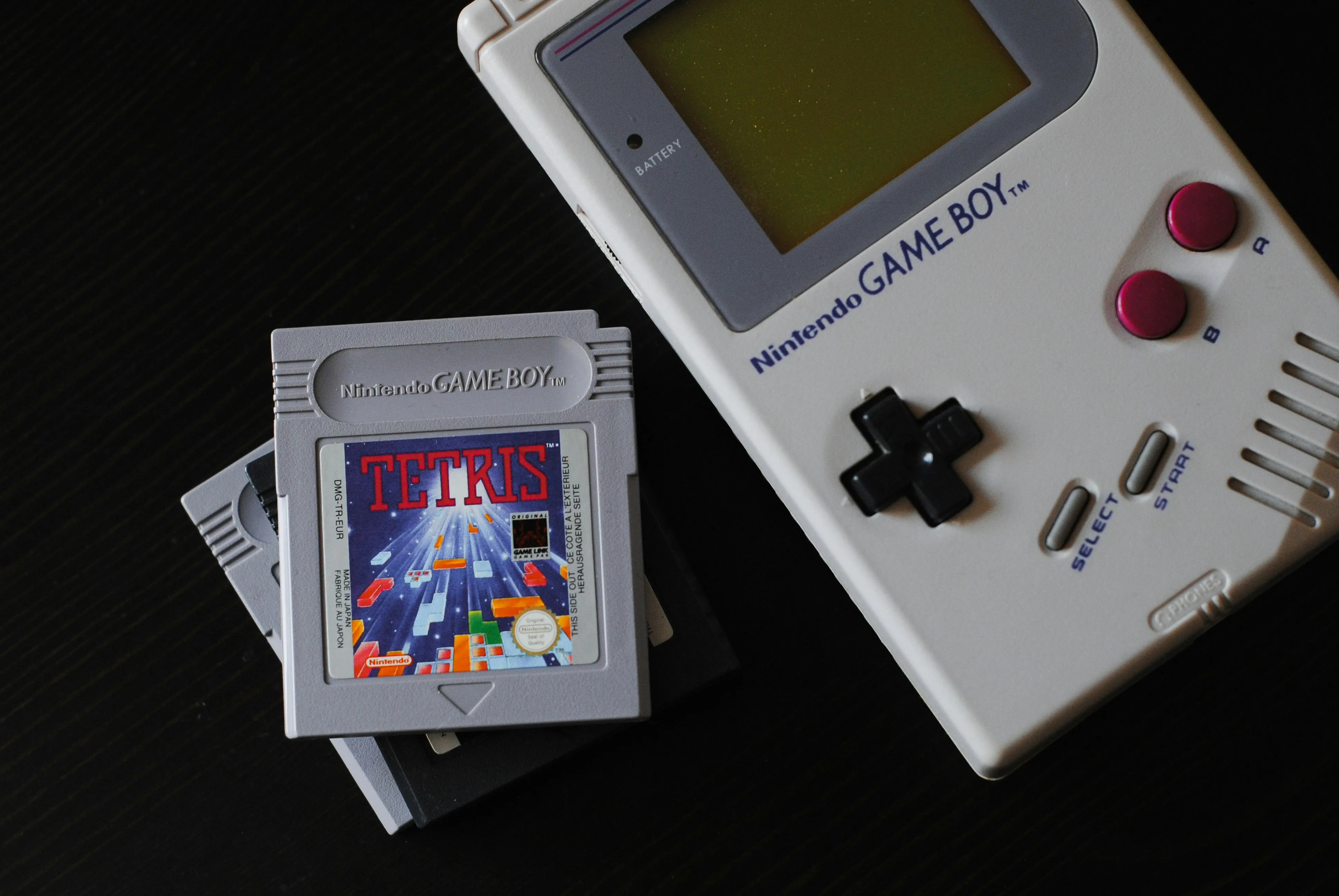
Games are no longer mere entertainment. The global gaming market is projected to grow to approximately USD 188.9 billion in 2025 — a market larger than the film or music industries. Games, accessed by billions of people, have now become a core axis of popular culture. And to that extent, games have also become mirrors that subtly reflect how we view the world and society, going beyond simple enjoyment.[Nintendo’s ‘Game Boy’ console and game cartridges © Nintendo]I had experienced that fact while playing ‘Civilization VI.’ This game, which once became a meme for its extreme addictiveness — once started, you end up playing through the night — is a simulation of advancing civilizations and growing cities and nations. What is interesting is that as you enter the latter stages, climate change appears in earnest. I intellectually knew, as numerous scientists and economic experts have publicly stated, that preemptive response is the wisest course. But when actually immersed in the game, the situation is different. Amid competition with neighboring cities, resources were always insufficient to maintain the system built over a long time, and stable energy was desperately needed to maintain population and industry. In the end, within the game, I had no choice but to delay the closure of coal power plants, and I could only postpone bold decisions while watching how the surrounding civilizations behaved. Even though in reality I work on urging the government and National Assembly to respond to the climate crisis, within the game, I keenly felt how difficult and political a choice responding to the climate crisis can be. Ironically, the game taught me before reality did that energy transition is ‘realistically’ difficult.[Civilization VI dealing with climate change and natural disasters © Maeil Business Newspaper]‘Final Fantasy VII’ unpacks this problem much more dramatically. Within the game, the mega-corporation ‘Shinra’ extracts the planet’s life force under the name of ‘Mako Energy’ to power its cities and weapons. Yet as a result, the planet gradually sickens and ultimately faces the threat of destruction. The entire game unfolds upon this dystopian backdrop. Released in 1997, ‘Final Fantasy VII’ was an innovative work that led the ‘cinematization’ of console games through the introduction of 3D graphics and cinematic direction, and simultaneously conveys the message that “corporate greed and energy abuse threaten the Earth.” Looking back now, this narrative appears not as simple fantasy but as a prophecy that overlaps with our reality, addicted to fossil fuels.There are more familiar examples. Pokémon has also boarded the climate change discourse. ‘Pokémon Sword and Shield,’ released in 2019, is set in the ‘Galar’ region, which draws its motif from the United Kingdom, symbol of the Industrial Revolution. In this version, the chimney-shaped gas Pokémon ‘Koffing’ appears, as if embodying the factory chimneys of the Industrial Revolution era. The coral Pokémon ‘Corsola,’ originally pink in color, has turned white in this version and wears a somber expression. Having changed from Water/Rock type to Ghost type, it clearly reveals the intent of ‘extinction.’ Traces of climate change are thus directly reflected even in games enjoyed by many children. The Pokémon production company has decided to officially cooperate with the UN’s Sustainable Development Goals (SDGs), and has begun to move beyond the framework of over-catching and utilizing Pokémon in the early series to reveal the value of biodiversity and symbiosis. As the series progresses, the in-game settings show the transition from thermal power plants to renewable energy such as wind, solar, and geothermal power over the passage of time. Shattering our perception that ‘Pokémon are cute and harmless,’ even this most popular and familiar content shows that we cannot sidestep the climate crisis.[The coral reef Pokémon gradually taking on an appearance as if going extinct © Pokémon]These three case studies, while differing in character, tell a common story. ‘Civilization VI’ makes one feel the difficulty of responding as an experience; ‘Final Fantasy VII’ imprints the structural problem of energy exploitation like a drama; and ‘Pokémon Sword and Shield’ shows the symbols of the climate crisis even in a world familiar to children. Across generations and genres, games let us know that the climate crisis is not merely numbers in scientific reports but a reality that touches our lives.Going forward, games will remain positioned at the center of the popular culture industry. The climate crisis, too, can only become an increasingly important narrative within games. Issues such as resource depletion, pollution, extinction, and disaster are already metaphorized in diverse ways. Even as gamers pass these scenes by without much thought, they are, in fact, gradually feeling the weight of the climate crisis.What matters in the end is not ‘clearing the game’ but how we advance to the next stage. Whether we farm more resources or, as in team play, all cooperate together to protect the map called Earth. The climate crisis is not simply a set of virtual choices but a shared quest that we are undertaking in reality. It is not a problem to be solved through someone’s sacrifice or a cheat code but like a raid in which the entire party must gather its strength. What games let us know, in the end, is this: the way we play now will soon change the outcome screen of tomorrow.by Kim Won-sang (Climate Solutions, Media Communications)

The title of Task 81 of the Lee Jae-myung Administration’s National Agenda is Promoting the Growth of the Social Solidarity Economy. The national governance plan specifies four action items for achieving this agenda: enacting the Framework Act on the Social Solidarity Economy, establishing a public-private cooperation support system, activating social solidarity finance, and supporting the growth of social solidarity organizations. As the term ‘social economy,’ which aims for a ‘people-centered economy,’ has been changed to social solidarity economy, and the activation of this economic domain has been listed as a national agenda item, social finance, or social solidarity finance, is drawing attention. Social finance means finance that serves society, finance that helps members of society. It contains the meaning and the will that because real-world finance does not serve society but only covets economic profit, a financial order that benefits humans and communities must be built. The aim is not to create banks that privatize profits and socialize losses, or finance that takes away the umbrella when it rains and offers it only after the rain stops, but to create institutions and systems that extend a hand to those in desperate need. Although finance is a public good that all citizens should enjoy, there are large differences in accessibility according to the size of assets and credit scores, and those below a certain threshold are entirely deprived of opportunities to access financial services. Those excluded from the financial market easily fall prey to high-interest borrowing or to loan sharks who engage in predatory lending. Filling this ‘deficiency’ and helping those in desperate situations to rise — giving wings to companies that pursue value over money — is the role of social finance. In the Korean context, there are broadly four domains in which social finance is required. These are: inclusive finance, which helps marginalized groups through unsecured microloans and the like; mutual finance, which operates based on cooperation and solidarity among participants such as mutual aid associations; impact finance, which supports organizations pursuing social and environmental value such as social ventures and social solidarity economy enterprises; and regional finance, which seeks to revive underdeveloped regional and local economies. In reality, the four domains sometimes overlap and sometimes move separately. For the social finance ecosystem to come to life, there must be intermediary institutions that connect demand-side actors with supply-side actors. The reason intermediary institutions are needed is that it is difficult for the supply and circulation of funds to take place through existing financial channels. Banks do not lend money without collateral or guarantees, because they have no incentive to bear the risk of loss. In contrast, social finance intermediary institutions do not demand collateral or guarantees; they accept risk and seek solutions. Only social finance intermediary institutions can carry out this ‘special’ mission.This is precisely where the failure of the Moon Jae-in Administration’s ‘Social Finance Activation Policy’ of 2018 lay. Out of impatience that results had to be produced quickly, intermediary institutions were not fostered; instead, the existing delivery system of commercial banks and policy financial institutions was utilized. As a result, the majority of social solidarity economy organizations were routinely excluded for reasons such as insufficient credit scores, and the benefits went to only a few. To avoid repeating the same mistake, a new delivery system through which demand-centered supply can take place must be built. Above all, the role of the government is crucial for social finance to become active. The government must take the lead in building a social investment wholesale fund in which the public and private sectors jointly participate, activating a public interest investment system so that the funds of public interest corporations can be used in socially meaningful places, allocating a portion of the funds of policy financial institutions to support social solidarity economy organizations, and improving the regional reinvestment evaluation system so that the money of financial companies can flow to the regions. Finance is a means, a tool, and a creation of human beings. How we utilize finance depends on our choice. What we need now is social imagination that breaks free from old path dependency and dreams of a better future. Humans, the main culprit of environmental pollution, are turning the land and sea into hells in which life cannot survive, blinded by money, and social inequality is deepening day by day. Somewhere in the ‘background’ that creates such tragedies, finance is coiled.The emergence of social finance, which pursues value over profit, lets us know that a ‘different’ kind of finance from the order we have thus far seen is possible. Those who practice inclusion and mutual benefit, impact and regional finance even amid difficult circumstances are the protagonists. These black swans, which appeared by shattering the world’s conventional wisdom that all swans are white, are heralds of hope. The government’s task is to help them take flight. If we change the flow of money, we can create a world in which money is used for good. by Moon Jin-soo, Director, Social Finance Research Institute