
The trendiest place in Seoul right now is without a doubt Seongsu. The reason the former factory district of Seongsu-dong has risen to become a hot place in just a few years is precisely pop-up stores. Now, one can encounter pop-up stores not only in Seongsu-dong but anywhere with a high young floating population. The boundaries of brands operating pop-up stores have also expanded. Beyond consumer goods such as fashion and beauty, IT companies like Lenovo are also opening pop-up stores. Pop-up stores, to which the concept of ‘limited-edition spaces’ has been added, are currently the most attractive marketing tool.
The explosive growth of pop-up stores is because they satisfy the needs of both consumers and companies. As social media has become a means of self-expression beyond a communication channel, demand for visually ostentatious content has increased. A pop-up store, which shows a brand at its most dazzling for a limited period, is material second to none for uploading to social media. For companies for whom a long-term offline space is burdensome, the pop-up store is a convenient method that can deliver a message with impact while minimizing risk. Through pop-up stores, consumers are provided with visual content they can share, while companies can enjoy high visitor numbers and social media diffusion effects in a short period.

[‘Pop-Up Guidebook’ created by Seongdong-gu, the mecca of pop-up stores Ⓟ Seongdong-gu Office]
What Pop-Up Stores Leave Behind After They Die
In Seongsu-dong, the landscape changes after just a few days. It is a vibrant landscape created by the countless pop-up stores that open and fade away. So where do all the decorative elements that have transformed the space overnight go?
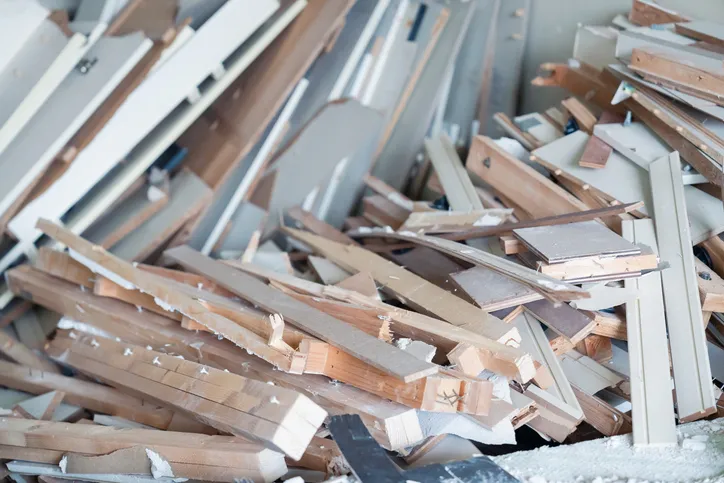
According to Seongdong-gu Office, an average of around 90 pop-up stores go up and disappear in the Seongsu-dong area each month. As Seongsu-dong has become a mecca for pop-up stores and space rental costs have risen, the operating period of pop-up stores is trending shorter. The average operating period of pop-up stores, which was still 22.6 days in 2024, decreased to 15.7 days in May 2025. The shorter the operating period of pop-up stores, the more waste increases. Given the temporary nature of pop-up stores, quick installation and dismantling are necessary, so interior structures and one-off installations are made from cheap materials. Most of these materials are unavoidably damaged in the dismantling process, making recycling difficult.
Each time a single pop-up store is dismantled, roughly 3 containers of waste are discharged. Since this is not construction waste such as brick or concrete, it is classified as general waste and is either incinerated or landfilled without any particular regulation. The volume of general workplace waste generated within Seongdong-gu has increased more than tenfold, from 51.2 tons in 2018 to 518.6 tons in 2022. The influence of pop-up stores is not insignificant. Such repetitive and continuously occurring resource loss and waste disposal increase corporate carbon footprints and local community environmental costs. A red light has come on signaling a transition into ESG risk.
The Possibility of Sustainable Pop-Up Stores
As if conscious of the environmental problems caused by pop-up stores, some brands are operating sustainable pop-up stores. The beauty brand Tone28, at its pop-up store held last year, minimized new installations by utilizing equipment previously used at its headquarters and laboratory for booth construction. Additionally, Maeil Dairies operated the pop-up store ‘Amazing Oat Café’ built with eco-friendly interiors, such as presenting chairs made from rice straw material in 2022 and utilizing discarded wood pallets in Seongsu-dong.
Specialized interior companies that create sustainable pop-up stores have also emerged. A representative example is ‘Buildweller.’ Buildweller developed the ‘Store Module System,’ eliminating adhesive methods that make material dismantling difficult and designing the system so that materials used for short periods can be easily separated and collected. Dismantled modules are reassembled to suit the brand concept, creating an entirely new space.
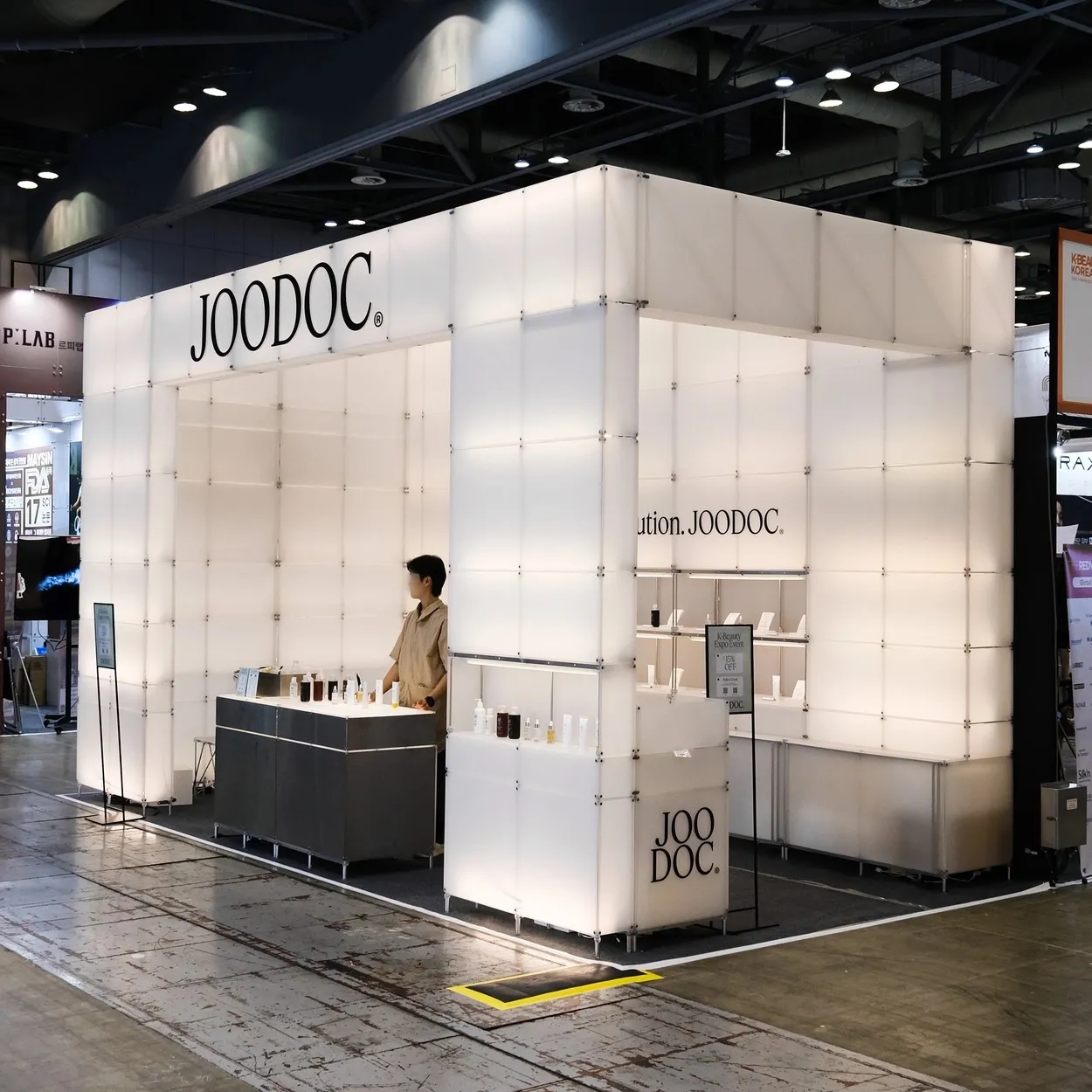
[‘JOODOC’ Pop-Up Store created by Buildweller © Buildweller]
Preparing pop-up stores in a new way requires the reorganization of existing operating methods and cost structures. Those who operate pop-up stores will inevitably worry about profit and loss. Yet for companies today that seek to contribute to sustainability, the gains that can be made in terms of resource efficiency and brand reputation cannot be ignored.
Quality of Experience vs. Overconsumption: Where Will We Open Our Wallets?
Although the environmental issues of pop-up stores are endlessly discussed, substantive change is minimal. This is because people visit even without such deliberation. Currently, the management of pop-up store waste is entrusted entirely to corporate voluntarism. However, the responsibility for operating sustainable pop-up stores cannot be left solely to companies. Those who enjoy, record, share, and consume pop-up stores — everyone in the pop-up ecosystem — bears this responsibility. We cannot simply wait for companies to change in the absence of individual and policy changes.
We can express our intentions by choosing where to pour our limited resources. This connects to policy discussions. When institutional mechanisms such as regulations on one-off exhibition structures and waste, and environmental impact assessments are strengthened, companies will naturally adopt more sustainable methods. Furthermore, companies will strategically interpret consumer choices and the regulatory environment to redefine the quality of the brand experience from an ESG perspective. The environmental problems created by pop-up stores will not be easily resolved without multifaceted efforts to change all together: individual awareness, government-level support and regulation, and the need for ethical corporate management.
Pop-up stores have added vitality to the run-down Seongsu-dong, but the rapidly increasing environmental costs are hard to ignore. When designs and operating methods that take ESG standards into account spread, pop-up stores will be able to establish themselves not as a mere ‘trend’ but as a sustainable brand experience platform.
by Editor L