
People say: tell me what kind of food you like, and I’ll tell you what kind of person you are. That formula holds for music, cars, and clothes. Whether someone wearing a Patek Philippe Nautilus is being pretentious, expressing a hobby, or showing a way of respecting themselves — no one but that person can know. It doesn’t matter if it’s both or neither, but the truth that desire is always dual in nature is something even they cannot deny. (Just as the ubiquitous term ‘luxury bag’ — the emotion that tacky coinage evokes exceeds the physical reality of what is, after all, an expensive bag.) In any case, in the backyard of the mind that opens the wallet, comparison, images of power, and perhaps some degree of frustration are bound to simmer.
One Thursday, a nouveau riche acquaintance of mine went to buy a watch. No, he believed he went to buy a watch. The watch boutique he saw was a kind of religious edifice. Beyond the glass door, priests were handling metal with solemn expressions. The waiting line before the door seemed elated, like devotees awaiting the Holy Sacrament. But entry was denied; the air did not circulate. The gatekeeper, without letting him in, treated him kindly but coldly: “There is no availability at the moment. Shall I put you on the waiting list?”
Those abused despite having money no longer asked the price but pleaded, “When can I receive it?” The staff, however, did not speak of time but asked about qualifications. He had to prove not the qualification of money, but the qualification of time.
He had asked himself: “What kind of person will I become if I wear this watch?” “Will time dominate me, or will I possess time?” But the doubt immediately became meaningless. Because he immediately stood on the side of the possessed. Not a slave of time, not a servant of the watch, but an attendant of the brand and a part of the merchandise. On the price tag, there was no tax, but attached to it was a vanity tax — a kind of toll imposed by society.
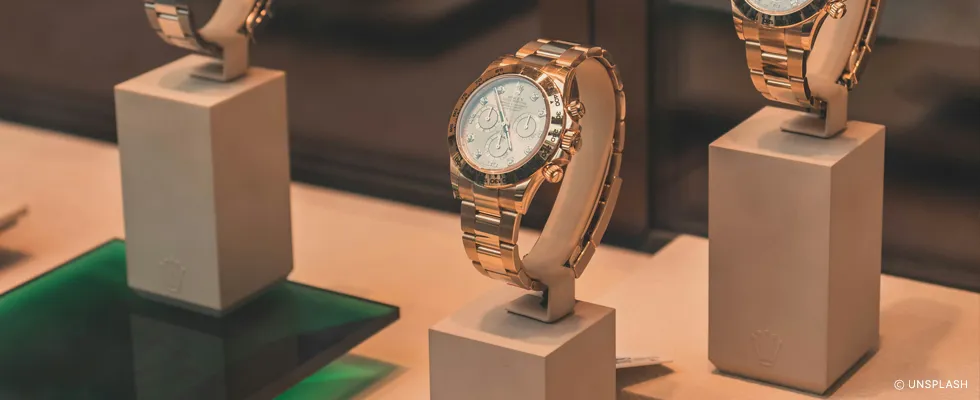
The watch shining on the display stand was no longer a mere object but a metallic gene that lives longer than humans. The second hand of the watch in the boutique, collecting desire and polishing it, reflecting it like a mirror, did not move. The stopped second hand, inversely, followed the human heart. How could an object in which time does not flow become a symbol of time? And yet, to possess that time, one must surrender a certain level of self. The deficiency of the machine that trades in the sense of time, calculating rank in the marketplace, and precisely designing instinct was almost ontological. In the bottomless waiting, he measured his own sense of existence. “How long can I wait?” That was precisely the new ethics of time tamed by capital. Why does a watch that snubs you even when you want to buy it reign atop the artificial device of scarcity?
If limited supply functions as a device that inflates value in the market, that watch would be wrapped in multiple layers of psychological, social, and economic shells rather than being an eco-friendly, pro-social object. This is why watches that ‘cannot be bought even with money’ keep appearing. Brands that once engraved their names in the world of wristwatches through technical prowess and durability promote that their watches are designed to fulfill long-term functions and can be passed down for several generations, but before that, the watch has now become the world’s most powerful event or self-aggrandizing narrative. A symbol of the status quo, a consolidation of status, an object of wealth and taste, a value that can open closed doors. A message that lives on beyond death — not durability but a persistent concept that transcends time.
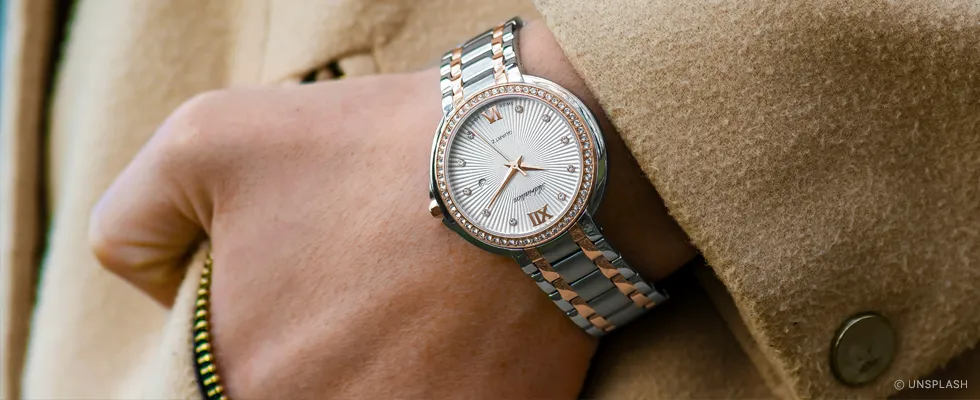
Wearing a watch is an act of making time visible. The moment metal glints on the wrist, time becomes a visual sign. But what is visible presupposes what is concealed. The watch shows the surface of time but conceals the texture of the life flowing within it. The glittering machine he wanted to place on his wrist was a composite of market and ideology. Because he deceived himself into believing he could connect the adventure and prestige that the watch offers to himself. To be honest, I was curious: why do people so badly want such expensive watches? Because it feels like owning time? But isn’t the illusion of controlling time merely a still life of luxury and a reflection of vanity? To speak plainly, rather than “I have grown this much,” the statement “I express my value through an object. I wear a watch” seems more courageous. Because that is a declaration of, “I have stood upon this much time.” As a manifesto of what time I have lived and will live through.
In fact, a particular watch summons a message of prestige and class. “You dare wear this watch?” Is it not because even with that money, one becomes shabby before the boutique — because the watch is a symbol of power and exclusion? Yet the shadow of social inequality overlaps with the token of status. I keep asking, again and again: is the time of a person wearing an expensive watch more valuable than the time of a person wearing a cheap watch? What lies between visible time and concealed time?
Before being a tool for measuring time, a watch is an object that reproduces social order, and simultaneously a form in which money packages time. In the promise of buying not the present but the future, there lies the idea: “My time is not disposable. My time does not stop.” The person wearing a watch belongs to a more socially ordered rhythm — the time of the scheduler, the time of appointments, the time of contracts. At this point, an expensive watch operates not simply as a precise machine but as an object that teaches an era’s way of seeing. In a certain sense, the person wearing an expensive watch goes about cloaked in socially translated time upon that glitter. Time belonging to a different system of meaning, time reduced to social value. At that moment, the watch is effectively the reward of a span of years recognized by society. They say without words: “This is how I used my time. I have been through this much hardship, this much success, this much recognition, and earned this watch hand. I have come this far, and I am doing this much. Simply put, I am here.”
Having a watch is a signal of being in a position to manage time. Time is not something that flows but something that is possessed. It belongs not to humans but to the market. So the claim that an expensive watch is the art of time, not the magic of capital, is a complete lie. From now on, we must open our eyes wide to distinguish between value and prestige. Because prestige draws attention, implicitly proves authority, and churns the gaze of others like an engine.
All watches, in truth, constitute a system of the domination of time. And in an expensive watch, visible time flows. His days are like an instant, split into meetings and appointments, flights and calls. Time takes the form of a schedule, is highly compressed, and is efficient. Capital, in fact, is also on the side of the one who manages time. The factory clock, the clock-in clock, the meeting clock, and the Breguet on the wrist. The illusion of visible time that an expensive watch symbolizes, and its opposite, the layers of matter and emotion. Who could be unrelated to the logic of exchange in which time is calculated as a price? But people generally do not know that the opposite is also possible. Money buys back time. The time of a person wearing an expensive watch is evidence that the owner of the watch is in a position to afford that time. If the per-minute value of what they do is converted into high wages, and the 10 minutes they are late equals someone’s day’s worth of labor. Yet, to me, that efficiency removes the human margin, leaving no comma. That the more precise the watch, the more life will gradually go astray might be an idle observation, but however one lives, life is shorter than expected.

I’m also curious, conversely, how this watch treats that person. Whether it makes him an object of display or regards him as a companion. If the machine itself truly says “my time is precious, it transcends generations,” it is worth examining whether that language crawled out of an illusion or slowly grew from within you. Whether the watch becomes your friend or you become the owner of the watch, if you can leisurely raise a glass upon your own time, that alone is sufficient.
At times, the slogan of the watch — to be passed down across generations — seems desperately plaintive. Across generations? I’m already exhausted within my own generation. Frankly, I think that slogan should be changed to “Know your station and delude yourself precisely.” In step with the trend of value consumption, a cynical atmosphere rises. The claim that only those with similar wealth and fame, accomplishments to boast of and elegant interests enumerated, the endless reliability of a perpetually active person, and those resembling me can wear that watch is no longer respected with the same awe. Whether the desire to own that watch is the pretense of a market trying to manage demand, the naivety of insisting it stands strong despite the passage of time, or the deficiency of hoping someone will look at the machine fastened to their wrist and murmur “Ah, so that is how that person lived” — it hardly matters. Because it is now time for the watch to need a new kind of hero.
At this point, another question raises its head. Would not all flows of time be mixed with sweat and tedium, waiting and nameless instants — and would a person wearing a roughly wrapped watch, without glass case or gold plating, merely spend anonymous time squirming in the fog? Would that person’s time only be loose and irregular? A day of someone without even a watch, dependent on the time of the bus, the interlude of waiting, and the rhythm of the body, cannot possibly pass quickly. In the long, tedious, hidden time of one who waits, moves, and repeats, margins abound. Time incalculable yet alive, a space in which thoughts grow, a crevice to pause briefly and look up at the void. Time in which the second hand cannot be heard, even if the watch stops,
is not anxious. Because it is time that flows with the cadence of the living body. In the end, it is what is invisible that will make us human.
Brilliant time is not recorded. It is not left in photographs, not measured by a second hand, but scattered within the memory of the body. Without ornament or proof. If so, the most expensive time might perhaps be time that flows without anyone knowing. That day, the touch of my mother’s hand. The twilight hour of sitting alone and feeling the wind. The days spent awake through the night beside my teacher’s sickbed. The pause between putting the child to sleep and catching one’s breath. The dawn at Andong Station, returning exhausted after waiting for that person.
The watch of prestige and the attitude with which you live twist as if in parallax. You are living day by day regardless, and you smile briefly, raising a glass as you watch the trees trembling in the November wind. At that moment, how well does a watch too expensive suit your placid time? How much room does it take in time that is serene yet voluminous? Your time is like a self-acknowledged declaration that it is valuable. Therefore, whether or not you wear a watch, you must be able to raise a glass while watching those wild geese crying as they fly away in the cold morning wind. Instead of the watch obscuring time, time must transcend the watch.
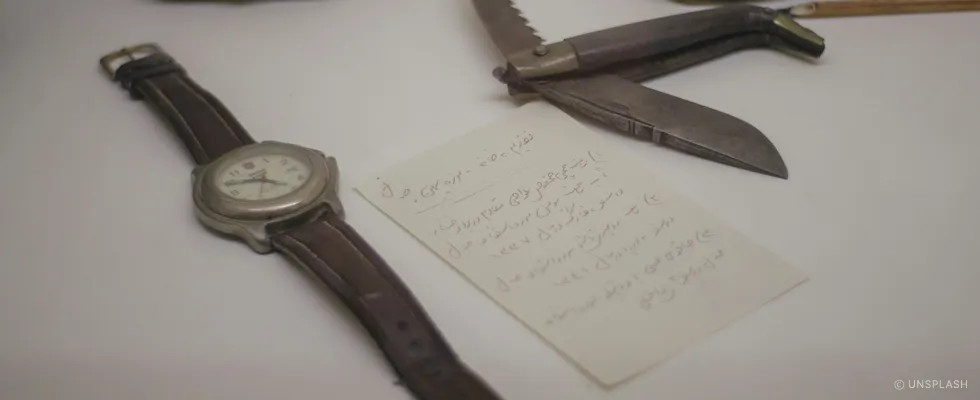
Like the Chinese soldiers during the Korean War who wore watches up to their arms, after seeing the collection of thirty watches that person boasts of, I came home and placed the old watch on the bedside table. It was old, with corrosion visible, and the minute hand was turning slowly, but I felt fine. Life does not slow down just because time is a little late. I imagined a world where watches had disappeared. Then, no one would be late. No one would rush. But the moment watches reappear, humans would once again slice up minutes, divide seconds, and indulge in time faster than others yet without tardiness.
Pretending to be a sage, I said:
“That’s right. The real watch was inside me all along.”
by Lee Chung-geol (Essayist, former Editor-in-Chief of GQ Korea, author of the novel ‘Your Face’)