
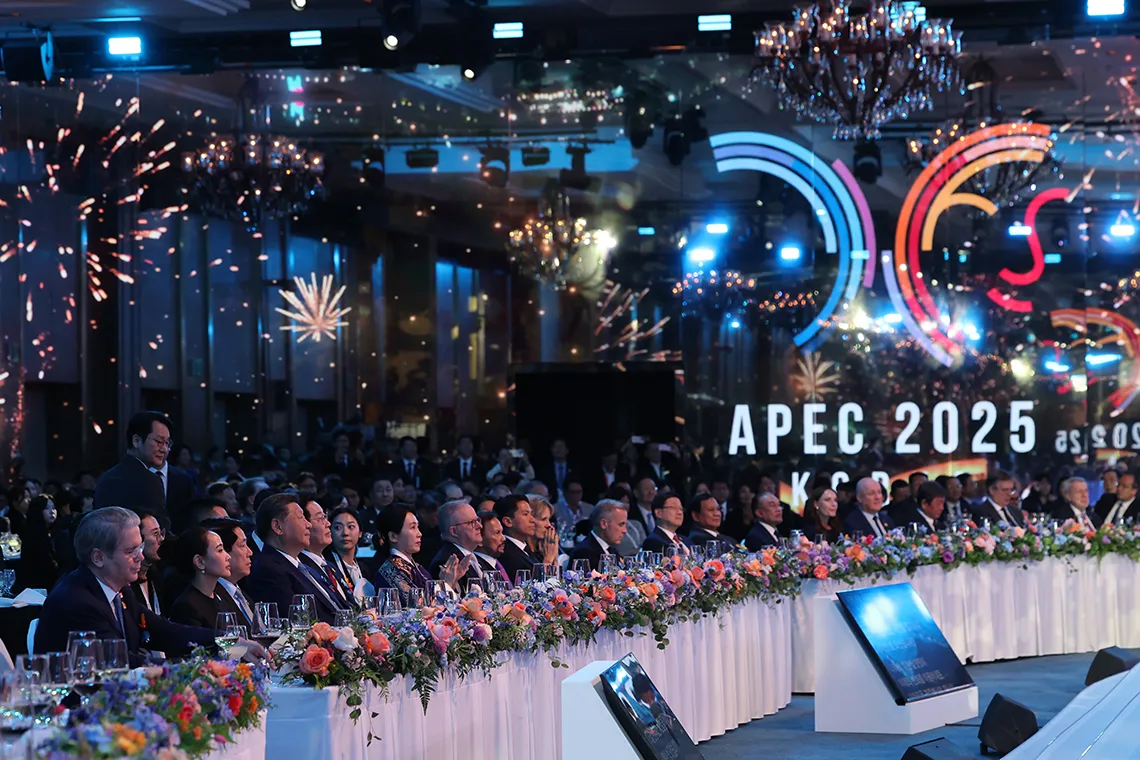
The Asia-Pacific Economic Cooperation (APEC) Summit held this time in Gyeongju was not merely an economic meeting. The venue was a stage where culture shone more brightly than politics and diplomacy. A Silla-era golden crown was presented as a gift to President Trump, and the CEO Summit was adorned with a keynote speech and music by BTS. The scene of NVIDIA’s Jensen Huang, Samsung Electronics Chairman Lee Jae-yong, and Hyundai Motor Group Chairman Chung Euisun sharing a meal at a chicken restaurant in Seoul was more talked about than anything else. Through this series of scenes, one thing became clear: there are times when soft power is more effective than hard power in the international community. The doors of relationships, which do not open through numbers, strategies, and statements, opened gently before the language of culture.
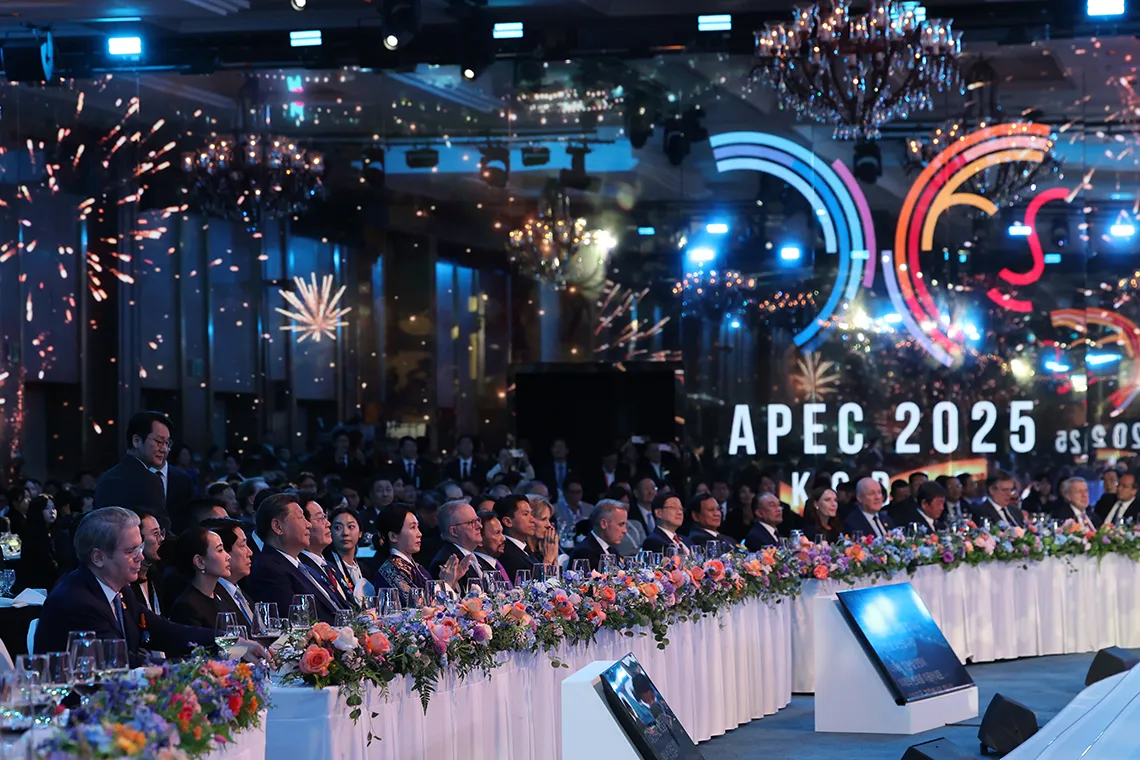
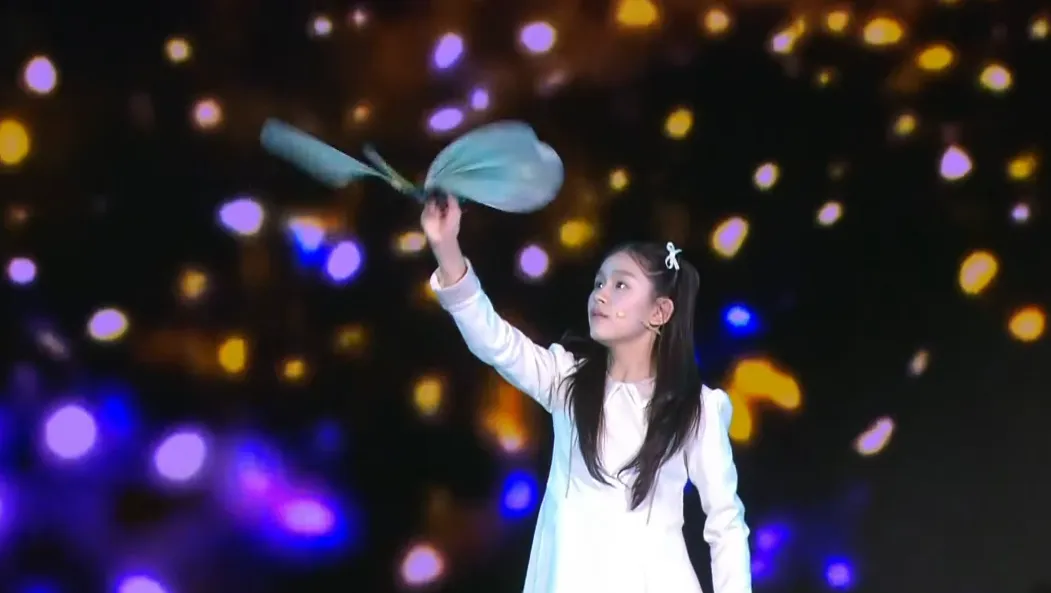
[‘Swallowtail Butterfly’ drones active during the gala show Ⓟ APEC2025KOREA]
The brief conversation between President Xi Jinping and President Lee Jae-myung shared on the subject of butterfly drones inspired by Korea’s ‘swallowtail butterfly’ also falls in the same vein. President Xi said, “Butterflies were fluttering at the banquet venue and it was truly beautiful,” and tossed out a topic, saying, “President Lee asked me, ‘Next year, will you make the butterflies fly this beautifully?’ and I replied, ‘I hope this beautiful butterfly here will fly all the way to Shenzhen and even sing.’” The dialogue between the two was as concise as a poem, yet contained within it was a symbol of change and connection. It was a moment that left a much softer and richer lingering impression than official statements reconciling the interests between nations. It can be evaluated that such cultural rhetoric and symbols contributed to easing the overall atmosphere of the talks and fostering a positive outlook.
It is hoped that such a language of communication will also exist in climate negotiations. At the talks held each year, technical discussions on reduction rates, financial burden-sharing, and emissions trading pour out, but progress is slow. Countries clash over responsibility, and consensus statements always stay at the level of principle. Science is precise and economics is cold, but people’s emotions are still far away. Yet the essence of the climate crisis is not a problem of data but of relationships. It is not that technology is lacking but that the grain of trust is broken.
Culture is the power that reconnects this grain. Art and music, food and stories restore the human dimension that cannot be captured by political language or economic indicators. Culture lowers the barrier of language and restores the circuit of emotion. It is ultimately culture that loosens the atmosphere of the conference hall stiffened by numbers and clauses, and creates space for empathy within the competitive structure. It is not a procedure of consensus but the soil of trust.
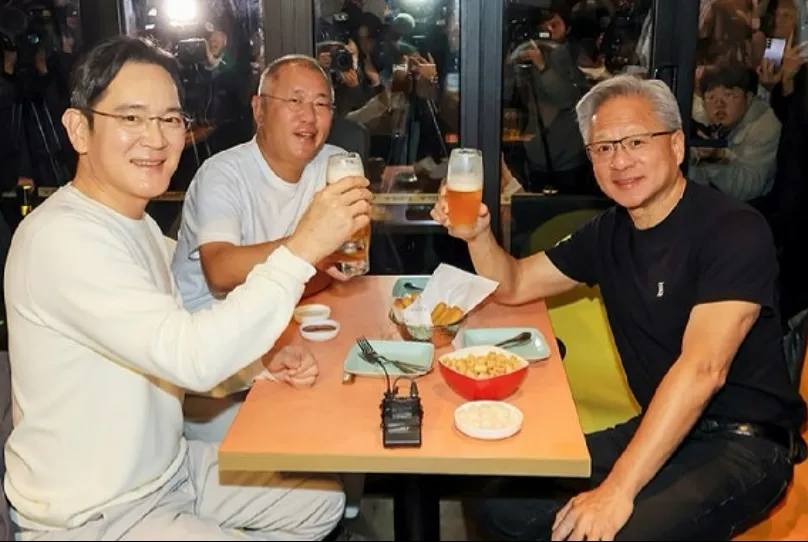
[The Kkanbu Chicken gathering of NVIDIA, Samsung Electronics, and Hyundai Motor leaders that drew major attention during APEC © Hyundai Card CEO Chung Tae-young’s Instagram]
Now, as multilateralism is losing trust in its function, a new breakthrough lies outside rigid institutions. Culture may seem like the periphery of talks and negotiations, but in reality it acts as an invisible needle that adjusts the direction of the talks. Instead of documents that are forgotten after the talks end, long-lasting exhibitions and performances, songs and stories carry on the memory of cooperation. Just as cultural symbols and communication raised the temperature of relationships at APEC, a human language is also needed at climate talks. This will interlock each other’s grain and set the rigid structure in motion again.
In the era of the climate crisis, culture must further radiate that power. Culture must exert the power to seep through the gaps in negotiations and softly connect the grain of relationships. If hard power builds walls, soft power carves a path between those walls. Just as chicken and beer (chimaek) and the swallowtail butterfly changed the atmosphere of diplomacy and negotiations, we hope that a new language of climate diplomacy will also begin on that path.
by Kim Won-sang (Climate Solutions, Media Communications)