
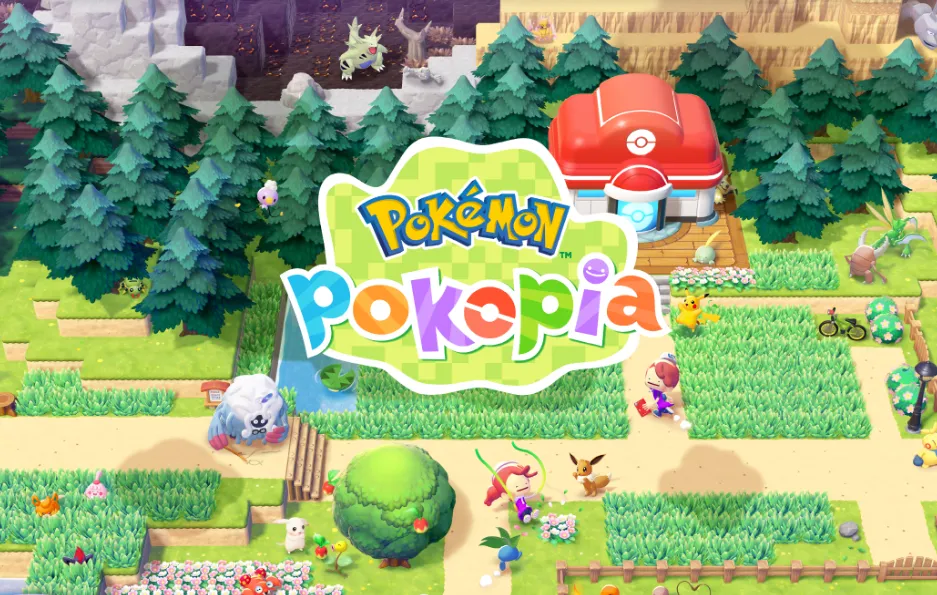
Few titles in the Pokémon series have ever put forward such a somber starting point. The world the gamer will encounter is withered; humans have vanished, leaving only ruins and wasteland. Yet paradoxically, this game is showing signs of being regarded as a masterpiece of the Pokémon series. This is the story of ‘Pokémon Pokopia,’ the game series released on March 5. Pokémon Pokopia is the first slow-life simulation game in the Pokémon franchise, selling 2.2 million copies worldwide and one million in Japan alone within four days of release. It received a favorable 89 points on the game review site Metacritic and, with sell-outs continuing at major retailers, it even drove a reverse momentum surge for the Nintendo Switch 2 console.
Ecosystem Crisis Becomes the Game’s Setting
The basic premise is also quite different from the familiar grammar of Pokémon games up to now. The game user becomes a Ditto in human form and must restore a land that once was home to Pokémon and humans together but has now withered and been abandoned. Gathering materials to craft items and building houses and habitats, the player creates an environment to which Pokémon can return. The in-game time is linked to real time, and weather and day-night changes are reflected as well. It is not a game about catching stronger Pokémon or raising captured ones as in the existing series. It is simply a game about rebuilding a world where humans and Pokémon can live.
Previous entries in the Pokémon universe had already hinted at climate change and ecosystem threats through the cases of certain Pokémon such as Koffing and Corsola. The traces of industrialization spewing air pollutants and bleached coral reefs showed that the shadow of the ecological crisis was seeping into an IP beloved by children and the public. Pokémon Pokopia took that implication one step further. This time, climate and ecosystem issues did not remain as background decoration but became the very rules of gameplay. The gamer comes to realize how the world was devastated through dialogue, diaries, letters, and books. The story does not move forward unless the withered world is restored.
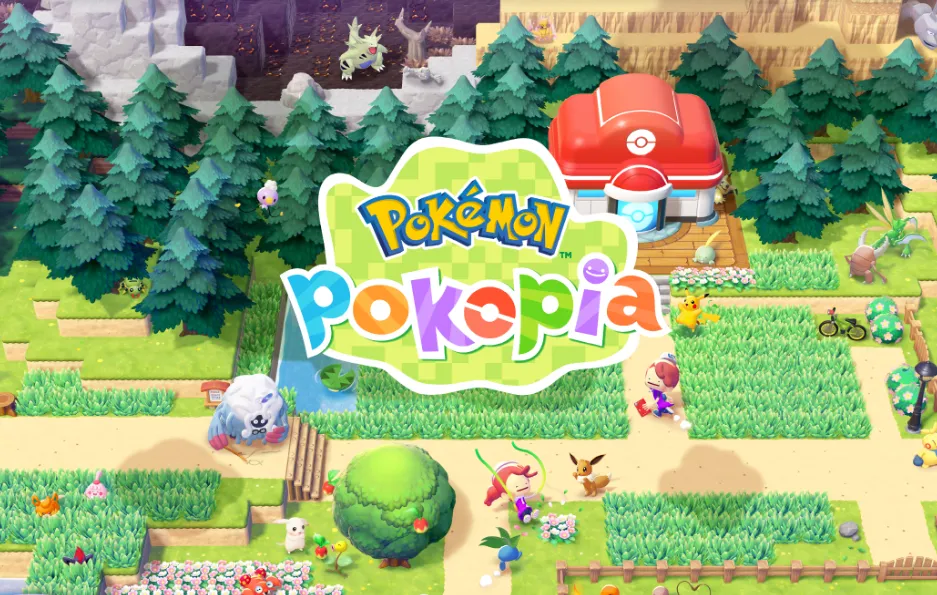
[Pokémon Pokopia © Pokémon Pokopia Official Website]
The Game Teaches the Grammar of Symbiosis
What makes this game interesting is that its core loop itself can be read as a metaphor for environmental management. The more you restore the devastated village and create habitats where Pokémon can thrive, the more Pokémon come to visit. The game features an ‘environmental level’ indicator; as you maintain the village, restore nature, and make Pokémon comfortable, the value rises. This unlocks new materials and opens up facilities. In short, the more livable an environment you create in the game, the more the world comes back to life, and the more rewards return to the gamer.
In this respect, Pokémon Pokopia displays a different ethic from existing Pokémon games. Whereas past Pokémon games were closer to the logic of capture, battle, and the growth narrative of becoming stronger than opponents, Pokémon Pokopia centers on building a good home for Pokémon to live together. For instance, instead of borrowing Pokémon’s moves to fight, Ditto uses them to grow grass, draw water, and clear terrain. Bulbasaur adds vegetation to barren land, and Squirtle breathes vitality into that greenery. In this way, the ‘moves’ that Pokémon possess perform the role of tools for stewardship and restoration, not as means of destruction or competition.
Another impressive aspect is the way it handles diversity. Each Pokémon prefers a different environment. Some prefer dry places, some prefer the waterside, and some prefer greener, more humid settings. Therefore, instead of building a uniform village, the game user must design multi-layered habitats where different conditions can coexist. It is not about making all environments the same, but about harmonizing so that different beings can live together under their own conditions. At this point, Pokémon Pokopia portrays not only the restoration of ecosystems but also the value of diversity — of different beings living together — in a very gentle grammar.
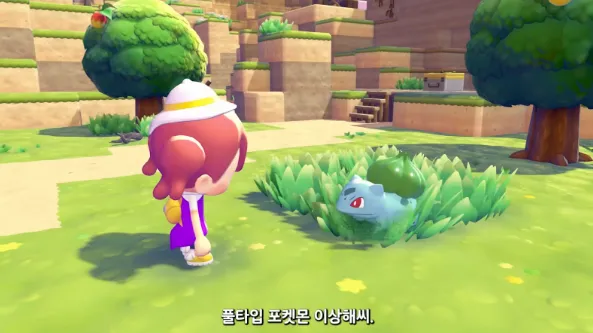
[Pokémon Pokopia gameplay scene © Nintendo Official YouTube Channel]
Conveying a Way of Embodying Coexistence
Of course, there are clear limitations. Pokémon Pokopia is not a game that directly accuses the climate crisis. What the official introduction and core systems emphasize is not the language of real-world politics — ‘carbon, fossil fuels, energy transition, responsible agents’ — but the language of restoration: ‘restoration, gardening, habitat creation, comfort level.’ So rather than sharply criticizing the problems of cause, power, and capital, this work is closer to a healing-type reconstruction narrative that repeatedly instills the intuition that “when you nurture the environment, life returns.” Yet it is precisely because of this that it can reach a broader audience. This is because it persuades through resonance and experience rather than direct criticism.
Ultimately, the achievement of Pokémon Pokopia lies here. Rather than delivering environmental issues in a heavy and difficult manner, it makes the sensation that “when you create a good environment, more life returns, more diverse beings can live together, and the community also becomes richer” something that is learned through gameplay. It has transformed Pokémon from targets to be caught into neighbors to live with, moves from means of attack into tools of restoration, and growth from competition into action for coexistence.
Content that deals with climate and the environment need not always mobilize the fear of disaster or guilt. Sometimes, this kind of imagination of gentle recovery can emerge from the most somber worldview. The educational potential is also great, in that it is a case of seamlessly integrating climate crisis and ecosystem collapse into gamification. Pokémon Pokopia, in that sense, can be called both a transformation of Pokémon and a clever evolution of climate and environmental communication.
by Kim Won-sang (Climate Solutions, Media Communications)