
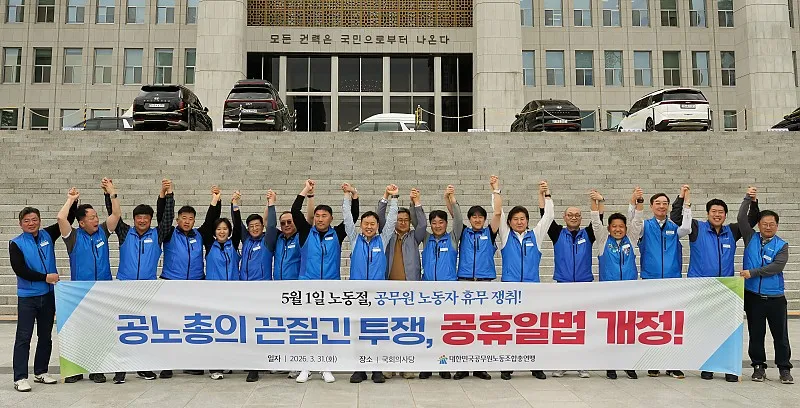
On May 1, 2026, South Korea marks its first Labor Day on which all workers take the same day off. The two changes — the restoration of the name and its designation as a statutory holiday — are not mere institutional fine-tuning but a societal answer to the age-old question of ‘who is a worker.’
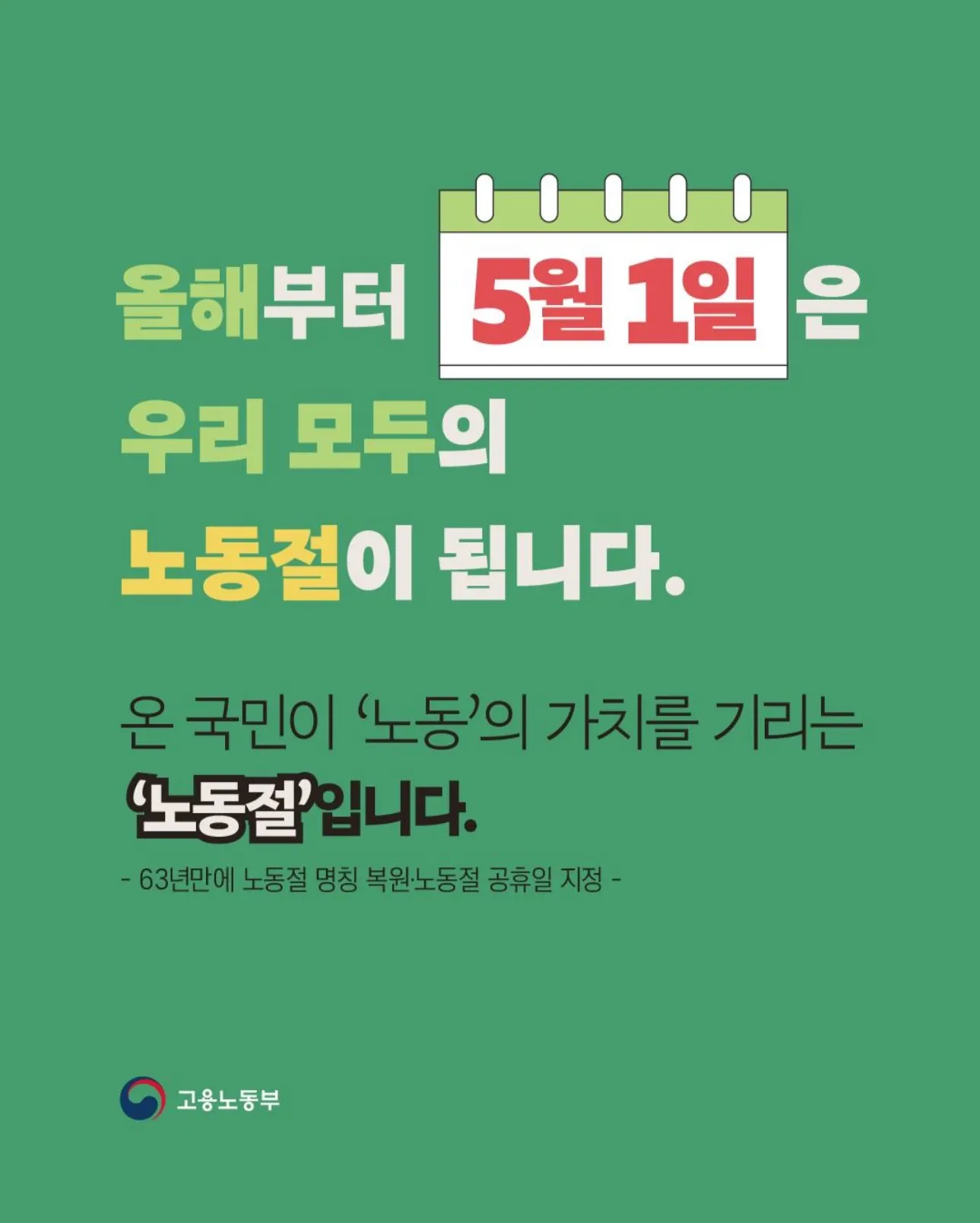
[Labor Day-related post © Ministry of Employment and Labor Instagram]
In 1963, the word ‘labor’ was erased from the law. After seizing power through the May 16 military coup, the government restructured labor-related legislation in a direction that suppressed the autonomy of the labor movement, and in that process, the ‘Act on the Designation of Workers’ Day’ was created. The choice was ‘geullo’ (diligent work) instead of ‘nodong’ (labor). According to the National Institute of Korean Language, ‘geullo’ means working diligently, while ‘nodong’ means working by moving the body. One demands an attitude; the other describes a fact. It was a choice aligned with the spirit of the times, which emphasized the faithful provision of labor services over workers’ rights. After being maintained for 63 years, on October 26, 2025, the National Assembly passed a full revision of the ‘Act on the Designation of Workers’ Day’ into the ‘Act on the Designation of Labor Day.’ A single word changed, but considering the weight of the era contained in that word, this is not merely a name swap. And the change did not stop at the name.
What Has Changed and What Has Not
Alongside the statutory holiday designation, new criteria also emerged. The Ministry of Employment and Labor issued an official interpretation that substitute holidays are not permitted for Labor Day. This is because, unlike other public holidays, the special act directly fixes the date of May 1. If work is unavoidable on Labor Day, employers must choose between paying premium wages or granting compensatory leave under a written agreement. The elimination of size thresholds also heightens the sense of change, as Labor Day is guaranteed as a paid holiday regardless of workplace size. Until now, workplaces with fewer than five employees had effectively fallen into a legal blind spot, but the principle of Labor Day, at least, applies uniformly regardless of size.
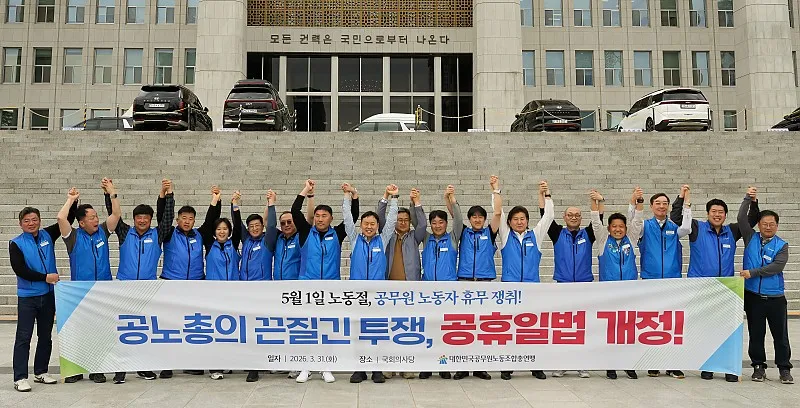
[Public servants also included in this year’s Labor Day holiday © Korean Government Employees’ Union]
However, there are places this standard does not reach. Workers in special types of employment are often not recognized as workers under the Labor Standards Act, so time off is not legally mandated for them. The government is aware of this gap. The Ministry of Employment and Labor is promoting a labor-respecting legislative package for 1.44 million workers in special employment types who are not protected by labor laws as AI advances. It is also working on introducing a ‘worker presumption system,’ under which a person is presumed to be a worker and protected by labor law unless the employer proves otherwise.
From the Conditions of a Worker to the Definition of a Worker
When Chicago workers took to Haymarket Square in 1886 demanding the eight-hour workday, the core issue was ‘how long do we work.’ Now, 140 years later, the issue has shifted to ‘who is recognized as a worker.’ And this question does not remain confined to the workplace.
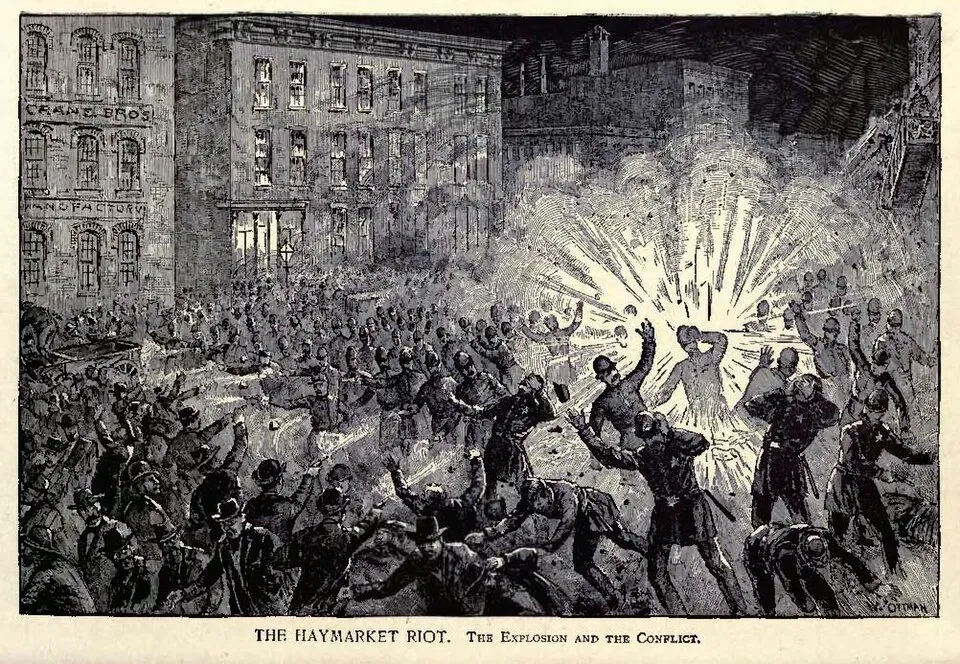
[The Haymarket affair, the origin of Labor Day © Wikipedia Commons]
Amid the trend of strengthening global supply chain due diligence standards, the working conditions and rest rights of workers employed by partner companies are being elevated to quantitative indicators in sustainability reports reviewed by investors. Yet, workers who are not legally ‘workers’ go uncaptured even in these reports. They are labor actually utilized by companies, yet they exist outside disclosure indicators.
Just because a risk is not yet visible does not mean it does not exist. Global buyers and institutional investors have begun looking directly into supply chains. If the reality of labor forces not captured in reports is revealed during due diligence, it leads to questions of disclosure reliability and the very business relationship can be shaken. The definitional vacuum around ‘whom to consider a worker’ accumulates unmanaged, eventually bursting as a risk all at once. This institutional change has partly raised that baseline. The statutory holiday designation has broadened the language of ‘worker’ somewhat, but for Labor Day to truly become a day for everyone, a broader structural change is needed beyond a single line of law. This May 1 marks the starting point of that journey.
by Editor L