Loading Data
Please wait a moment...
Update Cal.
2026.08
03
Mon
04
Tue
05
Wed
06
Thu
07
Fri
08
Sat
09
Sun
Update Calendar
2026.08
01
Sat
02
Sun
03
Mon
04
Tue
05
Wed
06
Thu
07
Fri
08
Sat
09
Sun
10
Mon
11
Tue
12
Wed
13
Thu
14
Fri

Loading Data
Please wait a moment...
Morning features and interviews. A morning story over a cup.
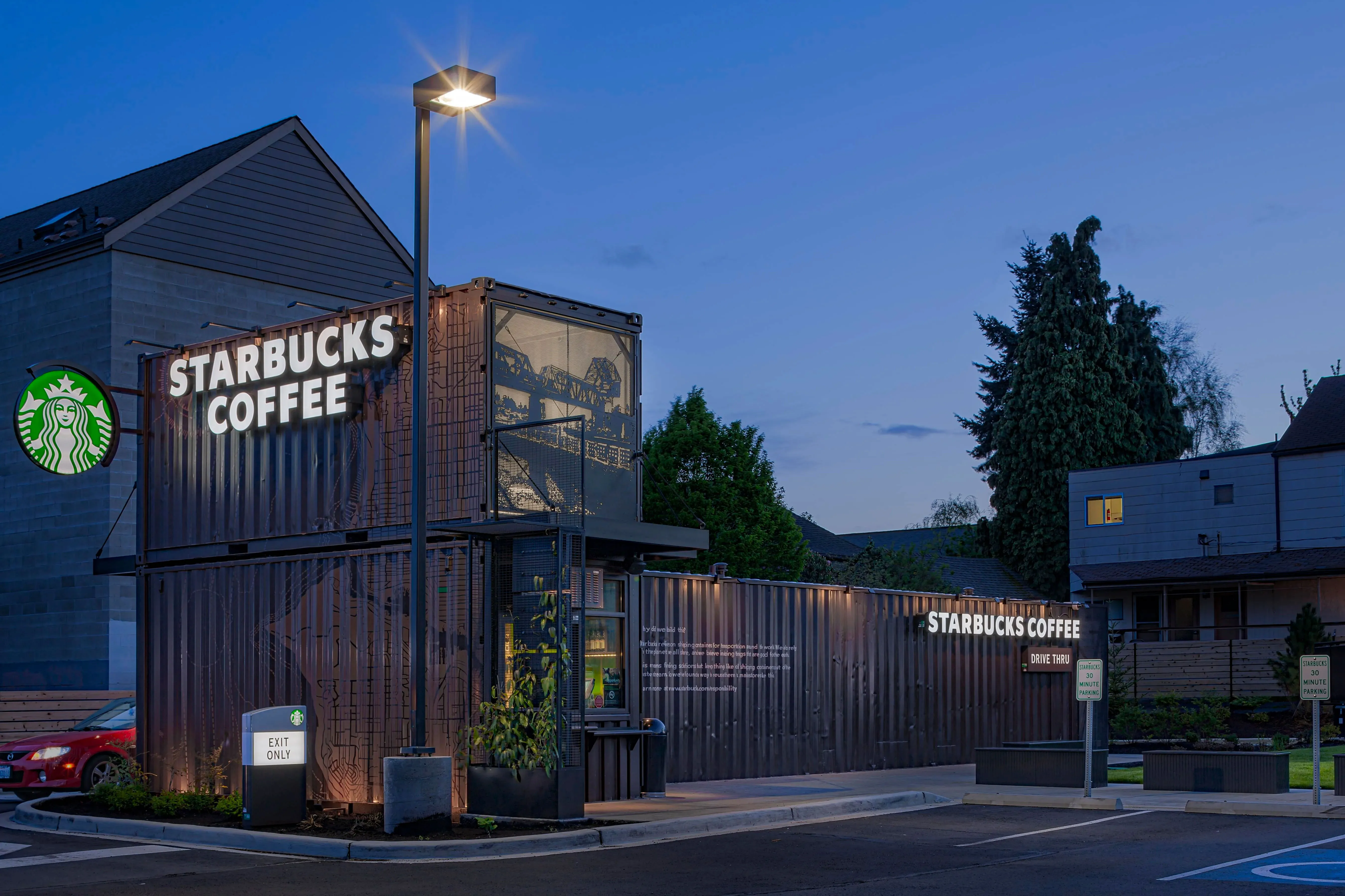
Only Happy Employees Can Provide Happy ServiceFrom back when it was a small coffee company with only four stores, Starbucks has carried out value-centered management based on a corporate philosophy that puts people first. Starbucks' own value-centered management can be said to have begun with and been built by former CEO Howard Schultz, called the father of Starbucks. In "Pour Your Heart into It," a book he published in 1999 — the year Starbucks first entered Korea — he said that employees come first, customers second. Howard Schultz believed that happy employees provide excellent service and create happy customers. Accordingly, during his time as CEO he always called employees "partners," and under the belief that the company's profits should be shared together, he provided a stock option called "Bean Stock" to all employees, including part-timers.[Howard Schultz, Starbucks Chairman Emeritus © AFP/Yonhap News]Managing risk from a social and ethical perspective is also one condition of good governance. Remembering his difficult childhood, Howard Schultz provided health-insurance benefits to all employees including contract workers, and this was firmly maintained even amid the crisis around the 2008 economic crisis, when Starbucks' stock price fell 42% and it closed 7,100 stores across the US. He also raised his voice to reduce wage gaps by race and gender. In particular, he showed a favorable attitude toward the poor and refugees. In 2011 he opened a "Community Store" in New York's Harlem, notorious as a high-crime area, hiring Harlem residents to create jobs and investing part of the profits in the local community. In 2017 he announced that Starbucks would hire 10,000 refugees over five years, thereby also standing against former President Donald Trump's anti-refugee policy.In 2024, Starbucks announced a new store-design direction for the convenience of employees and customers with disabilities. Starbucks has, all along, made store accessibility and inclusivity core elements of the consumer experience. The core of this announcement is that it will apply to offline store spaces this value that it had also shared on its online channel, the mobile application. The new design plan, called the "Inclusive Spaces Framework," was first applied at a new Starbucks store located in Washington, and Starbucks said it plans to apply it to about 4% of the 16,000 stores located in North America going forward.Greener "People" and "Places"[A Starbucks Greener Store in Shanghai, China © Starbucks]Beyond the social and ethical perspective, managing risk in environmental terms is also a condition of good governance. In 2018, Starbucks, together with the "World Wide Fund for Nature (WWF)," announced a plan to create 10,000 "Greener Stores"* by 2025, and to date has opened more than about 6,000 stores in 44 countries worldwide. A Greener Store is designed to use 30% less energy than existing stores, and the amount of energy saved this way is equivalent to the annual electricity use of more than 30,000 households. It also reduces water use by more than 30% each year, contributing to the company's sustainability goal of cutting carbon emissions, water use, and landfill waste by nearly 50% by 2030. As we are well aware, the coffee beans used at Starbucks have their origin and entire distribution process disclosed through a program called "Bean to Cup."** The realization of the fair-trade value implemented through this leads to consumer trust.In 2018, Starbucks' headquarters announced that it would "phase out the use of single-use plastic straws at 28,000 stores worldwide," and Starbucks Korea is currently pursuing an eco-friendly campaign under the slogan "Greener Starbucks Korea — A Promise for the One and Only Earth." Through introducing paper straws, using eco-friendly packaging materials, and making natural fertilizer by recycling coffee grounds, its goal is to reduce carbon emissions by 30% going forward. It is also spurring product development for coexistence and shared growth with local regions. Starting with the Mungyeong Omija Fizzio in 2016, it has steadily developed and released beverages using Korean agricultural products — such as the Icheon New-Harvest Rice Latte and the Goheung Yuja Fizzio — and plans to expand these to as many as 10 kinds by 2025.*Greener Store: a store that directly practices eco-friendly activities to reduce waste, energy, and water use in order to realize a sustainable future. To receive Starbucks' Greener Store certification, a store must meet 25 essential criteria across 8 environmental areas developed through a partnership between the World Wide Fund for Nature (WWF) and SCS Global Services, and must be certified by an external auditing body.**Bean to Cup: a program that lets you scan the QR code attached to the coffee-bean packaging with a smartphone to check the bean's growing region and place of production, how Starbucks supports the farmers of that region, and more. Beyond the origin, it also provides detailed information such as the farm and farmer, the coffee's roasting time, and tasting notes.The presence of the brand Starbucks has long surpassed the level of a company that merely sells coffee. Like the taste and aroma of coffee, which has settled unchanged over a long time as an essential beverage in our lives, let us look forward to Starbucks' own sincere ESG management taking root naturally in our lives.by Editor LKorea translates the G (Governance) of ESG as "control structure (jibae gujo)" and uses it that way. But if we translate "control structure" back into English, it is not governance. "Control structure" literally means a company's "decision-making and profit-distribution structure" itself. The globally accepted meaning of governance is closer to the conduct and processes of the people who lead a company. ESG.ONL's "In Search of Governance" series introduces cases of domestic and overseas companies with good governance, for a more accurate understanding and use of governance.
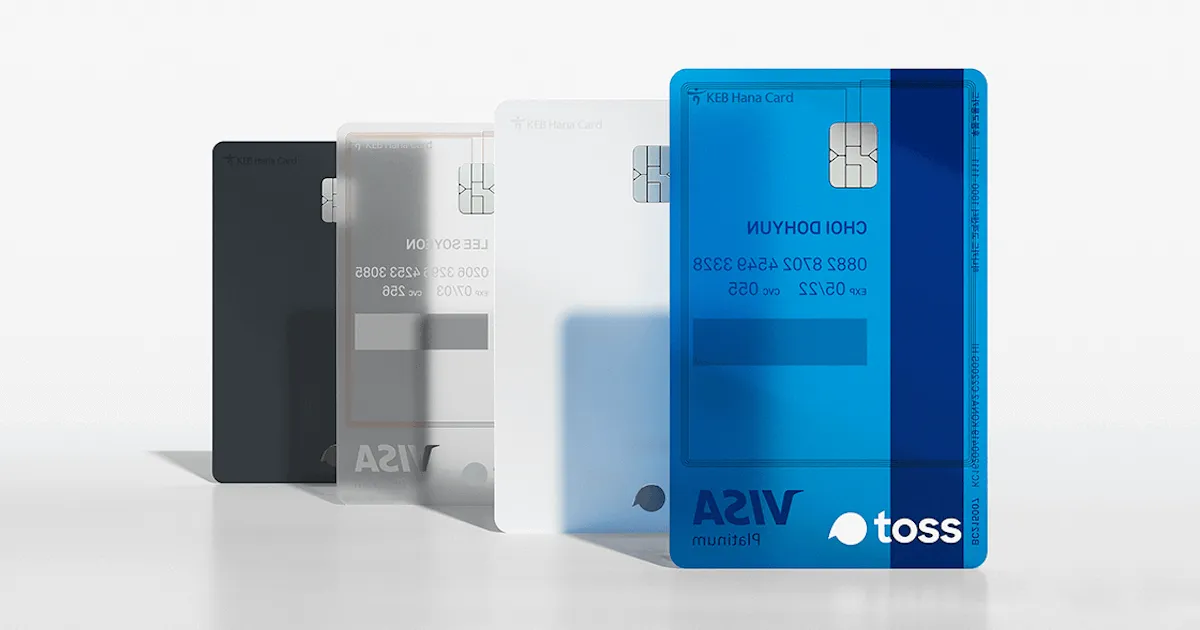
Korea translates the G (Governance) of ESG as "control structure (jibae gujo)" and uses it that way. But if we translate "control structure" back into English, it is not governance. "Control structure" literally means a company's "decision-making and profit-distribution structure" itself. The globally accepted meaning of governance is closer to the conduct and processes of the people who lead a company. ESG.ONL's "In Search of Governance" series introduces cases of domestic and overseas companies with good governance, for a more accurate understanding and use of governance.A Strategy for Survival and VictoryFor Toss, culture is both a "survival strategy" and a "victory strategy." Toss's corporate culture completely fuses culture and work, and operates from the perspective that it must be able to provide practical help so that work can be done well. Because it thought, decided, and worked based on organizational culture even when the organization was struggling and even when it was shaken, the organizational culture has not been neglected even in the process of growing into a large-scale organization as it is now, and continuous experience management is being carried out.At Toss, arrival time is as you please, and there is no limit on the number of vacation days. There are no ranks or titles either. Even the CEO is called "Seung-gun-nim," aiming for a horizontal culture. A team's leader is not a "manager" who gives orders, but plays the role of a "facilitator" who helps team members effectively achieve goals. Although it is an organization without managers, each team member communicates with colleagues and finds "my work" on their own. It gives complete freedom but assigns complete responsibility, so that everyone becomes both a practitioner and a "Directly Responsible Individual (DRI)."The transparent disclosure of a company's operations, policies, and risks is one condition of good governance. And Toss shares practically all information company-wide. At every affiliate, a "Weekly Alliant Meeting" and "Weekly QnA" are held on a weekly basis, and everything from the corporate-card expenses each person used to each team's work status is shared through the weekly mail. You might wonder, "What if personal information leaks?" or "Is it okay to disclose even this kind of information?" But through such actions, Toss sought to build a high level of information-sharing infrastructure and mutual trust. The idea is to make the information needed for decision-making already exist in one's head, so that a suitable solution can be found easily.*DRI: a concept borrowed from Apple — a directly responsible individual. That is, a concept designed so that the most expert person on a particular task becomes the person responsible for the decision.Weekly QnA: a team-leader Q&A session where you can ask the team leader anything you are curious about regarding the Toss team.[Lee Seung-gun, CEO of Toss © Viva Republica]The Obsession with Transparency Hidden in Customer Service TooToss is a company that provides financial services. Therefore, a user cannot but worry about personal-information protection — how their personal information is being used, whether destruction is properly carried out when they leave the service, and so on. Toss regards obsession with customer value as a core value, and considers customers' information protection and security the top priority. So Toss newly established a personal-information-protection website where personal-information-protection activities can be checked at a glance. Anyone can easily access this website through the Toss app and website. Centered on Toss's five core principles for personal-information protection, it separated the personal-information-handling policy into a distinct menu to resolve customers' questions about where their personal information is used, and it also organizes and introduces the activities of the "Toss Data Protection Compliance Advisory Committee." From January 2023, it launched the "Personal Information Reassurance Report" service, so that customers can check at any time the record of personal information looked up during service use. In 2023, Toss also carried out a project, centered on the Toss white-hacker team, to hack Toss within 48 hours. And it disclosed the entire process of this project through YouTube. To state the conclusion, the Toss white-hacker team failed to hack Toss within 48 hours. Red Teaming is carried out in various situations — at leading IT companies and in many countries' military-training situations — to inspect and supplement an organization's strategy, but disclosing this entire process to everyone is exceptional. It may have been a for-show internal project. Even so, such activity by Toss further highlighted the point that, for good governance, transparent disclosure of a company's operations, policies, and risks is necessary.*Toss Data Protection Compliance Advisory Committee: an independent body within Toss launched in November 2022, playing the role of monitoring and controlling whether Toss is properly complying with data-related laws.Red Teaming: the act of finding problems or vulnerabilities from a different perspective and intentionally attacking them, in order to inspect and supplement an organization's strategy. It originated from the virtual "Red Team" that the US organized to identify and analyze the vulnerabilities of the friendly Blue Team during mock military-training exercises.In an environment like the fintech industry, where the uncertainty of technology and the market itself can act as a crisis, the value that transparency holds is even greater. Having declared "bold information transparency and accessibility," Toss now looks beyond a unicorn toward a decacorn.by Editor L

Launch of "Pulmuone Gigusikdan," a sustainable-food specialty brand, to foster a future growth engineIntroduction of a professional-management system for management transparencyPulmuone's Sustainable Management 1. GigusikdanPulmuone first began at "Pulmuone Farm," established in 1955 by the late director Won Kyung-sun. At the time, Pulmuone Farm played the role of a community living together with those who had nowhere to go, including war orphans, and in 1976 it established "Jeongnonghoe," Korea's first organic-farmer organization, working to spread organic agriculture. Later, in 1981, "Pulmuone Farm Pollution-Free Produce Direct Store," Korea's first organic-produce shop selling the organic crops produced by Jeongnonghoe, opened its doors, and this small vegetable shop is the beginning of "Pulmuone," now a beloved and respected company in Korea that also strives for the globalization of right food.[An image of Gigusikdan products launched in 2022 © Pulmuone]Pulmuone practices ESG management based on realizing LOHAS (Lifestyles of Health and Sustainability — activities for the sustainability of oneself and the Earth) values through plant-forward orientation, animal welfare, healthy experience, eco-friendly care, and more. In 2021, Pulmuone made the vegan-food business a new growth engine, declared itself a plant-forward leading company in 2021, and, under the keynote "We make right food for the healthy tomorrow of people and the Earth," launched its first sustainable-food brand, "Gigusikdan." It consists of two sub-brands — "Plant-Based Gigusikdan," which uses only plant-based ingredients, and "Animal-Welfare Gigusikdan," which uses animal-welfare ingredients as the main ingredients — and Plant-Based Gigusikdan unveiled a variety of products divided into the categories of animal-substitute foods made only with plant-based ingredients, plant-based protein-enriched foods, and plant-based convenience foods.To target a broad consumer base — from full vegans who eat a vegan diet, to flexitarians who try partial vegetarianism, to the MZ generation that pursues a meaningful diet — Pulmuone focused on implementing not only nutrition but also taste and texture, and it expanded its meat-substitute lineup centered on menus reflecting Korean food culture and eating habits, so that Koreans can enjoy plant-based meat substitutes in a familiar and delicious way. Gigusikdan is also backed by economic effects, posting cumulative sales of 43 billion won just one year after launch, and as Pulmuone reorganizes along with its strategy of fostering vegan food as a food of the future, it is also seeing an effect of improving profitability across the group.Along with plant-forward, Pulmuone selected "Eco-Caring" as one of its four core strategies, firming up its will and resolve to reduce greenhouse gases. To realize this, it set a plan to reduce company-wide greenhouse-gas emissions by 4% each year through 2025, for a total reduction of more than 12%. It plans to establish and implement greenhouse-gas-reduction measures on various fronts — actively pushing plant-based product development, raising the share of new and renewable energy, managing manufacturing-process energy on a unit basis, and promoting the resource circulation of plant residues.Pulmuone's Sustainable Management 2. Professional ManagementPulmuone is one of the companies that, across Korea's industry as a whole, stepped into ESG management activities early. Since 2017, it has responded to ESG risks by forming an "ESG Committee" and inspecting sustainable management strategy. Currently it operates an ESG Committee system composed of one internal director and four external directors within the board, and Pulmuone attempted a major shift in its management style from 2018 for management transparency. Ending the owner management that had continued for 33 years since its founding in 1984 and introducing a professional-management system, current CEO Lee Hyo-yul, "Pulmuone's employee No. 1," has taken charge of management.The following year, in 2019, it completed the purchase of subsidiary stakes and more, completing its governance structure as it is now, and Pulmuone became the only listed company in the group. Pulmuone now entrusts all business to subsidiaries and operates in an "operating holding company" manner in which the holding company makes all important decisions — a structure in which Pulmuone, as a pure holding company, oversees management, brand, R&D, and more, and the subsidiaries carry out the business. A governance structure in which the holding company holds 100% of the subsidiaries' stakes, as at Pulmuone, is a governance structure commonly seen at global companies; by establishing a holding-company system meeting global standards, it laid the groundwork for advancing its governance.[Pulmuone's Open Shareholders' Meeting held in 2019 © Pulmuone]Since 2008, Pulmuone has held its shareholders' meeting under the name "Open Shareholders' Meeting" for 14 years running. Held once a year, it is a venue for reporting the year's performance to shareholders, and unlike an ordinary company's, Pulmuone's is conducted based on shareholders' participation and communication. This is possible because Pulmuone, seeking to break away from the existing uniform shareholders'-meeting culture, holds an "Open Shareholders' Meeting" in a discussion-forum format, benchmarking Warren Buffett's Berkshire Hathaway shareholders' meeting; through the shareholders' meeting, Pulmuone sought to create a venue for communication in which shareholders become the owners.Pulmuone is also working on employee education for digital innovation, building the digital learning platform "Digital Academy" this past March for its executives and staff. In addition, by establishing "Pulmuone Together," a subsidiary-type standard workplace for people with disabilities that helps them become self-reliant, within the Yangji Logistics Center, it provides opportunities for individuals with disabilities to demonstrate their abilities and helps them achieve economic self-reliance. We hope that the sincere ESG management of Pulmuone — which leads the front of Korea's food industry and has established itself as the No. 1 most respected company in Korea — will continue.by Editor N
In Korea, the "G" (Governance) in ESG is translated and used as jibae gujo, meaning "control structure." But if you translate jibae gujo back into English, it is not "governance." Jibae gujo literally refers to a company's "decision-making and profit-distribution structure" itself. The internationally accepted meaning of governance is closer to the conduct and processes of the people who lead a company. ESG.ONL's "In Search of Governance" series introduces cases of companies at home and abroad with good governance, in the interest of a more accurate understanding and use of the term.Patagonia, Whose Shareholder Changed on Its 50th AnniversaryThe outdoor brand Patagonia is unquestionably a frontrunner in the philosophy of sustainable management. "Don't buy this jacket" was an advertising line that ran in The New York Times in 2011, long before the MZ-generation consumer culture known as "meaning out" caught fire. There is one more line that makes you think Patagonia has an excellent copywriter: "Earth is now our only shareholder," announced in September 2022, the company's 50th anniversary. At that time Patagonia's founder and chairman, Yvon Chouinard, donated all of the Patagonia shares held by himself and his family for the sake of the Earth. This amounted to 100% of Patagonia's stock.[Yvon Chouinard, founder of 'Patagonia' ©Patagonia]Who Speaks for the EarthOf the shares Chouinard donated, the 2% consisting of voting stock was transferred to the "Patagonia Purpose Trust," a newly established trust created to carry on Patagonia's values and public-interest activities, while the 98% consisting of non-voting stock was transferred to the nonprofit "Holdfast Collective." The Holdfast Collective was established to support local environmental organizations, protect biodiversity and nature, and back political candidates and political activities; those activities continue on roughly 100 million dollars (133 billion won) in annual dividends, though the figure will vary with Patagonia's financial performance. Chouinard, who transferred 100% of the company's shares for the Earth through these arrangements, still works at Patagonia. Having given up owning the company, he did not give up working for it.Was Chairman Chouinard's Decision Good Governance?There were largely two reasons Chouinard arrived at this decision: preserving the values the company had pursued, and securing continued employment for Patagonia's employees working all over the world. If you sell a company to someone else, its values are bound to be corrupted, and its staff are likely to be replaced. Taking the company public was another option, but a public company inevitably faces the pressure of generating short-term profits. So Chouinard designed a new approach unique to Patagonia and transferred the entire stake, explaining it as "not going public, but going purpose." He minimized risk so that Patagonia's greatest asset—its management values—could be carried on, and protected the company by making the Earth, which does not press for profit, its shareholder.Patagonia vs. CapitalismConsidering the background of Chouinard's decision, one cannot rule out the possibility that it owes something to Patagonia's headquarters being in the United States. In the U.S., the prevailing view is that ESG investing violates the "fiduciary duty of a trustee to consider only the interests of the client." In other words, within the current American capitalist system, there is a surrounding climate one must be mindful of before doing good freely. Of course, Patagonia is not a listed company subject to disclosure, nor did a financial institution take an equity stake in it. But Chouinard sought to change corporate practice, and through it he appears to be dreaming of a change in the capitalist system as well. One could view his choice as extreme and experimental governance. Yet, with an owner's foresight, Chouinard's choice made it possible for decision-making centered on the company's values and the interests of shareholders to stand on the same line.It goes without saying that good copy comes from good substance. The line "Earth is now our only shareholder" is the very value that Chouinard and Patagonia are putting into practice.by Editor L

Pursuing shared growth with local communities and partner companiesSocial-contribution activities grounded in employee participation, such as the POSCO 1% Foundation and the POSCO Talent Volunteer CorpsThe bond between POSCO and the city of Pohang began the moment Pohang was confirmed as the site for the new steelworks in June 1967. As POSCO grew into a global steel company, Pohang, the city where POSCO is based, grew along with it. Now, more than half a century after POSCO and Pohang came together, Pohang has become the leading city of the Gyeongbuk region with a population of 500,000 and the mecca of Korea's steel industry. In the course of the city's growth, POSCO offered a variety of support from its earliest days—actively running education projects to cultivate local talent and creating spaces where citizens could enjoy culture and the arts. In Part 2, we examine POSCO's community-based social-contribution activities, focusing on the "Pohang Community Report" and the "Gwangyang Community Report."POSCO's Sustainable Management 1. Shared Growth[POSCO's four supply-chain management strategies and eight shared-growth programs ©2022 POSCO Corporate Citizenship Report]POSCO began activities for shared growth in the late 1990s, when the very term "shared growth" was still unfamiliar. In 2005 it formed a dedicated shared-growth organization and continued support for coexistence with small and medium-sized enterprises. Using its eight shared-growth programs, it helped suppliers solve problems and, beyond mere social-contribution activities, sought to grow together with SMEs and strengthen the supply chain of domestic industry. With the inauguration of POSCO Group Chairman Choi Jeong-woo in 2018, the company signed the "With POSCO Shared-Growth Practice Agreement," which included support for coexistence management with partner companies, closing wage gaps, and expanding shared-growth programs, and it extended shared-growth benefits down to second-tier partner companies. Since 2021 it has operated a Shared-Growth Support Group to assist not only partner companies but also local SMEs, identifying improvement tasks centered on four areas—building smart factories, resolving ESG issues, equipment and energy efficiency, technological innovation—and encouraging local SMEs to strengthen competitiveness on the basis of sales expansion and cost reduction.[Pohang citizens holding a celebration on July 19, 1985, welcoming the approval to establish Pohang University of Science and Technology ©2022 Pohang Community Report]POSCO has, from its earliest days, considered growing together with the local community—not just local companies—to be a corporate social responsibility. Based on its management philosophy of being "a corporate citizen that develops together with others," it divided its focus into three areas—local community, future generations and vulnerable groups, employees—established three strategies accordingly, and sought directions in which more social value could be created by making the most of the company's strengths. A notable undertaking is its education-support project for building a sustainable local community. Beginning with the Jecheol Scholarship Foundation in 1971, its early founding period, it established the Jecheol Academy school foundation in 1976. The total number of graduates produced through POSCO's education foundation is 129,112; as of 2022, it accommodates 5,489 (10%) of Pohang's 55,521 elementary, middle, and high school students, providing a high-quality educational environment. After establishing the middle- and high-school foundation, it founded Pohang University of Science and Technology, "POSTECH," in 1986 and the Research Institute of Industrial Science & Technology (RIST) in 1987, then opened "Technopark," which supports venture start-ups, in 2000 and the start-up support space "Change Up Ground" in 2021, thereby building a world-class industry-academia-research cluster in Pohang. As of 2022, Pohang Change Up Ground housed a total of 98 companies with a combined corporate value of 1.4018 trillion won. Moreover, through the operation of Pohang Change Up Ground, it attracted 60 billion won in investment.POSCO's Sustainable Management 2. Sharing Through VolunteeringThe strength that enables POSCO to carry out active social-contribution activities lies in the voluntary and active participation of POSCO's employees. The funds of the "POSCO 1% Foundation," a nonprofit public-interest foundation established in November 2013, are raised when employees of POSCO Group and its partner companies donate 1% of their salaries. Over the past ten years the number of donors alone has reached 34,818, and donations recorded 10.17 billion won, an increase of about 131% compared with 2013, the first year of establishment. Project expenditures likewise reached 12.55 billion won compared with 2013, providing generous support to future generations, vulnerable groups, people with disabilities, and multicultural families. In 2022 the donation participation rate through the 1% Foundation was 98%, with 275,147 cumulative beneficiaries and 85.5 billion won in cumulative funds raised.[Composition of major talent-volunteer corps by region ©2022 Pohang Community Report]POSCO also operates volunteer organizations. The "POSCO Volunteer Corps," founded in 2003, is likewise run on the basis of voluntary employee participation. In particular, it steadily maintains relationships with the local community through talent-volunteer activities that make use of individual employees' job characteristics and special skills, and it also runs a special volunteer week, the "Global Model Citizen Walk," to build a better local community. Cumulative volunteer hours alone reach 346,855, and the number of volunteer participants is 13,096.[Pohang Clean Ocean Volunteer Corps ©2022 Pohang Community Report]The Pohang "Clean Ocean" volunteer activity, launched in 2009, carries out activities for the marine ecosystem. The marine debris collected by the Clean Ocean Volunteer Corps to date totals 2,060 tons, and over the past 15 years 19,368 people have taken part in preserving the marine ecological environment and in underwater cleanup activities, amounting to 77,472 volunteer hours.Through the highlights of its Corporate Citizenship Report, POSCO makes it easy for the general public to understand its achievements to date, including its corporate-citizenship management philosophy and ESG strategy framework. It also provides files that the POSCO Talent Volunteer Corps recorded as audiobooks through the Good Voice volunteer group, so that POSCO's efforts and achievements can reach diverse stakeholders. As the title of POSCO's 2022 Corporate Citizenship Report suggests, we look forward to the better future that POSCO and its local community will create together.by Editor N
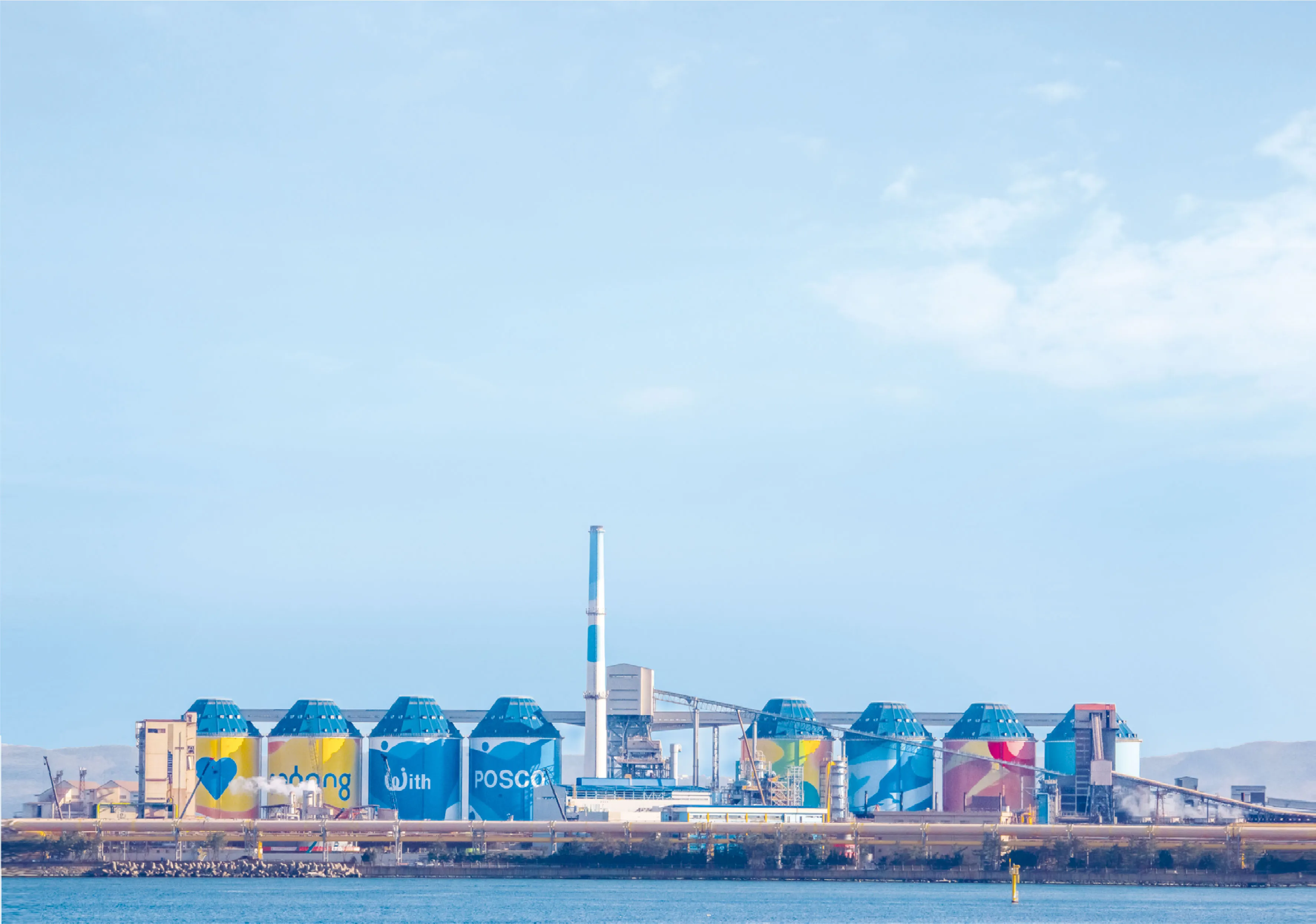
The meaning of a corporation redefined as a member of the social communityEfforts for biodiversity conservation and environmental problem-solving, such as marine forest (seaweed forest) restoration and the Clean Ocean Volunteer CorpsStarting with the "Environmental Report" it published in 1995, the first in Korea, POSCO issues an annual corporate performance report on sustainability under the name "Corporate Citizenship Report." In 2022, it not only overhauled its management system by launching as the steel-business company POSCO but also published "The Corporate Citizen POSCO Story, Together with the Citizens of Pohang," sharing 55 years of a history of coexistence with the Pohang community. POSCO has contributed to Gyeongbuk's Pohang growing into an industrial city of 500,000 people and is a company responsible for about 18% of Pohang's fiscal revenue. It provides local-community education, support for venture companies utilizing the POSCO Group network, and industry-academia-research collaboration infrastructure.Reading Sustainability Reports, "POSCO Edition," is divided into Parts 1 and 2: Part 1 covers POSCO's management philosophy and environmental-conservation activities, and Part 2 covers its community-based social-contribution activities.The Corporate Citizenship Management PhilosophyThe year 2023 marked "the 5th anniversary of POSCO's proclamation of its corporate-citizenship management philosophy," and it simultaneously commemorated the 10th anniversary of the "POSCO 1% Foundation" and the 20th anniversary of the founding of the "POSCO Talent Volunteer Corps." In March 2018, POSCO proclaimed "a corporate citizen that develops together with others" as its management philosophy, in order to "join in solving social problems and to build the prosperity of humanity and a better world."Centered on this management philosophy, it built five corporate-citizenship brands:• Green with POSCO (a company that protects the environment together)• Together with POSCO (a company you want to do business with)• Challenge with POSCO (a company you want to grow with)• Life with POSCO (a company that builds the future together)• Community with POSCO (a company that stands with the region)[Nine ESG focus areas linked to the Green Framework]Through a "double-materiality assessment," POSCO derived 13 material issues and manages the risks of the steel business. Taking "GREEN"—which carries the meaning of eco-friendly future materials—as the keyword of its ESG management, it established five ESG strategies, set a Green Framework, and derived focus areas to pursue a variety of activities.Environmental Conservation for Future GenerationsIn its double-materiality assessment, POSCO selected responding to climate change as its most important issue and established a "2050 Carbon Neutrality Roadmap." To reduce greenhouse gases, it is pursuing the development of coking-coal-reduction technology and low-HMR (Hot Metal Ratio) technology. By 2022, POSCO's emissions recorded 70.2 million tons, a 10.9% reduction from the base-year emissions of 78.8 million tons, and it improved its greenhouse-gas intensity to 2.05 tCO2e/ton, a 2.1% reduction from the base-year figure of 2.09 tCO2e/ton.['Triton,' an artificial reef installed in the sea south of Ulleungdo]POSCO has continued its marine-forest creation project over the past decade or so. In 2000, together with the Research Institute of Industrial Science & Technology, it developed "Triton," an artificial-reef material that recycles a steel-production byproduct (slag). Triton reefs are being installed along coasts where "whitening events" (barren-ground / gaetnokeum) occur; to date, about 7,000 of them have been installed along roughly 30 coastlines.[Changes in seaweed biomass after the creation of the Ulleungdo marine forest]In 2020, it created a Triton marine forest of about 0.4 hectares in the southern part of Ulleungdo. Three years of follow-up management showed that "the seaweed biomass and biodiversity of the coast increased." Through the use of Triton, eco-friendly marine fertilizer, and the development of new-type artificial reefs, POSCO plans to contribute to restoring marine ecosystems and increasing fishers' income.*Triton: POSCO's artificial reef brand. Triton artificial reefs have been verified as safe through the Ministry of Oceans and Fisheries' assessments of marine environmental stability and marine biological food safety.**Triton Reef: Due to its high content of minerals beneficial to the marine ecosystem, such as calcium and iron, it promotes the growth of seaweed and has effects such as boosting marine plankton proliferation and facilitating seaweed spore attachment, thereby contributing to increased biodiversity and the restoration of marine ecosystems.by Editor N

Binggrae's sense of social responsibility, revealed through active social-contribution activitiesPursuing sustainable growth of Binggrae, its employees, and its partner companies by building a Shared-Growth TF TeamThe social responsibility of "Binggrae"—familiar to us as an ice-cream company—is revealed through active social-contribution activities. Over the past few years Binggrae has built up remarkable achievements in the ESG field: an A+ grade in the social category of the 2023 Korea ESG Research Institute evaluation, an "A" grade for four consecutive years since 2019 in the KCGS ESG evaluation, and the top grade of AA for three consecutive years in the Sustinvest ESG evaluation.Binggrae's Sustainable Management 1. Responsibility for the Next GenerationTo strengthen its sustainable-management framework, Binggrae has, since 2018, reorganized its existing capabilities and systems and established a mid- to long-term strategy. Accordingly, each year through its board of directors it reviews and resolves on non-financial risks, the setting of the next year's ESG management goals, and its sustainable-management strategy, and it has built an organizational structure consisting of an ESG officer reporting directly to the CEO, dedicated staff for each ESG field, and cooperating departments. In addition, to identify sustainable-management issues related to its business and reflect them in management strategy, it conducts a double-materiality assessment,* setting goals and performance according to the priority of the issues surrounding the company and reporting them in its sustainability report.*Double-materiality assessment: an assessment that adds, to the materiality assessment that selects key issues based on the impact of sustainability issues such as environmental or social problems on corporate value, further consideration of the impact the company has on the environment and society.[Binggrae products developed with eco-friendly packaging ©2023 Binggrae Sustainability Report]Binggrae also practices eco-friendly management. Based on an environmental management system (ISO 14001), it established a sustainable supply-chain operating strategy, pursued Life Cycle Analysis of its products, and sought to minimize environmental impact. It also developed eco-friendly product packaging to reduce carbon emissions, and it is active in developing packaging optimized for resource circulation after incineration or landfill. These efforts led to reductions in greenhouse-gas emissions. The greenhouse-gas emissions Binggrae reduced in 2022 through raw-material recycling, material improvement, and weight reduction were about 6,588 tCO₂eq, equivalent to the effect of planting about 53,000 pine trees.* *Assessment basis: Korea Forest Service carbon-tree calculator.[Binggrae's eco-friendly campaign ©2023 Binggrae Sustainability Report]Each year it runs eco-friendly campaigns with diverse and fun concepts alongside consumers, drawing active participation. In particular, the "Danji Washing Machine" produced through the 2020 Banana-Flavored Milk campaign "Save the Earth, Banana" showed consumers how to sort and dispose of waste in a fun and intuitive way. It not only won a great response but also went on to receive awards at prestigious domestic and international marketing award ceremonies such as the "Korea Advertising Awards," the "& Awards," and the "Effie Awards."Binggrae's Sustainable Management 2. Leading Shared ValueBinggrae is accelerating its creation of social value to put its management philosophy into practice. As a food manufacturer that procures raw and subsidiary materials from a variety of suppliers, it works hard on sustainable supply-chain management to stabilize costs and prices. To grow together with partner companies and farms, it has set up a shared-growth fund of about 10 billion won with IBK Industrial Bank of Korea to support partners struggling with financing, and it has built a channel for ongoing communication with partner companies through its "Happy Together with Partners!" program. During the COVID-19 period, it supported its partners and partner companies with Binggrae products, seeking to overcome the difficult times together, and through its Shared-Growth TF Team within the Compliance Management Team reporting directly to the CEO, it seeks improvement measures to resolve partners' suggestions and grievances.[2023 scholarship award ceremony for descendants of independence patriots ©Binggrae]Beyond this, Binggrae is also carrying out various social-contribution activities for coexistence with local communities. Since 2013 it has sponsored the Korean Red Cross by donating Binggrae products or a portion of sales proceeds. In 2022 it also donated 300 million won worth of rice and goods to disaster-vulnerable groups, including people displaced by the wildfires in the Gyeongbuk and Gangwon regions. Furthermore, it is actively carrying out activities to carry on our culture and spirit. As a company with a pure Korean name, it has been distributing the Binggrae Hangul font since 2016, and it established the Binggrae Public Interest Foundation to run a scholarship program for descendants of independence activists and persons of national merit. In 2019 it signed an agreement with the National Police Agency to sponsor scholarships for descendants of independence patriots connected to the police, and since 2021 it has expanded the scholarship program to include the children of police officers who died in the line of duty while also increasing the scholarship amount; in 2022 it delivered 40 million won in scholarships to a total of 26 scholarship recipients, including 13 descendants of independence activists and 13 children of police officers who died in the line of duty.Binggrae's company name embodies the "spirit of the nation's smile, Binggrae," which Dosan Ahn Chang-ho emphasized. Just as a smile that wells up in daily life without worry, sorrow, guilt, or turbidity is called "binggrae," we hope the company can fulfill its role as a contributor that promotes the health and happiness of the people through the production and development of good products.by Editor N

The Day We First Used a Credit CardIn the American novelist Edward Bellamy's novel "Looking Backward," a future in which money has vanished appears. Instead, a single card holding a year's wages is people's means of payment. The first appearance of the credit-card concept was the content of a novel depicting an unknown future. By 1949, this concept actually became reality. The American businessman Frank McNamara, drawing on an awkward experience of visiting a restaurant after leaving his wallet in a hotel room, devised a membership service that connected acquaintances with nearby restaurants so that one could pay with a single membership card without cash and settle the total amount at the end of the month. This was the start of "Diners Club," and the start of the credit-card service we are still using at this very moment. Later, bank-consortium-based Mastercard and Visa introduced a revolving function allowing repayment after consumption. Cashless consumer life became possible. We will explain how this story connects to ESG.Environmental Challenges and Mastercard's Response[Targets for carbon neutrality by 2050 ©Mastercard]Mastercard shares its strategic moves for responding to the climate crisis. First, to prevent global warming, it sets targets in line with the Science Based Targets initiative (SBTi) and actively responds to climate change. It has also joined RE100, with a goal of cutting Scope 2 (indirect emissions) greenhouse-gas emissions by 38% from 2016 levels by 2025, and discloses its progress through its sustainability report. It seeks to use 100% renewable energy company-wide, and to realize this it contributes to promoting the use of renewable energy as it spreads worldwide.As a card company, it also responds to environmental problems related to single-use plastics. When producing Mastercard cards, it develops cards using materials grounded in sustainability—bio-materials, recycled plastics, ocean waste, and the like—instead of conventional PVC plastic. Through this, the amount of plastic consumed in card manufacturing can be dramatically reduced.These moves also include planting 100 million trees by establishing an organization called the "Priceless Planet Coalition." The organization primarily runs global campaigns to offset carbon emissions and enhance biodiversity. It carries out direct tree-planting activities for the environment, but what it places greater emphasis on is playing a role in bringing in customers, partners, and employees to induce broader community, interest, and action.Social Challenges and Mastercard's ResponseMastercard also has initiatives for resolving social inequality. It seeks to strengthen financial access worldwide and provide everyone with opportunities for inclusive growth; to this end, it expands digital payment systems that anyone can use easily through innovative technology and partnerships, and it develops inclusive-finance programs for communities with poor access to financial services. Along with these solutions, it runs education programs to improve individuals' financial skills, helping consumers better understand and manage their own economic circumstances. Such education raises the quality of individuals' financial decision-making and, in the long run, can promote economic independence and financial soundness.[A poster for the Social Innovation Incubator (SII), through which Mastercard, together with the women's organization Women Choice, creates employment opportunities for women across the Middle East and North Africa (MENA) ©Mastercard]In this context, Mastercard also operates social initiatives for small businesses and women-owned businesses. It provides specialized payment solutions so that small businesses harmed by the pandemic can smoothly join the digital economy, and it uses analytical tools such as big data to help businesses understand market trends and establish appropriate business strategies. To women entrepreneurs it provides financial services that improve access to capital and resources, while also offering various non-financial support such as business consulting, networking opportunities, and leadership education programs.With a declaration to bring 25 million women-owned businesses into the digital economy by 2025 as a goal of its ESG activities, it continuously invests resources toward the goal of the economic empowerment of women-owned businesses and works to bring about positive change.Governance Challenges and Mastercard's Response[A supply-chain code of conduct produced by Mastercard ©Mastercard]Mastercard seeks sustainable growth by building trust with both the inside and outside of the organization. Taking responsibility and transparency as core values, it has established comprehensive rules and a systematic management structure and applies ethical judgment criteria to all areas of its business. It also raised the transparency of corporate governance by forming an independent board of directors and expert committees, and through its "Business Ethics and Compliance program" it built a system of practice that applies not only legal compliance but also the company's values and principles. This program encourages all employees to observe various rules and standards through continuous education and strict internal management, and it also includes a reporting system that can handle violations swiftly and fairly. It has also introduced a compensation system that links performance and compliance indicators for employees at all levels. Through a reward system based on ESG indicators, it strengthened ethical choices and proved that fulfilling social responsibility is possible within the scope of business.On the basis of these initiatives, Mastercard strengthened its leading position in the ESG field, and this led to the desirable effect of increasing long-term investor returns and the company's social value.The Truly Precious Moments in Life That Money Cannot BuyMastercard's communication message is very famous. The message "Priceless" left a powerful impression on people's minds in that a company providing financial services proposes something money cannot buy. Known as a TV advertising campaign from 1997, this message says that, beyond the mere experience of using products and services made possible by using a card, we should create unique and unforgettable moments of life. Over time this message elevated Mastercard's presence to a value inseparable from people's lives, becoming a brand asset and identity connecting consumers and Mastercard. Now is the time to pay attention to the "Priceless" ESG moves that Mastercard will unveil.by Editor N