
Launch of "Pulmuone Gigusikdan," a sustainable-food specialty brand, to foster a future growth engine
Introduction of a professional-management system for management transparency
Pulmuone's Sustainable Management 1. Gigusikdan
Pulmuone first began at "Pulmuone Farm," established in 1955 by the late director Won Kyung-sun. At the time, Pulmuone Farm played the role of a community living together with those who had nowhere to go, including war orphans, and in 1976 it established "Jeongnonghoe," Korea's first organic-farmer organization, working to spread organic agriculture. Later, in 1981, "Pulmuone Farm Pollution-Free Produce Direct Store," Korea's first organic-produce shop selling the organic crops produced by Jeongnonghoe, opened its doors, and this small vegetable shop is the beginning of "Pulmuone," now a beloved and respected company in Korea that also strives for the globalization of right food.
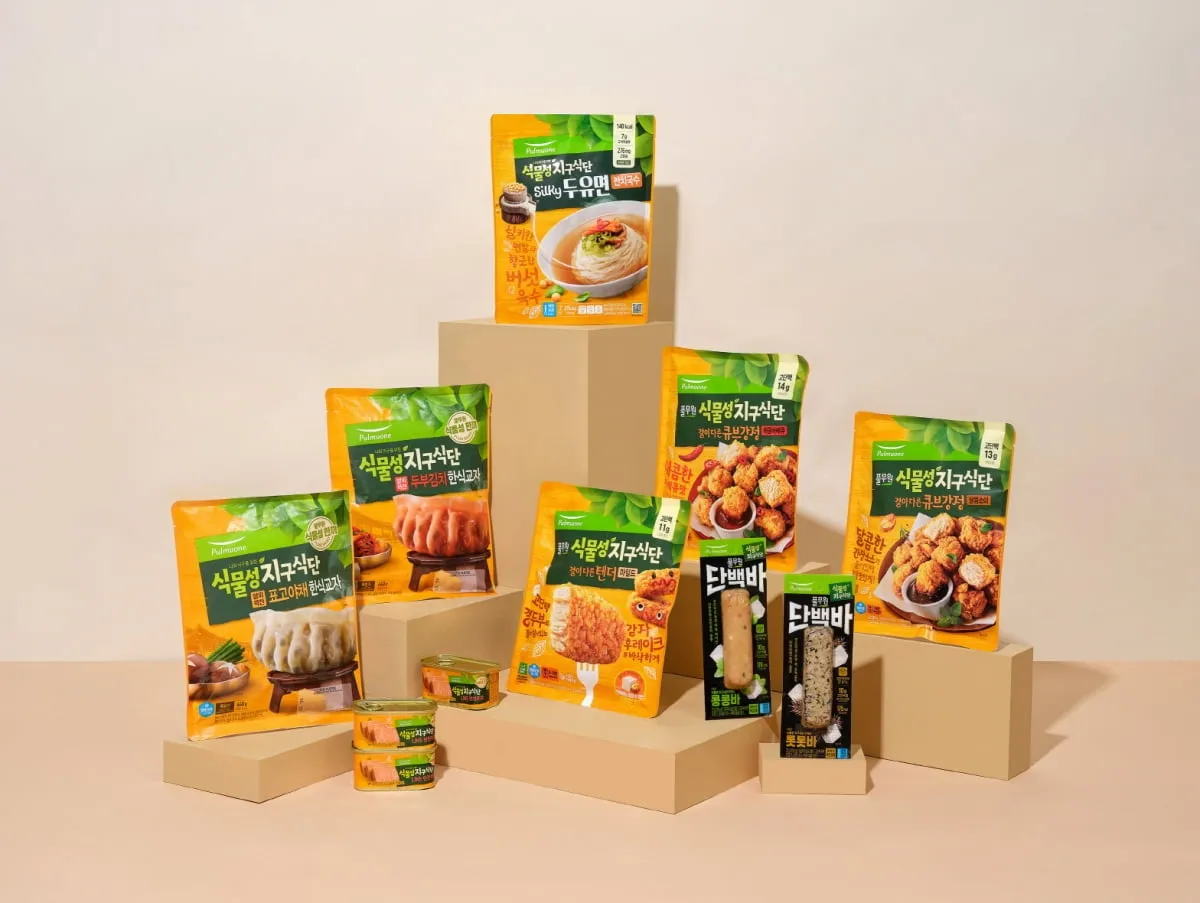
[An image of Gigusikdan products launched in 2022 © Pulmuone]
Pulmuone practices ESG management based on realizing LOHAS (Lifestyles of Health and Sustainability — activities for the sustainability of oneself and the Earth) values through plant-forward orientation, animal welfare, healthy experience, eco-friendly care, and more. In 2021, Pulmuone made the vegan-food business a new growth engine, declared itself a plant-forward leading company in 2021, and, under the keynote "We make right food for the healthy tomorrow of people and the Earth," launched its first sustainable-food brand, "Gigusikdan." It consists of two sub-brands — "Plant-Based Gigusikdan," which uses only plant-based ingredients, and "Animal-Welfare Gigusikdan," which uses animal-welfare ingredients as the main ingredients — and Plant-Based Gigusikdan unveiled a variety of products divided into the categories of animal-substitute foods made only with plant-based ingredients, plant-based protein-enriched foods, and plant-based convenience foods.
To target a broad consumer base — from full vegans who eat a vegan diet, to flexitarians who try partial vegetarianism, to the MZ generation that pursues a meaningful diet — Pulmuone focused on implementing not only nutrition but also taste and texture, and it expanded its meat-substitute lineup centered on menus reflecting Korean food culture and eating habits, so that Koreans can enjoy plant-based meat substitutes in a familiar and delicious way. Gigusikdan is also backed by economic effects, posting cumulative sales of 43 billion won just one year after launch, and as Pulmuone reorganizes along with its strategy of fostering vegan food as a food of the future, it is also seeing an effect of improving profitability across the group.
Along with plant-forward, Pulmuone selected "Eco-Caring" as one of its four core strategies, firming up its will and resolve to reduce greenhouse gases. To realize this, it set a plan to reduce company-wide greenhouse-gas emissions by 4% each year through 2025, for a total reduction of more than 12%. It plans to establish and implement greenhouse-gas-reduction measures on various fronts — actively pushing plant-based product development, raising the share of new and renewable energy, managing manufacturing-process energy on a unit basis, and promoting the resource circulation of plant residues.
Pulmuone's Sustainable Management 2. Professional Management
Pulmuone is one of the companies that, across Korea's industry as a whole, stepped into ESG management activities early. Since 2017, it has responded to ESG risks by forming an "ESG Committee" and inspecting sustainable management strategy. Currently it operates an ESG Committee system composed of one internal director and four external directors within the board, and Pulmuone attempted a major shift in its management style from 2018 for management transparency. Ending the owner management that had continued for 33 years since its founding in 1984 and introducing a professional-management system, current CEO Lee Hyo-yul, "Pulmuone's employee No. 1," has taken charge of management.
The following year, in 2019, it completed the purchase of subsidiary stakes and more, completing its governance structure as it is now, and Pulmuone became the only listed company in the group. Pulmuone now entrusts all business to subsidiaries and operates in an "operating holding company" manner in which the holding company makes all important decisions — a structure in which Pulmuone, as a pure holding company, oversees management, brand, R&D, and more, and the subsidiaries carry out the business. A governance structure in which the holding company holds 100% of the subsidiaries' stakes, as at Pulmuone, is a governance structure commonly seen at global companies; by establishing a holding-company system meeting global standards, it laid the groundwork for advancing its governance.
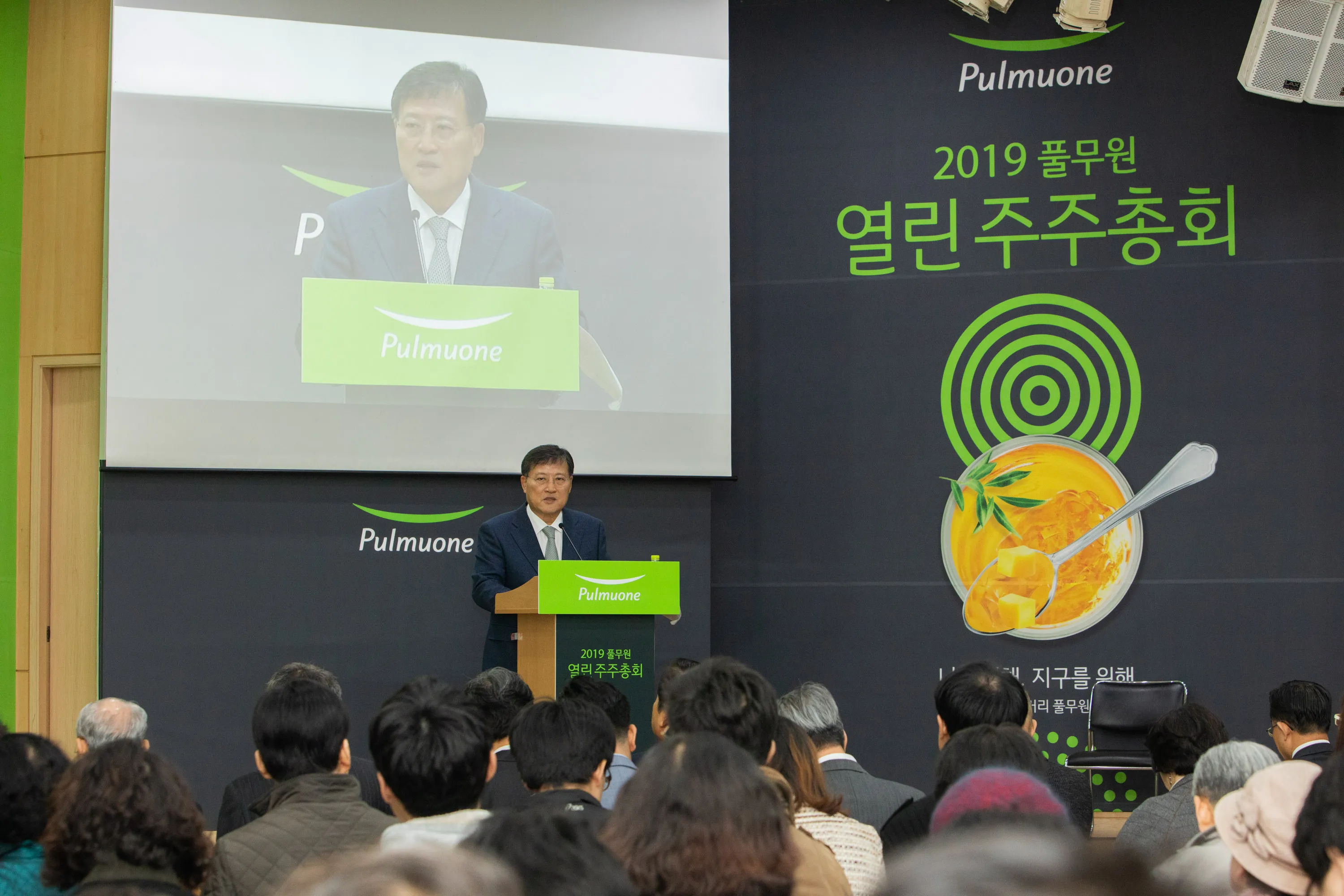
[Pulmuone's Open Shareholders' Meeting held in 2019 © Pulmuone]
Since 2008, Pulmuone has held its shareholders' meeting under the name "Open Shareholders' Meeting" for 14 years running. Held once a year, it is a venue for reporting the year's performance to shareholders, and unlike an ordinary company's, Pulmuone's is conducted based on shareholders' participation and communication. This is possible because Pulmuone, seeking to break away from the existing uniform shareholders'-meeting culture, holds an "Open Shareholders' Meeting" in a discussion-forum format, benchmarking Warren Buffett's Berkshire Hathaway shareholders' meeting; through the shareholders' meeting, Pulmuone sought to create a venue for communication in which shareholders become the owners.
Pulmuone is also working on employee education for digital innovation, building the digital learning platform "Digital Academy" this past March for its executives and staff. In addition, by establishing "Pulmuone Together," a subsidiary-type standard workplace for people with disabilities that helps them become self-reliant, within the Yangji Logistics Center, it provides opportunities for individuals with disabilities to demonstrate their abilities and helps them achieve economic self-reliance. We hope that the sincere ESG management of Pulmuone — which leads the front of Korea's food industry and has established itself as the No. 1 most respected company in Korea — will continue.
by Editor N