
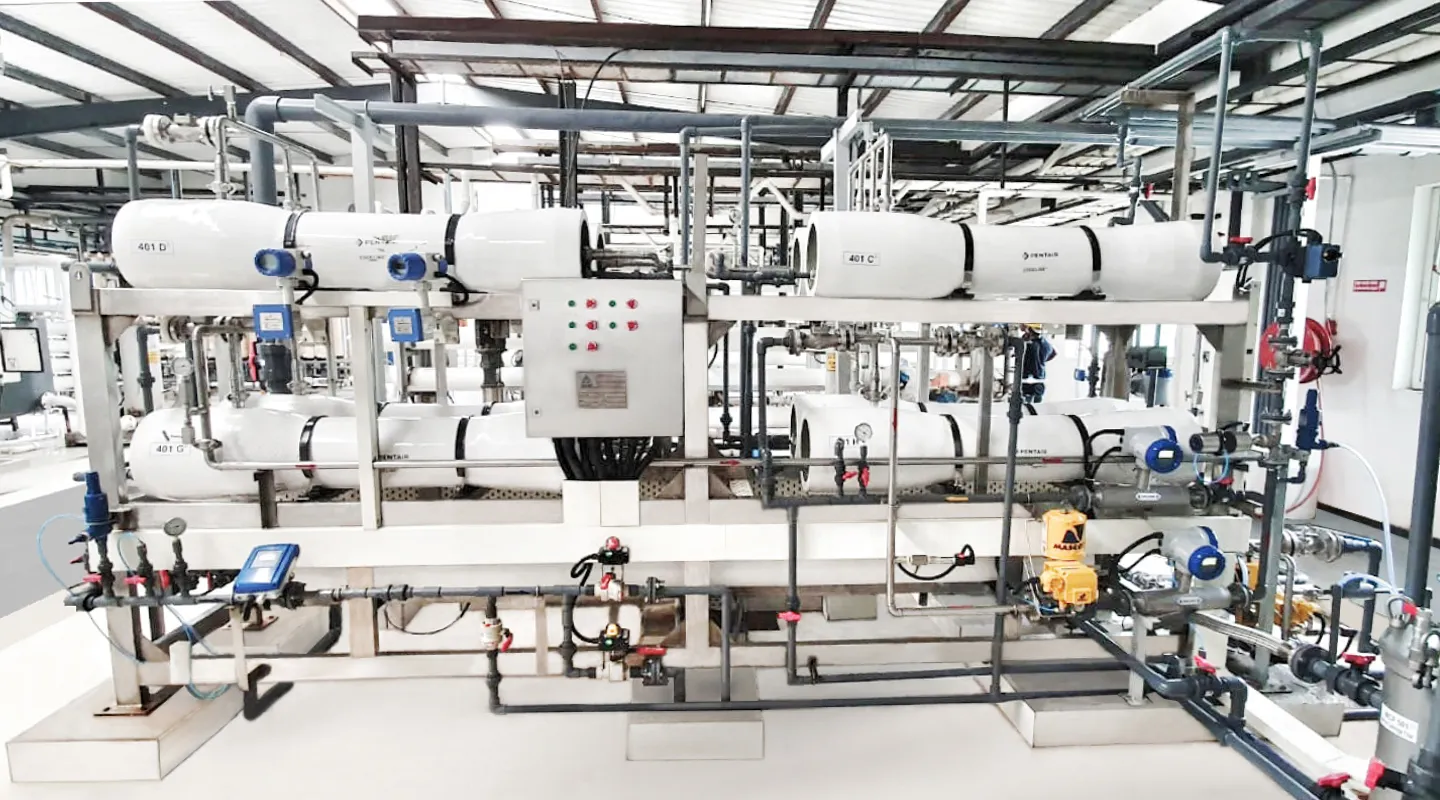
More Than 7 of Every 10 Natural Disasters Are Related to "Water"
Water is a substance that directly affects our life and survival. And it is also part of our environment that is being most greatly affected by the climate crisis. Fundamentally, climate change disrupts weather patterns and causes severe weather anomalies. The availability of water becomes hard to predict, and serious impacts arise — water shortages and the destruction of water-supply networks. In particular, we must not overlook that children are being greatly affected by this change.
According to "Water and the Global Climate Crisis: 10 Things You Should Know," released by UNICEF in March 2024, about 74% of the natural disasters that occurred from 2001 to 2018 were water-related, including droughts and floods, and the frequency and intensity of such events are expected to increase due to climate change. And as a result, by 2040 about 1 in 4 children will live in an area experiencing extreme water shortage. A not-easy future awaits adults too. The floods and sea-level rise that will occur due to climate change can pollute land and water-supply networks and will damage water-resource and sanitation infrastructure. Insufficient drinking-water resources, droughts, and wildfires will destabilize the local communities where we have set down roots.
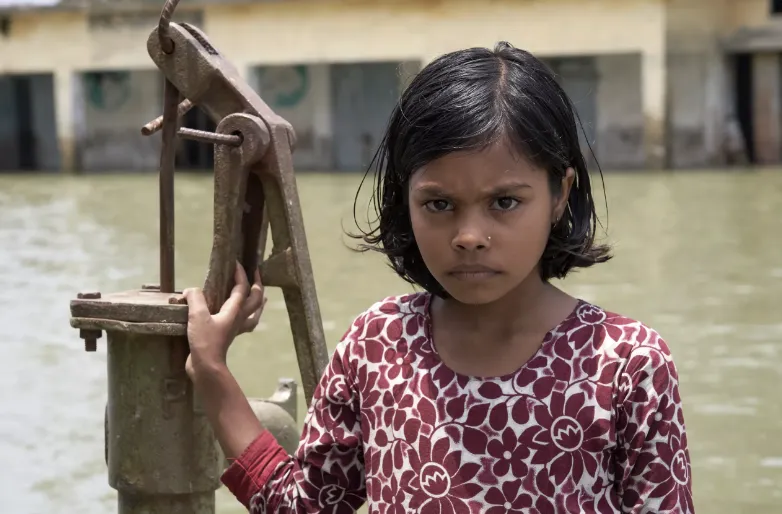
[A water-shortage campaign photo © UNICEF]
Interest in sustainable water management is gathering. And Gradiant (hereafter "Gradiant"), which seeks to respond to water-related problems, was born. Gradiant is a company that deals in "water technology," and it has proven its corporate value by providing the solutions needed to confront the climate crisis.
"Gradiant," the Expert Group That Best Knows Water's Impact and Solutions
A key problem Gradiant discovered was that about 10% of the water used worldwide is used by industry, and that about 70% of the wastewater resulting from it is not properly treated. Gradiant is attempting a multi-angle approach to improving the water-use environment: reducing water use itself by improving water-use processes, raising the recycling rate with technology that sorts metals and resources out of wastewater, and purifying polluted water through desalination technology so it can be used again.
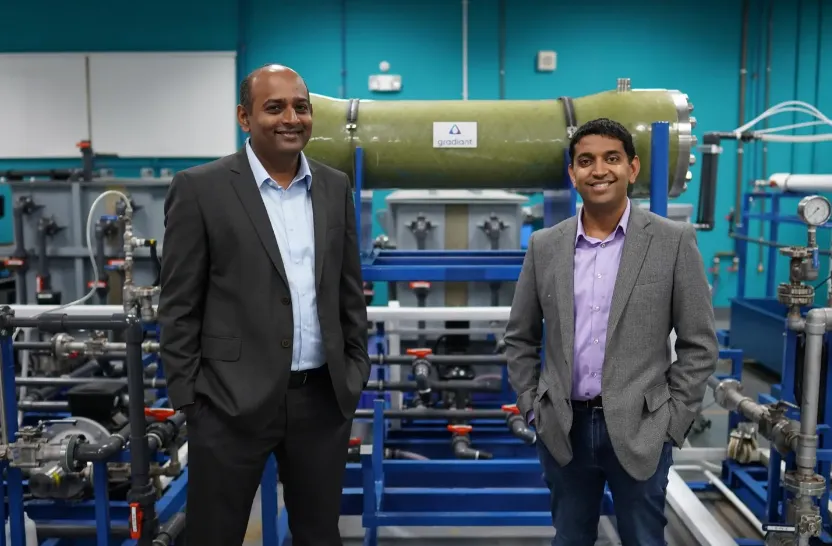
[Gradiant co-founders Prakash Govindan and Anurag Bajpayee © Forbes]
Why are Gradiant's technology and approach recognized as a new approach to water management? Each day, Gradiant reduces water use by about 650 million liters, recovers 10,500 kg of useful water resources, and regenerates 850 million liters of wastewater. With these results, it shows direct environmental-improvement solutions — saving 1,500 megawatts of power per hour each day and reducing 950 tons of carbon emissions.
Gradiant's start was a team composed of internationally recognized experts and engineers. Anurag Bajpayee and Prakash Govindan, who obtained their PhDs at MIT, founded it together. For his "research on industrial seawater desalination and water treatment," which is the foundation of Gradiant's technology, Bajpayee was recognized by Scientific American (founded in 1845, the longest continuously published magazine in the US) as a scientist who devised one of the "10 Ideas That Will Change the World." Govindan co-developed one of Gradiant's flagship products, the Carrier Gas Extraction (CGE) system. Having grown up in India, the two watched the impact of water shortage on individuals and communities closer than anyone as they grew up. Students who were researching water purification at MIT founded a company to solve that problem. And this company unveiled a technology that recycles 98% of polluted water and purifies it with 2% new water. Co-founder Bajpayee says, "We cannot eliminate dependence on water, but if we greatly reduce it, we can increase sustainability."
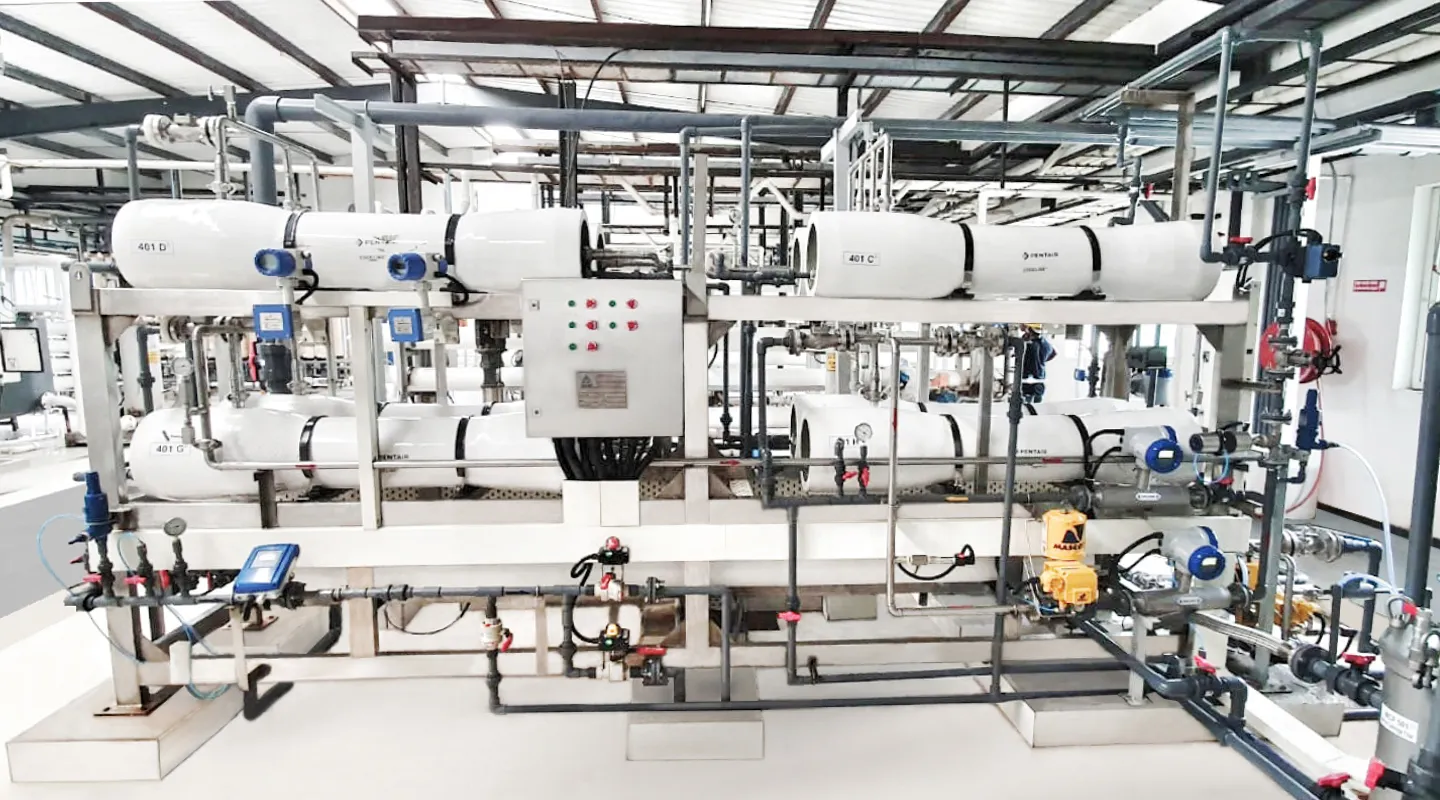
[A Gradiant solution © Gradiant]
Gradiant's Achievements
Gradiant believes water-resource problems can be solved with reasonable technology and human-resource solutions. It smoothly designs end-to-end solutions running from design to manufacturing to management, along with a proprietary AI platform, and provides customized services to various industries — semiconductors, pharmaceuticals, F&B, oil refining and chemicals, and even textiles.
According to what Gradiant revealed through a 2023 Forbes interview, since 2020, through a project for the pharmaceutical company GSK in Singapore, it has extracted about 5 tons of waste from the wastewater generated each day and raised the amount of reused water. With the crude-oil-development company "Schlumberger," it signed a contract to extract, from brine rather than rock, the lithium used in lithium batteries. Based on such achievements, Gradiant is said to have achieved more than $200 million in revenue and more than $500 million in new contracts in 2023. Operating 20 branches worldwide and attracting a total of $400 million in investment to raise its corporate value to $1 billion, Gradiant is confidently establishing itself as a company that shows innovation and leadership in climate tech, and in the water-technology field within it.
Four billion people — two-thirds of the world's population — experience serious water shortage for at least one month each year. Due to the climate crisis, humanity's water-related difficulties are expected to grow. The time has come to pay attention to the scope and effect of the solutions Gradiant provides, and the way they contribute to solving water-resource problems.
by Editor L