Loading Data
Please wait a moment...
Update Cal.
2026.08
03
Mon
04
Tue
05
Wed
06
Thu
07
Fri
08
Sat
09
Sun
Update Calendar
2026.08
01
Sat
02
Sun
03
Mon
04
Tue
05
Wed
06
Thu
07
Fri
08
Sat
09
Sun
10
Mon
11
Tue
12
Wed
13
Thu
14
Fri

Loading Data
Please wait a moment...
Morning features and interviews. A morning story over a cup.
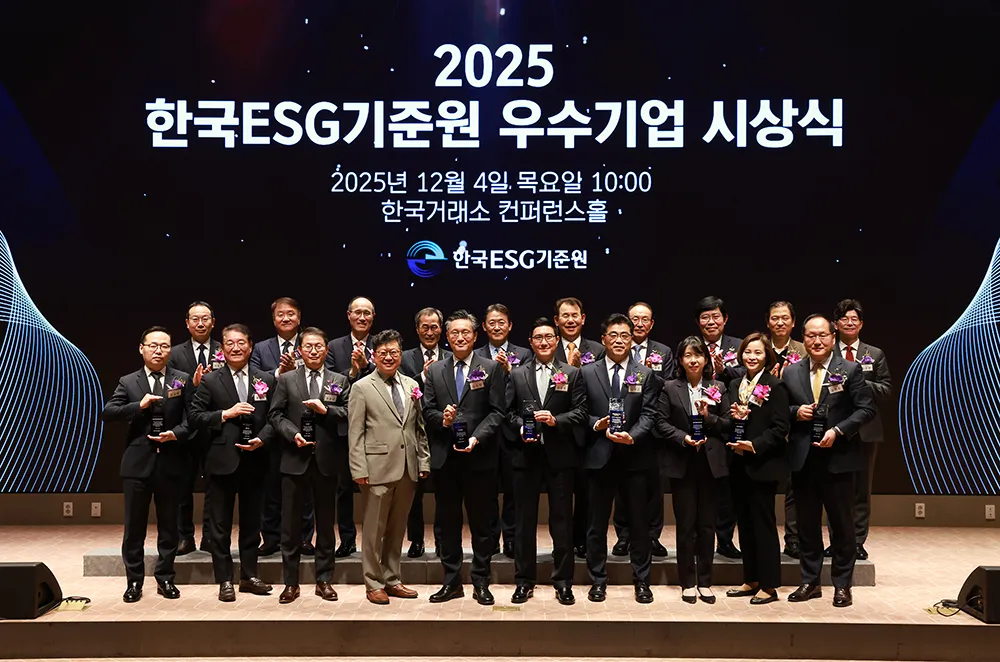
With the arrival of December, companies’ ESG report cards are being released one after another. Companies with excellent ESG performance publicized this year’s ESG achievements, while the reasons for the relatively low ratings of other companies are being analyzed by the media and the market. ESG stands for the three core elements for achieving sustainability in corporate management. So what is ESG evaluation, and what kinds of evaluation agencies exist? Let us also learn about what ESG evaluation is, the differences between domestic and international ESG evaluators and their respective evaluation criteria, and the comprehensive ESG evaluation elements through the K-ESG Guidelines.[2025 Korea ESG Standards Institute (KCGS) Excellent Company Awards Ⓟ KCGS]What Is ESG Evaluation?Now, both investors and consumers are utilizing ESG to evaluate companies. According to a 2021 survey, over 60% of consumers responded that they consider ESG activities in their consumption, and several global credit rating agencies including Moody’s also reflect ESG in their credit ratings. While it is important to receive good ESG evaluations, there is no single common evaluation standard. Currently, more than 600 evaluators worldwide assess companies using differing ESG definitions and processes. This is precisely why ESG evaluation grades differ significantly from one evaluator to another, regardless of whether they are domestic or international. ESG disclosure is scheduled to become mandatory in South Korea from 2026 onward, and if evaluations can be conducted with a common standard in this way, it appears that somewhat more accurate evaluation and comparative analysis will be possible going forward. The ESG evaluation grades of representative companies can be grasped at a glance on the ESG Portal jointly created by the Korea Exchange and the Financial Services Commission. [ESG Portal Site Mobile Screen Ⓟ ESG Portal]Where Should ESG Evaluations Be Received?ESG evaluation institutions each set the definition of evaluation items, measurement methods, and the weighting of each item differently. For example, for the same electric vehicle company, Evaluation Agency A focuses on the emission of pollutants during the operation of the electric vehicle, while Agency B focuses on the emission of pollutants during the production process of the electric vehicle. This is how evaluation scores diverge.If a domestic company is evaluated by a domestic evaluator, a qualitative ESG evaluation based on non-financial information is possible compared to an overseas evaluator. A major advantage is that even companies without an English-language sustainability report can receive an evaluation. In addition, the ability to encompass domestic-specific ESG risks such as chaebol owner risk within the evaluation scope can also be seen as a strength. The broad framework for evaluation by institutions providing scores on the ESG Portal, such as KCGS, Sustinvest, and the Korea ESG Research Institute, is similar. They use corporate disclosures, business reports, sustainability reports, and publicly available materials on company websites as evaluation data, and may also utilize media such as news articles. Each of the E, S, and G domains are divided into detailed items to assign scores, points are deducted where risk factors exist, and weightings are applied to each item score reflecting industry-specific characteristics. Evaluation results are expressed in 7 grades; for Sustinvest, AA is the highest grade, while for the other two institutions, S is the highest grade.[Ⓟ Sustinvest]Examining the characteristics of each evaluator more closely, KCGS is a non-profit incorporated foundation in which capital market-related institutions including the Korea Exchange participate. Its evaluation purpose is to help companies examine and improve their current level of sustainable management. Among ESG, it evaluates the G domain by dividing it into ‘general listed company governance’ and ‘financial company governance,’ and also awards companies with excellent evaluations. Sustinvest’s evaluation purpose lies in investment. It helps investors make investment decisions that consider ESG factors as well. It also verifies information that companies have not disclosed, which is reflected in the ‘controversy assessment,’ where points are deducted by monitoring issues that may be controversial from an ESG perspective, and the ‘large corporate group assessment,’ where points are deducted from the G domain score for risks arising when the owner family influences the corporate group with a minority stake. Meanwhile, the Korea ESG Research Institute is a relatively new institution launched in 2021 from the Daishin Economic Research Institute. It is carrying out improvement work to refine industry-specific weightings on an annual basis and calculates evaluation grades by applying relative evaluation. [Ⓟ KCGS]There are also advantages to being evaluated by overseas evaluators. Cross-comparison of scores with global companies becomes possible. The most widely used evaluation standard, MSCI, evaluates based on publicly available information, selecting and weighting issues of high financial materiality by industry. It is also designed to measure a company’s resilience to ESG risks. S&P reflects global corporate sustainability assessment scores in publicly available materials such as corporate disclosures. This sustainability assessment includes industry-specific questionnaires that companies can directly answer. S&P produces results by scoring from 0 to 100 points instead of grades. Beyond these, Sustainalytics and Refinitiv are representative overseas evaluation institutions. [Ⓟ MSCI]ESG Evaluation Items: Based on the K-ESG GuidelinesSince ESG evaluation methods differ so much, companies may be confused about which indicators to use as the basis for establishing their ESG response direction. The Sustainable Management Support Center provides the ‘K-ESG Guidelines,’ which are materials analyzing the key points of major domestic and international ESG evaluation indicators and disclosure standards, and can be considered suitable for understanding common evaluation criteria across evaluators.[K-ESG Guidelines v2.0 Cover Ⓟ Sustainable Management Support Center]The Guidelines add a P (disclosure) domain to E, S, and G. First, Environmental (E) is composed of a total of 25 items. It checks whether environmental management objectives have been established, how resources (energy, water) are being managed, and the volume of greenhouse gases, waste, and pollutants being emitted. Whether there are any violations of environmental laws and regulations, and how many eco-friendly certified products exist also have an impact. It includes climate change response methods including climate change governance, as well as biodiversity conservation activities. Social (S) is composed of a total of 22 items. These include the labor domain, which checks new recruitment, the proportion of regular employees, and the guarantee of freedom of association, as well as the diversity and gender equality domain, which evaluates the proportion of female members and the employment rate of persons with disabilities. Governance (G) has a total of 17 items. It evaluates board composition and activities, shareholder rights, and so forth. Additionally, ESG Information Disclosure (P) refers to the act of publicly informing about environmental, social, and governance-related information that influences the decision-making of investors and diverse stakeholders. The disclosure domain checks the method, frequency, and scope of information disclosure.Since ESG does not yet have a long history, its evaluation standards are diverse as described. With both South Korea and the world set to begin ESG regulations in earnest from 2026, the importance of ESG evaluation is expected to grow even further. Next year, checking ESG evaluation methods and inferring the ESG level of our companies will also be an interesting activity. by Editor L
2025 was a year in which global interest in K-pop exploded with the success of the Netflix original animation <K-Pop Demon Hunters>. K-pop artists won major music awards overseas, and the elevated status of K-pop could be confirmed as major international award ceremonies newly established K-pop categories. Accordingly, the number of idol groups conducting world tours is increasing, and the reach of K-pop is expected to expand further, with so-called ‘export-type idols’ who receive more love overseas than in Korea emerging. [YG 2024 Sustainability Report Cover Ⓟ YG]As more people pay attention, those turning their eyes toward the sustainability of K-pop are also increasing. Behind the glamour of K-pop — from the scene of purchasing and discarding albums made of materials difficult to recycle as if they were fan sign tickets, to the changing facilities and custom-made costumes for each stage — lie environmental issues that cannot be ignored. Like G-Dragon, the youngest recipient of the Order of Cultural Merit, and BLACKPINK, who received the Order of the British Empire, YG is a ‘prestigious K-pop house’ that has produced artists representing K-pop. YG, which broke a seven-year hiatus last year by unveiling the new female idol group BABYMONSTER and is actively active, is also putting considerable effort into ESG. Today, we examine YG’s sustainable management, which is writing records of firsts in the domestic entertainment ESG field, including obtaining the international standard for occupational health and safety management systems set by the International Organization for Standardization, presenting the concept of sustainable performances, and strengthening accessibility within concert venues.The Impact of Climate Change on EntertainmentThe entertainment business, having no production activities, has relatively low greenhouse gas emissions compared to other industries. However, if appropriate management policies for responding to climate change are not established, the activities of affiliated artists and, further, the brand image could take a hit. Moreover, abnormal weather can inflict direct physical damage on corporate management activities. Weather anomalies such as wildfires, typhoons, and heatwaves are highly likely to generate unnecessary costs and unexpected accidents. For instance, if an accident occurs due to a natural disaster during the travel or operational process for an artist’s overseas or regional performance attendance, or if the artist’s condition is affected, this can act as a business risk. Accordingly, YG is responding to risks by calculating the greenhouse gas emissions of performances, using new and renewable energy, improving the energy efficiency of its company building, and establishing guidelines by type of natural disaster. YG is also considering opportunity factors in which the company’s reputation and the market and social perception of its artists improve as a result of selling low-carbon, environmentally friendly products. It carries great significance from an ESG perspective that a company that sells intangible values such as brand image and music has reached a conclusion converging on the value of coexistence: that being eco-friendly is directly in the company’s interest. The First Step to Eco-Friendliness Starts with ElectricityGiven the nature of the entertainment industry, where nearly all corporate activities take place in the digital realm, the first greenhouse gas reduction and climate change response measure YG can take is to change the way it consumes electricity. In fact, with the goal of achieving RE100 by 2050, YG is establishing a plan to convert this year the power usage that accounts for 65% of Scope 1 and 2 to renewable energy. [YG New Building Bird’s-Eye View Ⓟ YG]To achieve this target, YG has installed solar power facilities at the new company building, the construction of which began in 2012, and is partially producing its own energy. It is reducing its purchase of external electricity by installing building-integrated photovoltaic modules and rooftop solar panels. As a result, in 2023, 3% of its annual electricity usage was replaced with self-produced new and renewable energy. Beyond its own production of new and renewable energy, YG is also reviewing direct and indirect new and renewable energy purchase policies including PPA and REC platform transactions. In fact, in 2023, it purchased renewable energy equivalent to 5% of its annual electricity usage through RECs, and in 2024, it has a policy to expand that proportion to 30%. In addition, YG has made efforts to reduce its absolute electricity usage by optimizing the number of heating cycles through external temperature monitoring.A New Vision: Sustainable PerformancesYG defines performances as festive venues that move the emotions of countless people and lead them to action. A performance, as an occasion that can gather people with the same interests and lead to behavioral change, is not only an opportunity for fans and artists to breathe together but becomes an event of cultural significance. YG is pursuing projects to improve the environmental impact of such performances and the accessibility for disabled audience members. A sustainable performance is one that minimizes the negative impacts of the performance on the environment and society and enhances the positive impacts. YG’s sustainable performances are being advanced in accordance with the ‘2030 Sustainable Performance Roadmap,’ which aims to produce all performances by YG-affiliated artists as sustainable performances by 2030, following preliminary work to derive KPIs. [YG Sustainable Performance Report Cover Ⓟ YG]YG’s first action to realize sustainable performances is to collect objective indicators of the greenhouse gases generated by performances. ‘YOUR GREEN STEP,’ first attempted at BLACKPINK’s concert, is a program that calculates the means of transportation used by audience members to travel from their residences to the concert venue and the approximate greenhouse gas emissions accordingly. Since then, AKMU’s concert and TREASURE’s concert have also measured the greenhouse gas emissions emitted by the audience using the same program, and have estimated the Scope 1–3 greenhouse gases generated per performance by calculating the greenhouse gases emitted during the performance operation process through a third-party institution. Based on this data, YG plans to establish work promotion processes, develop a framework, and utilize it for numerical improvement. Beyond this, YG has collaborated with waste collection companies to reduce the environmental impact of waste generated during performances, secured seating for wheelchair-using audience members, and produced videos guiding access to the performance venue. This is a policy that considers not only the environment but also the social impact on audience members who attend performances, and is a point where one can glimpse YG’s deliberation on the cultural values that performances disseminate, going beyond environmental protection. Like K-pop and K-beauty, Korean culture is spreading across the world bearing the ‘K’ brand. The sustainable management that YG practices across its corporate management and performance operations is significant in that it leaves ethical legitimacy for Korea’s soft power, as well as material and spiritual heritage for future generations. If you are curious about the ESG moves of domestic entertainment companies striving to deliver tangible and intangible values, take a look at YG’s sustainability report. by Editor L
Global credit rating agency S&P Global introduced a new evaluation system in 2025 for the first time targeting solar and wind ESS (Energy Storage System) manufacturers worldwide. Outstanding companies were selected by comprehensively analyzing various factors including market position, market share, scale, financials, and sustainability. After passing through such rigorous criteria, the Q Cells division of the domestic company Hanwha Solutions was selected as Tier 1 Clean Tech. Let us examine the ESG strategy of a company leading the materials and energy sector, recognized for its value in the global market, through Hanwha Solutions’ sustainability report. [Hanwha Solutions 2025 Sustainability Report Cover Ⓟ Hanwha Solutions]Together, Further: Hanwha Solutions’ PortfolioHanwha Solutions is a global energy and materials-based solution company operating businesses in a total of five fields. Its representative business areas include the Chemical division, which produces petrochemical products and recycled raw material rPE (recycled polyethylene) certified by global certification bodies under international recycling standards, and the Q Cells division, which is building a solar power value chain from solar panels to energy storage devices. The Insight division, which emphasizes sustainability, researches sustainable urban development solutions that consider industrial and lifestyle domains such as new and renewable energy and premium lifestyles. As for business areas that target overseas markets without having domestic business sites, there are the Q Energy division, which is dedicated to introducing eco-friendly energy within Europe, and the W&C division, which constructs grids that distribute power produced through new and renewable energy methods.These five business divisions are researching and developing sustainable energy and material solutions by domain. Hanwha Solutions, whose business portfolio alone reveals its orientation toward a sustainable future — so what methods is Hanwha Solutions employing to realize ESG?The Sustainable Future Created by Hanwha SolutionsFirst, it is necessary to examine the way Hanwha Solutions makes its products and the results. Hanwha Solutions analyzed the business risks and opportunities arising from climate change. The petrochemical-based Chemical division carries the risks of policy regulation, changes in consumer awareness, and the emergence of low-carbon substitutes. Meanwhile, the expansion of the hydrogen industry, the increase in the share of new and renewable energy, and the growth in demand for bio and recycled plastics will provide positive opportunities for the Chemical, Q Cells, and W&C divisions.[Representative Types of Water Electrolysis Technologies Ⓟ Hanwha Journal]Based on this analysis, Hanwha Solutions is adopting a strategy of expanding eco-friendly businesses, developing new and renewable energy infrastructure, and taking the lead in total energy solutions. First, the Chemical division is researching and developing Anion Exchange Membrane Electrolysis (AEMEC) technology to activate the hydrogen industry. Currently commercialized water electrolysis methods include Alkaline Water Electrolysis (AWE) and Proton Exchange Membrane Water Electrolysis (PEMEC), but both technologies have respective limitations in terms of initial investment cost or productivity. The AEMEC being developed by Hanwha Solutions is a method that complements the limitations of AWE and PEMEC, and is expected to be capable of producing large volumes of hydrogen even with low investment costs and low electricity consumption. Additionally, the Hanwha Solutions Insight division is planning the construction of solar power and fuel cell facilities at H-Techno Valley in Hwaseong, Gyeonggi Province, for the development of new and renewable energy infrastructure. H-Techno Valley is a semiconductor and automotive specialized industrial complex, and producing products using new and renewable energy in an industrial sector where demand will remain high going forward is significant. Beyond this, reflecting the geographical characteristics of South Korea with its many mountainous areas, the Insight division also acquired a patent for a solar power facility structure that can be arranged in an east-west direction. The structure, which compensated for the limitations of existing facilities that could only be arranged facing due south, now secures advantages such as shortened construction periods, improved economic viability, and reduced wind resistance, thus ensuring the efficiency and economic viability of the solar power facilities that will grow in the future. [Perovskite Campaign Image Ⓟ Hanwha]Finally, the Hanwha Solutions Q Cells division is strengthening its leadership in solar technology to take the lead in total energy solutions. Most solar silicon modules have a power generation efficiency of around 23–24%. In other words, only 23–24% of the solar light energy received by the module can be converted into electricity. The M10-standard perovskite-crystalline silicon tandem cell, independently developed and manufactured by the Q Cells division, can absorb solar light of wavelengths different from existing silicon cells and produce approximately 15% additional power. The Q Cells division is also constructing a ‘Solar Hub,’ an integrated solar production complex, to build a renewable energy value chain within the United States. Through this, it provides total energy solutions encompassing product sales, project development and operation, and power intermediation and sales. As a result, it was selected as the engineering, procurement, and construction partner for TransGrid Energy, which operates a significant-scale Battery Energy Storage System (BESS) complex within the United States, and construction is underway. Sustained technology research and energy capability development have borne substantive results. Making ‘Eco-Friendly Products’ in an ‘Eco-Friendly’ WayHanwha Solutions does not stop at developing eco-friendly technologies and producing products, but applies processes that ensure the process does not have a negative impact on the environment. Hanwha Solutions declared its 2050 Net Zero commitment in 2021.[View of the Jincheon Plant of Hanwha Solutions Q Cells Division Ⓟ Hanwha Q Cells]The most important aspect of greenhouse gas reduction is to reduce absolute energy consumption. The Q Cells division promoted an LED lighting replacement project at the Jincheon and Eumseong plants. Unlike fluorescent lamps, LEDs do not use mercury, thus producing no carbon dioxide, and are superior to incandescent bulbs in terms of energy efficiency and power consumption. In addition, the Jincheon plant, which produces solar cells and modules, introduced cooling system optimization facilities to reduce its energy usage, investing in the HVAC system that uses the most power to save energy.The Chemical division is realizing sustainability through air pollutant management. It has set its air pollutant emission allowance standards at 30% of the legal standard and is conducting self-measurement of abatement facilities. It systematically manages air pollutant emissions by strengthening close monitoring of the operation of air pollution-related facilities. It is also managing nitrogen oxide emissions by introducing reduction facilities suited to the characteristics of each business site.Hanwha Solutions is an affiliate of the Hanwha Group, launched through the integration of Hanwha Q Cells & Advanced Materials and Hanwha Chemical. In particular, the Chemical division, one of the domestic petrochemical Big Four, traces its origins to the state-owned enterprise Hanyang Chemical and shares the history and lineage of the Korean petrochemical industry. The petrochemical industry produces materials indispensable to our lives such as plastics, nylon, polyester, and acrylic, yet it faces a crisis in which the very reason for the industry’s existence must be proven, due to global oversupply and the trend toward defossilization. Hanwha Solutions is securing its future competitiveness through a strategy of diversifying its portfolio with various energy supply solutions including petrochemicals, while simultaneously pursuing sustainability in both process and outcome. Hanwha Solutions’ ESG strategy and Scope 3 emissions strategy, which could not be covered in this article, can be found in the 2025 Hanwha Solutions Sustainability Report. by Editor L
As various technologies such as AI and virtual currencies emerge and develop, the financial sector — most closely connected to daily life — is also being influenced. ‘Fintech’ is a term combining finance and technology, referring to financial services led by ICT companies. Fintech, which has taken the lead in the digital innovation of finance by combining financial services and technology, has shown a high market growth trend alongside technological advancement. According to the National IT Industry Promotion Agency’s global ICT market survey, the global fintech market size is projected to grow from USD 79.38 billion in 2023 to USD 141.18 billion in 2028. [KakaoPay 2024 ESG Report Cover © KakaoPay]KakaoPay is a simple payment service used by two out of three South Koreans, and under its mission of creating beneficial flows in daily life, it carries out diverse business and social contribution activities. What content is contained in KakaoPay’s sustainability report, now in its third year of publication?The Digital Industry Is Also Under the Influence of the Physical EnvironmentHow does KakaoPay, where most work and services take place in a digital environment, interact with the physical climate? KakaoPay’s ESG Committee, which regularly discusses climate issues, conducted a climate-related materiality assessment in 2024 and identified 15 risk factors. The most significant risk factors among these are: ①Market — Electricity price increases, ②Policy and Legal — Strengthening of emissions reporting obligations, ③Policy and Legal — Increases in greenhouse gas emission allowance prices, ④Reputation — Increases in negative stakeholder feedback, ⑤Technology — Costs of transitioning to low-carbon technologies, and ⑥Market — Changes in customer behavior. These risks are factors that could lead to increased input costs and decreased revenue in the medium-to-long term. In particular, data centers — essential for operating digital platforms — emit massive amounts of greenhouse gases as they consume large volumes of electricity. Even if climate change cannot be said to immediately and significantly affect the working environment or efficiency of workers, it can be anticipated that it will gradually become a burden on corporate operations. [View of Kakao Data Center © Kakao]Data centers are infrastructure vulnerable to rising temperatures. To provide users with fast payment and financial services without delay, data centers must be operated in an optimal state, and to do so, they must be maintained at an appropriate temperature. While operating data centers consumes a great deal of power, cooling the heat generated by data centers also consumes power — a major issue. In fact, the power consumption required for data center cooling is said to reach 40–50% of the data center’s total power consumption. An efficient and effective solution is needed. Accordingly, KakaoPay is gradually introducing eco-friendly and high-efficiency servers. When constructing new data centers, it is joining the movement to fulfill environmental and social responsibility by purchasing servers that have received the highest rating (Platinum) from the U.S. Electronic Product Environmental Assessment Tool (EPEAT). It is also making efforts to reduce power consumption by optimizing the data center cooling system. During the shoulder and winter seasons, it reduces cooling power usage, and through a DCIM (Data Center Infrastructure Management) solution, it systematically manages power consumption and energy efficiency. During the summer, when thermal management requires particular care, it installs sunshades atop chillers and has introduced an ‘Adiabatic System’ to increase thermal management efficiency. The Adiabatic System is a method in which water is sprayed onto the hot air flowing into the chiller during summer to cool the air. By utilizing the principle of water evaporating together with heat, it removes heat from the air and lowers the temperature of the air entering the chiller, increasing the efficiency of data center cooling.In a Direction Beneficial to the CommunityMore than 90% of the greenhouse gases emitted by KakaoPay originate from electricity consumption. For this reason, KakaoPay is making efforts to transition the power consumption occurring at its business sites to eco-friendly sources, beyond just data centers. KakaoPay has established a RE100 goal of converting 100% of the power used at its Pangyo office to renewable energy by 2027, and further converting 100% of the power used at all business sites to renewable energy by 2040. In 2024, it drew closer to achieving its interim target by using 1,000 MWh of renewable energy, equivalent to 12% of its total power consumption. Beyond this, it aims to reduce the greenhouse gas emissions generated by its business activities by converting 100% of its company-owned and leased vehicles to eco-friendly vehicles by 2030. [KakaoPay 2040 RE100 Implementation Roadmap © KakaoPay]If greenhouse gas emissions are reduced through such efforts and climate change is mitigated, this will consequently help prevent physical risks to KakaoPay’s key assets. This is because the torrential rains, heavy snow, and droughts intensified by recent climate change could inflict physical damage on KakaoPay’s assets or generate additional costs for management and recovery. Beyond this, KakaoPay is attempting various other improvements in its business site operations beyond power consumption, such as using paper bags and shopping bags within the company that are certified by the Forest Stewardship Council (FSC) and replacing the cups used at the in-house café with reusable cups. Even a business based on outstanding technology and infrastructure can only realize its value when there is an environment to operate it and people to use it. KakaoPay is striving for the sustainable development of fintech finance by pursuing benefit toward the Earth, toward people, and toward growth. by Editor L

Every store of the global skincare brand Aesop has a sink where customers can try products. All Five Guys locations, a fast-food brand that has also entered Korea, offer free peanuts. And then there is a brand that gives away free ice cream at all its stores worldwide on a single day each year — the world's best-selling ice cream brand, Ben & Jerry's. Ben & Jerry's Brand ActivismBen & Jerry's was founded in 1978 when founders Ben Cohen and Jerry Greenfield converted a gas station into their first store. The two founders believed that the company's success was rooted in the local community, including its residents. As a way of giving back, they started "Free Cone Day," an annual event where visitors at all stores worldwide receive free ice cream — an event that has become synonymous with the Ben & Jerry's brand. If you think of Ben & Jerry's as just a cute brand with warm, fuzzy events thanking customers and soft, sweet ice cream, that would be a huge misconception. When you learn that the most powerful value underpinning Ben & Jerry's is brand activism, that pint of Chocolate Chip Cookie Dough in your freezer starts to look very different. [Ben & Jerry's first Free Cone Day ⓒ Ben & Jerry's website]Brand activism refers to brands taking active stances on social issues to drive positive change. Ben & Jerry's business philosophy rooted in brand activism was made unmistakably clear by the way co-founder Jerry Greenfield recently left the company. When multinational corporation Unilever acquired Ben & Jerry's in 2000, management made it a condition that Unilever not interfere with the company's business policies. Unilever agreed to this condition, but over time it began to curb Ben & Jerry's outspoken social engagement. In response, Ben & Jerry's filed lawsuits against Unilever twice, and as tensions escalated, Greenfield decided to leave Ben & Jerry's entirely on September 17. "I can no longer remain as an employee who has worked at Ben & Jerry's for 47 years, feeling pangs of conscience," he stated. It is hard to find a more emblematic example of brand activism, where action to uphold the values a brand stands for is treated as paramount.[Jerry Greenfield's resignation announcement ⓒ Ben Cohen's X] Ben & Jerry's, which takes an active stance even on politically sensitive social issues, pursues creating "a small number of passionate fans" rather than "being vaguely loved by many." How are the convictions behind each scoop of Ben & Jerry's ice cream being realized internally?You Cannot Sell Happiness While Creating UnhappinessDiversity, Equity, and Inclusion (DEI) is a core corporate value that global companies are devoting themselves to. This is not merely a charitable perspective where companies give socially disadvantaged groups opportunities to enter society. DEI is critical to the success of modern organizations. Numerous studies support this — DEI can cut the risk of employee turnover by nearly half, and companies with above-average executive diversity have been shown to generate higher innovation revenue than those below average. Naturally, it also improves brand perception and contributes to higher sales performance. The more diverse a workforce, the better equipped an organization is to solve the complex and individualized problems of our time. [Overall race and gender composition of U.S. operations ⓒ Ben & Jerry's 2023 Sustainability Report]Ben & Jerry's also maintains that its business and the world improve when every characteristic that constitutes and defines an individual — race, gender identity, and more — is respected. To verify that this conviction is properly applied in its business operations, Ben & Jerry's has publicly disclosed the gender and race breakdown of its U.S. manufacturing and office workers since 2020. The disclosure specifies Black, Hispanic, Asian, Native American, and multiracial categories, with white employees comprising the largest share. Since the racial composition was first disclosed in the 2020 report, the proportion has been gradually declining. Ben & Jerry's DEI policy does not stop at the hiring level. Ben & Jerry's also champions diversity as a key value in its ice cream ingredient supply chain and runs a program called Values Led Sourcing (VLS). VLS sets supply chain diversification, shared value creation with social enterprises, regenerative agriculture and animal welfare, and the success of farmers and farmworkers as its primary goals. To this end, Ben & Jerry's sources ingredients from farms operated by Black, Indigenous, and People of Color. It is Ben & Jerry's way of supporting cultural diversity through ice cream. [Ben & Jerry's carbon footprint graph ⓒ Ben & Jerry's website]When the Earth Melts, Ice Cream Melts TooFifty-three percent of the carbon footprint from manufacturing Ben & Jerry's ice cream comes from dairy products. Other ingredients, aside from dairy, make up the next largest share. Carbon emissions from the ice cream production process far outweigh those from transportation and distribution. Ben & Jerry's has set a goal of reducing greenhouse gas emissions by 100% by 2025, but dairy products like milk are essential ingredients that are hard to eliminate from ice cream. That is why Ben & Jerry's operates the Caring Dairy Program. Now in its second phase since 2020, this program pursues values of farm economic success, healthy soil and clean water, animal welfare, and low-carbon dairy, with the goal of creating a dairy farming environment that ultimately places less burden on the planet. Farms participating in this program practice cover cropping (planting non-cash crops during fallow periods to strengthen the soil) and conservation tillage (covering the soil with crop residues such as roots and stalks). Through these practices, they foster a healthy soil environment. They also feed cows a diet designed to reduce the methane emitted during digestion, making efforts to cut greenhouse gases from livestock operations. In 2023, 48 farms participated in the Caring Dairy Program, producing approximately 190 million liters of milk and accounting for 84% of the U.S. dairy supply chain. While building a dairy farming structure that does not burden the environment is important, Ben & Jerry's is also continuing its efforts to create ice cream without milk. It has already introduced sorbet ice cream, which uses no dairy ingredients, and a non-dairy product line that uses sunflower butter instead of milk. The non-dairy ice cream line, which launched in 2016 with four products, has been praised for faithfully replicating the taste of the original dairy-based flavors, and the variety has been steadily expanding. Ice cream is a food that delivers comfort and happiness regardless of the season with its sweet, smooth taste. If you want to explore a successful case of brand activism that brings the cultural meaning of food to life in social and environmental terms, why not read Ben & Jerry's Social & Environmental Assessment Report (SEAR) yourself?by Editor L

Manufacturing can have its environmental contribution assessed by reducing the greenhouse gases and hazardous substances generated in the process of making products, or by using methods that emit no carbon at the supply-chain level. So then, how does a company that provides intangible services establish and implement an ESG strategy? Today, let us look at the sustainability report of Hana Financial Group, which dreams of "finance that grows together and shares happiness." [Hana Financial Group Sustainability Management Report © Hana Financial Group] BIG STEP FOR TOMORROW Under the ESG vision "BIG STEP FOR TOMORROW," Hana Financial Group has selected and is implementing 3 mid-to-long-term strategies and 9 concrete goals. Each detailed goal follows 10 of the 17 Sustainable Development Goals (SDGs) presented by the UN. [The UN Sustainable Development Goals © UN SDGs] First, in the E (Environment) area, Hana Financial Group set the promotion of the transition to a low-carbon economic system as its mid-to-long-term strategy. To this end, in line with its coal-phase-out declaration, it restricts coal P/F (Project Financing, a financing method that raises funds against future revenue) and, while expanding ESG bond issuance, is expanding green finance and ESG-theme finance. Specifically, Hana Financial Group aims to raise a total of 60 trillion won by 2030 in the green and sustainable sectors, combining ESG bonds, loans, and investments. While providing funds to companies continuing eco-friendly moves, it also pursues a method of excluding carbon-intensive industries from its investment destinations. It induces businesses in high-carbon-emitting sectors to transition into eco-friendly companies by introducing carbon-reduction facilities or reducing carbon emissions themselves in order to attract investment. In addition, efforts continue to make the greenhouse-gas emissions generated at Hana Financial Group's sites zero by 2050. It has also set concrete goals of a 42% reduction by 2030 compared with 2020, and a 75% reduction by 2040. It plans to practice these goals by improving energy efficiency and expanding new and renewable energy. Finance That Contributes to Customers and Society Hana Financial Group's mid-to-long-term strategy in the S (Social) area is "social contribution through finance." Hana Financial Group practices social contribution through two approaches: mutual-cooperation activities and social-contribution activities. Mutual-cooperation activities are divided into common programs and autonomous programs; a representative common program is the banking sector's common livelihood-finance support plan, decided through the Financial Services Commission's task force for preparing a banking-sector livelihood-finance support plan in December 2023. This is a plan to ease, to a certain level, the interest burden that rose after the end of the COVID-19 pandemic, providing interest refunds to borrowers holding sole-proprietor loans. Hana Financial Group provided a total of 194.4 billion won through the common program, and additionally provided 147.9 billion won through an autonomous program it prepared on its own, practicing total support of 342.3 billion won. In addition, by providing 294.5 billion won to social-contribution activities such as Mecenat (private-sector arts patronage), local-community and public-interest support activities, and microfinance activities, the scale of the social contribution Hana Financial Group made over the single year of 2024 reached 641.8 billion won. Meanwhile, Hana Financial Group is carrying out the "Hana Power On Project" as a social-value-creation program to practice the group's vision of "finance that grows together and shares happiness" and to create a society where all members are happy. This project is divided into a Challenge program that supports youth internships and start-ups, a Care program that supports the socially disadvantaged, and a Community program that supports areas that enrich life, such as sponsorship of sports and the arts. [Hana Financial Group's ESG project "Hana Power On" © Hana Financial Group] Among these, the Hana Power On Challenge program is Hana Financial Group's flagship social-value-creation program. This project is divided into "Hana Social Venture University," which raises young people's start-up capabilities; "Innovative Enterprise Internship," which connects social-innovation enterprises with people with disabilities, women with career gaps, and young job seekers; "Hana ESG Double Impact Matching Fund," which financially supports the growth of social enterprises; and "Second Life," which supports the continued economic activity and social participation of mid-career and older talent. The Hana Power On Challenge program, which encompasses various strata of society and all ages who have entered society — social enterprises, youth, the middle-aged and older — produces thousands of participants and participants who achieve real results each year, creating social value while also contributing to the diversity of social-value-creation activities. The Process That Raises the Value of ESG Finance The mid-to-long-term strategy in the G (Governance) area, ESG's final area, is decision-making based on transparency and responsible management. To systematically manage environmental and social risks in the loan and investment decision-making process, Hana Financial Group operates an Environmental and Social Risk Management Framework (ESRM). ESRM is a standard for identifying, assessing, and managing the potential environmental and social risks of corporate finance, investment and advisory services, project finance, and securities-issuing institutions, based on Hana Financial Group's policy and industry policy. It also added an effort to strengthen the system by applying the K-Taxonomy (the Korean-type green taxonomy) to the standard it established on its own. Through this process, Hana Financial Group can manage the group's portfolio in a more environmentally friendly way. [Hana Financial Group's ESG financial services © Hana Bank Corporate Banking] In addition, Hana Financial Group provides services that help other companies with sound ESG management by supporting the various procedures needed for ESG management. At Hana Bank's Corporate ESG Lounge, since ESG management is directly linked to a company's investment attraction and regulation, companies can receive consulting services in which the financial company itself resolves ESG-management difficulties and presents customized solutions. It also helps companies' ESG transition and expansion by providing various services that are needed for ESG management but were not easily accessible — such as a greenhouse-gas emissions calculation program and corporate ESG education. Beyond this, Hana Financial Group operates various systems and guidelines for customers of all strata of society who use its products and services — such as operating mobile branches for the elderly, supporting Gyeonggi Province's child meal cards to address meal blind spots, introducing text-consultation-only tablets for hearing-impaired and hard-of-hearing customers, and introducing braille security cards for the visually impaired. Because financial life is a service used by everyone living in society, Hana Financial Group continues multifaceted activities to make finance where "everyone" is happy — not only customers, employees, and business owners, but reaching to the environment and society. If you are curious about what Hana Financial Group has done to become finance that grows together and shares happiness, take a look at Hana Financial Group's sustainability report. by Editor L
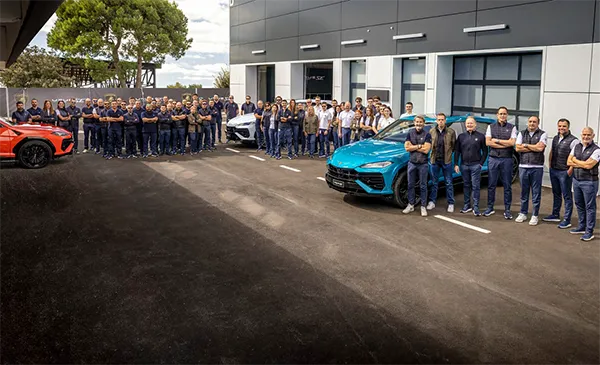
"F1: The Movie," directed by Joseph Kosinski, director of "Top Gun: Maverick," and starring Brad Pitt, set a new box-office record by surpassing 60 million dollars (about 810 billion won) at the worldwide box office. Prompted by this film, made to commemorate the 75th anniversary of F1, the world's fastest car race, much interest is gathering around F1 and motorsports in general. [A scene from F1: The Movie © f1themovie.com] Meanwhile, according to the International Energy Agency (IEA)'s "World Energy Outlook 2024" report, energy demand in the transport sector will increase by about 10% by the end of the 2020s, and the main factor is road transport. However, while the number of vehicles corresponding to road transport increases by about 10%, the growth rate of road-transport energy use is expected to stay at around 5%. The spread of electric vehicles offset the energy use of existing internal-combustion-engine cars that use fossil fuels. The Fédération Internationale de l'Automobile (FIA), which governs many motorsports, is responding to this change by holding Formula E, electric-powered open-wheel racing, since 2014. So then, in what way is a mobility company that makes the fastest cars on the road raising its speed toward ESG? [Cover of Lamborghini's sustainability report © Lamborghini] Toward Taurus (Direzione Cor Tauri) Ferrari, Aston Martin, McLaren, and Lamborghini — the brands that represent supercars — each practice sustainability in their own way. Ferrari has steadily published sustainability reports since 2018, Aston Martin since 2019, and McLaren since 2021. Lamborghini published its sustainability report for the first time this year, beginning to officially share the brand's ESG moves. Under the slogan "Driving Human Beyond," Lamborghini aims for the goal of newly creating not only what is visible but even the experience. The strategic direction "Direzione Cor Tauri" — that is, "Toward Taurus" — launched in 2021, was to the extent of electrifying all of Lamborghini's models, but in 2024 it expanded its goal and scope to the decarbonization of the company's entire value chain. This means achieving decarbonization in the true sense not only in Lamborghini's cars but in all processes encompassing the brand, such as production and transport. [Lamborghini's production process © Lamborghini] Lamborghini's Sustainable Value Chain Lamborghini continues to collaborate, through ongoing communication, with partners who pursue common values in social, environmental, and quality terms. Through this, it consistently maintains a high level in the basic quality of products and in the experience the products deliver to consumers. Since joining the Audi Group in 1998, Lamborghini has been innovating its supply chain, collaborating with related departments to create synergy with Volkswagen Group brands. Lamborghini's headquarters and manufacturing plant are in Italy, and it reduces transport-related greenhouse-gas emissions by sourcing parts from suppliers in the Europe, Middle East, and Africa region. In addition, as part of a project to employ the socially disadvantaged, it signs supply contracts with local cooperatives. This can be called a mutually beneficial value chain that solves the problem of excessive greenhouse-gas emissions arising from long-distance transport while at the same time realizing local development. [Lamborghini's high-performance electric car "Revuelto" © Lamborghini] An Upright Promise for Future Generations In line with Lamborghini's Direzione Cor Tauri strategy, the "Revuelto" model, unveiled in 2023, is the brand's first hybrid HPEV (High Performance Electrified Vehicle) supercar, a model combining a 12-cylinder engine with three electric motors. The following year, Lamborghini also unveiled the Urus SE, a hybrid version of its super SUV, and the Temerario, its second HPEV. At the 2024 Asia-Pacific unveiling event for the Temerario, Lamborghini CEO Stephan Winkelmann stated, "We will convert our entire lineup to hybrid in sequence, and we are waiting for the right time to apply electrification technology that maintains the driving experience Lamborghini pursues." A pure electric car inheriting Lamborghini's performance and driving pleasure is scheduled for release in 2030. Besides making its existing internal-combustion supercar lineup all hybrid and electrified, Lamborghini operates various policies for environmental protection: saving energy and resources, reducing greenhouse-gas emissions to minimize environmental impact, and protecting biodiversity. Paying particular attention to water-resource management, Lamborghini uses water supplied through the waterworks network as domestic water for the cafeteria, cleaning, and the like, and supplies the water needed for the production process from its own wells. Lamborghini covered 82% of its total water use from 2023 to 2024 with well water, also using water treated in its own purification facilities as a major supply source. Going forward, Lamborghini aims for a zero-discharge plant that completely reuses, until depletion, the intake resources of process wastewater, domestic sewage, industrial wastewater, and rainwater generated in the process. By reducing unnecessary waste of water resources and recycling used water, it is expected to contribute to environmental protection and resource circulation. Like the speed approaching 300 km/h and the tremendous performance, many of the elements that represent the sentiment of a supercar originate from the internal-combustion engine. Supercar brands are preparing for changes in future mobility by exploring various methods such as e-fuel, hybrids, and high-performance motors. If you are curious about what the future of mobility that Lamborghini is preparing — and further, its future as a sustainable carmaker — will look like, how about reading Lamborghini's sustainability report, whose meaning is all the greater for being its first? by Editor L

The world-renowned demographer Dr. Jennifer D. Sciubba, in her book "8 Billion and Counting" (2023, Hyeoreum Publishing in Korean), proposes viewing the population problem from a global perspective. This is because, while most advanced countries including Korea are experiencing the problem of population decline, worldwide the poverty and social turmoil accompanying population growth are a bigger problem. Indeed, the "World Population Prospects 2024" report of the United Nations Department of Economic and Social Affairs (UNDESA) predicts that the world's population will reach 10.29 billion in 2084, and that the region driving this will be Asia — excluding Africa and East Asia. And such population growth carries a strong risk of inevitably accelerating environmental and resource consumption. A World Where No One Goes Hungry (Health for all, Hunger for none) [Cover of the highlights of Bayer's 2024 Sustainability Report © Bayer] The global life-sciences company "Bayer," which marks the 70th anniversary of its entry into Korea this year, is also carrying out business in various areas with this awareness of the problem. Bayer takes "Inclusive Growth," "Reduced Ecological Footprint," and "Acting Responsibly along the Entire Value Chain" as its three pillars of sustainability. Today, we look at the sustainability report of Bayer, which carries out various activities for health for all and "a world where no one goes hungry (Health for all, Hunger for none)." Based on its rich portfolio in the healthcare and agriculture fields, Bayer is striving to improve the quality of life in low- and middle-income countries (LMICs). Bayer is also supporting food security in various ways — providing agricultural knowledge and partnerships and developing innovative seeds for smallholder farms in low- and middle-income countries that find it hard to respond resiliently to climate change and population growth. Last year, Bayer collaborated with Solynta, a hybrid-potato breeding company, to distribute a new potato variety in Kenya and India. Unlike the usual method of growing potatoes from tubers, this potato is distributed as seed, making it easy to store and transport, and it has characteristics advantageous against disease and climate change. Through this, Bayer presented another possibility to the potato-cultivation market, which reaches 20 million hectares worldwide. Freedom to Choose: Broadening Its Scope [Contraception awareness-improvement activity © Bayer] In addition, Bayer is increasing access to modern contraception for women in low- and middle-income countries by supplying modern contraceptives and devices at reasonable prices. Through this, over the single year of 2024 alone, 51 million women in low- and middle-income countries were able to make proactive family plans and manage their health with Bayer's products. This will become a foundation guaranteeing women the most basic rights for their bodies and health, and for their social advancement and economic status. Bayer is raising product availability by adjusting product prices to local purchasing power and strengthening patient-access programs for its products. In addition, Bayer's sustainable moves continue in the self-care field, which drew attention as we passed through COVID-19. Half of the world's population is said to still not enjoy basic medical services. In place of specialized medical services hard to reach as far as remote areas, Bayer last year provided educational programs to about 73 million people to help them choose self-care products as well as over-the-counter medicines and health functional foods. It is, in effect, an effort to provide all kinds of health to everyone. A Vision Practiced Through ESG Management [Carbon-reduction targets © Bayer] Along with sustainability through its products, Bayer establishes and practices various goals for sustainable management. Bayer set a goal of reducing greenhouse-gas emissions by 42% by 2029 and reaching net zero in 2030 by offsetting the unavoidable carbon emissions arising from facility operation and the like through carbon offsets. To this end, Bayer is gradually implementing action measures such as using renewable energy, investing in process optimization, and switching to electric vehicles. As a result of such efforts, Bayer stated that it reduced greenhouse gases by 21.3% in 2024. This is a figure reaching more than half of its final greenhouse-gas reduction target. Beyond this, Bayer is continuing efforts such as producing all product packaging from 100% recyclable materials by 2030 and allocating 36% of its procurement costs to suppliers leading decarbonization. Furthermore, it is working on overhauling and establishing systems to foster a healthy workplace culture — such as expanding the ratio of women hired in management positions from the 2024 level of 44.1% to 50% by 2050, and providing parental leave and health-and-rest programs. Not only the lives of the consumers who use its products but also the lives of the employees who strive for this are precious values that Bayer pursues. Bayer's moves — having entered 145 countries and striving for humanity's healthy life — have expanded into protecting future generations and the ground they will live on. This means that Bayer's vision of health for all and a world where no one goes hungry is no different from protecting the environment, such as by reducing carbon emissions and expanding recycled goods. In addition, Bayer's ESG management, which encourages the flexibility of the work environment and women's social advancement, suggests the various meanings that sustainability holds. Bayer's all-around ESG strategy can be found in Bayer's annual report. by Editor L