
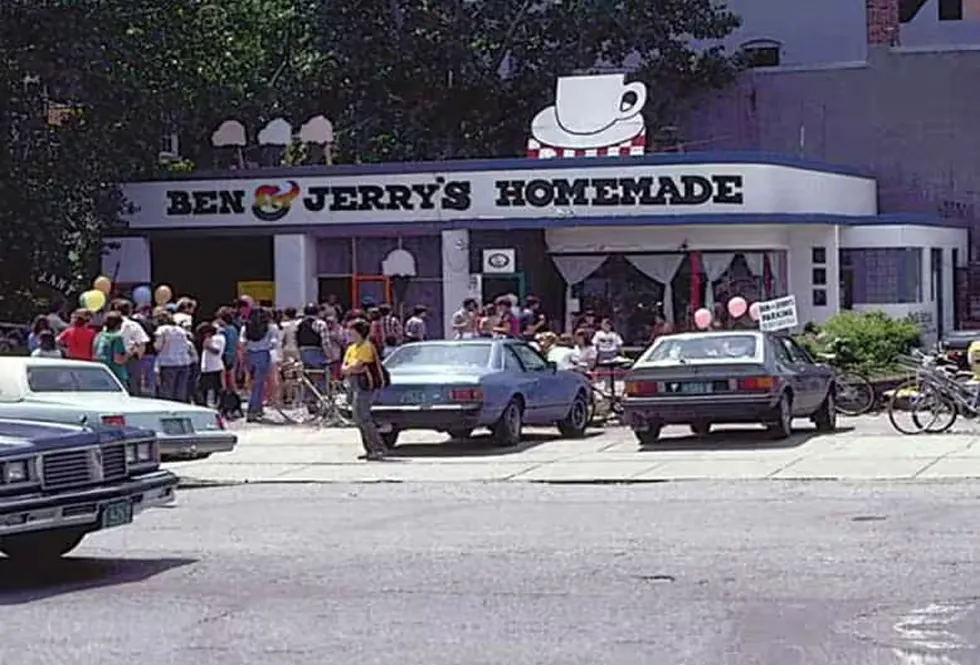
Every store of the global skincare brand "Aesop" has a sink where you can try the products. Every store of the fast-food brand "Five Guys," which has also entered Korea, offers free peanuts. And there is also a brand that, for just one day each year, gives away ice cream free at all its stores worldwide — none other than "Ben & Jerry's," the best-selling ice cream brand in the world.
Ben & Jerry's Brand Activism
Ben & Jerry's opened its first store in 1978, when founders Ben Cohen and Jerry Greenfield remodeled a gas station. The two founders thought the company's success was based on the residents and the local community. "Free Cone Day," which began as a token of that gratitude, is a day when, choosing one day each year, they give away ice cream free to all visitors at stores worldwide, and it has established itself as Ben & Jerry's representative event. If, seeing only such charming events that express gratitude to customers and the soft, sweet ice cream, you think Ben & Jerry's is simply a cute brand, that is a big mistake. Once you know that the most powerful value sustaining Ben & Jerry's is brand activism, the chocolate chip cookie dough ice cream in your freezer will start to look different.
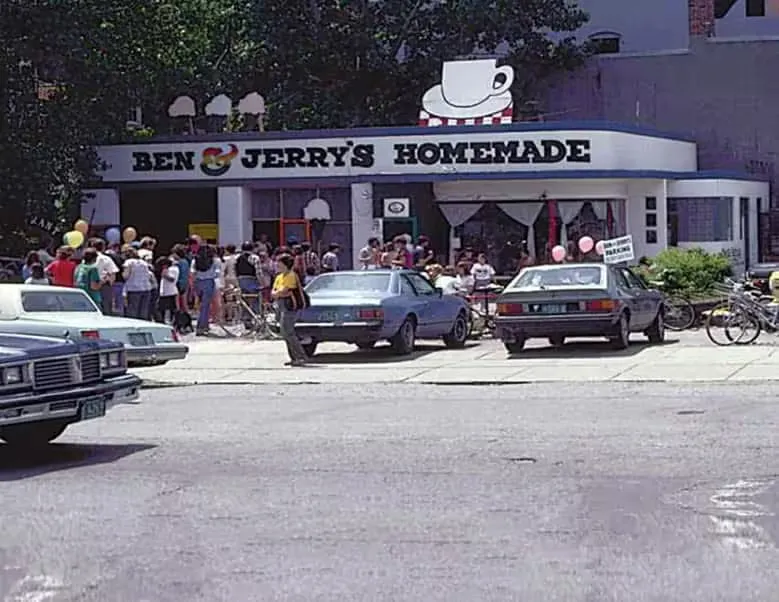
[Ben & Jerry's first Free Cone Day © Ben & Jerry's website]
Brand activism means a brand actively stepping forward and acting on social issues to bring about positive change. Ben & Jerry's management philosophy based on brand activism is clearly revealed in the way founder Jerry Greenfield recently left the company. When the multinational corporation Unilever acquired Ben & Jerry's in 2000, its management set as a condition that Unilever not interfere with the company's management policy. Unilever agreed to this condition too, but as time passed it began to put the brakes on Ben & Jerry's active social engagement. Ben & Jerry's, pushing back against this, sued Unilever twice, and after the conflict intensified, on September 17 Greenfield decided to leave Ben & Jerry's completely. The reason was that "as an employee who has worked at Ben & Jerry's for 47 years, I feel a pang of conscience and can no longer stay." It cannot but be a representative case of brand activism, which values acting to practice the values a brand pursues.
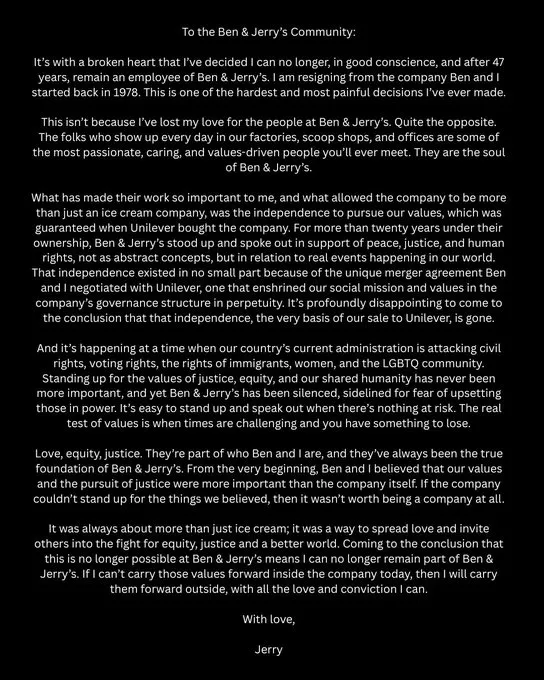
[Jerry Greenfield's resignation statement © Ben Cohen's X]
Ben & Jerry's, which shows an active stride even on politically sensitive social issues, pursues creating "a small number of fervent fans" more than "being vaguely loved by many people." How is Ben & Jerry's conviction, contained in a single scoop of ice cream, being realized internally?
You Shouldn't Create Unhappiness While Selling Happiness
DEI, meaning Diversity, Equity, and Inclusion, is a major corporate value that global companies devote themselves to. This is not merely a benevolent stance in which a company grants socially disadvantaged people opportunities to enter society. It is because DEI works importantly for the success of modern organizations. There are many research results proving this. Results have followed one after another, such as that DEI reduces the risk of employee attrition by nearly half, or that companies with above-average management diversity have higher innovation revenue than below-average companies. Naturally, it also affects the improvement of brand perception and thus contributes to raising sales performance. The more diverse the composition of employees, the more easily one can expect the complex and individualized problems of the era to be solved.
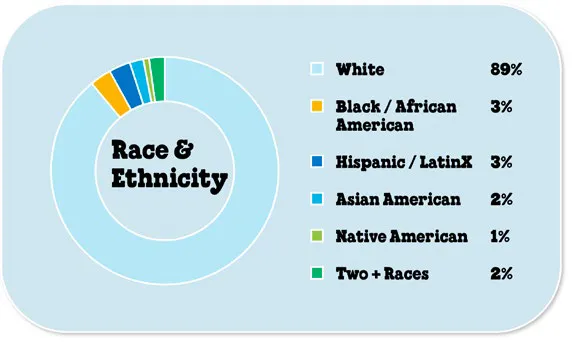
[Graph of overall race and gender composition at US sites © Ben & Jerry's 2023 Sustainability Report]
Ben & Jerry's, too, says that when all the characteristics that constitute and define an individual — race, sex, gender, and so on — are respected, Ben & Jerry's business and the world get better. To check whether this conviction is properly applied at business sites as well, Ben & Jerry's has, since 2020, disclosed the gender and racial ratios of its production-facility and office employees in the US. It specifies Black, Hispanic, Asian, Native American, and mixed-race people, and the proportion of white people is the largest. Since disclosing racial ratios in its 2020 report, that ratio has been gradually decreasing.
Ben & Jerry's DEI policy does not stop at the employment level. Ben & Jerry's puts forward diversity as an important value in its ice cream ingredient supply chain as well, and operates a program called "Values Led Sourcing (VLS)." VLS sets as its main goals the diversification of the supply chain, shared-value creation with social enterprises, regenerative agriculture and animal welfare, and the success of farmers and farm workers. To this end, Ben & Jerry's sources ingredients from farms run by Black, Indigenous, and people of color. This is Ben & Jerry's way of supporting cultural diversity through ice cream.
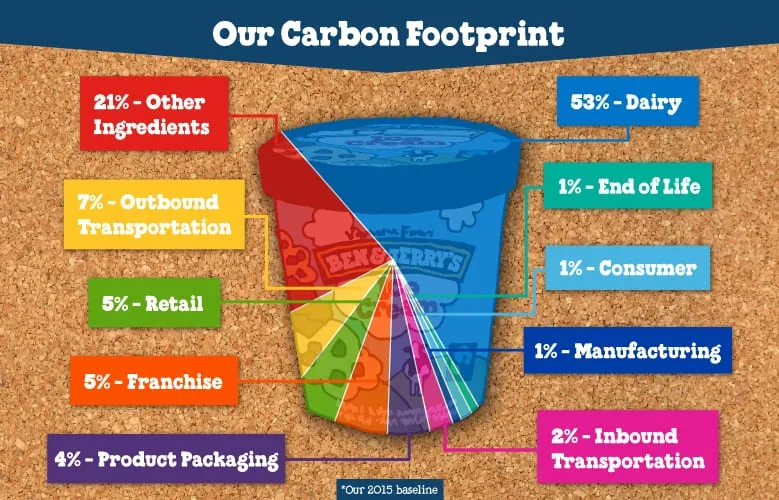
[Ben & Jerry's carbon-footprint graph © Ben & Jerry's website]
When the Earth Melts, Ice Cream Melts Too
53% of the carbon footprint generated when making Ben & Jerry's ice cream comes from dairy products. Ingredients other than dairy account for the next-highest proportion. Carbon emissions in the process of making ice cream are overwhelmingly greater than the carbon generated in transport and distribution. Ben & Jerry's has set a plan to reduce greenhouse-gas emissions by 100% by 2025, but milk and other dairy products are core ingredients that are hard to remove from making ice cream even if one wants to. So Ben & Jerry's operates the "Caring Dairy Program." This program, which entered its second phase in 2020, aims to pursue the values of farms' economic success, healthy soil and clean water, animal welfare, and low-carbon dairy, thereby creating a dairy-farming environment that ultimately burdens the environment less.
Farms participating in this program practice "Cover Cropping" (planting plants other than the cultivated crop during the soil's rest period to reinforce the soil) and "Conservation Tillage" (a tillage method covering the soil with residue such as the roots and stems of cultivated crops) on their pastures, and through this create a healthy soil environment. They also strive to reduce greenhouse gases generated in the herding process by serving feed that reduces the methane gas cows emit when digesting. In 2023, 48 farms participated in the Caring Dairy Program, and these farms produced about 190 million liters of milk, accounting for 84% of the US dairy supply chain.
Creating a dairy-farming structure that does not burden the environment is important, but Ben & Jerry's has also continued attempts to make ice cream without milk. It has already presented sorbet ice cream, which contains no dairy in the ingredients themselves, and a non-dairy product line using sunflower butter instead of milk. Non-dairy ice cream, which uses no milk, started with 4 products in 2016 and is gradually increasing its variety, receiving the assessment that it reproduces the taste of existing dairy products as is.
Ice cream is a food that, regardless of season, conveys comfort and happiness to us with its sweet, soft taste. If you want to look at a successful case of brand activism that realizes the cultural meaning contained in food in a social and environmental way, how about reading Ben & Jerry's Social & Environmental Assessment Report (SEAR) yourself?
by Editor L