
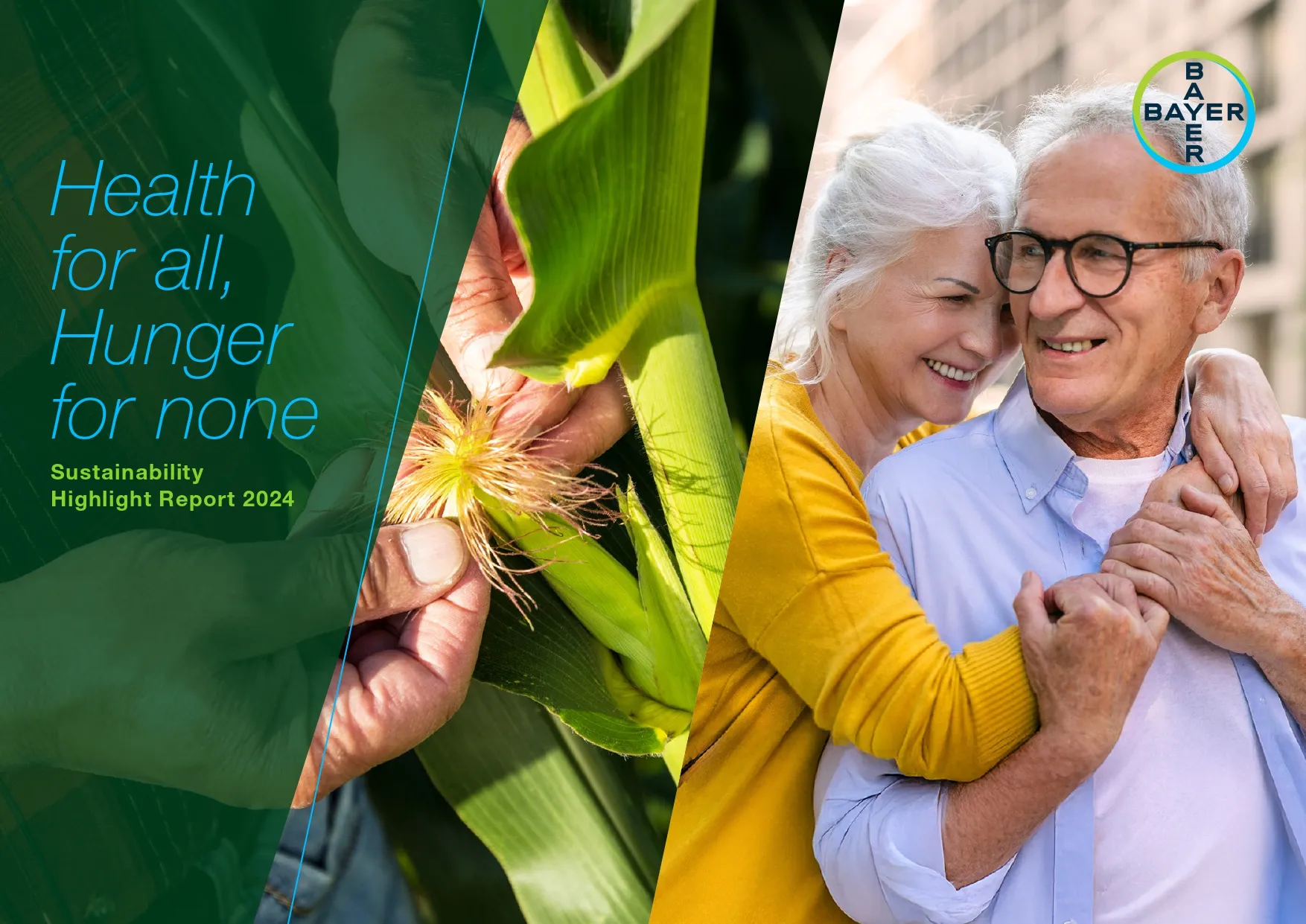
The world-renowned demographer Dr. Jennifer D. Sciubba, in her book "8 Billion and Counting" (2023, Hyeoreum Publishing in Korean), proposes viewing the population problem from a global perspective. This is because, while most advanced countries including Korea are experiencing the problem of population decline, worldwide the poverty and social turmoil accompanying population growth are a bigger problem. Indeed, the "World Population Prospects 2024" report of the United Nations Department of Economic and Social Affairs (UNDESA) predicts that the world's population will reach 10.29 billion in 2084, and that the region driving this will be Asia — excluding Africa and East Asia. And such population growth carries a strong risk of inevitably accelerating Environmental and resource consumption.
A World Where No One Goes Hungry (Health for all, Hunger for none)
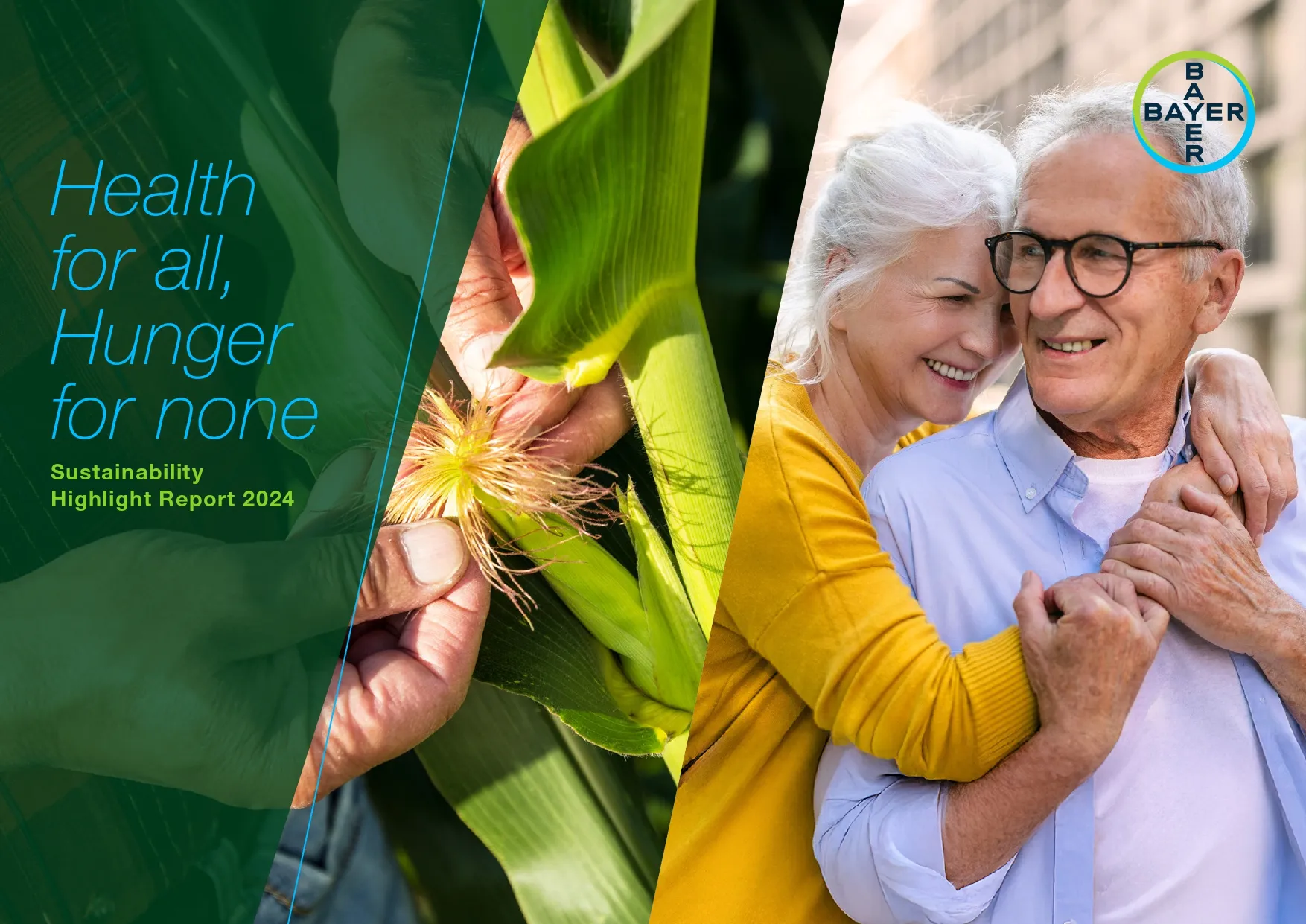
[Cover of the highlights of Bayer's 2024 Sustainability Report © Bayer]
The global life-sciences company "Bayer," which marks the 70th anniversary of its entry into Korea this year, is also carrying out business in various areas with this awareness of the problem. Bayer takes "Inclusive Growth," "Reduced Ecological Footprint," and "Acting Responsibly along the Entire Value Chain" as its three pillars of sustainability. Today, we look at the sustainability report of Bayer, which carries out various activities for health for all and "a world where no one goes hungry (Health for all, Hunger for none)."
Based on its rich portfolio in the healthcare and agriculture fields, Bayer is striving to improve the quality of life in low- and middle-income countries (LMICs). Bayer is also supporting food security in various ways — providing agricultural knowledge and partnerships and developing innovative seeds for smallholder farms in low- and middle-income countries that find it hard to respond resiliently to climate change and population growth. Last year, Bayer collaborated with Solynta, a hybrid-potato breeding company, to distribute a new potato variety in Kenya and India. Unlike the usual method of growing potatoes from tubers, this potato is distributed as seed, making it easy to store and transport, and it has characteristics advantageous against disease and climate change. Through this, Bayer presented another possibility to the potato-cultivation market, which reaches 20 million hectares worldwide.
Freedom to Choose: Broadening Its Scope
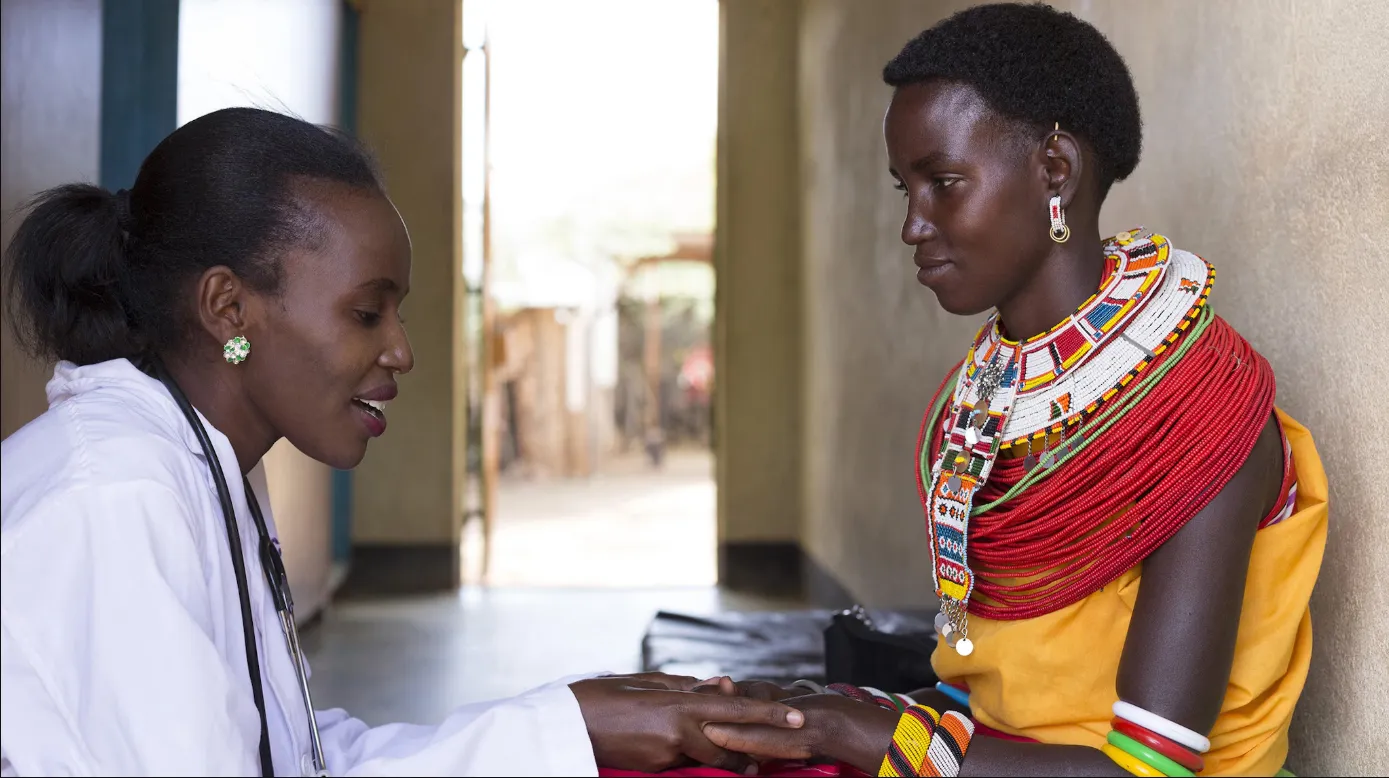
[Contraception awareness-improvement activity © Bayer]
In addition, Bayer is increasing access to modern contraception for women in low- and middle-income countries by supplying modern contraceptives and devices at reasonable prices. Through this, over the single year of 2024 alone, 51 million women in low- and middle-income countries were able to make proactive family plans and manage their health with Bayer's products. This will become a foundation guaranteeing women the most basic rights for their bodies and health, and for their social advancement and economic status. Bayer is raising product availability by adjusting product prices to local purchasing power and strengthening patient-access programs for its products.
In addition, Bayer's sustainable moves continue in the self-care field, which drew attention as we passed through COVID-19. Half of the world's population is said to still not enjoy basic medical services. In place of specialized medical services hard to reach as far as remote areas, Bayer last year provided educational programs to about 73 million people to help them choose self-care products as well as over-the-counter medicines and health functional foods. It is, in effect, an effort to provide all kinds of health to everyone.
A Vision Practiced Through ESG Management
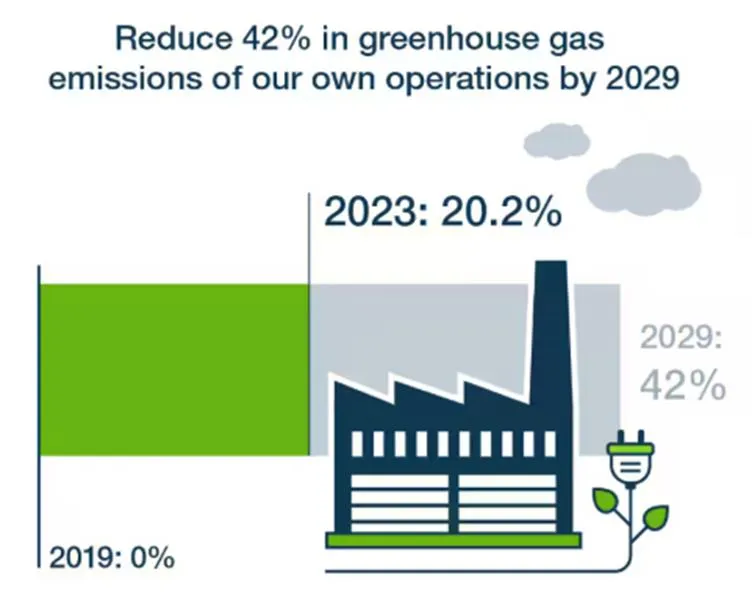
[Carbon-reduction targets © Bayer]
Along with sustainability through its products, Bayer establishes and practices various goals for sustainable management. Bayer set a goal of reducing greenhouse-gas emissions by 42% by 2029 and reaching net zero in 2030 by offsetting the unavoidable carbon emissions arising from facility operation and the like through Carbon Offsets. To this end, Bayer is gradually implementing action measures such as using renewable energy, investing in process optimization, and switching to electric vehicles. As a result of such efforts, Bayer stated that it reduced greenhouse gases by 21.3% in 2024. This is a figure reaching more than half of its final greenhouse-gas reduction target.
Beyond this, Bayer is continuing efforts such as producing all product packaging from 100% recyclable materials by 2030 and allocating 36% of its procurement costs to suppliers leading decarbonization. Furthermore, it is working on overhauling and establishing systems to foster a healthy workplace culture — such as expanding the ratio of women hired in management positions from the 2024 level of 44.1% to 50% by 2050, and providing parental leave and health-and-rest programs. Not only the lives of the consumers who use its products but also the lives of the employees who strive for this are precious values that Bayer pursues.
Bayer's moves — having entered 145 countries and striving for humanity's healthy life — have expanded into protecting future generations and the ground they will live on. This means that Bayer's vision of health for all and a world where no one goes hungry is no different from protecting the environment, such as by reducing carbon emissions and expanding recycled goods. In addition, Bayer's ESG management, which encourages the flexibility of the work environment and women's social advancement, suggests the various meanings that sustainability holds. Bayer's all-around ESG strategy can be found in Bayer's annual report.
by Editor L