
By Lee Choong-gul (essayist, former editor-in-chief of GQ Korea, author of the novel "Your Face") · August 27, 2025
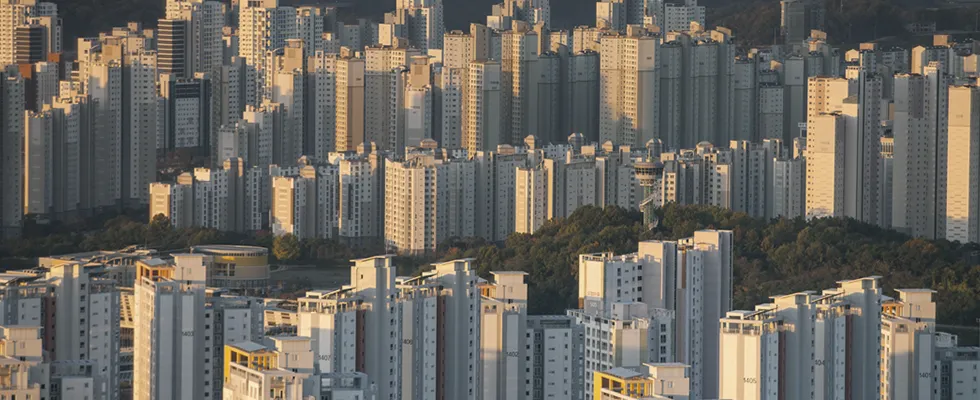
In Korean society now, a home has become documentary evidence of wanting to live like a human being, and a longing beyond mere space. When a friend who grew up in the same neighborhood, who rode the same bus all along and listened to the same music, buys a house with a parent's help and leaves the neighborhood, the young person finally realizes that the bus does not stop in front of his own semi-basement home. At that moment, how leisurely must the saying that a home is a place that remembers how much you loved and how you empathized sound to the young person?
[ⓒESG.ONL]
The sighs of those left behind bite one another's tails. My parents wrongly co-signed a guarantee, so even I have lived as a pauper all this time. My parents left me debt instead of light. Until I was in college, four family members lived in an 11-pyeong house. I was pushed by the jeonse crisis all the way to a gosiwon. At some point the question "Why am I still living in monthly rent?" is transformed, as if overwritten, into "Why do I seem to have failed?" Because now, like it or not, it is the era of "home-ownership authoritarianism," in which one's own home becomes housing stability, a future asset, and the only achievement accomplished without a parent's help.
The nuance of the word "desire" is elegant and sensual, but the desire concerning a home is far denser than that, closer to appetite. Woven, one might say, with some measure of frustration and shame. From one angle it is a little funny and slightly chilling. Because a home is, astonishingly, a new way of destroying the internal order of a family by combining individual cases, statistics, and cracked emotions. Now class has been divided even within a family. Siblings staying in different economic strata cannot be said to live in the same world.
A reason for silence, grounds for jealousy, and blocked anger. The home burns without rest, north, south, east, and west. Today too, somewhere in Seoul, a parent with means is gifting a child an apartment subscription. Because a home is another statement of account, the parent writes the contract and the child signs it. But who could call it a gift, this spectacle in which the word "registration transfer" runs rampant like a windfall?
Sometimes I get so angry. Why on earth does the news make such a fuss every single day that apartment prices have risen? Whatever the case, stop showing celebrities' homes. When the camera licks the marble floor, the ceiling-high windows, the electric fireplace, and even the terrace where a pet dog frolics, and sweeps over the kitchen cabinets and the hangers of the dressing room, a "so what?" forces its way out of my polite mouth. Right on cue, when the subtitle does its "This home — is this for real?" nonsense, comments like "Wow, I want to live like that too" run wild. Ah, isn't this the very reproduction of housing fantasy? Doesn't watching something repeatedly ultimately prove that one comes to believe it?
Every second, ads, variety shows, content, and dramas join forces to trumpet the absolute value of ownership. "You must live in a good house. Spacious, clean, sunlit, and above all, under your own name." Besides, drama characters live in Gangnam apartments every single day (that damn Gangnam. Even a single fish cake is pricier there, the utility-pole wires tangled over that expensive Apgujeong land like rain-soaked Indian water ghosts, that Gangnam where store clerks strut about pretending to be the owner). YouTube real-estate channels whisper, sirens be damned. "You have to buy now." "This place is going to skyrocket." "Leveraging everything isn't crazy. It's strategy, investment, calculation." Prophesying a society with no jeonse and threatening that you'll become a lightning-strike pauper if you don't listen, the camera happily scans an apartment model house. The mother walking in holding a child, the father reading a book in the parlor, the kitchen faucet embracing every scene, the bathroom slathered with marble, and the lighting cozy as the Virgin Mary. They bully you that it is your future.
[ⓒESG.ONL]
In Korea of this era, the words "owned or jeonse?" determine the phase of a relationship. At a blind date, at a loan window, at a family gathering, the question follows annoyingly. There is a heavy premise here. A home in my name is settling down, but a rental is temporary or unstable dwelling. The high and mighty cry out for an inclusive society, but slogans like that don't even reach our neighborhood, nor do they embrace those rejected by loan-screening standards. In a reality where the absolute power of "my home" blazes, society whispers even to the young person struggling with dirty Converse, a ramen-cooled aluminum pot, and a 30-million-won deposit. A person without a home is incomplete. A home is a game. Who enters first, who wastes less of their youth. And the young person believed it. Very deeply, like bone.
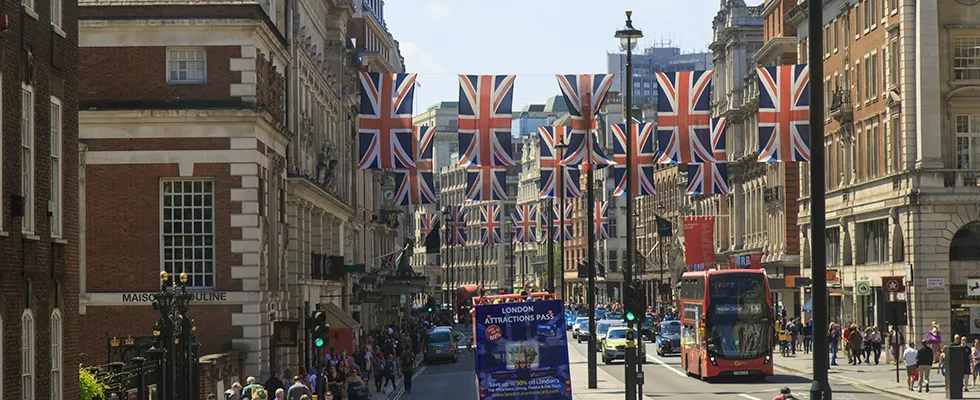
But, as you know, most of Europe lives in rental housing. 80 percent of Berlin's citizens are tenants, Paris 60 percent, more than half of Copenhagen. They live without conflict under a long-term public-rental system provided by the government and the city. No loans, not chased by interest, they immerse themselves in life without the anxiety of dwelling form. Seen that way, the dignity of renting seems like the opposite of ownership. Human dwelling beyond the contract, one might say. But here, everyone shrinks their own domain on their own. "It's not my house anyway."
In someone else's house anyway, the tenant lives with the Siamese twin called a moving plan. Two years or four, as the expiry approaches, searches catch fire. Contract renewal means a rent hike, and there is no fixed life. Jeonse is the passage to leveraging everything, monthly rent a kind of failure. A young person who must find a new home in September puts a rooftop or veranda where he can grill samgyeopsal onto his wish list. What is ironically sad about the tenant's naive daydream is that, on a night of wildly scrolling the real-estate page on the monitor, he will end up seeing, on the screen, not listings but a withered face. A home is a "place to live," not a "thing to buy," yet this generation's home is bigger than a home and more important than a human being. This is why "I want to live there" turns into meaning "I want to buy it even by going into debt."
And so he spent five seasons for a single house in Seoul. The season of enduring, the season of preparing, the season of anxiety, the season of resignation, the season of calculating. The future dried up like credit spent out by a loan. Hell is another name for a present that has mortgaged its future. Overtime was a given, he saved 60 percent of his salary, and turned down both coffee and chicken. He dated, but deleted marriage. Because there was no house to live in together. The thoughts that would not be realized were all the more tenacious. He buried his individual life within the market's margin of error. Now is the last chance. If he missed it, it seemed he could never again set foot in Seoul.
Even after six seasons changed, the home did not come. An impossible dream, a hope not grasped, a flowing phantom (幻影). The home was heavy. The ratio of concrete and desire was the same. He tried to burn the present to build the wall of later, but the wall did not protect him. To the young person who, as soon as he left the cradle, dreamed of his own home and ran aground, Mother Earth asks, "Why do you try so hard to wrap me in walls?"
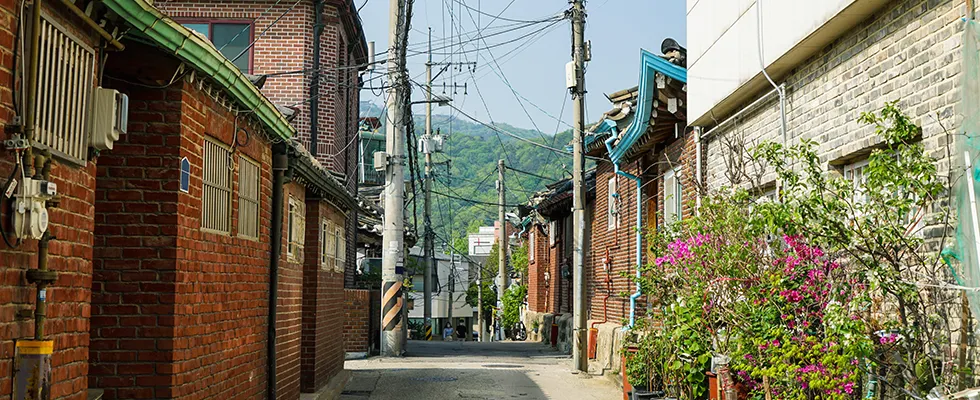
Ten years ago, before I built a house at the foot of Namsan, I lived in an apartment in Seongsu-dong. It wasn't my choice. I liked the old house. I wanted to live my whole life in that apartment, perched slightly on a mountainside so that a high wind blew year-round. But one winter, seeing my mother buy two radishes at the traditional market down below and carry them up to the house, I moved to a place where one could step on flat ground. In that not choosing is itself the most common choice, that too was my responsibility. Once I moved, I was confused whether it was a "place to live" or a "space bought and set aside." The exterior wall was the beautiful glass of the postmodern era, safe and clean at once. But somehow I couldn't adapt to the new home's sociability. If there hadn't been an enormous supermarket in front of the apartment's main gate, it might have been terribly lonely. Eventually, a few years later, I built a house somewhere on Namsan. My major is architectural engineering, but I also felt that its usefulness had run out with the building of this house.
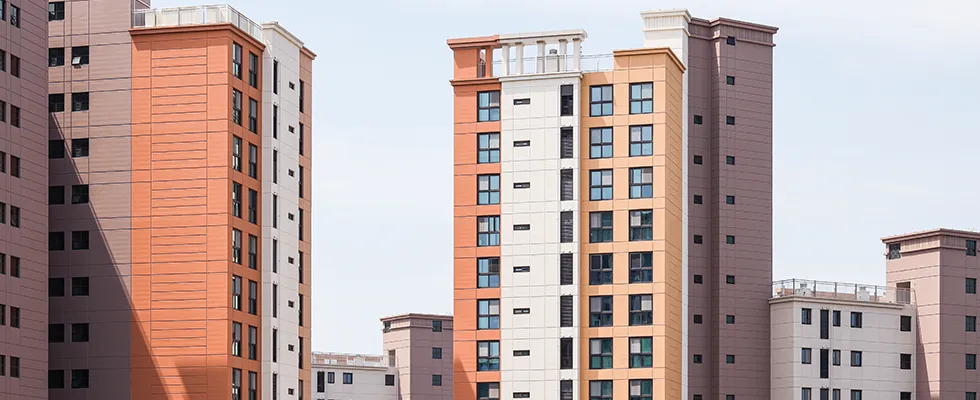
Apartments built these days come with words like premium, wide-type, master zone. Because a construction company's language is not architecture but marketing. Here ESG suitably slips in. High-efficiency materials, solar panels, LED lighting, eco-friendly wallpaper, smart meters... But the real structure of a space is not that simple. More important than how luxurious a wall is, is the question of whom that wall is pushing out.
[ⓒESG.ONL]
The city moves around homes, but the people within it grow ever more distant, outward. Individual characteristics are excluded from every blueprint, and social equity does not appear on the floor plan. An apartment-sales video emphasizes eco-friendly finishing materials but does not mention the damage to the nearby ecosystem. Greenwashing, which deceives consumers by feigning eco-friendliness with a straight face, is quite smooth and persuasive. Like a tree green on the outside but rotten within. No one asks: for whom was that house built, and who are the people outside the screen?
I often wonder. Does the Earth build houses, or do houses tear down the Earth? It is doubtful how much environmental factors are considered when building a large apartment complex. The energy waste during construction, the structural pressure of cutting and filling earth, the disappearing green space and animal habitats — all are offset by a single image of a bird's-eye rendering, a single line saying a park is planned. Where did the village that was there go? And to whom will that energy be used? Might it, rather than a house where three generations live, fatten the bank account of a rich person expecting rental income? What connection is there between energy efficiency and structural inefficiency?
Here a subtler item follows. What construction companies put forward as documentary evidence of fulfilling social responsibility is often things like community spaces, children's playgrounds, and convenience facilities for the elderly and infirm — but what if there are very few children at the playground, the community center is run by reservation, and no one sits on the benches?
Building a home must answer not only the technical solution of erecting a structure but also the ethics of dwelling. Before drawing the plans, one must sense the days that will unfold in that home; before choosing materials, one must hear the voice of the land; and one must ponder what to anticipate and permit in others' lives. Who can live there, who is pushed out, and for whom it was prepared.
Honestly, I don't expect too much. Because a story that is emotionally deep yet logical, and requests ethics even within pessimism, seems rather far from a company's priorities. I just want to ask that, next time you build, please pay a little attention to the view from the small units, let sunlight reach the lower floors well, don't spend money on bizarre garden stones but plant one more tree where shadow lingers. Anyway, when apartments swallow up everything of the city, what should we protect?
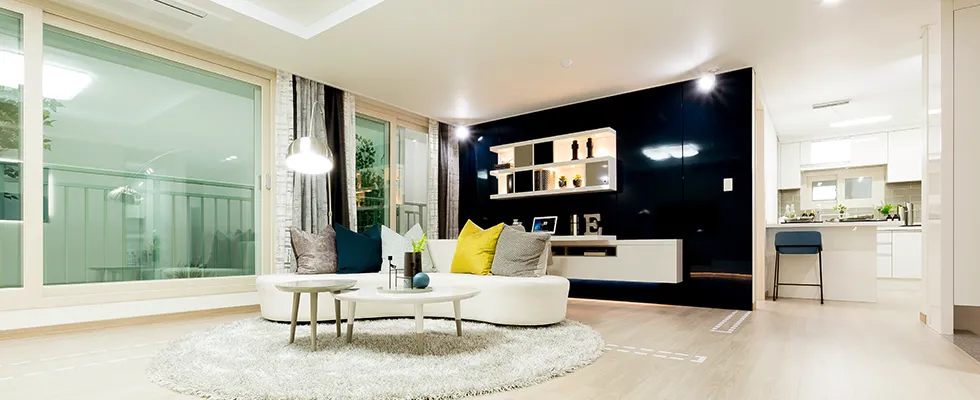
Sometimes I look at construction companies' apartment floor plans. Out of some lingering attachment. Windows opening in all directions, an expanded living room, a dressing room, a powder room, a utility room each separate, a king-size bed, a bookshelf running wall to wall — imagining these, I stopped and grew doubtful about why people want such wide homes. Is area itself presence? A structure of self-confirmation that one is recognized by others? Ah, that's right. In the world there was a unit called pyeong. In the Republic of Korea, the right to breathe is guaranteed by the number of pyeong, indeed.
[ⓒESG.ONL]
Numbers always point to a place wider than reality. The notion that the hierarchy of the human species is determined by area is primitive, yet it has multiplied into a more sophisticated form. So in this era no one says "I want to live in a small house." Because a big house is a class system that architecture has brought upon itself. A 24-pyeong is one thing, but a 34-pyeong extorts others' meaningful glances. From 46 pyeong the words change. "Now that's a livable place." But what does "livable" mean? One more room, one more closet for stacking dead time — is that what it's about? Here the weight of the single line "That person lives in a Raemian" willingly implies the social truth of "a person worthy of living in such a place."
I openly sneer. Even if I moved to the Han riverside and were pleased to death every day, I wouldn't collapse in happiness gazing out each day. The medal of living by the Han River excludes the metallic-thunder noise of the Olympic Expressway and the riverside road. However wide a house is, it only increases the cleaning. The wider it is, the greater the loneliness too. The unseen crevices will be taken by dust swollen like a ball.
The comfort a pricey, wide home gives was sometimes wordless. No — it said much. If you live in Lotte Tower, you have to change elevators just to buy a single cigarette, and you'd have to attach an oxygen mask to the stingily opening windows. If you feared the electricity bill you wouldn't live there in the first place, but anyway you'd never know the joy of clear wind and bright moon. A space made too tidy by hiring a cleaner would surely push you into an organized sorrow. That place isn't a real home but like a set, so you'd feel you've briefly rented something — how would one live there? ...Even picking a fight, it only leaves my insides raw.
A home is built on the ground, but sometimes it stands upon people. Yet even the smallest home has my dining table, my night, and a wall that swallows my resentment. Even where the ceiling leaks, the wall has collapsed, and the wallpaper is peeling, children grow. A home is the wish to be protected. A place not to forget who I am. A map of relationships, not an address. Now the story must be rewritten. A home must be defined as a right, not a commodity; that right must not shrink according to whether it is registered; and we must quickly agree that a value more important than ownership is a sense of stability. Dignity comes from staying and the everyday, from repetition and attachment. Therefore the starting point of a home must begin from a small room, a floor where one person can lie comfortably.
What we want of a home is to find our own place on the ground. Not to invade another's space, and, that night, laughter spreading like a silver bell. And now I write the last sentence.
[ⓒESG.ONL]
I want not to "own" a home but to "live in" one.
By Lee Choong-gul (essayist, former editor-in-chief of GQ Korea, author of the novel "Your Face")