
CO₂ Reduction: A New Solution Is Demanded to Confront the Climate Crisis
At this very moment, in places all over the world, large amounts of carbon dioxide are being emitted through industrial activity, deforestation, agriculture, and more. The carbon-dioxide emissions we have traded for our convenience are continuously increasing. Carbon-reduction efforts at the previous level alone have limits in curbing rapid climate change. Against the backdrop of this reality, the technology of Climeworks (hereafter "Climeworks"), which can directly capture carbon dioxide from the air and store or recycle it, began to draw attention. The technology called "Direct Air Capture (DAC)" presents a way to solve the otherwise-unmanageable problem of carbon-dioxide emissions by directly capturing carbon dioxide from the atmosphere and storing or recycling it. The direct-air-capture technology led by Climeworks, founded in 2009, is an innovative approach that not only supplements existing carbon-reduction efforts but can also manage even unavoidable emissions.
[Climeworks' two founders © Bloomberg]
The Principle of Direct Air Capture
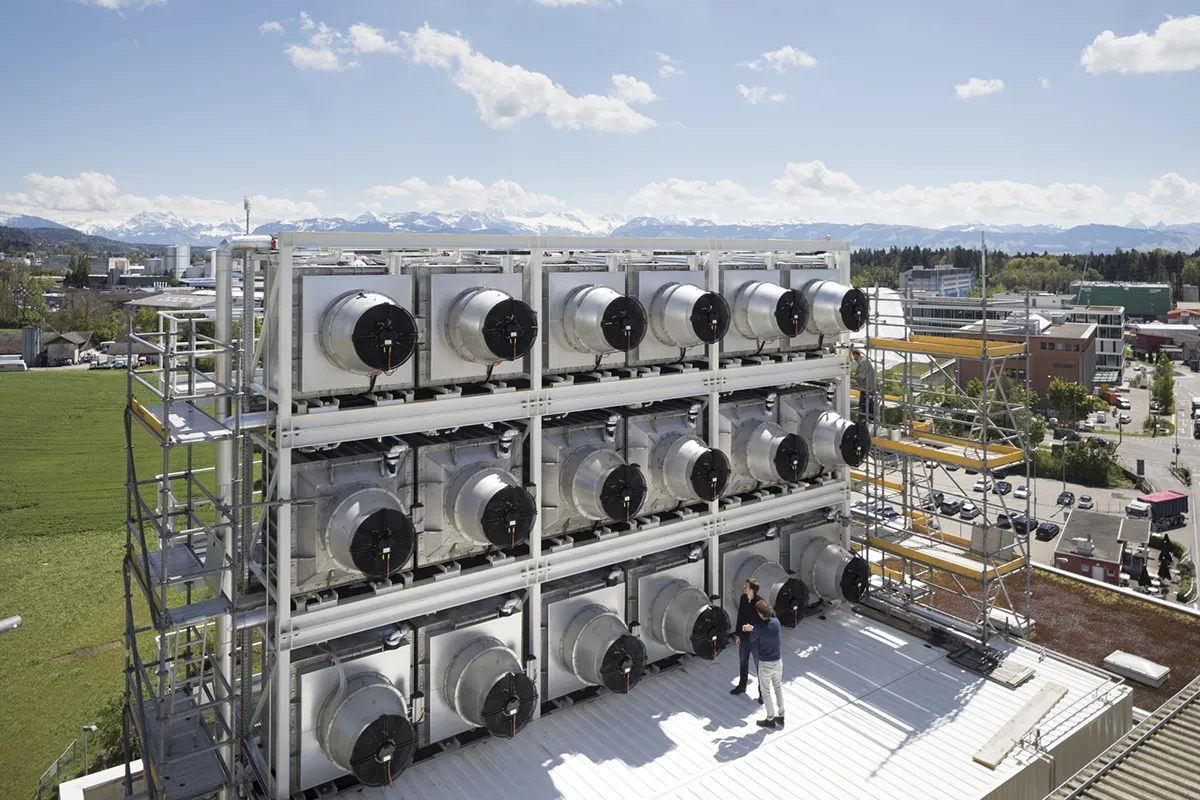
Let us look at Climeworks' direct-air-capture technology. First, a huge fan is turned to draw air into the system, and then a specially made filter is used to selectively capture only the carbon dioxide. The captured carbon dioxide is heated at high temperature and refined into pure carbon dioxide, which can then be recycled right away, or stored and used later for other purposes. Projects using direct-air-capture technology are under way at 15 sites around the world, and are known to be successfully capturing more than 9,000 tons of carbon dioxide per year.
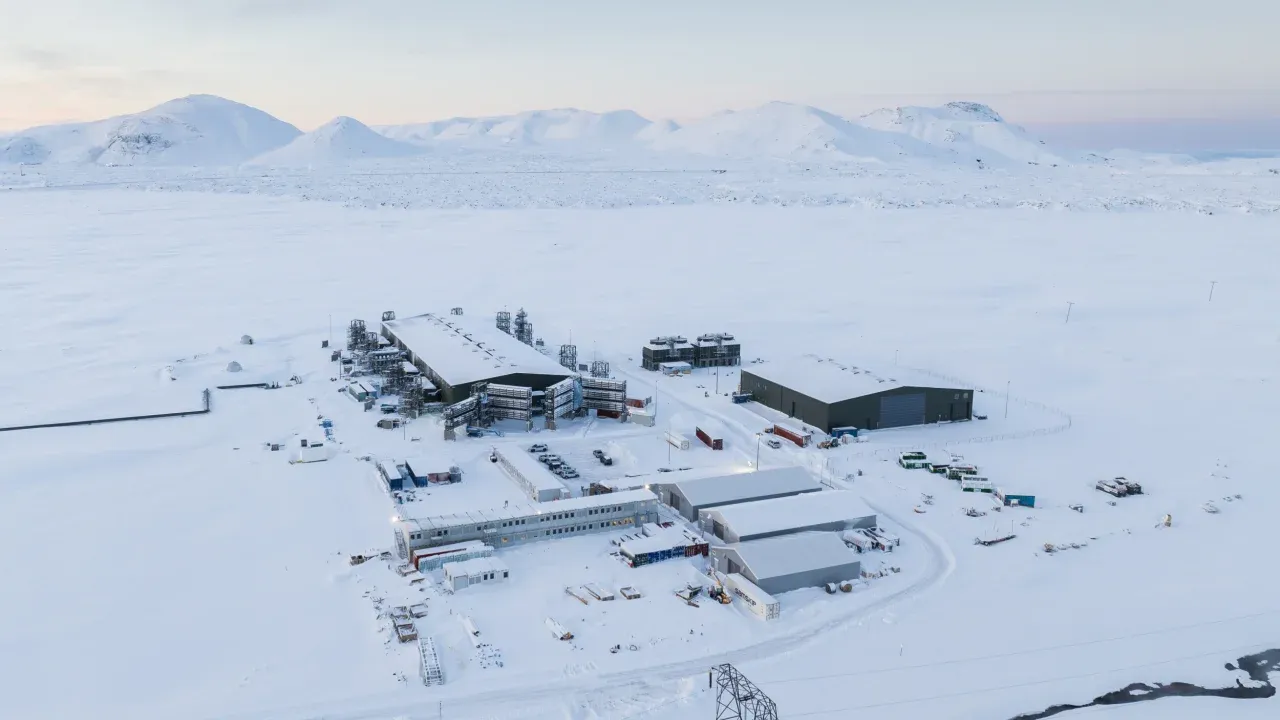
Among these, "Orca," which Climeworks operates in Iceland, is currently the largest direct-air-capture facility in the world. The carbon dioxide captured at this facility is stored in underground basalt layers at a depth of 800–2,000 meters, where it naturally forms carbonate rock. The period needed for this process is about two years, which is more efficient than other carbon-dioxide capture methods, and it is drawing attention for being environmentally sustainable. Another direct-air-capture facility operating in Switzerland captures 900 tons of carbon dioxide each year and supplies it to a local greenhouse. This greenhouse uses the captured carbon dioxide to boost the photosynthesis of greenhouse crops such as tomatoes and cucumbers, and as a result increases yield, thereby also improving the sustainability of agriculture.
The carbon dioxide produced and managed through direct air capture is used as the carbonation source for carbonated drinks, or is converted into an intermediate needed for renewable-energy production. With such highly versatile direct-air-capture technology, Climeworks aims to capture a certain proportion of the world's carbon-dioxide emissions. Experts forecast that applying direct-air-capture technology in industries where carbon emissions are unavoidable can contribute to achieving climate-change-related goals. In addition, Climeworks continues to explore technologies that can improve economic efficiency and become part of a sustainable climate-response strategy. This is because, like every innovative technology company, Climeworks too seeks to solve the problems of cost and efficiency. It may not be a perfect technology, but the success cases already created have drawn investment from technology companies such as Bill Gates's Microsoft, Jeff Bezos's Amazon, and Elon Musk's Tesla.
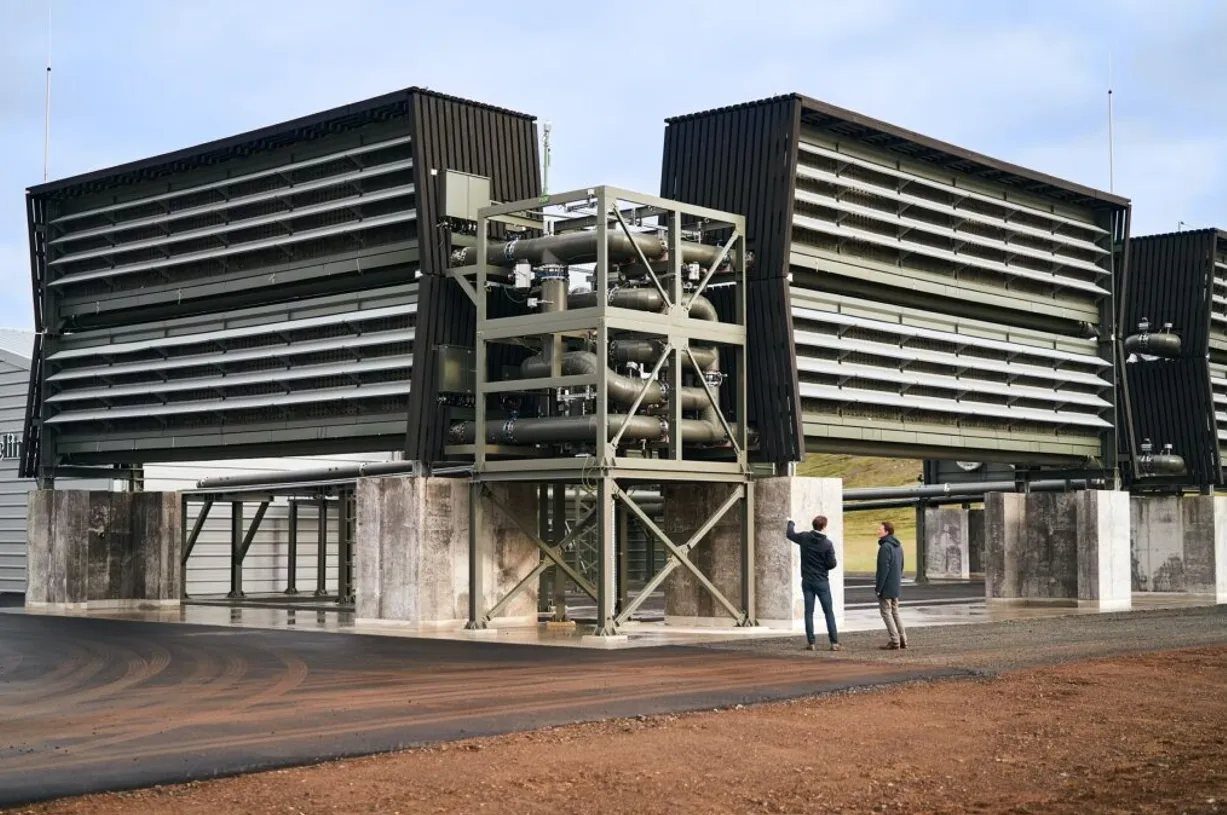
["Orca," which Climeworks operates in Iceland © Climeworks]
The Future of Direct-Air-Capture Technology and a Sustainable Outlook
The direct-air-capture technology Climeworks holds is known as an effective countermeasure that can confront climate change, one of the most urgent problems of our time. As a developing technology it invites various viewpoints, but this technology shows the potential of a means that can manage the Earth's carbon-dioxide concentration.
The results achieved at large facilities such as "Orca" have proven that direct-air-capture technology can offer environmental and economic benefits beyond mere theoretical possibility. It is a technology that not only increases crop yields in agriculture but can also be used in the carbonated drinks we consume. According to a January 2023 report, direct-air-capture technology received official certification for its carbon-removal technology and process from DNV, an international specialized certification body. In response, Climeworks CEO Christoph Gebald explained that "(third-party certification) is proof that we are doing the right thing in the right way." With expectations for the formation of a carbon-removal credit market to be created with carbon-removal technology, the multinational e-commerce company Shopify purchased 5,000 tons of credits through a multi-year contract with Climeworks. We look forward to substantive results following, as much as the market's expectations and investment.
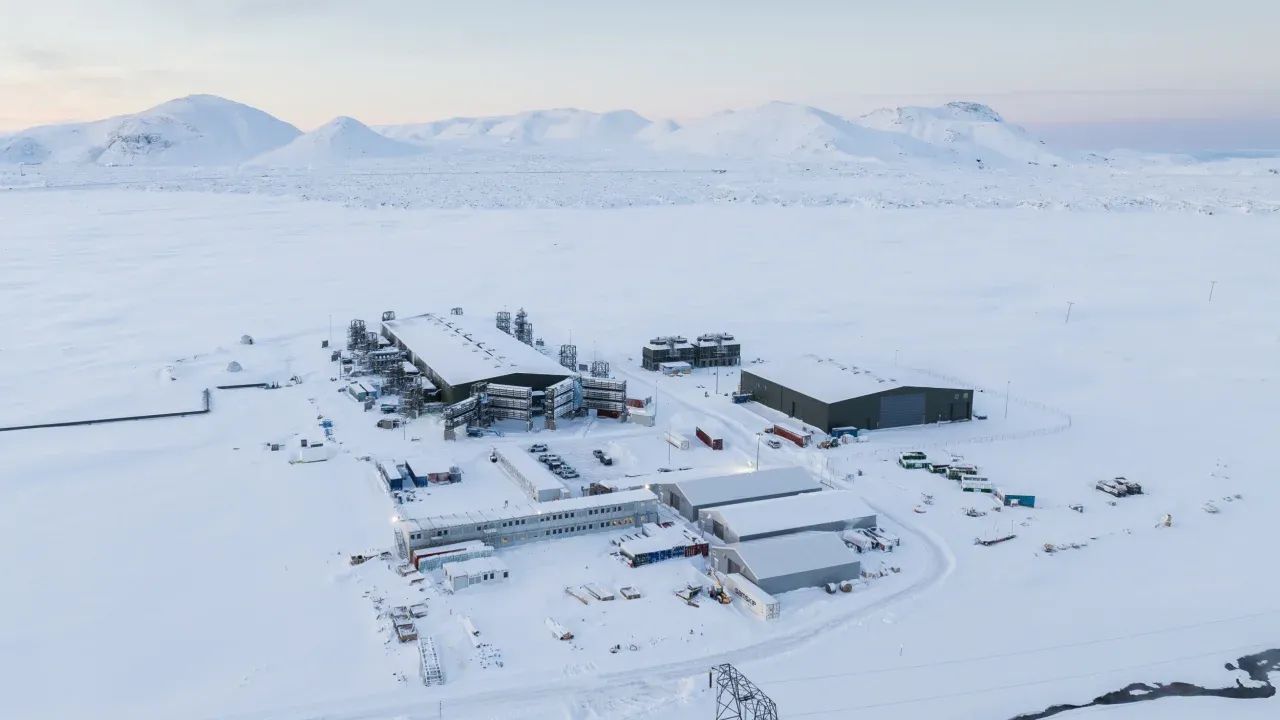
["Mammoth," a facility Climeworks is building in Iceland on a scale larger than Orca © Climeworks]
by Editor L