
Before the launch of the Trump second administration, it was expected that there would be great change in ESG policy. But can the global effort that agonized over a sustainable future stop here? For those interested in ESG, what are the ESG-related changes of the Trump administration that one must know? How will the ESG policies of Europe and Korea change? ESG.ONL seeks to approach the global ESG environment expected in 2025 by finding answers to these questions through a total of three planned content pieces.
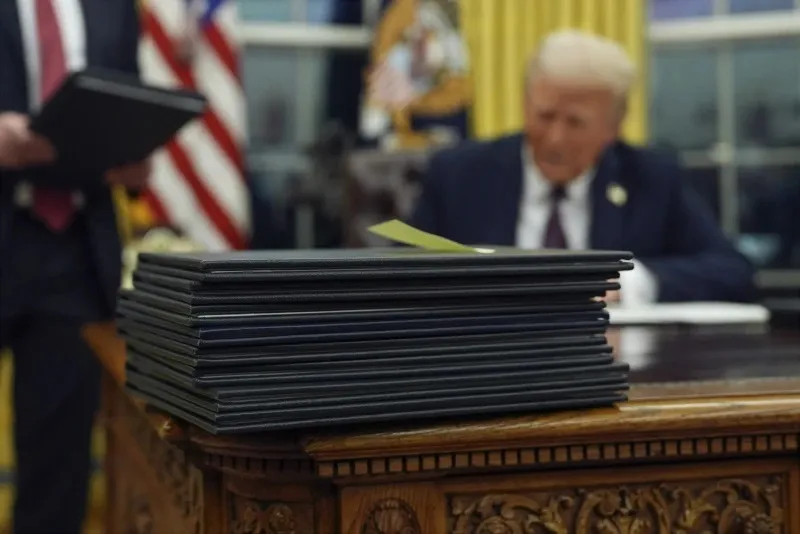
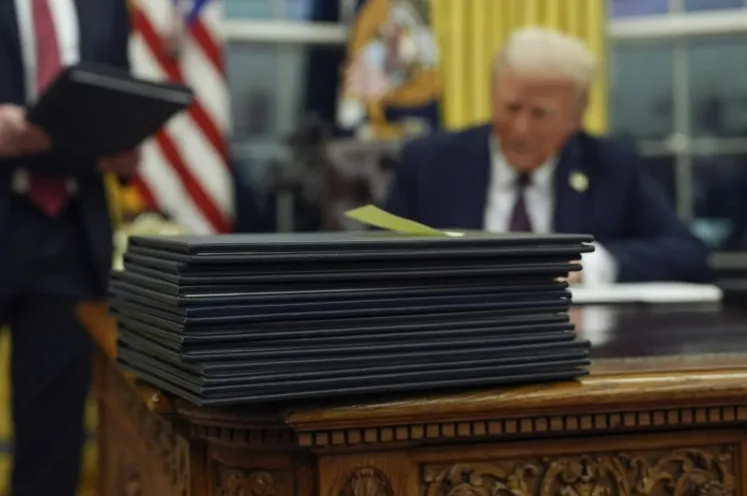
[US President Trump signing an executive order abolishing ESG-related policies © AP]
Trump 2.0's E: Climate-Change Response Is a Green Scam?
The Trump second administration, launched in January 2025, is releasing negative views on ESG day after day. Each time President Trump releases opinions on ESG policy that run counter to the existing flow, a heated debate unfolds worldwide. Calling ESG a "Green New Scam," he puts forward thinking close to that of a climate-crisis disbeliever. Following the Trump second administration's executive orders, the US is withdrawing from the Paris Agreement — the global climate-crisis-response effort — and all agreements and treaties concluded under the UN Framework Convention on Climate Change. President Trump has shown such antipathy toward ESG since his first administration. He also has a history of having already withdrawn from the Paris Agreement, the promise to keep the world's temperature rise within 1.5 degrees.
The Meaning of the Trump Second Administration's Re-withdrawal from the Paris Agreement
The Trump second administration has stated that it will run state affairs by prioritizing the interests of the US (America First) over global-level environmental agreements. This is the essential reason for withdrawing from international agreements such as the Paris Agreement. It can also be interpreted as a stepping stone to facilitate the US's fossil-energy business. In fact, he lifted the ban on offshore oil-and-gas drilling, and is showing the ambition to freely develop and use the abundant fossil energy from America's land and sea — natural gas, coal, and more — to make America strong again (MAGA; Make America Great Again) and recover its former glory.
Trump 2.0's S: Is DEI (Diversity, Equity, Inclusion) a Leftist Ideology?
America is a land where the living victory of the human-rights movement breathes. The "DEI (Diversity, Equity, Inclusion) policy," which began with the US Civil Rights Act of the 1960s, has gradually provided equality of opportunity for socially disadvantaged groups such as women, racial minorities, and people with disabilities. DEI was, over the past decade, a means of expanding human-rights protection widely applied not only to the US government and public institutions but to companies. But President Trump, criticizing DEI as a "leftist ideology," is forcing through its abolition. President Trump, going further, argues that DEI policy violates the US Civil Rights Act and is pressuring companies to reduce policies for sexual minorities as well. Saying, "I will return American society to when it was a merit-based system," he even shut down major diversity-related sites of government departments. The US White House, in a statement, justifies its discriminatory policy, stating that abolishing DEI is implemented "to end illegal preference and discrimination." This atmosphere raises concern about room for the strengthening of discrimination-permitting policies against the socially disadvantaged whom DEI had protected.
Signs of Change at US Government Agencies and Global Companies
The movements of global companies within the US following Trump's such measures are also not to be taken lightly. Leading US global companies such as Google, Meta, Amazon, and Disney stated that they would restrict socially responsible investment through retirement pensions. Also, those in charge of DEI-policy-related programs within companies are being put on paid leave, and preparations are under way to carry out large-scale restructuring.
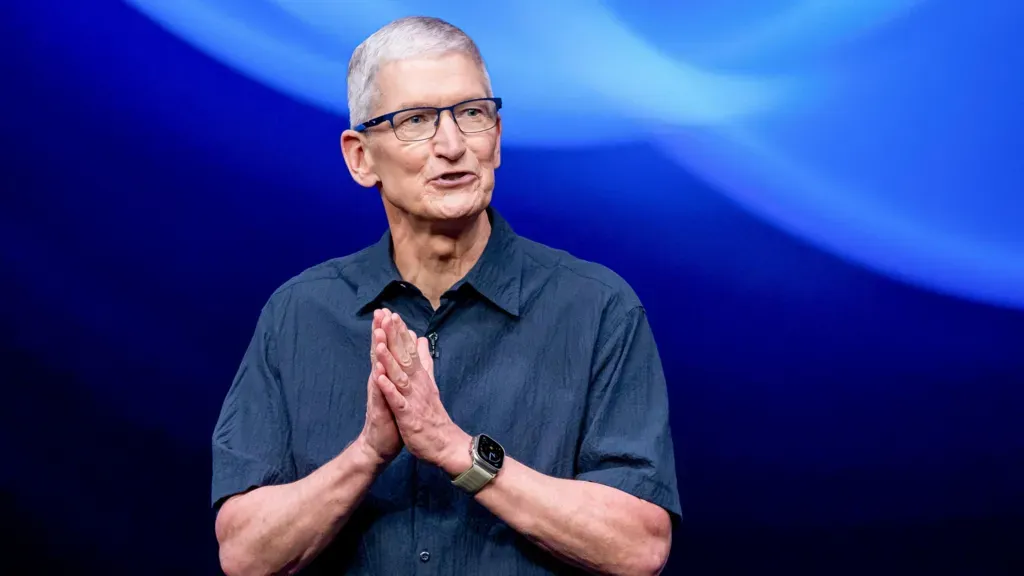
[Apple CEO Tim Cook, who requested the board vote against abolishing DEI policy © Gettyimagesbank]
Trump 2.0's G: The Great Upheaval in Global Governance Trump Caused
The more sensitive issue of international trade, in which the international community is densely intertwined, must (however much one must protect one's own citizens first) inevitably entail understanding and cooperation between nations. President Trump is releasing, one after another, policies that go beyond mutual understanding and cooperation — such as raising tariffs even on US allies and neighboring countries and further raising trade barriers. And these policies are having a great impact on America's global governance and on corporate governance within the US. Global governance refers to the way and system of dealing with global problems that nations, international organizations, multinational companies, non-governmental organizations, and civil society must cooperate to solve. Even if a counterpart country takes retaliatory measures against the US's such high-tariff policy, Trump's position is that he does not care. Therefore, from 2025, an invisible war among nations related to trade tariffs is anticipated.
Governance Changes at America's Global IT Companies
America's large IT companies appear to be all accepting the Trump second administration's measures. "Google" changed its organizational-workforce composition, conscious of Trump's DEI abolition. "Meta" also eliminated its DEI team. "OpenAI" deleted DEI-related items from its website and said that going forward, "for intellectual freedom, even if controversial," ChatGPT will answer with relaxed DEI-related censorship. Meanwhile, unlike such moves by US companies, "Apple" CEO "Tim Cook" also revealed a position supporting DEI policy, before the February annual meeting stating a position asking the board to vote against abolishing the DEI program.
Summary of the US ESG Outlook: The US ESG Keynote May Retreat, but the Global Flow Will Continue
All of the preceding happened within two months of the Trump administration taking office. Overall, the Trump second administration is revising ESG-related policy in a direction that prioritizes US interests above all. Due to the Trump administration's such measures, the worldwide effort that had aimed at establishing global climate norms and building a fair society and reasonable governance has been put at risk of being shaken. But along with the great concern comes an optimistic prediction that the long-term direction of ESG that each country is pursuing will continue to be maintained. Yang Chun-seung, Standing Director of the Korea Sustainability Investing Forum, foresees, "With Trump's return to power, the ESG keynote within the US may retreat, but the ESG flow of the global financial world and Europe will still continue."
Let us continue to learn, through the following articles, what change the fallout of the US's changed ESG policy will bring to Europe and Korea, and how we will cope going forward.
> ESG.ONL's Three-Line Summary 💡
> - The Trump second administration, following the first, is still negative on ESG-related policy and is pushing an "America First" policy.
> - With this stance, the Trump administration is inducing "anti-ESG changes" in various fields such as climate-change response, DEI policy, and global governance.
> - The US's policy change is highly likely to affect the global ESG environment, but there is also a positive outlook that the global ESG direction, including Europe's, will continue.
by Editor L