
"Quality Never Goes Out of Style."
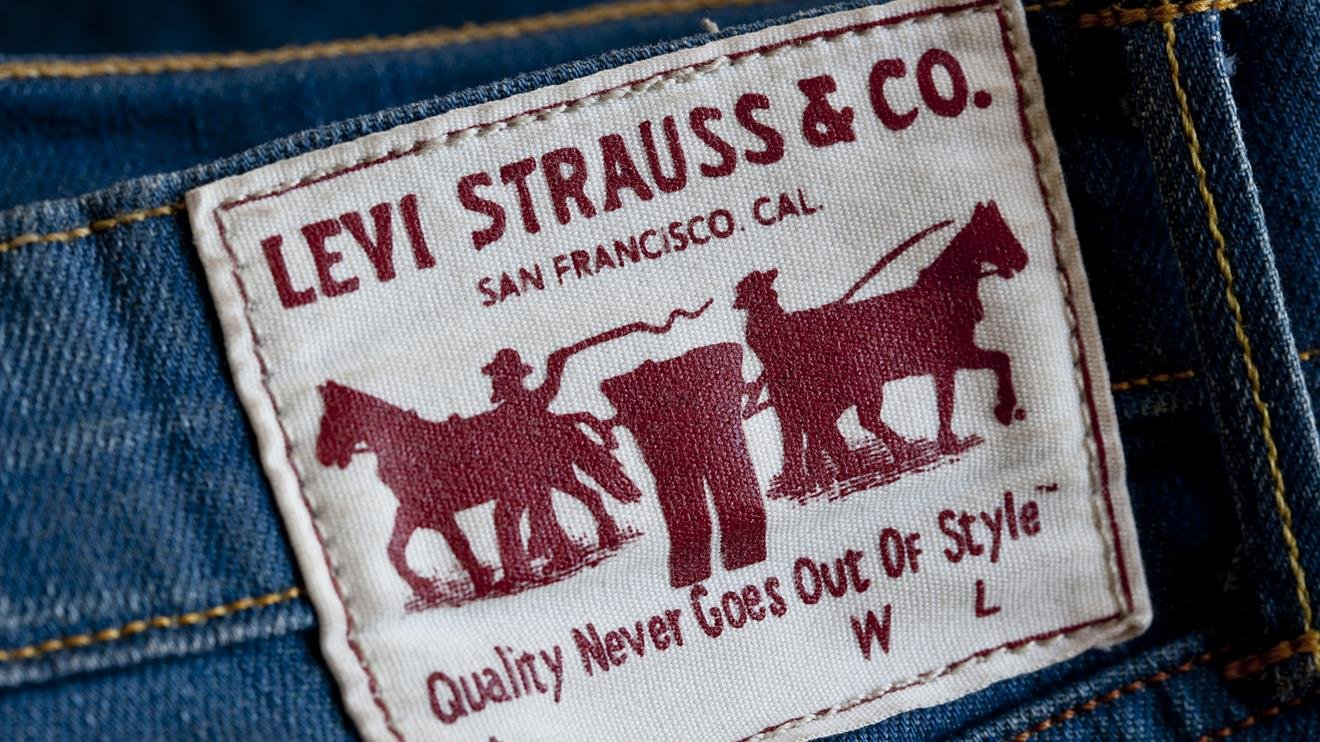
[The slogan of the jeans brand Levi's © Levi's]
This is the slogan written on the label of "Levi's," a jeans brand loved by many. The paradox of a fashion brand talking about quality rather than style explains why this brand, which began in 1853, is still loved today. In modern society, fashion has established itself, beyond a part of the basics of living, as an element of economic value and cultural expression. But as awareness of this industry's negative impact on the environment has accumulated, it is being asked for sustainability, as recently in many fields. The fashion industry's carbon emissions account for about 10% of global greenhouse-gas emissions, which is more than the aviation and shipping industries combined. Water is used to the tune of 920 billion tons each year, an amount that 10% of the world's population could use for a year. The problem does not end here. Social problems — labor exploitation, low wages, and poor working environments that threaten underdeveloped and developing countries in pursuit of cheap production costs — are also not unfamiliar. Consumers now take an interest in such problems and choose friendly products. Furthermore, they also make a brand's ethical management an important purchase-decision factor. Because of this, sustainable fashion brands are increasing in the fashion industry, which is sensitive to consumer interest. Although their influence and results so far are slight, sustainable fashion brands have emerged to solve the burden of excessive resource consumption, using eco-friendly materials, recycling, and upcycling. They also leave declarations to fulfill social responsibility. Modern fashion brands are, beyond simply selling products, presenting a vision to make a better world. In this context, the clothing brand "Patagonia" launched "Patagonia School" in Korea in April 2024.
The Reason "Patagonia School" Was Born: The Barrier That Is Patagonia
To understand Patagonia School, let us refer to a comment left on a blog by Seo Jin-seok, a research fellow at Inno Social Lab who planned this project.
To turn away from Patagonia because it does too well. Meaningful, but an ironic situation. So this project team felt the need to reset the mission it had set for itself, and after pondering from 2022, in April 2024, through the approval of headquarters, it established the "Patagonia Unfashionable Business School (hereafter Patagonia School)." For Patagonia School's curriculum and specific ideal, refer to the following:
• First, a person who has a sense of calling in the fields of social innovation and ESG going forward, and who can educate and share problem awareness with people who will work hard from a social-change perspective.
• Second, a person who can visit Patagonia's headquarters in Ventura, California, USA, and bring back discussion and inspiration.
• Third, a person who recognizes that the current ESG is unsustainable — that a Net-Zero-centered strategy can never solve the environmental crisis and inequality — and who is capable of an Earth-ecosystem-centered approach.
• Fourth, a person who can find their own direction as a participant.
In-House Philosopher Vincent Stanley Becomes Principal

["Vincent Stanley," Patagonia's Director of Philosophy and principal of Patagonia School © Patagonia]
Patagonia has an executive in charge of corporate philosophy. "Vincent Stanley," who serves as Director of Philosophy at Patagonia, was with founder Yvon Chouinard from the early days of the company's founding. Such a person took up the role of principal of "Patagonia School," established by Patagonia Korea. Having worked at this company for over 50 years, he is said to have accepted this role with expectation and hope for how the radical yet hopeful management philosophy Patagonia has shown will be applied to Patagonia School, and how this seed will connect to other countries. In a recent Hankyoreh 21 interview, he cited the following three items as reasons for the high level of cultural confidence Patagonia holds:
• First, the steady effort of the Chouinard family to "consider human happiness and the good of the Earth" in every decision we make.
• Second, that most Patagonia employees made the same steady effort equally.
• Third, that all employees have pride in the products and services we make.
Patagonia School was planned and established by people from public enterprises, Patagonia Korea, social enterprises, and investment companies gathering together. The curriculum is said to have referred to Director of Philosophy Vincent Stanley's book "The Responsible Company." So it was all too natural that he took up the principal role himself. Patagonia School's first cohort, which began in April 2024, started with a total of 8 people. Even in the first semester, CSR and ESG officers from many companies are said to have applied. They conduct classes in the form of special lectures, presentations, discussions, and topic discussions until September, and in October they visit Patagonia's headquarters. The reason Patagonia School exists is to dream that, through such study, discussion, observation, and reporting, company workers become "seeds" that realize a new capitalism.
Do Companies Have Souls Too?

[The DON'T BUY THIS JACKET ad that made Patagonia known to the world © Patagonia]
Patagonia, which answers this question loudly through a megaphone, supports the efforts of company workers connected to realizing CSR and ESG, as "seeds of a new capitalism" to confront the climate crisis. With the wish that those seeds, like dandelion spores, return to their respective places and become the new seeds of those companies.
The brand Patagonia gives substance to a vision to make a better world, beyond a value of merely selling more goods. And it does it well. Patagonia School is closer to the story of a brand creating new possibilities beyond what Patagonia does well. The results are not yet known. But the inspiration this new experiment offers to the companies around it is certain.
by Editor N