
Sustainable Resource Circulation: A New Revolution in Waste Management
Korea achieved a high level of economic growth, accomplishing advanced industrialization and urbanization in a short time. This growth produced the side effect of large-scale waste generation, and its damage and treatment costs are increasing more and more. According to Statistics Korea, Korea treats about 150 million tons of waste each year, and a considerable portion of this is not recycled and heads to landfills or incinerators. On top of resources on an Earth living with limited resources, there is the bonus of serious environmental pollution from the treatment process and the obstacle it poses to sustainable development.
SuperBin (hereafter "SuperBin") is a Korean climate-tech brand that noticed this problem and improves the waste-management system. SuperBin's automatic waste-sorting technology combines artificial intelligence and machine learning to accurately sort waste and recover recyclable resources as much as possible. Through this, it improves the recycling rate, reduces the negative impact of waste on the environment, and at the same time promotes resource circulation. Let us now learn about the approach of SuperBin, which seeks to create a global standard for waste-management technology beyond Korea.
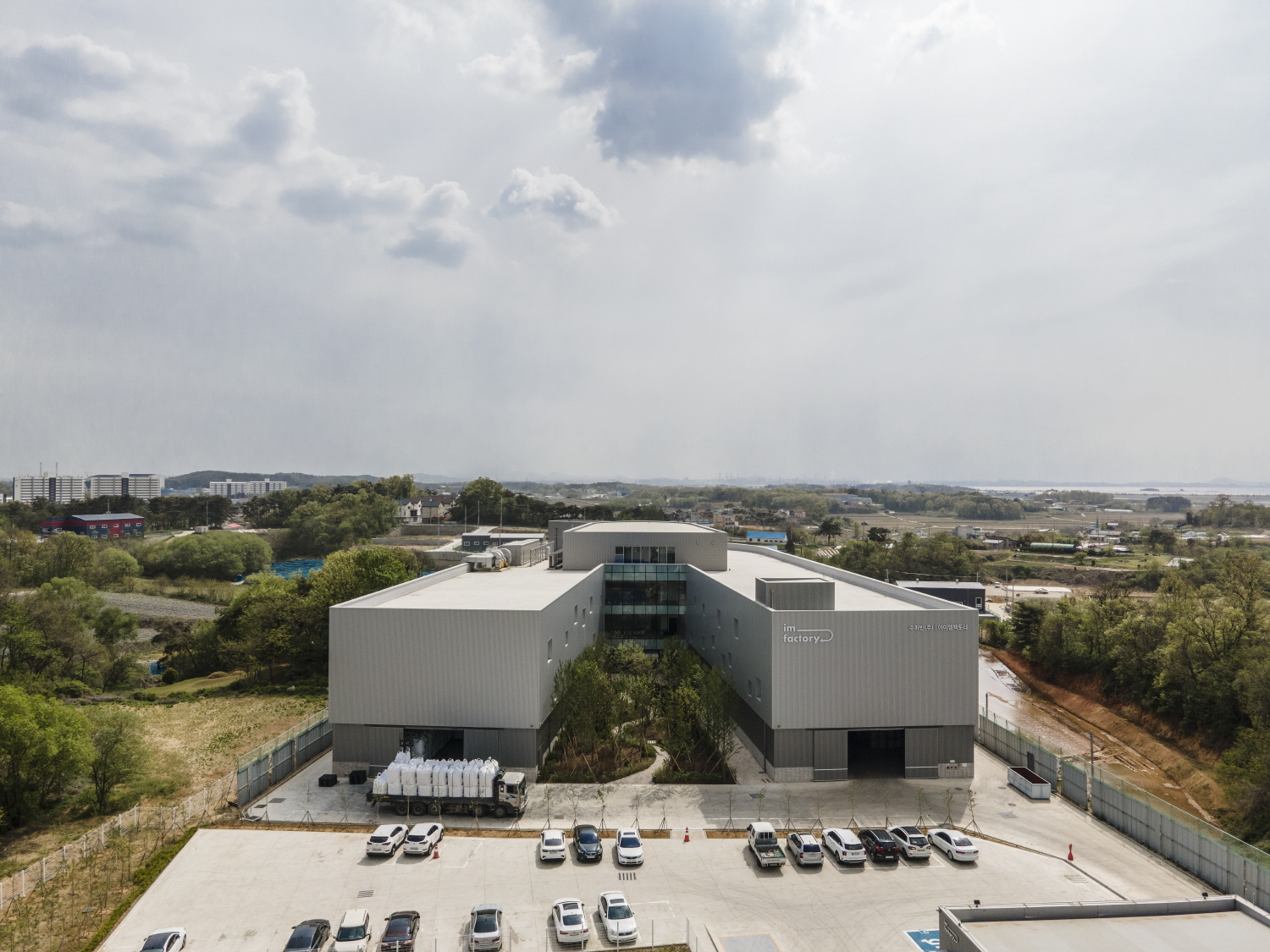
[A factory that doesn't look like a factory, located in Hwaseong, Gyeonggi Province: SuperBin's I'm Factory © Kim Yi-hong Architects]
Creating a World Where Trash Becomes Money and Recycling Becomes Play
SuperBin CEO Kim Jeong-bin created SuperBin in 2015 out of interest in environmental issues. He focused on automatic recognition and sorting systems among waste-management technologies, combining high-performance sensors with artificial intelligence. This technology, which quickly and accurately sorts various types of recyclable resources, is proving its cases through collaboration with various institutions and brands.
[The Yeonnam-dong Trash Mart, carried out together by SuperBin, Coca-Cola, and WWF Korea © Coca-Cola YouTube]
#1 Nephron
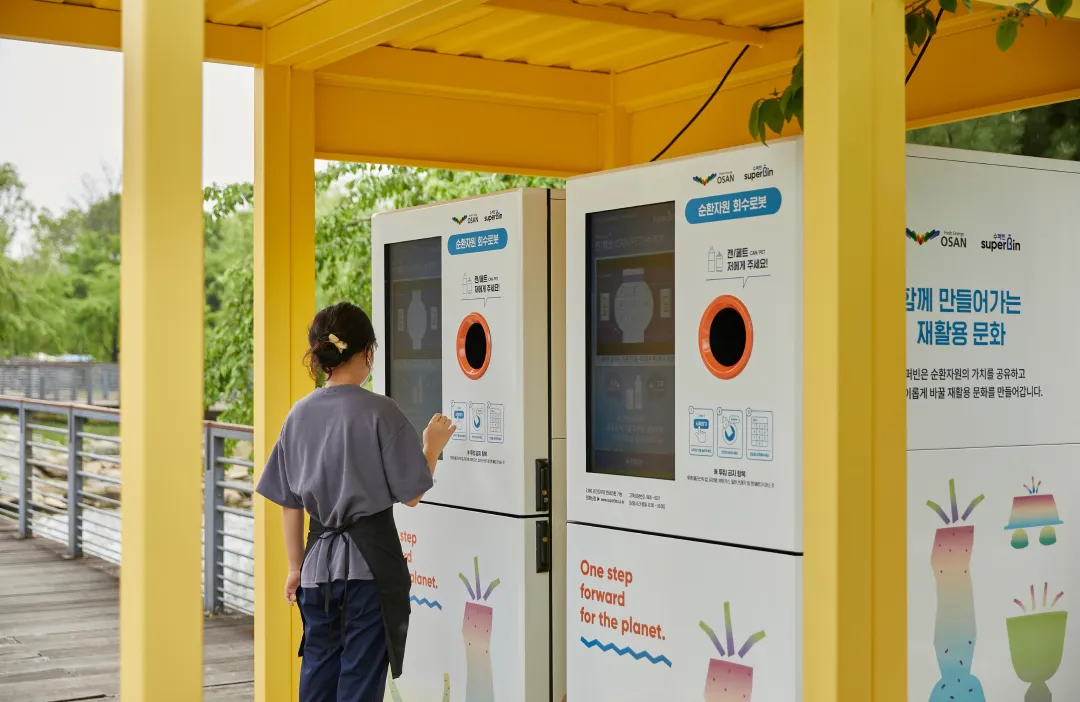
SuperBin's Nephron is a recyclable-resource recovery robot combining AI, Big Data, and IoT. Users gain monetary profit by trading the trash they throw away, and the traded trash becomes a resource again, building a circular-economy ecosystem. For B2B users or users trading large quantities of resources, it also operates a face-to-face recovery channel called "Super Moa."
#2 Trash Spaces
The biggest feature of SuperBin's services is that it has fun content that can encourage the circular economy — a Trash Café selling upcycling menus and experience kits, a Trash Mart where you can shop with trash, "Super Rookie," which educates students on correct recycling awareness, and a Trash Art Museum where upcycled works can be exhibited.
#3 Global Challenges and Opportunities
Currently, SuperBin is accelerating its expansion into the global market, based on successful verification of its business model in Korea. Based on a new approach that turns trash into play, it also obtained the safety standards of the US, Europe, and elsewhere and the Global Recycled Standard (GRS). Amid discussions worldwide to reduce plastic use, the forecast is that such demand will increase not only domestically but also abroad.
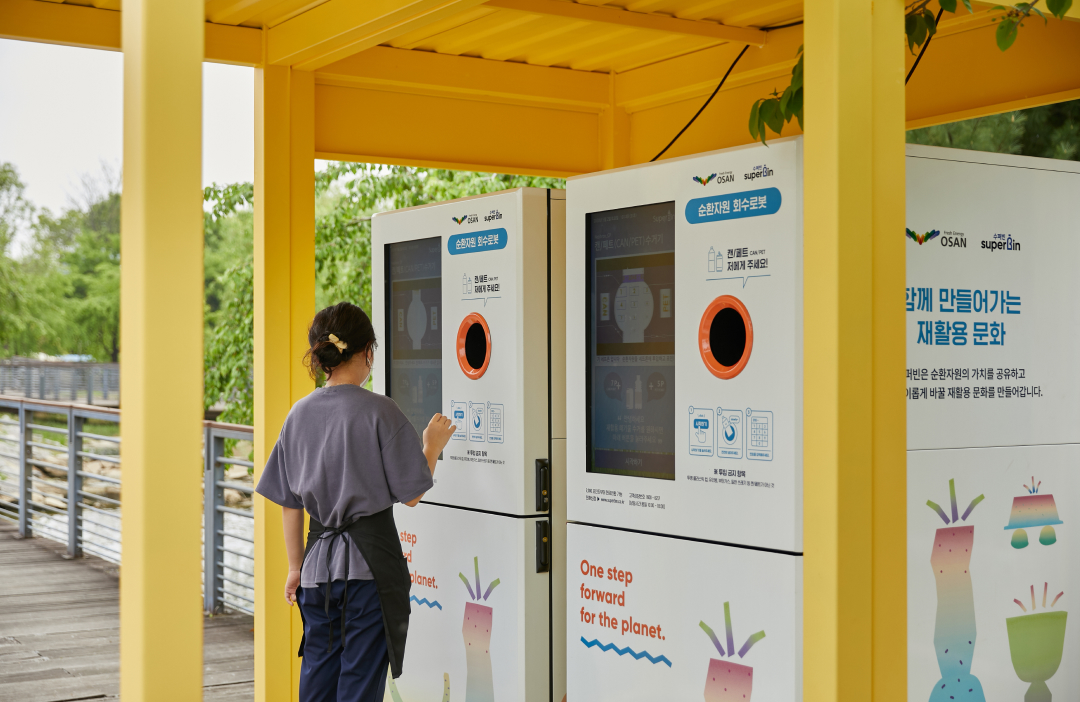
[Citizens using Nephron, the recyclable-resource recovery robot © SuperBin]
The Trash-Free World SuperBin Envisions
CEO Kim Jeong-bin has revealed the ambition to "firmly build the circular-economy cycle of waste PET bottles and have ownership of the concept of 'circular economy.'" It is said he plans to expand the business by increasing waste items, and to continuously pay attention to spreading recycling culture with content that can prove the cultural value of recycling.
SuperBin, which pursues continuous innovation and technological advancement in the waste-management field and plays a leading role among Korea's climate-tech brands, has to date attracted investment six times, recognized with cumulative investment of 46.7 billion won and a corporate value (valuation) of 250 billion won. With SuperBin's confirmed standing and brand value, let us look forward to the value of resources and the cultural environment surrounding the circular economy getting better.
by Editor L