

By Lee Choong-gul (essayist, former editor-in-chief of GQ Korea, author of the novel "Your Face") · July 9, 2025
My first car was a 3-door Pride FS. A blood-colored, seven-year-old used car. I sealed the cracked taillight lamp with box tape, the wiper drew a fan shape on the glass, cigarette smoke that had gone in and out of someone else's insides invaded through the gap in the window, and it stalled once on a road in Sinchon — but I loved my car. Back then, a car was a matter of conviction. The belief that there is a road, the fantasy that the road will always continue, the self-deception that the fuel will never run out.
[ⓒESG.ONL]
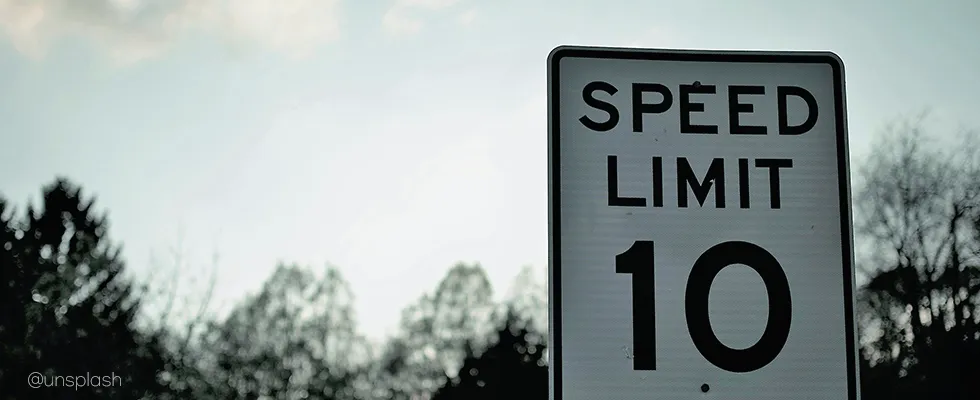
In the old days, everyone loved speed. Nor were we prepared to give up speed. Because we had been trained as such a moving species, and because we long believed the lie that speed is the proof of existence. And because there was no pleasure quite like it. Thus humans made engines, burned fuel, and swallowed roads. Essentially, even if you park the car, the Earth turns and we too are accelerating. The sense of stopping is so impractical that it reads rather as regression. Zero-to-sixty is class, the speedometer coordinates, the fuel gauge a bank balance. Here, Seoul, jammed every single day, became the front line of speed, and the roads willingly schemed for the physical extension of a fast-forwarded life.
The people growling with engines on the morning road reflect back not the destination the GPS tells them but the things behind it — the inside of the worn tire's skin, the moisture cooling the radiator, the shouts blocked out between the soundproofed doors. The world rotates twice. Once along the reciprocating motion of the piston, and once within the vapor called ethics. The former's rhythm is mechanical; the latter's rotation is morally irregular.
[ⓒESG.ONL]
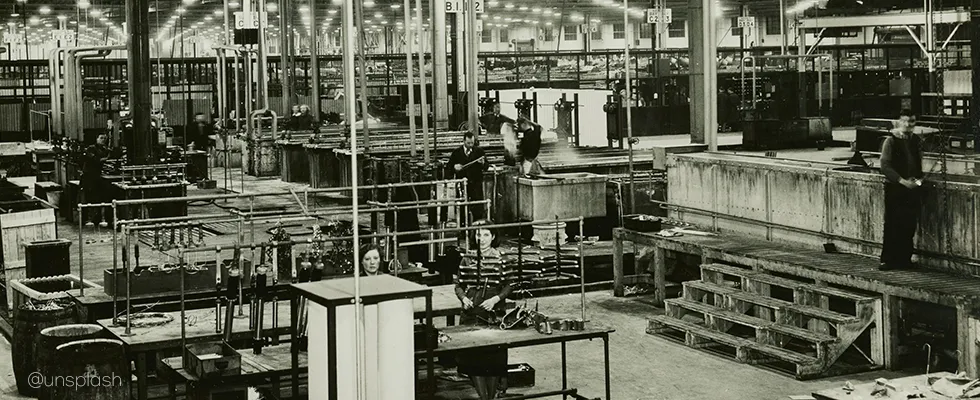
When the automobile civilization that arose from the Detroit factory floor a century ago covers the planet with the murmur of 100 million internal-combustion engines, weaves a million feedback circuits, and races into the heart of capitalism, finished-car companies assemble and procure these through a monstrous supply chain extending to first-, second-, and third-tier suppliers. (Like a relative abruptly bringing up a philosophical story, my emotions churn on their own.) This structure is surely efficient, but what's beneath the wheels is hard to see.
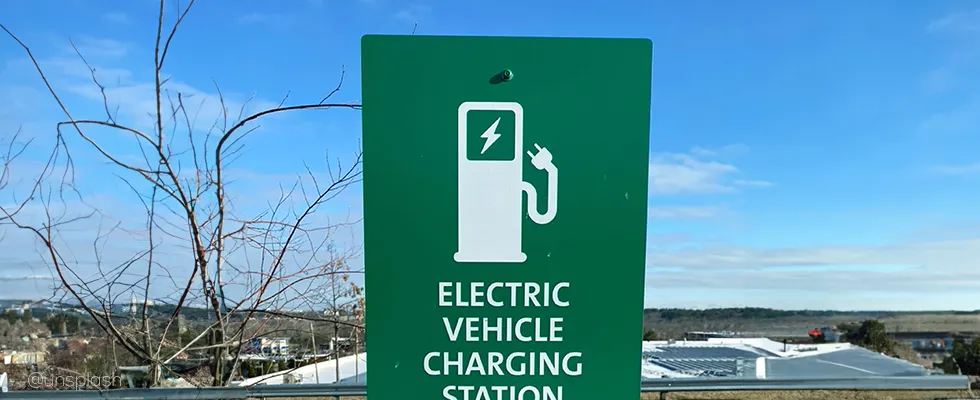
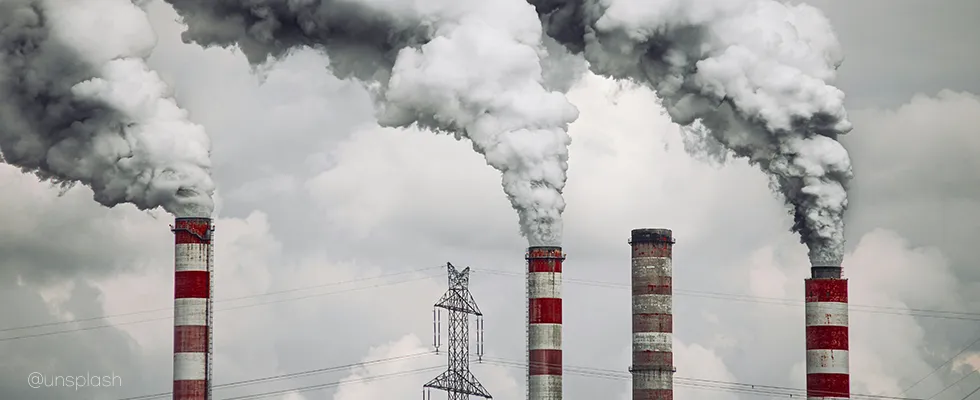
Nitpicking like a fussy village schoolmaster, some report describes that 6 to 17 tons of carbon dioxide are emitted when making a single car. It reduces carbon dioxide roughly, they say, but electric-vehicle batteries would presuppose high-density mining of lithium, nickel, and cobalt — and in which country, by what method, through what route it came to the factory is opaque. Lithium dries up the salt lakes of Chile, cobalt is extracted under the shadow of child labor in the Congo, nickel digs up the lowlands of Uzbekistan. Here a few questions fill every corner of the car's blueprint. Is the electricity at that charging station really renewable energy? On whose life was the supply route laid?
[ⓒESG.ONL]
In chemistry class at fifteen, in a classroom where a globe rolled about, while everyone wilted without even a fan's breeze, the teacher said the Earth was dying. The Earth was dying then too, and it is dying more each day now. Only, these days the way it dies has become a bit more expensive. Recycling, circulation, carbon neutrality, electric cars, hydrogen cars. All these words have become a luxurious religious rite by the name of eco-friendliness, so behold, the day of being saved with a single button has come.
To me, the acronym ESG — vaguely abstract and at times hard as a matchbox — gives off a strange pheromone smell. Something like a spell that Shakespeare's three witches brewed by mixing guilt, imbalance, and some nightmare. In any case, the presence that the neologism ESG now has in the auto industry is as heavy as a single drop of oil and as delicate as a single watt of electricity. Yet in a situation where a dozen buckets of cars pour out every day and the roads can't even handle it, ESG sometimes appears as a detour that avoids controversy. And it is too technical to speak of the future. So more footnotes are needed.
Right on cue, the car companies moved. One company uses recycled fabric in large quantities, another installs solar panels, and yet another announces it will do away with internal-combustion engines. There is no slogan as hungry as this — one where it's unclear whether the words "for the Earth" are symbol or system, or an apology for values already broken. What? So you're saying you'll bring light to the factory, eyes to the supply chain, questions to the board?
When ESG works not as a question but as a declaration, it becomes unsettling. Something like hastily putting on a straight face. The feeling that when someone proclaims "I've decided to live good now," they're already not good. Because a declaration of apology also looks like a statement of account, a report, or a brochure rather than an apology. In any case, industry seems to have an aspect of keeping balance with hidden facts, concealed relationships, structured silence, and unpronounced things. Whether it's a new market strategy or the consumerization of ethics, the obsessive systematization of the public good exposes how anxious they are, and at the same time how sorry.
[ⓒESG.ONL]
The name "eco-friendly car" also invites slight suspicion, but I don't want to condemn it blindly. Suspicion is an efficient purification mechanism, and we justify ourselves through condemnation, persuading ourselves that we are the better axis. What is clear is that Toyota, which persuaded the world with hybrids, or Tesla, which molded desire with batteries, or Hyundai, which took the lead in hydrogen fuel-cell technology, are surely not a squad of superheroes saving the Earth — but at least they would have wished to wreck it a little less.
But, in a moment of carelessness, the era that shimmered with the pleasure of engine sound set. No one is even seen arguing over which engine is strongest. To think, the dream of speed is now the days of asking speed's guilt. Whatever the case, speed itself is not a sin. Only the direction is the problem.
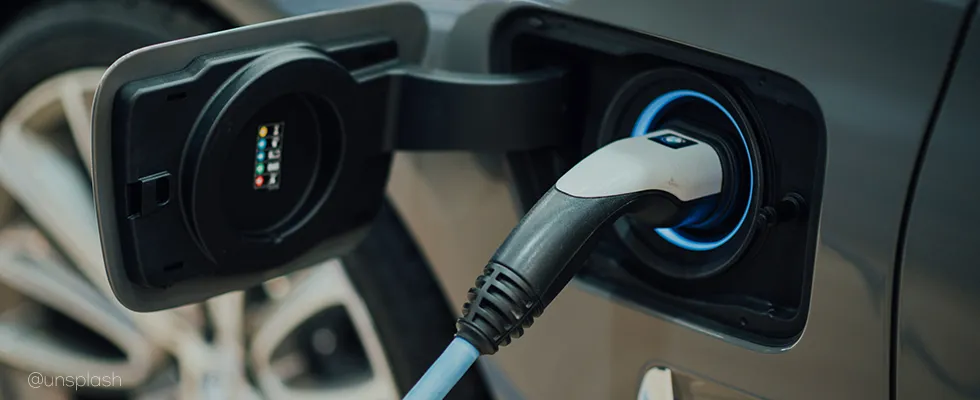
A friend who had only ever driven diesel cars changed his electric car twice in three years. The first time, it was because of the government subsidy, the charging station near his home, and the half-price rate at the public parking lot in front of his company. The second time he changed, the biggest reason was jealousy that an ugly junior had bought a Tesla, but anyway he searched the battery's country of origin and chose fabric seats over leather. (But when the charging line grew as long as a National Assembly hearing, the Earth was saved, but the citizen's patience died.)
[ⓒESG.ONL]
This summer, I sat in the passenger seat of that friend's car, and it was so quiet that I felt a little uneasy. Because the quieter the car gets, the less we exist. Because the more the car thinks, the less we think. Some technology will easily exclude humans and, using convenience as an excuse, shrink the human's place. Still, it wasn't that I disliked it. Because being peaceful is, in any case, addictive.
Rather, there was comfort. Inside the car, I could hear the city's minute breathing. Vapor rising from the drain, the sound of a bicycle chain, the sound of a child dropping a milk bottle. When I suddenly grew drowsy, I couldn't tell whether the car was running, veering off onto a side road, or passing through a heat haze.
"The car is so quiet I feel like I've disappeared."
Once I said it, it sounded to my own ears like a really good metaphor explaining the dilemma of the auto industry.
Everything seethed with antinomy. The engine grew quiet, but the city grew noisier. We reduced exhaust gas, but couldn't turn off the anger within us. However fast we ran, the destination was far. At such times even the word "stop" becomes part of speed and disguises itself in the name of acceleration. At that very moment, if you slam the brakes, you'll gain even a bit of moral satisfaction.
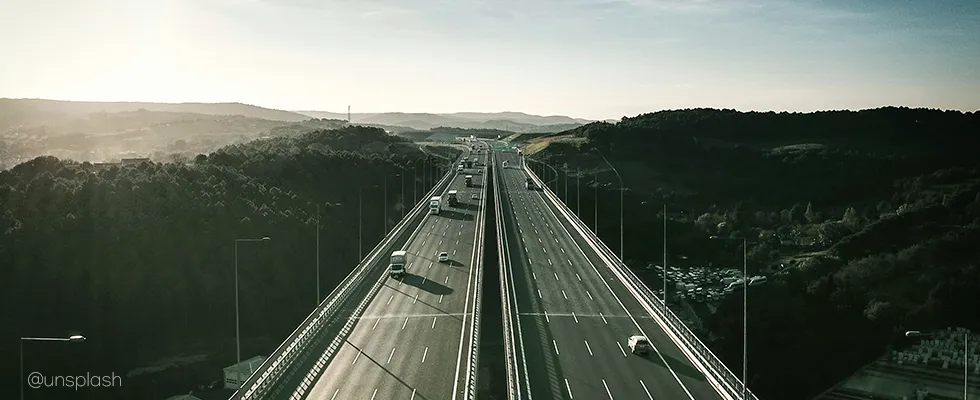
My love for the Pride was at times irresponsible, and nostalgia was often ignorant. But a car was, from the beginning, not a machine to me but a narrative. The night harbor, the morning rice fields, the utility poles along the national highway. In my youth, riding a moving box, I tasted what lay beyond the city's edge.
[ⓒESG.ONL]
Now I drive a more ethical car than my father's generation, but my father's generation treated cars with a more ethical attitude. My father's car is memory, my car is a social weathervane, and my son's car is, well, like the only chance at advice given to me. We tell our children "don't live like me," yet still commute at the same hour. Even while sitting in a hydrogen car reciting things about being for the environment, our hand turns the air conditioning to maximum. Still, when passing through the middle of the city in a way no one teaches, I suddenly ask, somewhere between reason and mechanical instinct. Can one be moving and quiet at the same time? Can one reduce carbon while enduring desire? I haven't even solved all the problems — which road should I take to get out?
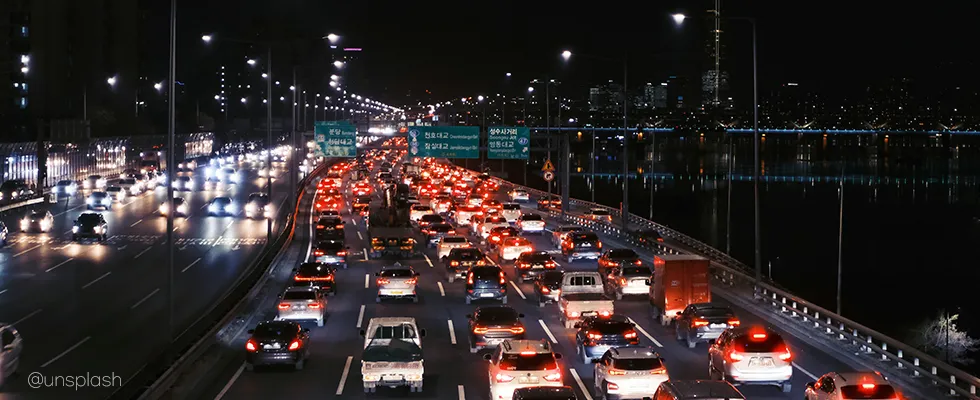
With my weakened and worsened eyesight I cannot drive, but I ride in a car every day. Late on a Friday night, when I see the line of headlights stuck and unable to move on the highway, my heart grows cold and warm at once. I don't know whether it is the fruit of technology or the loneliness of the year, but the car, whether jammed or flowing well, was carrying me somewhere.
In July, when raindrops flow down the windshield of a Genesis GV60, everything looks beautiful. When you slow down and lower the window, you see another face of the city you didn't know as a pedestrian. A person leaning against a traffic light, a handcart disappearing into a bent alley, the fingertips of a woman sorting a garbage bag, some waiting hung on a single electric-vehicle charging cable. Upon the overlooked face of silence, so many mysterious invisible relationships are entangled.
Changing the energy source doesn't mean the way of moving will change. The road is not an asphalt route but a collective fantasy about how the world works. We still go somewhere. We still race down the highway, still drink coffee in the car, still listen to music over Bluetooth.
[ⓒESG.ONL]
And so, someday, I want to write a single aphorism in black ink.
Let all that runs, run.
By Lee Choong-gul (essayist, former editor-in-chief of GQ Korea, author of the novel "Your Face")