
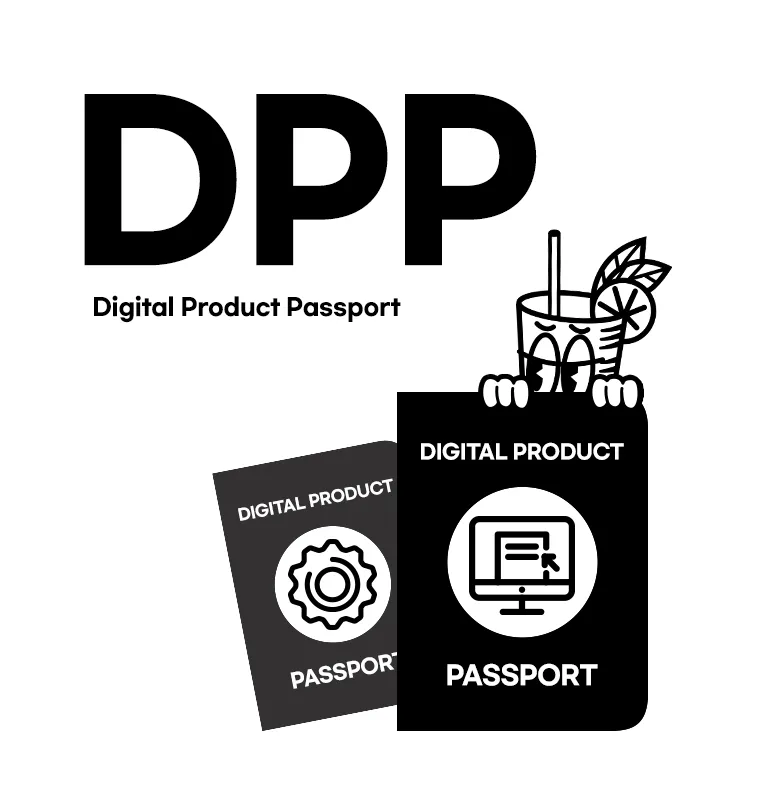
When preparing to travel across borders, the first thing we reach for is a passport. The Digital Product Passport (DPP), proposed by the EU, is a system that stores and shares information about a product's sustainability — encoded in a QR code or similar format. All tangible products distributed within the EU must carry a DPP. In other words, any product crossing into the EU by sea or air must carry this DPP like a passport to clear customs.
The DPP became mandatory in 2024. To advance its 2050 carbon neutrality target, the European Commission enacted the EU Ecodesign Regulation on July 18, 2024, announcing the introduction of the Digital Product Passport for all physical goods distributed within the EU. Required information includes compliance with criteria such as durability, repairability, recyclability, and carbon footprint. From 2027, the DPP will be applied first to textiles and steel, before expanding to cover aluminum, furniture, tires, detergents, paints, lubricants, and chemicals. Companies in these sectors must begin preparing now.

[ⓒESG.ONL]
The Digital Product Passport was introduced to enhance product sustainability and resource efficiency, and to promote the transition to a circular economy. Anyone with a smartphone can scan the QR code or barcode on a DPP to access information about a product's raw materials and production process, as well as its carbon emissions and recyclability. The ability for all stakeholders — not just consumers — to transparently verify sustainability-related information about a product is the core value of the DPP. It also raises the likelihood that consumers will be able to identify which products are more eco-friendly and sustainable, driving the spread of ethically conscious consumption across society.
[ⓒESG.ONL]
Many companies are already preparing for the introduction of the DPP. International brands that have already adopted it include luxury houses such as Dior and Cartier, coffee brand Nespresso, and fashion brands H&M and Hunter. South Korean brands that have introduced the DPP include fashion labels RAW RAW, Matin Kim, and Andar, as well as outdoor brand Kolon Sport.
However, the use of DPP may give rise to issues including the protection of personal data. Companies adopting the DPP must therefore pay close attention to user protection policies as well.
by Editor O