
Barrier-Free, meaning "free from barriers," is a movement aimed at eliminating the institutional, physical, and psychological barriers encountered in daily life by socially vulnerable groups — including people with disabilities, the elderly, and pregnant women.
The term was first officially used in a 1974 UN report titled "Barrier-Free Design." In the 1990s, Japan and Germany began applying the barrier-free concept in earnest to physical obstacles — transportation facilities and public infrastructure. The wheelchair ramps beside staircases at building entrances, and the tactile paving blocks on sidewalks and subway platforms that are now familiar features of daily life, are all examples of barrier-free design. South Korea has actively implemented this approach since 2008.
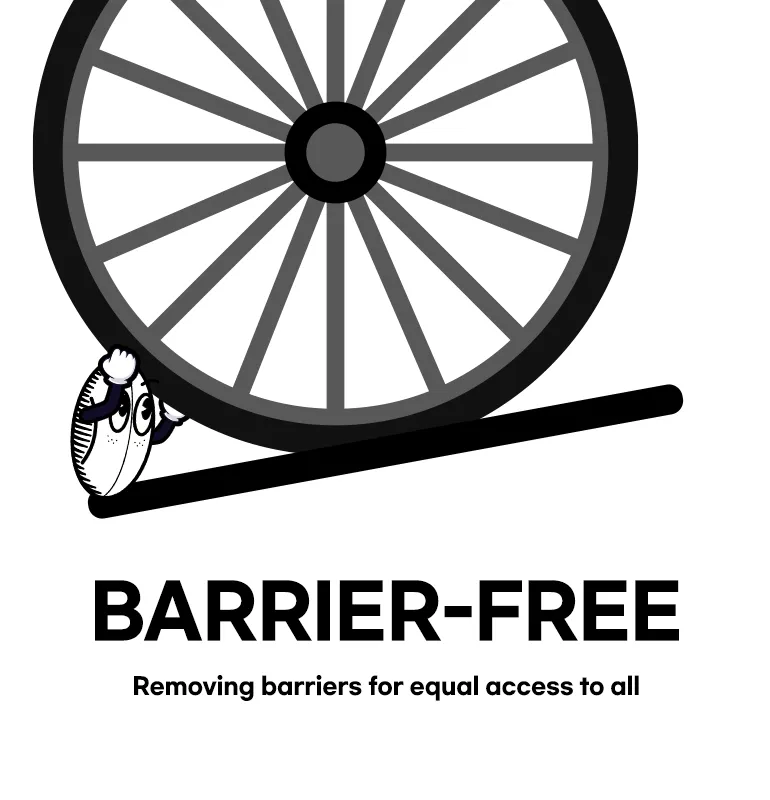
[Barrier-Free ⓒESG.ONL]
The barrier-free concept continues to expand alongside technological advances. Today, not only transport facilities but also ordering kiosks are accessible via braille, and voice guidance systems are available to assist service users. A diverse range of AI-based solutions has also been developed, with services such as document recognition systems for the visually impaired and AI sign language avatars for the hearing impaired now entering commercial use.
Barrier-free is also being extended into leisure activities. OTT services offer specially produced subtitles and audio description services so that people with visual or hearing impairments can enjoy films. Travel companies are developing barrier-free destinations, lowering the threshold for international travel among socially vulnerable groups.
In this way, the barrier-free concept is being applied broadly across everyday life, transforming society so that socially vulnerable individuals can enjoy universal opportunities and rights alongside everyone else.
by Editor O