Loading Data
Please wait a moment...
Update Cal.
2026.08
03
Mon
04
Tue
05
Wed
06
Thu
07
Fri
08
Sat
09
Sun
Update Calendar
2026.08
01
Sat
02
Sun
03
Mon
04
Tue
05
Wed
06
Thu
07
Fri
08
Sat
09
Sun
10
Mon
11
Tue
12
Wed
13
Thu
14
Fri

Loading Data
Please wait a moment...
ESG keywords to ponder during a short lunch break.
Wooden stirrers used for a cup of coffee, newly purchased furniture, even chocolate — many of the products we use in daily life originate from forests. But what if, because of these products, forests somewhere on Earth are disappearing? The EU Regulation on Deforestation-free Products (EUDR), which the EU is implementing in earnest from December 2025, is precisely a regulation to solve this problem. According to the World Wide Fund for Nature, approximately 40% of the world’s forests have already been degraded by human activity, and 10 million hectares of forest are lost each year. That is about 16 times the area of Seoul disappearing every year. This is why the EU created the EUDR, a regulation requiring proof that products entering the EU market were not produced through the destruction of forests.[EU Regulation on Deforestation-free Products (EUDR) Ⓟ ESG.ONL/ESG Today]Under the EUDR, operators wishing to distribute seven commodities — cattle, cocoa, coffee, palm oil, soy, rubber, and timber — and their derivative products within the EU must submit a due diligence report verifying that the production process is unrelated to deforestation and forest degradation. The same regulation applies not only to raw materials but also to derivative products made from them.The EU has classified the countries subject to the regulation into three grades based on risk level by country. According to the country risk classification published in May 2025, 140 countries including South Korea were classified as low-risk; Brazil, Indonesia, and Malaysia among others as standard-risk; and North Korea, Russia, Belarus, and Myanmar as high-risk. The classification standard is the degree of deforestation — the conversion of forests to agricultural land. Based on this standard, only 1% of the annual total volume of products produced in countries classified as low-risk are subject to inspection, and importers within the EU are subject to simplified due diligence obligations, such as being exempt from implementing risk assessments or mitigation measures. For standard-risk countries, 3% are subject to inspection, and for high-risk countries, 9%.For companies to respond to the EUDR, strengthening supply chain management is necessary. Transparency across the overall production system, including manufacturing and processing processes, must be secured by providing information such as the geographical location of all production stages, production dates, supply chain contacts, satellite images or land use maps, and land ownership or logging permits. The application of a new system entails some degree of inconvenience. But going forward, the products we use will come with an invisible guarantee that ‘this product did not destroy forests.’ by Editor O
11/27/2025
RCP scenarios are an acronym for Representative Concentration Pathways. They are scenarios that predict the impact of future human activities on the atmosphere in terms of greenhouse gas concentrations and forecast the resulting climate change. Based on RCP scenarios, which are used as tools to predict future climate by scientifically calculating greenhouse gas concentrations that vary depending on whether climate change response policies are implemented, it is possible to forecast changes in average temperature and the frequency and intensity of natural disasters due to climate change.The origins of RCP scenarios date back to 2007. The Intergovernmental Panel on Climate Change (IPCC) embarked on developing new scenarios to enhance the accuracy of climate change predictions. At a climate change expert meeting in September 2007 attended by approximately 130 relevant researchers and users, the new greenhouse gas concentration scenarios known as RCPs were finalized, and a scenario development framework and schedule were established by the climate modeling (CM), integrated assessment modeling (IAM), and impact, adaptation, and vulnerability (IAV) communities. Subsequently, RCP scenarios were officially adopted in the IPCC Fifth Assessment Report in 2013.[RCP Scenario Ⓟ ESG.ONL/ESG Today]The RCP scenarios consist of four types. RCP 2.6 represents a case in which the Earth can recover on its own from the impact of human activities, predicting atmospheric carbon dioxide concentrations of 420 ppm by the end of the 21st century. However, given the current state of national greenhouse gas emissions that has already surpassed this level, it is evaluated as a scenario that is difficult to realize. RCP 4.5 represents a case in which greenhouse gas reduction policies are implemented to a significant degree, forecasting carbon dioxide concentrations of 540 ppm and a temperature increase of approximately 2.4°C. RCP 6.0 represents a case in which greenhouse gas reduction policies are implemented to some degree, predicting carbon dioxide concentrations of 670 ppm and a temperature increase of approximately 2.8°C. RCP 8.5 is the worst-case scenario in which emissions continue along the current trend without greenhouse gas reductions, predicting carbon dioxide concentrations of 940 ppm and a temperature increase of approximately 4.4°C.The Korea Meteorological Administration develops and provides national climate change standard scenarios based on the IPCC’s RCP scenarios. Global climate models and regional climate models are utilized to produce detailed climate change projections specialized for the Korean Peninsula, and according to the climate change scenarios, in the latter half of the 21st century (2071–2100), South Korea’s temperature is projected to increase by 1.7–4.4°C, with precipitation increasing by 6.6–13.2% compared to the present.The four RCP scenarios also provide projections on sea level rise. According to the scenarios, the sea level in the waters surrounding South Korea is projected to rise by 87–136 cm by the end of the 21st century, a figure exceeding the global average. Just as the vulnerability of coastal areas makes it possible to anticipate socioeconomic impacts, the scenarios can also be used as the scientific basis for public policies such as industry-specific impact assessments, the formulation of climate change adaptation measures by local governments, water resource management plans, and disaster preparedness infrastructure construction. The RCP scenarios are not mere future predictions but tools that show the outcomes of our choices. Individual practices toward greenhouse gas reduction, corporate eco-friendly management, and government climate policies all come together to determine which path — between RCP 2.6 and RCP 8.5 — we will follow. Climate change response is no longer a matter of choice but of survival, and the RCP scenarios are indicators that scientifically demonstrate that urgency. by Editor O
11/20/2025
Microcredit is a representative case of social finance, a financial model that helps low-income groups and the financially vulnerable achieve self-reliance by providing small loans. [Microcredit Ⓟ ESG.ONL/ESG Today]Beginning in the 1970s with the Grameen Bank founded by Dr. Muhammad Yunus in Bangladesh, microcredit provided small loans to women and the poor without credit scores or collateral based on trust, opening opportunities for entrepreneurship, livelihood, and education. Women and the poor were able to start small businesses and livelihood activities with this money, and in the process of repaying the loans, they regained confidence and trust as members of the community. The Grameen Bank and Dr. Yunus, who presented a new path of ‘finance for self-reliance,’ were recognized for this contribution and awarded the Nobel Peace Prize in 2006. Institutional finance, which determines loan eligibility solely based on credit scores, finds it difficult to embrace multiple debtors, the financially vulnerable, and local small business owners. What microcredit provides to these people is not simply money but hope that they can overcome difficulties and dream of a future as members of society. Microcredit was subsequently adopted by various countries in forms adapted to their own circumstances and became a financial model representing social finance. The Together Making the World (Social Solidarity Bank), a non-profit incorporated association, introduced microcredit in the immediate aftermath of the IMF crisis and currently provides unsecured, low-interest small loans to youth preparing for independence and small business owners. In this way, the Social Solidarity Bank is continuing social finance activities to resolve financial blind spots by providing small loans to multiple debtors, small-scale small business owners, and financially vulnerable youth. by Editor O
11/18/2025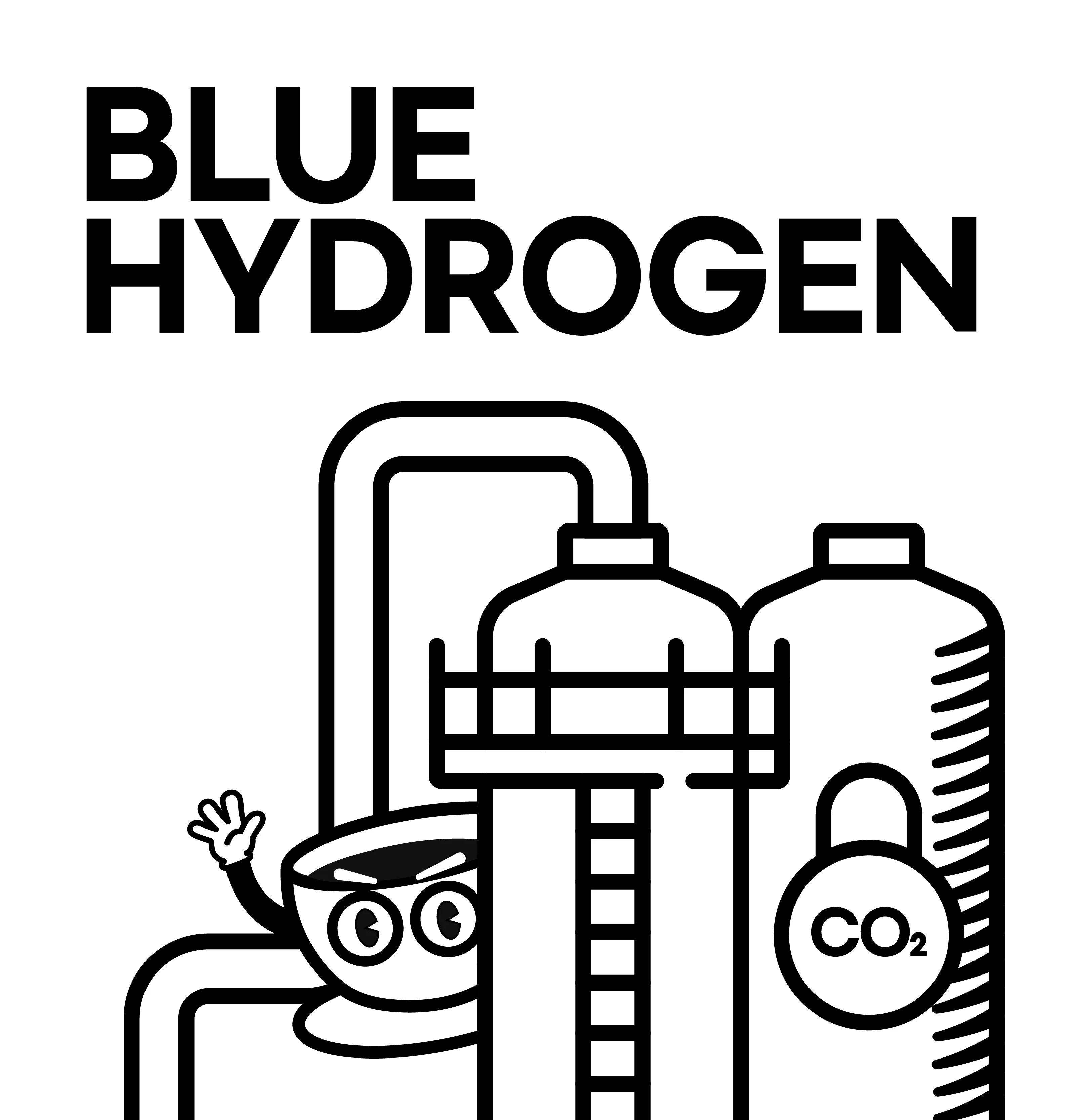
Green hydrogen is expected to play an important role in the future hydrogen value chain, but the reality is that sufficient infrastructure for immediate mass production is not yet in place. For this reason, blue hydrogen is the hydrogen produced in the most environmentally friendly way that the current hydrogen industry is paying attention to. [Blue Hydrogen Ⓟ ESG.ONL/ESG Today]To understand blue hydrogen, it is necessary to look at the process of gray hydrogen. The Global Hydrogen Review 2025 published by the International Energy Agency (IEA) analyzed that, despite the growth of low-emission hydrogen, the feedstock driving hydrogen production in 2024 was fossil fuels. According to the report, 290 billion cubic meters of natural gas and 90 million tons of coal were used to produce hydrogen. Gray hydrogen is precisely this method of producing hydrogen through fossil fuels. Fossil fuels such as oil, coke, and naphtha are supplied as raw materials in the production processes of petrochemical or steelmaking plants. In the process of converting fossil fuels into the target substances needed for these processes, hydrogen is generated as a by-product, and gray hydrogen is the collection and use of this by-product hydrogen as fuel. For this reason, gray hydrogen is sometimes called by-product hydrogen. Since gray hydrogen is primarily extracted from fossil fuels, it is difficult to evaluate it as environmentally friendly, and it emits carbon dioxide in the process of its generation. It also has the limitation that additional hydrogen production is difficult. What compensates for the limitations of such gray hydrogen is precisely blue hydrogen. Blue hydrogen is obtained by reacting natural gas with steam, and is therefore called extraction or reformed hydrogen. When natural gas or lignite — a type of fossil fuel — is reacted with steam, hydrogen and carbon dioxide are generated, and at this point, the carbon dioxide is captured using CCUS technology, preventing the air pollution that occurs in the production process. Blue hydrogen is more environmentally friendly compared to gray hydrogen and can be mass-produced, making it discussed as the most realistic alternative for obtaining hydrogen until green hydrogen infrastructure is developed and deployed. In fact, U.S. blue hydrogen production in 2025 is projected to increase nearly fivefold compared to 2024, and blue hydrogen production plants are increasing, centered on natural gas production regions or areas where various processes utilizing natural gas are concentrated. While the effectiveness and long-term stability of CCUS technology need verification, the shared opinion across the industry is that a transitional phase through blue hydrogen is necessary for the hydrogen ecosystem to stably take root while new and renewable energy and green hydrogen technologies mature.by Editor O
11/06/2025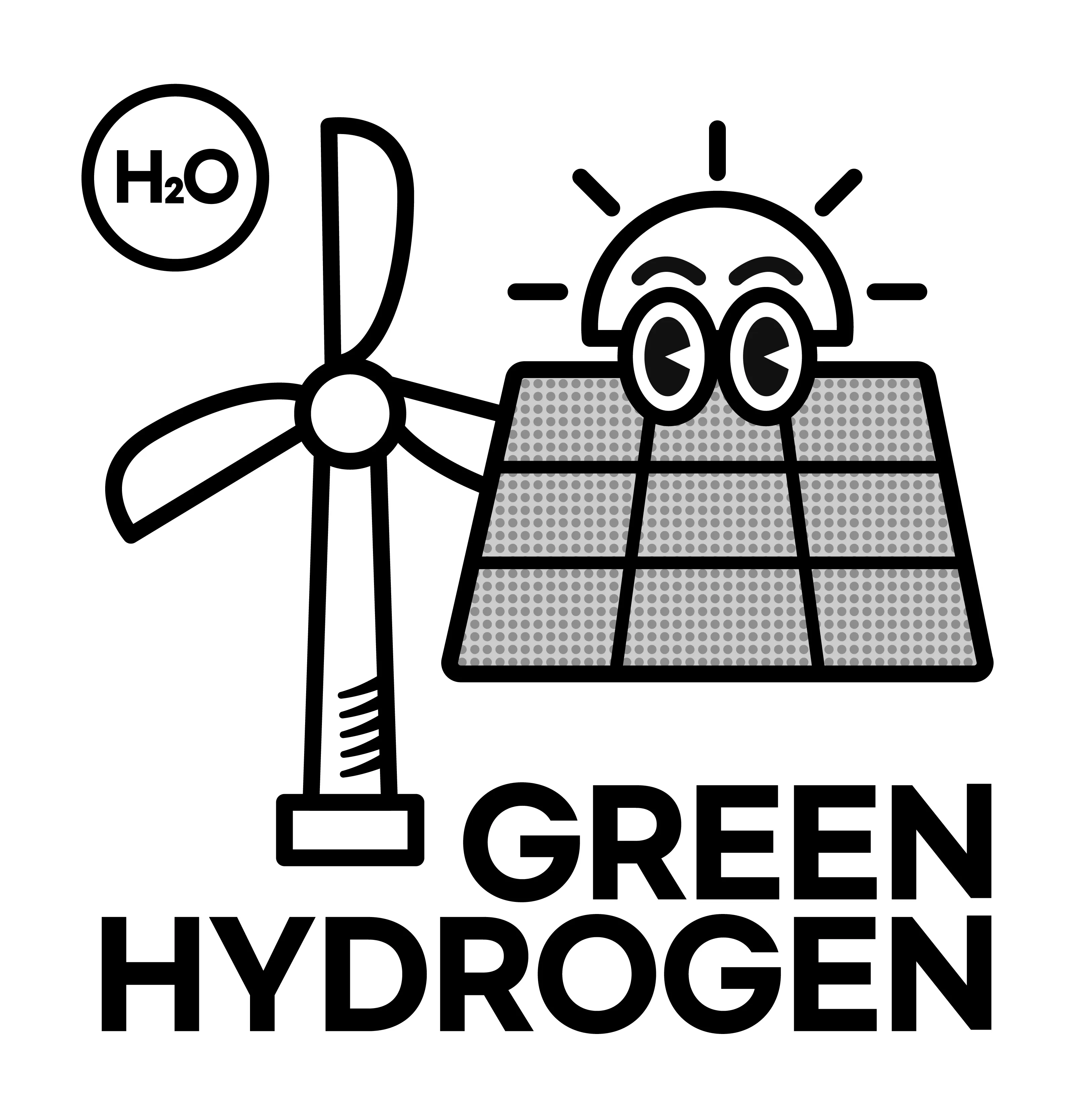
Hydrogen is a fuel drawing attention as a replacement for fossil fuels in the carbon neutrality era. Hydrogen is used as fuel in gas turbines or fuel cells and does not emit carbon dioxide in the combustion process. Green hydrogen, blue hydrogen, and gray hydrogen are named according to the differences in how such hydrogen is produced, and green hydrogen refers to hydrogen produced in a way that does not emit carbon dioxide during the production process. [Green Hydrogen Ⓟ ESG.ONL/ESG Today]Although hydrogen is a substance common enough to account for 75% of the mass of the universe, it does not exist in isolation in its natural state. Therefore, to obtain hydrogen, compounds such as ammonia and water must be decomposed. Different names are given depending on what kind of energy is used in this compound decomposition process. Green hydrogen, also known as water electrolysis hydrogen, uses electricity obtained from solar power, wind power, and the like for water decomposition, thus generating no carbon dioxide in the hydrogen production process.Previously, the high unit cost of electricity produced by new and renewable energy was a disadvantage of green hydrogen, but as the volume of electricity produced by solar and wind power globally has surpassed the share of coal-fired power generation, it is projected that this limitation will also soon be overcome. According to the IEA’s 2025 Global Hydrogen Review, among the hydrogen production volume of 100 million tons in 2024, the production volume using low-emission hydrogen* technology is just over 1%, but it achieved 10% growth compared to the previous year. While gray hydrogen — collected from the hydrogen generated in the process of processing fossil fuels — still accounts for a large share, the technology and market related to green hydrogen are gradually growing. *Low-emission hydrogen: A term encompassing hydrogen that captures carbon dioxide in the production process or water electrolysis hydrogen utilizing new and renewable energy, collectively referring to blue hydrogen and green hydrogen.Ivana Jemelkova, CEO of the Hydrogen Council, who attended the 2025 APEC CEO Summit held in Gyeongju in 2025, likewise diagnosed the current situation as “the hydrogen industry is now in a period of learning and growth” and highly evaluated its future growth potential. She also saw South Korea as a key axis in the expansion of the global hydrogen ecosystem and identified Hyundai Motor Company as being at the center of it. In fact, Hyundai Motor Company is building South Korea’s hydrogen value chain, recently constructing the nation’s first hydrogen fuel cell plant. It is worth paying attention to what strategic value Hyundai Motor Company and South Korea — which began hydrogen-related research and development in 1998, at a time when there was not even a conception of mass-producing electric vehicles — will realize on the journey to carbon neutrality. by Editor O
11/04/2025
A Nationally Determined Contribution (NDC) refers to the greenhouse gas reduction targets that each country voluntarily sets and submits to the United Nations under the Paris Agreement. The NDC aims to go beyond a mere declaration to reduce greenhouse gas emissions — to convert the nation’s economic and industrial structures to a low-carbon system and to establish and implement commitments with the international community in response to the climate crisis.[Nationally Determined Contribution (NDC) Ⓟ ESG.ONL/ESG Today]The Nationally Determined Contribution was first introduced in the 2015 Paris Agreement. Unlike the 1997 Kyoto Protocol, which imposed reduction obligations only on developed countries, the Paris Agreement requires all Parties to set their own reduction targets considering their national circumstances. Climate change response came to be recognized as a global task, not the responsibility of only certain countries. The goal is global carbon neutrality by 2050 to limit the global temperature rise to within 1.5°C. As the process toward that goal, participating countries autonomously set 2030 greenhouse gas reduction targets and aim to progressively achieve targets by raising them every five years.South Korea significantly raised its ‘2030 Nationally Determined Contribution’ in 2021 from the previous 26.3% to 40%. This is an ambitious target of reducing greenhouse gas emissions by 40% by 2030 compared to 2018 levels. To this end, it is pursuing reduction implementation plans spanning all sectors, from expanding the deployment of renewable energy to electric vehicle transition, building energy efficiency, and industrial process improvement, and has also reorganized the Ministry of Environment, the relevant ministry, into the Ministry of Climate and Energy and Environment. Other countries are also participating in implementing NDCs as the core tool for limiting the global average temperature rise to within 1.5°C and as a symbol of global efforts to create a sustainable future. The United States has announced it will reduce greenhouse gas emissions by 50–52% compared to 1990 levels by 2030, and the European Union (EU) by at least 55% compared to 1990 levels. Japan has set a target of a 46% reduction compared to 2013 levels, while Germany has put forward the even more challenging target of approximately 49%. EU member states including France are actively participating in the energy transition centered on the abolition of coal-fired power plants and the expansion of renewable energy. At a time when responding to the climate crisis has emerged as an urgent task, the successful implementation of NDCs has become a necessity, not a choice. The reduction targets presented by each country must now be converted into actual performance.by Editor O
10/31/2025
Social Finance is finance that pursues both the realization of social value and financial profit. It aims to exert a positive influence on society through financial activities, from providing funds to social enterprises in the form of investment, lending, and guarantees, to grant disbursement and socially responsible investment. [Social Finance Ⓟ ESG.ONL/ESG Today]Social finance originated in the cooperative banking and mutual credit unions of 19th-century Europe. At that time, farmers and workers who were financially marginalized pooled their own funds and lent them to one another, and this went beyond the mere pursuit of profit — lending or investing money to those who needed it — to form a finance of solidarity and mutual prosperity that helped the recovery of people and society. In this way, social finance places greater weight on solving social problems and creating sustainable value than on the risk management and profit-seeking that institutional finance focuses on. Today, social finance is broadening the scope of its activities to include ESG investment, impact investment in social enterprises, and microloans for the financially vulnerable, seeking to simultaneously address social problem-solving, environmental sustainability, and local resilience. In South Korea, mainstream finance for ordinary people began to draw attention as income inequality and poverty rates increased following the 1997 financial crisis, and the financially marginalized became vulnerable in terms of access to finance. As a financial service that compensates for many of the limitations of institutional finance, Together Making the World (Social Solidarity Bank) is a social bank that has accompanied the birth of social finance in the Republic of Korea. Currently, it carries out diverse activities for the self-reliance of the financially marginalized, from funding to financial education, management consulting, career exploration, and network formation. At a time when the social contribution of companies and institutions is becoming increasingly important, attention needs to be paid to domestic social banks that contribute to the expansion of social finance as a core tool for solving social problems and are making South Korean society healthier. by Editor O
10/21/2025
World Food Day, observed annually on October 16, is an international commemorative day with the meaning of raising awareness of the severity of global food issues and seeking sustainable food production and equitable distribution. This day was officially designated at the 20th FAO General Conference in 1979 to commemorate the founding date (October 16, 1945) of the Food and Agriculture Organization of the United Nations (FAO), established to improve the production and distribution of food and agricultural products and to provide guidance on land and variety improvement technologies. [World Food Day Ⓟ ESG.ONL/ESG Today]According to recent FAO reports, as of 2024, the global undernourished population reached approximately 673 million, with the undernourished population in Asia estimated at 323 million. In response, over 150 countries including South Korea practice international cooperation for eradicating hunger, spreading healthy eating habits, and strengthening food security through various events and volunteer activities on World Food Day each year.The root causes of the food crisis are complex. Climate change, conflict, and economic inequality interlock to threaten the global food system. In particular, extreme droughts and floods caused by abnormal weather, prolonged heatwaves, and irregular precipitation patterns disrupt crop cultivation cycles, destabilizing the yields of major grains. On top of this, regional conflicts including wars restrict grain exports and paralyze supply chains, while rapid price increases and currency devaluation greatly weaken the purchasing power for food in low-income countries. As climate, economic, and political factors act together in this way, international grain prices soar, and the food insecurity of the poor deepens.Raising awareness of the worsening global food crisis and eliciting cooperation from the international community is the core task of this commemorative day. As the theme of World Food Day 2025 is ‘Hand in Hand for Better Foods and a Better Future,’ humanity must act together and take one step further toward preparing substantive solutions so that everyone’s right to adequate food can be guaranteed.by Editor O
10/16/2025