

It is becoming increasingly difficult to distinguish videos created by artificial intelligence, or AI, from videos filmed in reality. As AI agents make it easy for anyone to produce videos, verifying their authenticity and preventing the risks of deepfake videos have become new social challenges we face.
Consider a recent AI-generated dance video trend on social media. A notable example is “NEON,” the title track by girl group A2O LITE, which recently debuted to considerable attention. As the choreography in the song’s opening drew attention, AI-generated composite videos of celebrities who could be paired together performing the choreography spread online, including Choi Min-sik and Yoo Ji-tae from the film “Oldboy,” Jung Jun-ha and Park Myung-soo from “Infinite Challenge,” and Kim Hee-ae and Ha Yu-mi from the drama “My Man’s Woman.”
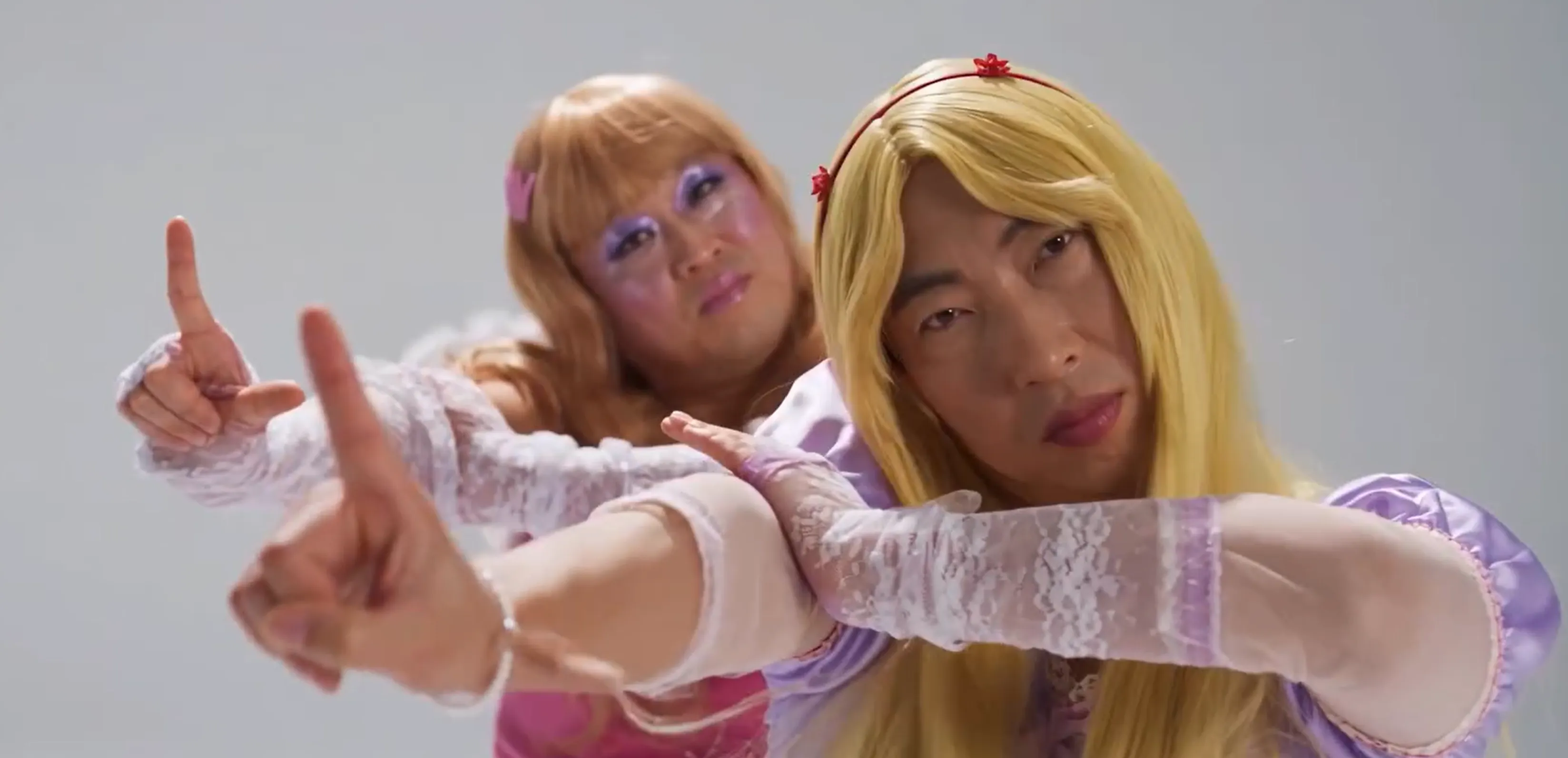
A similar phenomenon emerged in connection with “STORM,” a music video created by French filmmaker Romain Gavras’s project GENER8ION in collaboration with rapper Yung Lean. The difficulty of the synchronized dance scene, practiced and filmed by the actual performers, and the overwhelming impact created by the dancers moving in perfect unison became topics of discussion. The scene was easily reborn as parody videos featuring animals or celebrities through AI.
These two cases show how much AI has lowered the barrier to video production. Scenes that were never actually filmed can be rendered as videos, and parodies enjoyed with the knowledge that they were made using AI have become a new form of play culture. It is fun. But the story changes when technology makes nonexistent people appear to be experts or makes them say things they never actually said.
When a Nonexistent Doctor Recommends a Product
In June 2026, the Ministry of Food and Drug Safety announced that it had referred a distributor to prosecutors for falsely advertising food products using an AI-generated fake doctor. The company presented a fictional middle-aged man as if he were the director of a plastic surgery clinic and promoted vitamin C products and yeast-based foods as being effective in preventing aging and reducing biological age. The company sold 650,000 products over approximately nine months, generating about 8.1 billion won in revenue. Although the doctor in the advertisement was not a real medical professional, consumers could have understood it as an expert guaranteeing the products’ effects.
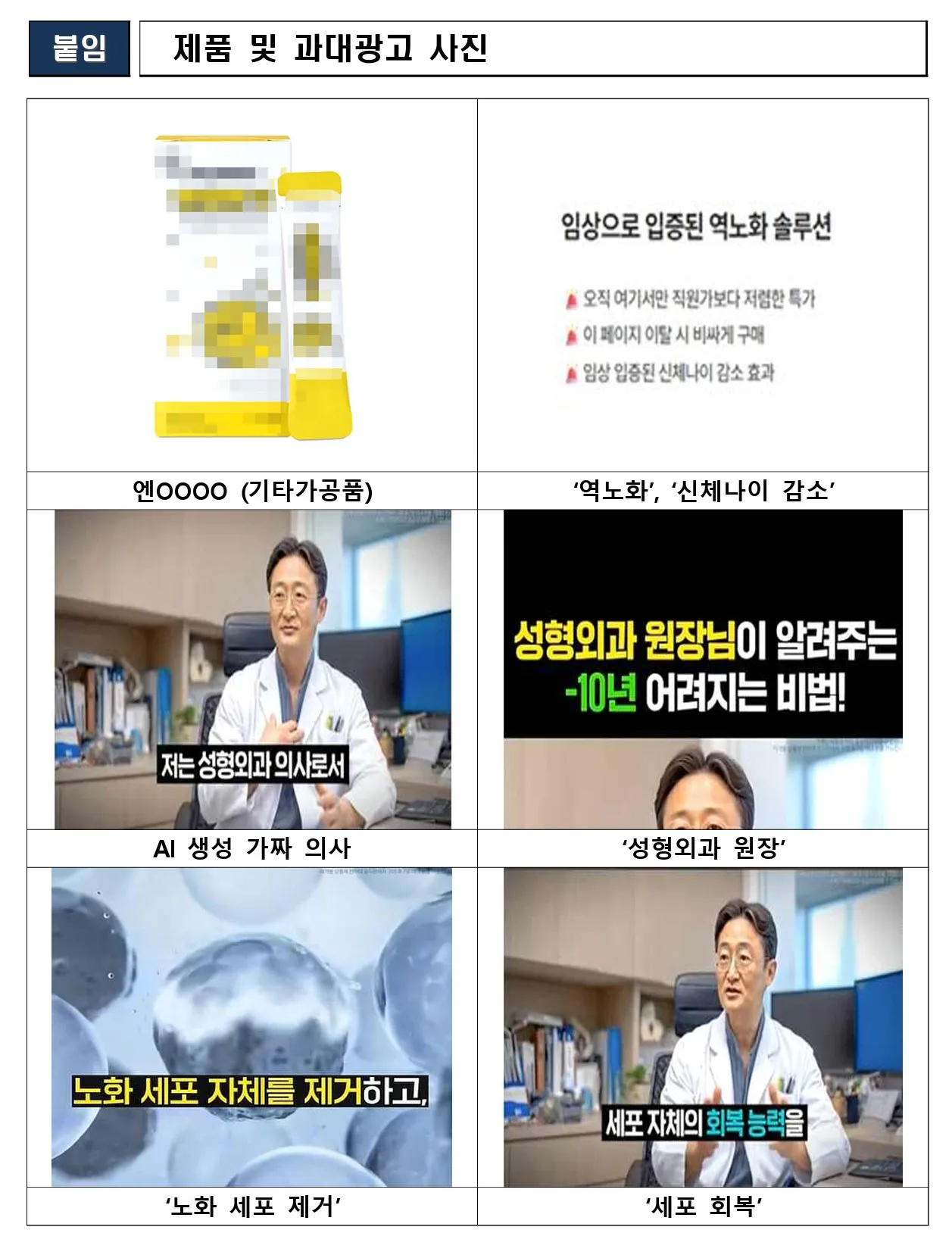
Such advertising is not a problem limited to a few companies. According to the Ministry of Food and Drug Safety, 63 cases of unfair advertising using AI-generated fake experts were uncovered in 2025. As AI-produced unfair advertisements continued to be detected in 2026, the government has been strengthening its monitoring of online advertising.
The problem with fake-expert advertising is not merely that the videos are sophisticated. A doctor’s white coat, professional manner of speaking, and a background made to look like a medical examination room all create an impression of trust. AI can produce such scenes without the participation of a real medical professional. The more difficult it is for consumers to verify a product’s efficacy directly, the more likely they are to rely on an expert’s explanation. Advertising in which a nonexistent expert recommends a product exploits this trust to influence purchasing decisions. When health-related information is involved in particular, it can risk not only financial loss but also interfering with appropriate medical judgment.
A Society That Suspects Even Real Videos
The impact of AI-generated false videos goes beyond the problem of mistaking fakes for reality. It is also problematic that even genuinely filmed videos may be suspected of having been manipulated. In academia, this phenomenon is called the “Liar’s Dividend.” As deepfake technology becomes widely known, it means that even when actual evidence exists, the person involved can claim that the material was manipulated by AI and gain room to evade responsibility.
For example, when a video of a corporate safety accident or environmental pollution site is made public, the authenticity of the video itself may become the focus of debate. If a dispute over the possibility of manipulation takes place before the actual harm can be confirmed, resolving the problem may also be delayed. Social trust is the foundation that enables citizens to make judgments based on information and hold companies and public institutions accountable. If videos become less effective as a means of proving facts, this could also affect the process of verifying corporate transparency and accountability.
However, not every AI-generated work is false information. Parodies enjoyed with the knowledge that they were made using AI must be distinguished from videos that deceive viewers into believing they depict real events. The key is not whether the technology was used, but whether viewers can properly understand the nature of the video.
Why AI Videos Should Be Labeled
Governments around the world are therefore establishing systems aimed at increasing the transparency of AI-generated content.
In South Korea, the “Framework Act on the Development of Artificial Intelligence and the Establishment of a Foundation for Trust” (AI Basic Act) has been in effect since January 22, 2026. Article 31 of the Act imposes an obligation on businesses providing products or services using generative AI to label AI-generated content. In particular, for artificial sound, images, and videos that are difficult to distinguish from reality, users must be clearly informed of their nature. In transparency guidelines released on the same day, the Ministry of Science and ICT specified that the obligation applies to businesses directly providing AI products and services. The same obligation does not apply to every act of an ordinary user posting a video made with AI. The government is also operating a grace period of at least one year to help companies adapt to the system.
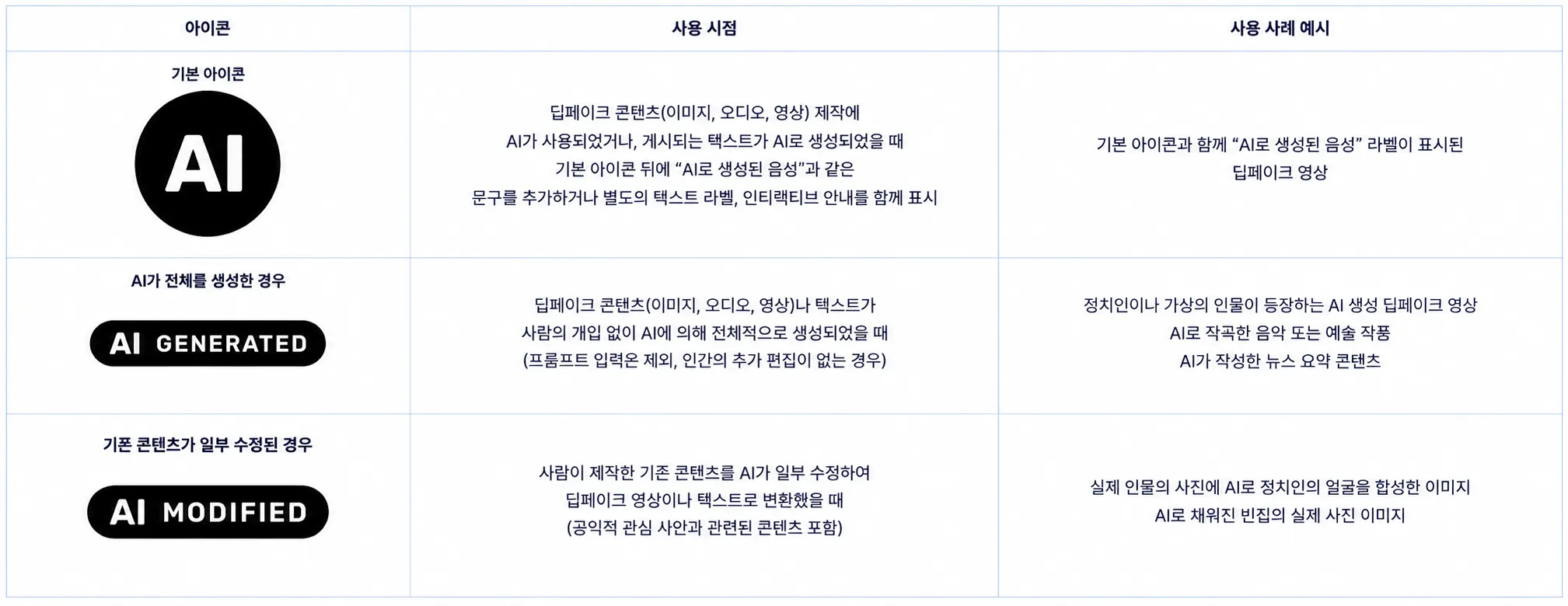
The European Union (EU) has likewise been applying the transparency provisions of the Artificial Intelligence Act (AI Act) since August 2, 2026. The Act requires machine-readable labeling for content generated or manipulated by AI and requires disclosure of the use of AI when deepfake videos and similar content are made public. However, it includes separate provisions allowing disclosure in a manner that does not interfere with appreciation of artistic, creative, and satirical works. What the two systems have in common is that rather than banning AI video production itself, they provide information so users can assess the nature of the content. This also represents an approach that does not leave judgments about a video’s authenticity solely to individual perceptiveness.
Videos recreating GENER8ION’s synchronized dance and the choreography from “NEON” will eventually be replaced by other trends. But the phenomenon those videos revealed will remain. It is now difficult to determine whether a scene is real based only on how natural it looks on screen. In addition to what a video shows, information that makes it possible to verify who created it and how is becoming a new standard of trust.
by Editor N